Benefits of Learning Survival Backstroke
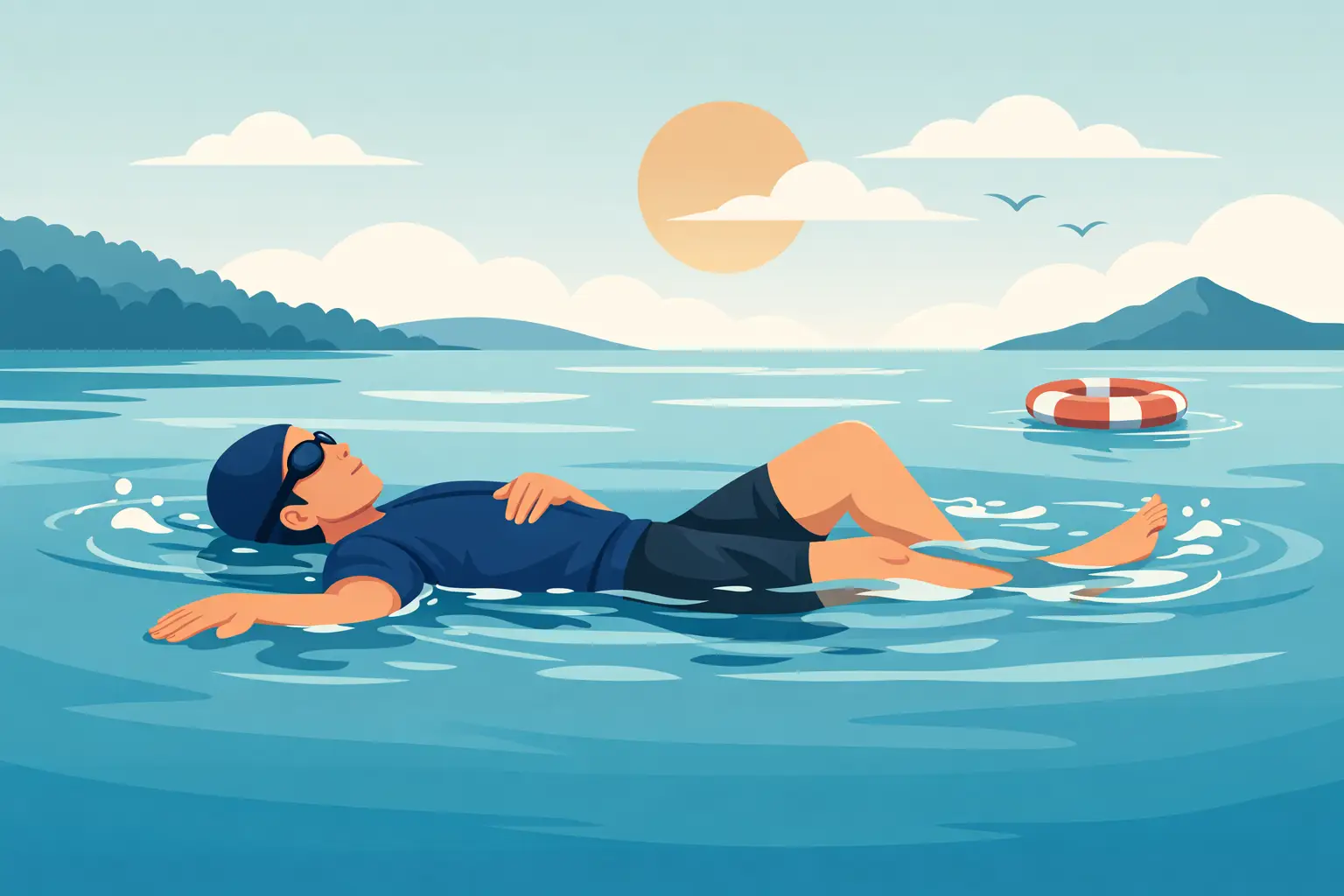
A swimmer who can roll onto their back, settle their breathing, and keep their face clear of the water has gained more than another stroke. The benefits of learning survival backstroke begin at the moment a child or adult feels tired, startled, or unsure in deep water. It creates a practical recovery position: one that buys time, reduces panic, and helps the swimmer make a safer decision.
For parents, this skill offers reassurance that goes beyond poolside confidence. For adult beginners, it often becomes the first stroke that makes deeper water feel manageable. Survival backstroke is a core water-safety skill because it teaches calm, control, and purposeful movement when the body needs rest.
Why Survival Backstroke Matters for Water Safety
Survival backstroke is designed for efficiency rather than speed. The swimmer stays on their back, keeps the face above water, uses steady arm movements, and adds a relaxed breaststroke-style or scissor-style kick to travel while conserving energy. Unlike a race stroke, the goal is not to reach the wall quickly. The goal is to remain composed and move toward safety without exhausting yourself.
That distinction matters. In a real water emergency, a swimmer may be cold, out of breath, wearing heavier clothing, or disoriented after swallowing water. A strong front crawl may not be the best answer when breathing feels difficult. Rolling onto the back can give the swimmer a clear airway and a moment to regain control before deciding whether to call for help, float, tread water, or travel to a nearby exit.
Children especially benefit from learning that stopping does not mean failing. In structured lessons, they learn that resting on the back is an active safety choice. This replaces the instinct to thrash or rush with a more useful habit: breathe, float, assess, and move with control.
Benefits of Learning Survival Backstroke at Every Age
The skill supports different goals depending on the swimmer’s age and experience, but its value remains consistent.
It builds confidence in deeper water
Many beginners are comfortable when they can stand, yet tense as soon as their feet leave the pool floor. Survival backstroke bridges that gap. It shows them they do not need to fight the water to stay safe. With correct body position and steady breathing, they can keep their face out of the water even away from the wall.
For young swimmers, this confidence should be earned through gradual progression. A coach may begin with supported back floats, then short glides, then independent movement over increasing distances. Trying to force a fearful child into deep water too early can create resistance. Measured practice builds confidence that lasts.
It teaches energy conservation
Water survival is often about managing effort. Fast, frantic movements use oxygen quickly and can make fatigue worse. Survival backstroke encourages a long body line, controlled kicks, and an unhurried rhythm. The swimmer learns to travel while using less energy than they might with a high-effort stroke.
This is valuable for confident swimmers as well as beginners. A child who can swim several lengths may still tire unexpectedly during play. An adult training for fitness may feel strong in a lap pool but need a recovery strategy when swimming outdoors. Knowing how to switch to survival backstroke gives both swimmers another safe option.
It improves breathing control and emotional control
Breathing is usually the first skill affected when someone becomes anxious in water. Since survival backstroke keeps the nose and mouth above the surface, it gives swimmers the opportunity to reset their breathing pattern. Slow inhalations and relaxed exhalations help reduce tension in the neck, shoulders, and legs.
The emotional benefit is just as significant. A swimmer who has practiced recovering onto their back is less likely to interpret a moment of fatigue as a crisis. They have a familiar action to take. That sense of preparedness can reduce panic and support better choices around water.
It supports formal water-safety progression
Survival skills are not isolated tricks to practice once and forget. They are part of a wider progression that includes safe entry, floating, sculling, treading water, directional changes, and rescue awareness. In SwimSafer-focused training, survival backstroke helps swimmers demonstrate body control, distance management, and calm movement in deeper water.
Test readiness should never replace real capability. Still, formal assessments give families a useful checkpoint. When a swimmer can perform survival backstroke consistently, under appropriate supervision and with correct technique, it provides visible evidence of growing water competence.
What Good Survival Backstroke Technique Looks Like
A survival backstroke should look relaxed, not rushed. The body remains close to the surface, with the head resting back enough to keep the face clear. The hips should not sink deeply, because a low body position forces the swimmer to kick harder and wastes energy.
The arms are usually kept simple and symmetrical, sweeping out and back in a controlled motion. The legs provide a gentle, repeatable kick. There are several acceptable variations, and coaches may adjust the pattern based on the swimmer’s age, mobility, and current skill level. What matters most is that the swimmer can breathe comfortably, stay afloat, and move in the intended direction.
Four cues help learners remember the essentials:
- Keep the ears in the water and the face looking upward.
- Stretch the body long while keeping the hips near the surface.
- Move arms and legs steadily instead of splashing quickly.
- Breathe slowly and look for the nearest safe exit or adult assistance.
A common mistake is lifting the head to look at the feet. This causes the hips to drop and makes the stroke harder. Another is kicking too fast. A powerful kick may feel productive for a few seconds, but survival movement is about maintaining control over time.
How Structured Practice Makes the Skill Reliable
Knowing the idea of survival backstroke is different from being able to use it when tired or surprised. Reliable performance comes from progressive practice in a supervised environment.
A well-organized lesson begins with back floating and safe recovery from a front position. The swimmer practices rolling from face-down to face-up without standing or grabbing for the wall. Next, they add short movements, work on maintaining direction, and gradually increase distance. As confidence develops, the coach may introduce realistic but controlled challenges, such as starting after a short swim or recovering in deeper water.
This approach is particularly useful for children preparing for SwimSafer stages and practical assessments. Repetition gives them a clear sequence to follow: regain the back float, settle the breath, then move safely. It is also effective for adults who are rebuilding confidence after a long break from swimming or overcoming a fear of deep water.
At AQZOG, structured progression places survival skills alongside stroke development rather than treating them as an optional extra. A swimmer may enjoy learning freestyle and breaststroke, but those strokes become more meaningful when they are supported by the ability to rest, recover, and respond safely.
Survival Backstroke Has Limits Too
Survival backstroke is a valuable self-rescue skill, but it is not a substitute for supervision, pool rules, life jackets, or professional rescue. It may also be difficult in choppy open water, strong currents, crowded conditions, or when a swimmer has an injury. In those situations, the right response depends on the environment and the swimmer’s condition.
Parents should also avoid assuming that one successful attempt means a child is water-safe. Skill varies with depth, temperature, fatigue, distractions, and confidence on a given day. Consistent lessons and regular practice create safer habits than occasional exposure.
The most useful outcome is not simply that a swimmer can complete a required distance on their back. It is that, when water feels challenging, they know how to pause, breathe, and give themselves time to reach safety.