Flippa Ball vs Water Polo
Flippa Ball vs Water Polo: Key Differences, Rules, and Why You Should Try Both
If you are exploring aquatic sports for kids or beginners, you will often come across two exciting options: Flippa Ball and Water Polo. While they may look similar at first glance—both involving a ball, goals, and teamwork in water—they are actually designed for very different skill levels and purposes.
This guide will break down the differences between Flippa Ball and Water Polo, explain their rules, and help you decide which is more suitable for your students or children. Whether you are a swim coach, parent, or beginner swimmer, this SEO-rich guide will give you everything you need to know.
What is Flippa Ball?
Flippa Ball is a beginner-friendly aquatic sport designed to introduce children to the fundamentals of water polo in a safe and controlled environment.
It is commonly used in learn-to-swim programmes and SwimSafer pathways to build:
- Water confidence
- Basic ball handling skills
- Team coordination
- Awareness in water
Key Features of Flippa Ball
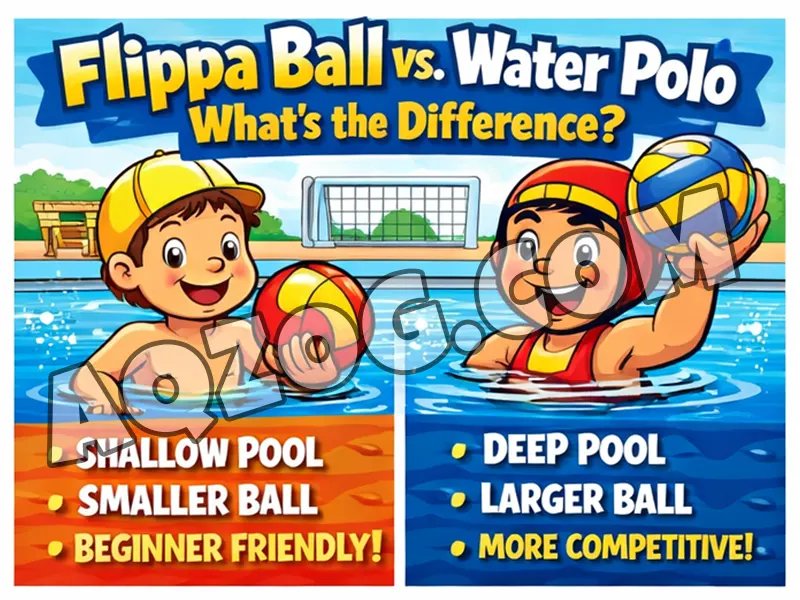
- Played in shallow water (participants can stand)
- Uses a smaller and lighter ball
- Focus on fun and learning, not competition
- Minimal physical contact
- Ideal for ages 6 to 12
Flippa Ball acts as a stepping stone to Water Polo, making it perfect for beginners who are not yet confident in deep water.
What is Water Polo?
Water Polo is a competitive team sport played in deep water. It is often described as a mix of swimming, basketball, and handball.
Players must:
- Swim continuously
- Tread water (eggbeater kick)
- Pass and shoot under pressure
Key Features of Water Polo
- Played in deep water only
- Uses a standard-sized water polo ball
- Requires strong swimming ability
- Includes defensive contact
- Suitable for advanced swimmers
Water Polo is widely recognized as one of the most physically demanding aquatic sports.
Key Differences Between Flippa Ball and Water Polo
1. Water Depth
- Flippa Ball: Shallow pool (standing allowed)
- Water Polo: Deep pool (no standing)
2. Skill Level
- Flippa Ball: Beginner-friendly
- Water Polo: Intermediate to advanced
3. Physical Demand
- Flippa Ball: Low to moderate
- Water Polo: High intensity
4. Contact Level
- Flippa Ball: Minimal or no contact
- Water Polo: Includes defensive contact
5. Game Objective
- Both aim to score goals, but:
- Flippa Ball focuses on learning and fun
- Water Polo focuses on competition and strategy
Rules of Flippa Ball
Flippa Ball rules are simplified to encourage participation and learning.
Basic Rules:
- Team Size: Usually 5–7 players per team
- Game Duration: Short halves (e.g., 10–15 minutes)
- Starting Play: Ball is thrown into the pool
- Movement:
- Players can walk or stand
- Passing is encouraged
- Scoring:
- A goal is scored when the ball enters the net
- Ball Handling:
- Players can hold the ball with one or two hands
- Contact:
- No pushing, pulling, or rough play
Key Objective:
Develop confidence, coordination, and teamwork
Rules of Water Polo
Water Polo follows stricter and more competitive rules.
Basic Rules:
- Team Size: 7 players (6 field + 1 goalkeeper)
- Game Duration: 4 quarters (usually 6–8 minutes each)
- Starting Play: Sprint to the ball from goal line
- Movement:
- Players must swim or tread water at all times
- Scoring:
- Ball must fully cross the goal line
- Ball Handling:
- One hand only (except goalkeeper)
- Shot Clock:
- Teams must shoot within a set time (e.g., 30 seconds)
- Fouls:
- Ordinary fouls (free pass)
- Major fouls (exclusion for 20 seconds)
Key Objective:
Win through strategy, endurance, and teamwork
Benefits of Flippa Ball
Flippa Ball is not just a game—it is a powerful teaching tool.
1. Builds Water Confidence
Children become comfortable moving and playing in water.
2. Encourages Social Interaction
Team-based play improves communication and cooperation.
3. Develops Basic Skills
- Throwing
- Catching
- Spatial awareness
4. Reduces Fear of Water
Fun gameplay removes anxiety and builds trust.
Benefits of Water Polo
For advanced swimmers, Water Polo offers significant advantages.
1. Improves Fitness
- Cardiovascular endurance
- Strength and stamina
2. Enhances Swimming Skills
Constant movement improves:
- Speed
- Agility
- Technique
3. Builds Mental Toughness
Players must think quickly under pressure.
4. Teaches Strategy
Game awareness and positioning are crucial.
Which One Should You Choose?
Choose Flippa Ball if:
- Your child is a beginner swimmer
- They are still building water confidence
- You want a fun and safe introduction
Choose Water Polo if:
- You can swim confidently in deep water
- You want a competitive sport
- You enjoy team strategy and physical challenge
Why Flippa Ball is Perfect for Swim Schools
For swim schools like AQZOG, Flippa Ball is an excellent program enhancement.
It helps bridge the gap between:
- Learn-to-swim lessons
- Competitive aquatic sports
By introducing Flippa Ball, coaches can:
- Increase student retention
- Make lessons more engaging
- Prepare swimmers for Water Polo
FAQs: Flippa Ball vs Water Polo
1. What age can children start Flippa Ball?
Most children can start from 6 years old, depending on their water confidence.
2. Do you need to know how to swim to play Flippa Ball?
Basic swimming is helpful, but not required. Since it is played in shallow water, beginners can still participate safely.
3. Is Water Polo dangerous?
Water Polo is safe when supervised, but it is more physically demanding and includes contact. Proper coaching and rules enforcement are essential.
4. Can Flippa Ball lead to Water Polo?
Yes! Flippa Ball is designed as a progression pathway into Water Polo.
5. What equipment is needed?
Swimwear
Ball
Goalposts
Swim caps (for Water Polo)
6. How long does it take to progress from Flippa Ball to Water Polo?
Typically, children can transition within 6 months to 2 years, depending on skill level and training frequency.
7. Is Flippa Ball suitable for adults?
Yes! It can be adapted for adults who are beginners or looking for a fun water activity.
8. Which sport burns more calories?
Water Polo burns significantly more calories due to continuous swimming and high intensity.
9. Can non-competitive swimmers enjoy these sports?
Absolutely. Flippa Ball is especially designed for non-competitive enjoyment.
10. Why should my child try these sports?
They promote:
Water safety
Fitness
Confidence
Teamwork
Final Thoughts
Flippa Ball and Water Polo are both fantastic aquatic sports, but they serve different purposes.
- Flippa Ball is your entry point—fun, safe, and confidence-building.
- Water Polo is the next level—competitive, intense, and rewarding.
For swim schools, parents, and coaches, combining both creates a complete aquatic development pathway.
If your goal is to build confident, skilled swimmers who enjoy the water, starting with Flippa Ball and progressing to Water Polo is one of the best strategies available today.