Swim Coaching That Builds Safer, Stronger Swimmers
A child who can move across the pool is not necessarily ready to manage an unexpected slip, a change in water depth, or a moment of panic. Real progress means more than completing a lap. Effective swim coaching teaches swimmers how to enter water safely, regain control, breathe calmly, travel with purpose, and make sound decisions around water.
For families, that difference matters every time a child attends a pool party, school activity, vacation, or public swimming session. For adults, it can be the line between avoiding the water and finally participating with confidence. A structured program turns swimming from a vague goal into clear, measurable skills.
What Strong Swim Coaching Should Deliver
The best coaching begins with an accurate starting point. Age matters, but current ability, confidence level, attention span, and experience in deep water matter too. A toddler who happily splashes at the steps needs a different lesson plan from a school-age beginner who is anxious about putting their face in the water. An adult returning after many years may need breathing control before stroke correction.
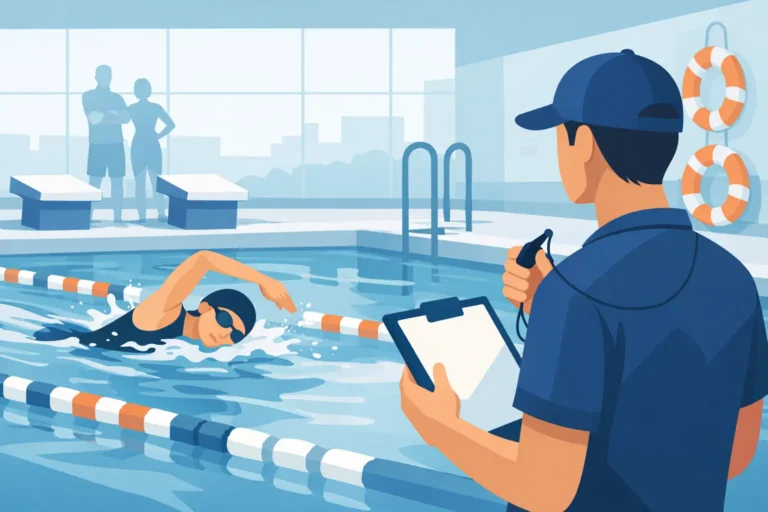
A qualified coach does not simply keep swimmers busy for an hour. Each lesson should build toward a defined outcome: safe entries and exits, floating, kicking, controlled breathing, propulsion, stroke development, or water-survival skills. Progress should be visible over time, even when a swimmer needs additional practice before moving ahead.
Good coaching also balances encouragement with standards. Praise helps children stay motivated, but passing a skill before it is consistent can create false confidence. Swimmers should progress when they can demonstrate the skill reliably, not just once on a good day.
Safety Comes Before Speed
Many parents understandably ask how quickly their child can learn freestyle. Freestyle is valuable, but it should not be the only measure of success. A swimmer who can kick quickly but cannot float, recover after submersion, or orient themselves in deeper water still has important gaps to address.
A safety-first pathway teaches practical responses before advanced performance. This includes controlled water entry, safe return to the wall, front and back floating, changing position in water, breathing management, and recognizing when to seek help. As swimmers advance, they should also learn to swim with efficiency while maintaining awareness of their surroundings.
This is especially relevant in Singapore, where families have frequent access to public pools, condominiums, water-play areas, and coastal activities. Regular exposure is valuable, but it is not a substitute for instruction. Familiarity with water can improve comfort, while structured practice develops judgment and capability.
Confidence Is Built Through Repetition
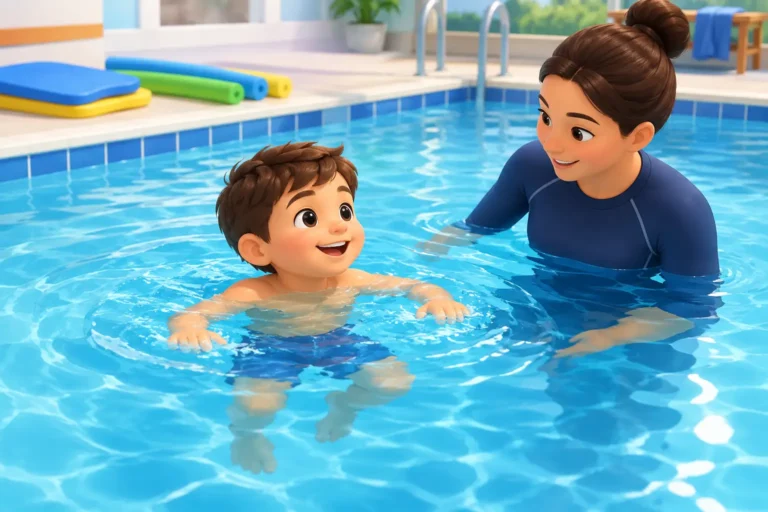
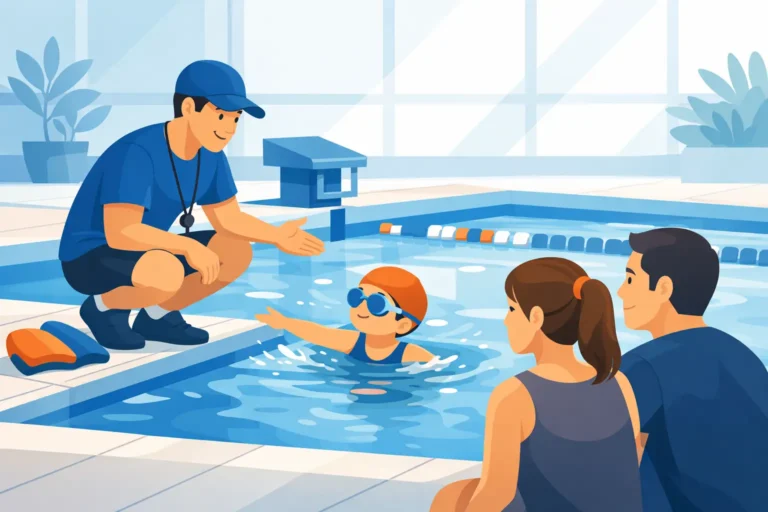
Water confidence is not created by telling a nervous swimmer to be brave. It is built through repeated, manageable experiences. A coach may start with sitting at the pool edge, blowing bubbles, supported floating, or short glides. Once the swimmer is comfortable, the next challenge becomes achievable rather than overwhelming.
For some children, progress is quick. For others, fear of water, sensory sensitivity, or a previous bad experience means the early stages take longer. That is not failure. Rushing a fearful swimmer can reinforce anxiety, while patient, consistent instruction helps them develop trust in both the coach and their own body.
Adults often benefit from the same approach. A beginner may feel embarrassed about starting later in life, but adult swim lessons should be practical and respectful. There is no need to compare yourself with faster swimmers in the next lane. The relevant question is whether you are more capable, calmer, and safer than you were last month.
Choosing the Right Lesson Format
There is no single best format for every swimmer. The right choice depends on goals, readiness, and the level of attention required.
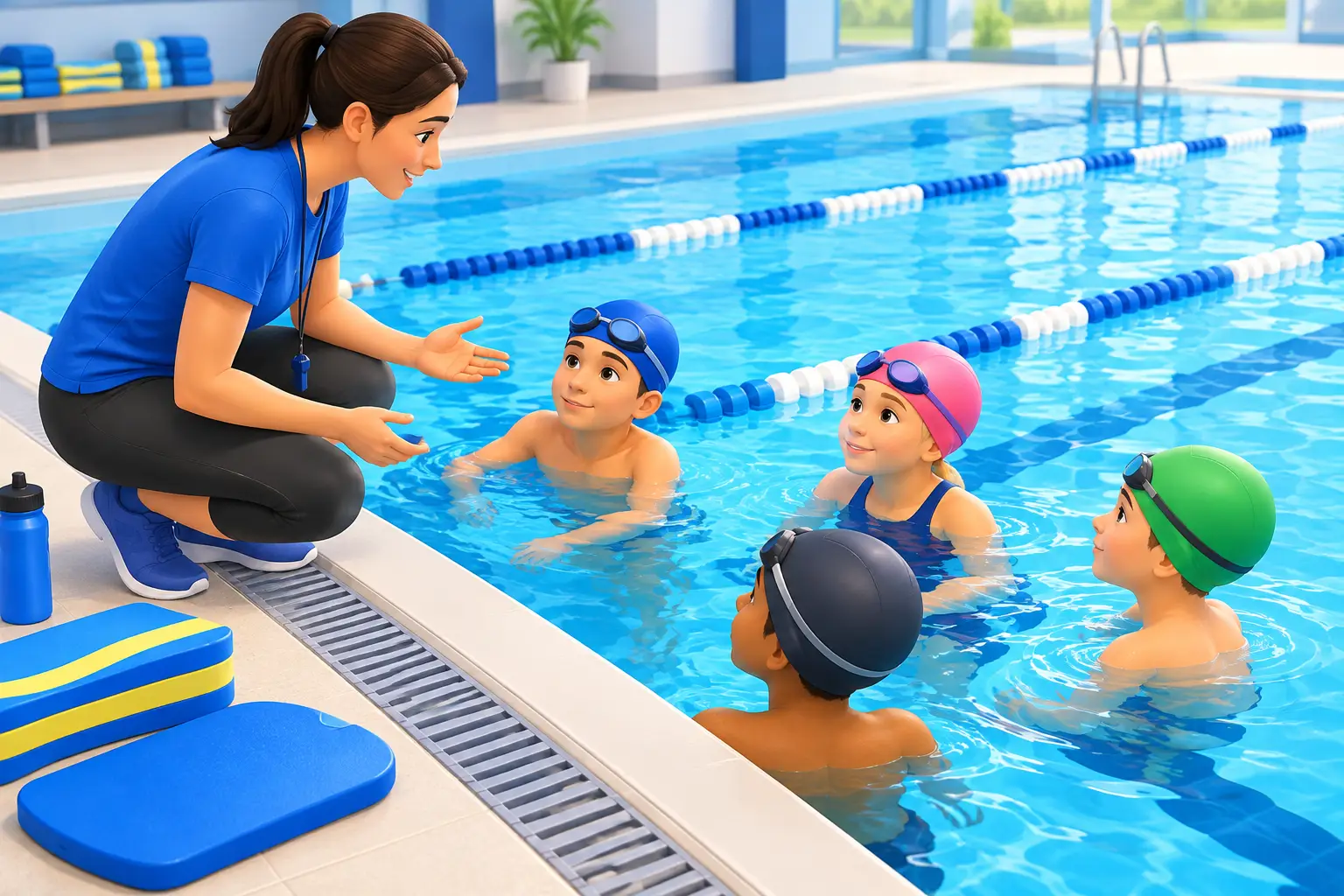
Weekly group lessons suit many children because they provide routine, social motivation, and regular reinforcement. A well-organized group should place swimmers with similar abilities together, allowing the coach to teach common skills while correcting individual technique. Group learning can be highly effective when class size and skill matching are managed carefully.
Private coaching is useful when a swimmer has a specific barrier or deadline. A child preparing for an assessment, an adult with significant water fear, or a triathlon trainee refining technique may benefit from one-to-one attention. The trade-off is that private lessons are typically more intensive and may cost more, so they are most valuable when personalized feedback is the priority.
Semi-private lessons offer a middle ground for siblings, friends, or swimmers with closely matched abilities. They retain more individual coaching than a larger group while giving swimmers a partner to practice alongside.
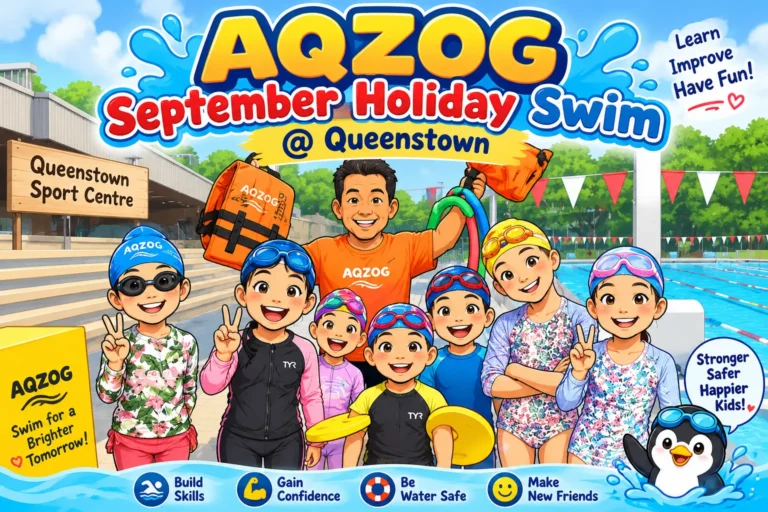
Holiday intensive programs can accelerate progress because skills are repeated across several days. They work particularly well for a child who already has basic confidence and needs focused practice. However, an intensive schedule does not replace long-term retention. After the program, swimmers need continued opportunities to practice and maintain what they have learned.
SwimSafer Progression Requires More Than a Checklist
For school-age children in Singapore, SwimSafer provides a useful framework for developing water safety knowledge and practical ability. It gives parents a recognizable progression pathway, but preparation should never become a rush to collect certificates.
Strong SwimSafer coaching connects each requirement to a real-world purpose. Floating is not just an item to complete. It is a way to conserve energy and regain calm. Safe entries are not simply assessed techniques. They help swimmers understand how to enter water without putting themselves or others at risk. Survival-oriented skills develop the awareness needed when conditions are less controlled than a lesson pool.
Test readiness is therefore different from last-minute test practice. A swimmer should have enough repetition to perform skills calmly, follow instructions, and recover if the first attempt is imperfect. Mock practical assessments can be helpful because they familiarize swimmers with the pace and expectations of testing. Theory preparation also matters, particularly when children need to explain safety rules rather than only demonstrate physical skills.
At AQZOG, structured progression can support swimmers from water introduction through certification-focused training, with coaching that keeps water safety at the center of each stage.
How Parents Can Support Progress Between Lessons
Parents do not need to coach every stroke. In fact, too many instructions from poolside can distract a child who is trying to listen to their coach. The most helpful role is to reinforce a positive, consistent relationship with swimming.
Arrive early enough that your child is not rushed. Bring properly fitted goggles if they are part of the lesson routine, and make sure your child has eaten and rested appropriately. After class, ask specific questions such as, “What skill did you practice today?” or “What felt easier than last week?” These questions focus attention on learning rather than whether the child was the fastest swimmer.
If supervised practice is available, keep it simple. Let children repeat familiar skills such as kicking, bubbles, floating, and short swims without turning family pool time into another formal lesson. Always follow pool rules and stay within arm’s reach of young or weak swimmers, regardless of their current stage.
Adults: Set a Goal That Makes Practice Meaningful
Adult learners often make faster decisions when their goal is specific. “I want to swim better” is broad. “I want to feel calm in deep water,” “I want to complete 500 meters without stopping,” or “I want to prepare for a triathlon” gives coaching a clear direction.
Technique should match the goal. A fitness swimmer may need help reducing drag and improving breathing rhythm. A complete beginner may first need to learn buoyancy and relaxation. Someone interested in lifesaving or aquatic work will need a more demanding pathway that includes survival skills, endurance, and controlled responses under pressure.
Expect progress to be uneven. Breathing may improve before coordination does. You may feel slower while changing an old habit, then become more efficient after the new movement settles in. Regular lessons and short, purposeful practice sessions are usually more effective than occasional long swims.
Questions to Ask Before Enrolling
Before choosing a program, ask how swimmers are grouped, how progress is assessed, and what happens when a swimmer needs more time at a stage. Find out whether the program includes water-survival skills alongside stroke instruction and whether coaches can prepare students for SwimSafer assessments where relevant.
Also consider convenience honestly. A nearby pool and a lesson time your family can sustain week after week will usually produce better results than an ideal schedule that becomes difficult to attend. Consistency is part of the program, not an extra.
The right swim coach gives swimmers more than a stroke to copy. They provide a clear path from uncertainty to control, from basic movement to reliable safety skills, and from practice to genuine confidence. Start at the level that matches the swimmer in front of you, then let steady, well-taught progress do its work.