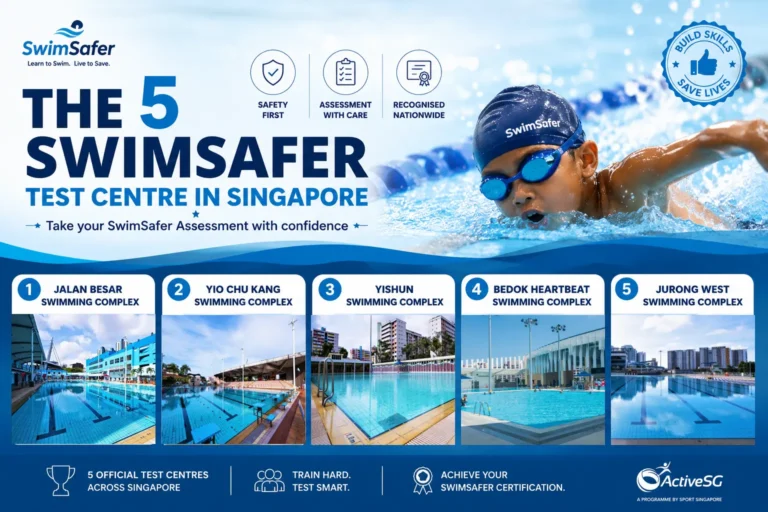
ActiveSG Babies Swimming Lessons Singapore
ActiveSG Babies Swimming Lessons Singapore
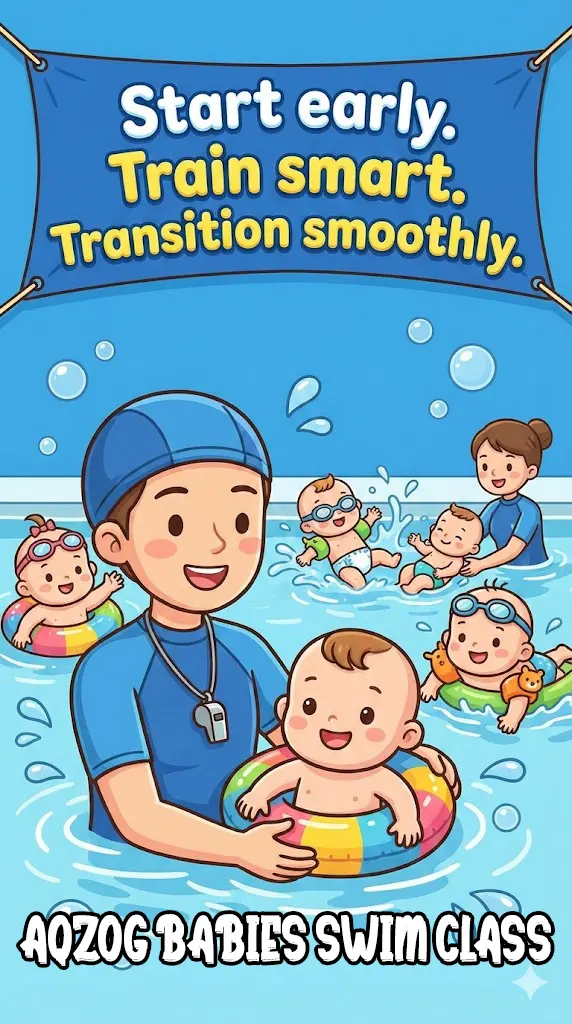
Sign up for Short Term Babies Swim Class
Early Exposure at ActiveSG Pools for a Smooth Transition to the SwimSafer Programme
Parents in Singapore increasingly recognise that babies swimming lessons and a structured toddler swimming class are not just enrichment activities—they are foundations for lifelong water confidence, safety, and swimming success. With Singapore’s strong national focus on water safety through the MOE SwimSafer Programme, starting early at a public ActiveSG pool gives children a natural advantage when they progress to formal swimming assessments later in primary school.
This comprehensive guide explains why early exposure matters, why ActiveSG pools are ideal, and how babies and toddlers benefit from learning in normal pool water—making the transition to Olympic-size pools and SwimSafer stages smoother, calmer, and more successful.
Why Babies Swimming Lessons Matter in Singapore
Singapore is surrounded by water and offers countless aquatic environments—from pools and beaches to reservoirs. Early swimming exposure is no longer a luxury; it is a practical life skill.
Key benefits of babies swimming lessons:
- Builds water familiarity before fear develops
- Enhances sensory, motor, and balance development
- Encourages parent–child bonding in a calm environment
- Establishes breath awareness and comfort with splashes
- Lays the groundwork for future swimming technique
Babies are naturally receptive to new sensations. Introducing them to water between 6 months to 18 months allows them to accept water as a normal environment rather than a threatening one.
Toddler Swimming Class: Where Confidence Is Formed
As babies grow into toddlers (18 months to 4 years), structured toddler swimming classes become crucial. At this stage, children start to:
- Understand instructions
- Develop independence
- Express fear or confidence more clearly
A well-designed toddler swimming class focuses on confidence before competence.
Core outcomes of a quality toddler swimming class:
- Entering the pool independently with confidence
- Submerging the face comfortably
- Floating with support
- Kicking and basic arm movements
- Listening and responding to simple safety cues
These outcomes align directly with early SwimSafer Stage 1 readiness.
Why ActiveSG Pools Are Ideal for Babies and Toddlers
One of the most overlooked advantages of enrolling your child in babies swimming lessons or a toddler swimming class at an ActiveSG pool is environmental familiarity.
1. Normal Pool Water Exposure (Not Private Warm Pools)
Many private facilities use overly warm or enclosed pools. While comfortable, they can delay adaptation.
ActiveSG pools offer:
- Standard public pool temperatures
- Open-air or large ventilated environments
- Realistic acoustics and lighting
This helps babies and toddlers adapt early to real swimming conditions, reducing shock or fear later.
2. Early Familiarity with Olympic-Size Pool Environments
SwimSafer assessments and most school-based swimming lessons take place in 50m Olympic pools or large public pools.
Children who start early at ActiveSG pools:
- Are not intimidated by large pool spaces
- Are comfortable with deeper water visuals
- Transition smoothly without emotional resistance
Early exposure eliminates the “big pool fear” commonly seen in children who only trained in small private pools.
3. Seamless Transition to the MOE SwimSafer Programme
Singapore’s SwimSafer Programme is conducted almost exclusively at public pools. Babies and toddlers who begin at ActiveSG pools already understand:
- Pool rules
- Changing room routines
- Showering before swimming
- Poolside behaviour
This familiarity dramatically improves focus and learning efficiency when they enter SwimSafer Stage 1 and 2.
The Science Behind Early Water Exposure
Early aquatic exposure supports:
- Vestibular development (balance and body awareness)
- Bilateral coordination (left-right body movement)
- Breath control and calm response under mild stress
Children who learn early are statistically:
- Less fearful of water
- More adaptable to instruction
- Faster at acquiring swimming fundamentals
In simple terms: early exposure rewires the brain to accept water as normal.
Babies Swimming Lessons vs Toddler Swimming Class: What’s the Difference?
Babies Swimming Lessons (6–18 months)
- Parent-assisted
- Focus on water comfort
- Gentle splashing and floating
- Sensory exploration
- No forced submersion
Toddler Swimming Class (18 months–4 years)
- Gradual independence
- Simple structured activities
- Floating and kicking skills
- Introduction to safety awareness
- Preparation for SwimSafer concepts
Both stages are equally important and complementary.
Why Learning in Public Pools Builds Real Confidence
Children are incredibly perceptive. When they learn in:
- Large pools
- Shared public spaces
- Realistic swimming conditions
They develop true confidence, not environment-dependent confidence.
This means:
- Less regression when changing pools
- Better adaptability during assessments
- Stronger emotional regulation in water
Preparing Your Child for Long-Term Swimming Success
Parents often ask:
“Isn’t my baby too young?”
The real question is:
Why wait until fear develops?
Early exposure ensures:
- No panic during SwimSafer tests
- Faster learning curve
- Reduced stress for both child and parent
By the time your child enters Primary 3, swimming is already second nature.
Choosing the Right Programme at ActiveSG Pools
A good babies or toddler swimming programme should:
- Be age-appropriate
- Progress gradually
- Never force submersion
- Emphasise enjoyment and safety
- Be led by experienced coaches familiar with SwimSafer outcomes
Look for programmes that bridge early childhood swimming with national water safety standards.
Frequently Asked Questions (FAQ)
1. What age can babies start swimming lessons in Singapore?
Babies can start as early as 6 months, provided the programme is parent-assisted and conducted by qualified instructors.
2. Are ActiveSG pools safe for babies and toddlers?
Yes. ActiveSG pools maintain strict hygiene, water quality, and safety standards suitable for young children.
3. Will normal pool water be too cold for babies?
ActiveSG pool temperatures are within safe ranges. Early exposure helps babies adapt naturally, reducing future sensitivity.
4. How does early swimming help with the SwimSafer Programme?
Children already familiar with public pools adapt faster, show less fear, and perform better during SwimSafer stages.
5. Is private pool training better than public pools?
Private pools may feel comfortable initially, but public pools better prepare children for real swimming environments and assessments.
6. How long does it take for toddlers to feel comfortable in water?
With consistent weekly lessons, most toddlers show visible confidence within 4–8 weeks.
7. Do parents need to be in the pool?
For babies, yes. For toddlers, parental involvement gradually reduces as independence increases.
Final Thoughts: Start Early, Transition Smoothly
Enrolling your child in babies swimming lessons or a toddler swimming class at an ActiveSG pool in Singapore is one of the smartest long-term investments you can make. Early exposure to normal pool water, large swimming environments, and public pool routines ensures your child grows up confident, calm, and fully prepared for the MOE SwimSafer Programme.
Swimming is not just a skill—it is a life-saving competence.
Start early. Train smart. Transition smoothly.