Adult Group or Private Swimming: Which Fits?
The choice between adult group or private swimming lessons often comes down to one question: what would help you make progress without avoiding the pool next week? For some adults, learning alongside others creates motivation and consistency. For others, focused one-to-one instruction is the fastest way to overcome water fear, correct technique, or prepare for a specific goal.
Swimming is more than a fitness activity. It is a practical water safety skill that can build confidence for travel, family time at the pool, open-water events, and lifesaving pathways. The right lesson format should give you clear instruction, a safe learning pace, and measurable improvement.
Adult Group or Private Swimming: The Core Difference
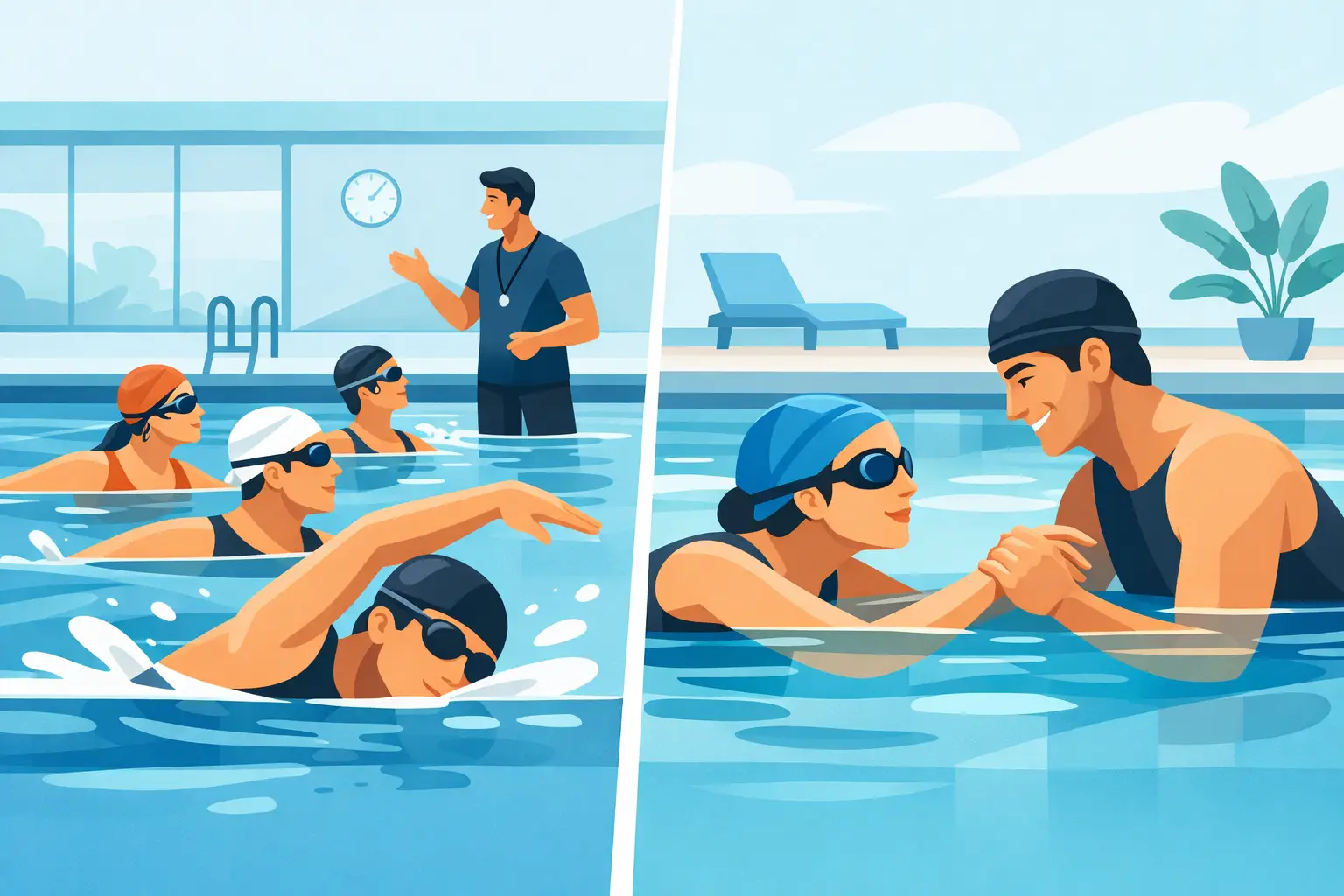
Group lessons place adults of a similar ability level with one instructor. Private lessons provide individual attention, with each session built around your starting point and target outcome. Neither format is automatically better. The stronger choice depends on your confidence in water, how quickly you need results, and the type of support that keeps you committed.
A complete beginner who is nervous about putting their face in the water may need a different experience from a swimmer who can already complete several laps but wants a more efficient freestyle stroke. Similarly, an adult preparing for a swim assessment, triathlon, or lifeguarding-related progression may benefit from a more targeted training plan than someone whose main aim is general confidence and fitness.
The key is not simply choosing the most convenient option. It is choosing a program with structured progression, experienced coaching, and practical water survival skills at the appropriate level.
When Adult Group Lessons Are the Right Fit
Adult group swimming classes work well for learners who value routine, encouragement, and a shared sense of progress. Seeing another adult successfully float, breathe, or swim a first full lap can make a new learner feel less alone. Many adults begin lessons believing they are the only person who feels anxious in deeper water. A well-matched class quickly shows them otherwise.
Group learning is especially effective when participants have similar foundations. Beginners can focus on water entry, floating, breathing control, kicking, and basic stroke coordination. More confident swimmers may work on stroke efficiency, endurance, turns, and paced swimming. A structured instructor keeps the class moving while still giving corrections that matter.
There is also a practical advantage. Group classes are typically a more cost-efficient way to receive regular coaching over a longer period. Consistency is crucial in swimming because confidence and coordination are built through repetition. A weekly class can create the discipline that busy working adults often struggle to maintain on their own.
Group lessons are a strong choice if you:
- are comfortable learning with people at a similar level
- want regular coaching at a more accessible cost
- benefit from a fixed weekly routine
- are working toward general water confidence, fitness, or basic stroke development
The trade-off is that lesson content must serve the group as a whole. An instructor can provide individual feedback, but the session cannot revolve entirely around one learner’s fear, technical habit, or schedule.
What Good Group Instruction Should Include
A group setting should never mean generic instruction. Effective adult classes begin with a clear assessment of current ability and place swimmers with suitable peers. The instructor should break skills into manageable stages rather than expecting learners to copy a full stroke immediately.
For beginners, progression may begin with safe entry and exit, supported floating, exhaling in water, and recovering from an unplanned loss of balance. These are not minor details. They are the foundations that make deeper-water confidence possible. As skills improve, the focus can move toward coordinated strokes, distance, and stamina.
For intermediate adults, useful group coaching includes specific feedback on body position, breathing timing, kick efficiency, and arm recovery. Small corrections can reduce fatigue and make swimming feel far more controlled.
When Private Swimming Lessons Make More Sense
Private swimming lessons are designed around one swimmer, one pace, and one set of goals. They are often the best option for adults who need focused support or want to make progress within a defined timeframe.
A private instructor can spend the entire session addressing the reason you enrolled. If you panic when your feet cannot touch the bottom, the lesson can stay with floating, breathing, and safe recovery until those actions feel reliable. If you can swim but struggle with side breathing, every drill can reinforce that skill. There is no need to wait for the rest of a class to reach the same stage.
This focused format can be particularly valuable for water-fear learners. Adult anxiety around water is often tied to a past incident, embarrassment, or years of avoiding pools. Progress requires patience, not pressure. A qualified coach can set small, realistic milestones and build control before introducing more challenging tasks.
Private instruction is also well suited to goal-driven swimmers. You may be preparing for a swim test, a triathlon, an open-water event, a job-related requirement, or a lifesaving pathway. In these cases, tailored sessions can prioritize the exact distances, strokes, pacing, survival techniques, or assessment standards involved.
The main trade-off is cost. One-to-one coaching is a premium format because the instructor’s full attention is dedicated to you. It also requires you to bring your own consistency. Without the social accountability of a regular group, it is easier to postpone a session when work becomes busy.
Who Benefits Most From Private Coaching?
Private lessons are often the more efficient choice if you are a complete beginner with strong water fear, have a specific deadline, need significant stroke correction, or have an irregular work schedule. They can also help adults returning to swimming after injury, provided training is aligned with appropriate medical guidance.
Private coaching does not have to be permanent. Some learners begin privately to establish basic confidence, then move into a group class to maintain practice and build endurance. Others start in a group and book a few private sessions to correct a persistent technical issue. A flexible pathway often produces the best value.
Choose Based on Your Starting Point and Goal
Before enrolling, be honest about what happens when you enter the water. Can you submerge your face calmly? Can you float on your front and back? Can you recover your footing without grabbing the wall? Can you swim a continuous distance with controlled breathing? Your answers matter more than whether you consider yourself “good” or “bad” at swimming.
If your goal is to feel safe while accompanying children at the pool, start with water confidence and survival skills. If you want exercise, prioritize stroke technique that lets you swim without exhausting yourself after one length. If your goal involves an assessment or certification, ask for a structured pathway that includes test readiness rather than relying only on casual lap practice.
AQZOG approaches adult instruction as skill progression, combining confidence building with practical water safety and clear coaching targets. That structure matters because adults often improve fastest when they can see exactly what they have achieved and what comes next.
Questions to Ask Before You Enroll
The quality of coaching matters as much as the format. Ask whether the program assesses your ability before placing you in a class, how progression is measured, and whether instructors teach water survival alongside stroke technique. You should also ask about class size, lesson frequency, make-up policies, and the pool location that fits your schedule.
For private instruction, clarify whether the coach will create a plan around your goal and track progress across sessions. For group lessons, find out how ability levels are organized. A class that is too easy can become frustrating, while a class that moves too quickly can damage confidence.
A good program should make the next step clear. You should know whether you are working toward independent floating, a specific distance, efficient freestyle, improved endurance, or formal assessment readiness.
Progress Comes From the Format You Will Attend
The best lesson format is the one that gives you enough challenge to improve and enough support to return consistently. Group classes can offer momentum, affordability, and a motivating routine. Private lessons can provide targeted coaching, flexible pacing, and faster correction when confidence or time is limited.
If you are uncertain, begin with your immediate barrier. Choose private coaching when fear, a deadline, or a highly specific goal is holding you back. Choose a group when you are ready for regular practice and would benefit from learning alongside others. Once swimming feels less like something to get through and more like a skill you can rely on, each session becomes a meaningful step toward safer, stronger water confidence.