SwimSafer Stage Two Skills for Safer Swimmers
A child who can move across a pool is making progress. A child who can enter safely, regain control after submersion, float, change position, and keep moving when tired is building a far more valuable capability. That is the purpose behind SwimSafer stage two skills: developing practical water survival alongside stronger swimming ability.
For parents, Stage Two is often where swimming starts to look more purposeful. Children are no longer simply becoming comfortable in water. They are learning to respond calmly, use efficient movement, and demonstrate skills in a structured assessment setting. The goal is not to rush a certificate. It is to build the control and confidence that make the next stage of progression safer and more achievable.
What SwimSafer Stage Two Represents
Stage Two builds on the basic confidence developed at the earlier level. At this point, a swimmer should be increasingly comfortable putting their face in the water, moving independently, and following safety instructions without constant physical support from an instructor.
The standard also introduces a higher expectation of self-reliance. Children need to understand that entering water, floating, swimming, and exiting the pool are connected safety skills. If they lose their footing, become tired, or need to change direction, they should have practical responses rather than panic.
This is why good Stage Two coaching does not consist of repeating laps alone. Repetition matters, but only when it improves body position, breathing, endurance, and decision-making. A child may be able to complete a short swim quickly, yet still need work on staying relaxed after a safe entry or maintaining a stable float. Those gaps should be addressed before assessment day.
Core SwimSafer Stage Two Skills
The exact assessment sequence and requirements should always be confirmed against the current SwimSafer standard. However, Stage Two training generally centers on the following areas of water safety and stroke development.
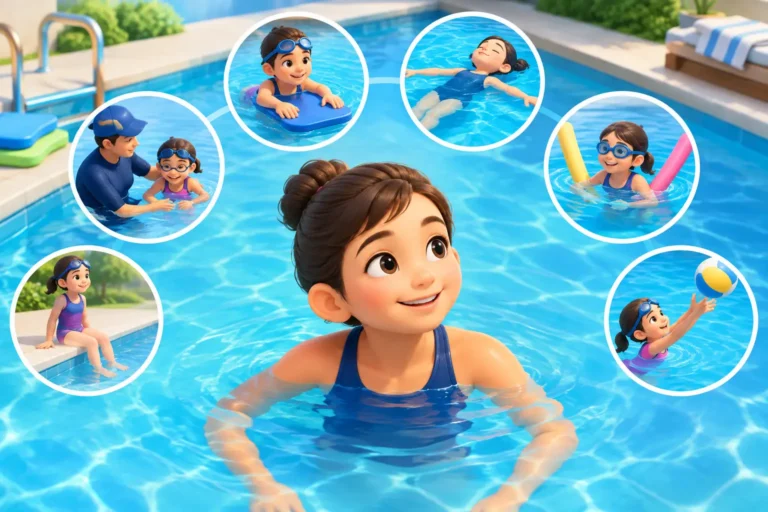
Safe entry, resurfacing, and orientation
Children learn to enter the water with awareness of depth, surrounding swimmers, and pool rules. They must become comfortable with the sensation of going under, resurfacing independently, and immediately orienting themselves toward a safe direction.
This skill matters because real-life water situations are rarely as neat as a practiced push-off from the wall. A confident swimmer knows what to do after entering the water: surface, breathe, stay calm, and begin the next required movement. Coaches should correct rushed entries, closed eyes, and wild arm movements early, as these habits make it harder for children to regain control.
Floating, sculling, and body control
A stable float is one of the clearest indicators that a child trusts the water. Stage Two swimmers work on maintaining a relaxed floating position and recovering to a safe standing or swimming position. They also develop sculling actions, using their hands and forearms to create support and maintain balance.
Sculling can look simple from the pool deck, but it requires timing and feel. Children who press downward too hard often sink or tense up. Children who use small, controlled hand movements start to understand that water can support them when their body remains calm and balanced.
This is particularly helpful for smaller swimmers or children who are nervous in deeper water. They do not need to be the fastest in class. They need to know they can pause, float, and regain confidence before continuing.
Treading water for survival
Treading water teaches children to stay vertical and keep their airway clear without relying on the pool wall. It develops leg coordination, arm control, and composure under mild fatigue.
At first, many children cycle their legs quickly and tire within seconds. Effective instruction helps them use a more controlled kicking pattern, relaxed sculling hands, and an upright head position. The aim is sustainable movement, not frantic movement.
Treading water is a key survival skill because it gives a swimmer time to look around, call for help, or decide where to move next. It also builds the confidence needed for deeper-water activities and later lifesaving-oriented training.
Stronger propulsion and recognizable strokes
At Stage Two, children should begin showing more consistent stroke actions rather than relying on an unstructured dog paddle. Training commonly focuses on coordinated kicking, arm recovery, breathing control, and a streamlined body position.
The most useful improvement is usually not a harder kick. It is better alignment. When a swimmer keeps their head too high, their hips drop and every stroke becomes harder. When they learn to look down, extend forward, and breathe without lifting the whole head, they conserve energy and travel more efficiently.
Children develop at different rates here. One child may have excellent confidence but weak coordination. Another may have neat stroke technique but hesitate when asked to swim farther from the wall. Both need targeted practice. A structured class should identify the limiting skill rather than treating every swimmer as if they need the same correction.
Underwater confidence and controlled breathing
Stage Two requires swimmers to be more comfortable with submersion and breath control. This supports safe entries, stroke development, and recovery after an unexpected splash or loss of balance.
The focus should never be on forcing a fearful child underwater. Instead, coaches build tolerance gradually through bubbles, face immersion, short glides, and simple underwater movement. Children gain confidence when they understand that they can control their exhale and choose when to surface.
A child who holds their breath tightly may look calm but often becomes tense and fatigued quickly. Learning to release bubbles steadily is a small technical change with a major effect on confidence and swimming rhythm.
Swimming with purpose, not just speed
Stage Two swimmers are expected to sustain movement with more independence. This involves swimming a required distance or sequence while maintaining reasonable technique and awareness.
Parents sometimes focus only on whether their child can finish. Finishing matters, but how the child finishes matters too. If they reach the wall exhausted, swallowing water, or relying on repeated pauses, they may need more conditioning and technical work before they are truly ready.
A well-prepared swimmer completes the task with enough control to follow instructions, recover safely, and exit properly. That is a more meaningful measure of water readiness than speed alone.
How Structured Lessons Build Assessment Readiness
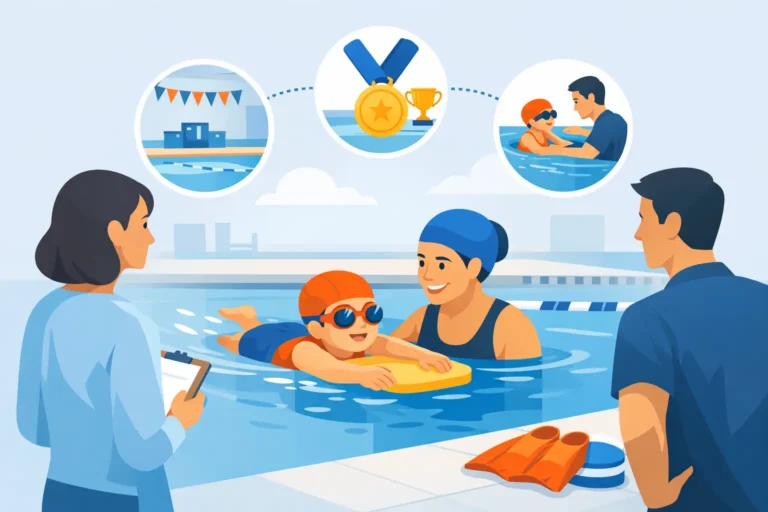
Assessment readiness comes from progressive practice. Coaches typically begin by isolating each skill, then combine skills into sequences that resemble the demands of a practical test. For example, a child may first practice floating separately, then practice floating after entering the water, and later add swimming and exiting safely.
This approach reveals weaknesses that ordinary lap practice can hide. A swimmer might perform a good back float when rested but lose balance after a jump entry. Another might swim confidently but forget to look for a safe exit point. Practicing transitions prepares children to respond, not simply recite a routine.
At AQZOG, Stage Two preparation can include technique correction, water survival drills, and mock practical test practice so families can see whether a child is ready or needs more development. Mock practice should be used to reduce uncertainty, not to pressure children. When children know what to expect, they can focus on performing the skills they have already learned.
What Parents Can Reinforce Outside Class
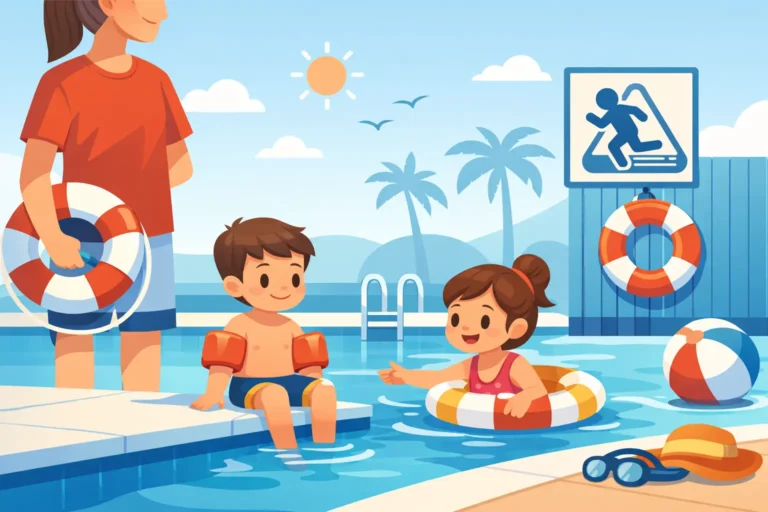
Parents do not need to become swim coaches. The most helpful support is consistent, calm reinforcement of pool safety habits. Remind children to wait for permission before entering, check where the deeper water begins, avoid rough play near the edge, and tell an adult when they feel tired or uncomfortable.
During family pool time, encourage them to show a relaxed float, a controlled kick, or a short swim with their face in the water. Keep practice light and supervised. Avoid asking a child to repeat difficult skills until they are distressed, especially if they are still building confidence with submersion or deeper water.
Regular attendance is usually more valuable than occasional long practice sessions. Swimming coordination develops through frequent repetition, and missed lessons can interrupt the gradual confidence-building that Stage Two requires.
Signs Your Child Is Ready to Progress
A child is generally moving toward Stage Two readiness when they can follow pool instructions promptly, enter and resurface without distress, float or tread with growing control, and swim independently with a recognizable stroke pattern. They should also show that they understand basic water safety, including when to ask for help.
Readiness is not identical for every child. Some need more time to develop stamina, while others need reassurance in deeper water. Extra practice is not a setback. It is the right choice when it gives a child stronger habits instead of a rushed pass.
The best next lesson is the one that leaves your child more capable than before: calmer after entering the water, more controlled while moving through it, and more certain of what to do when they need to keep themselves safe.