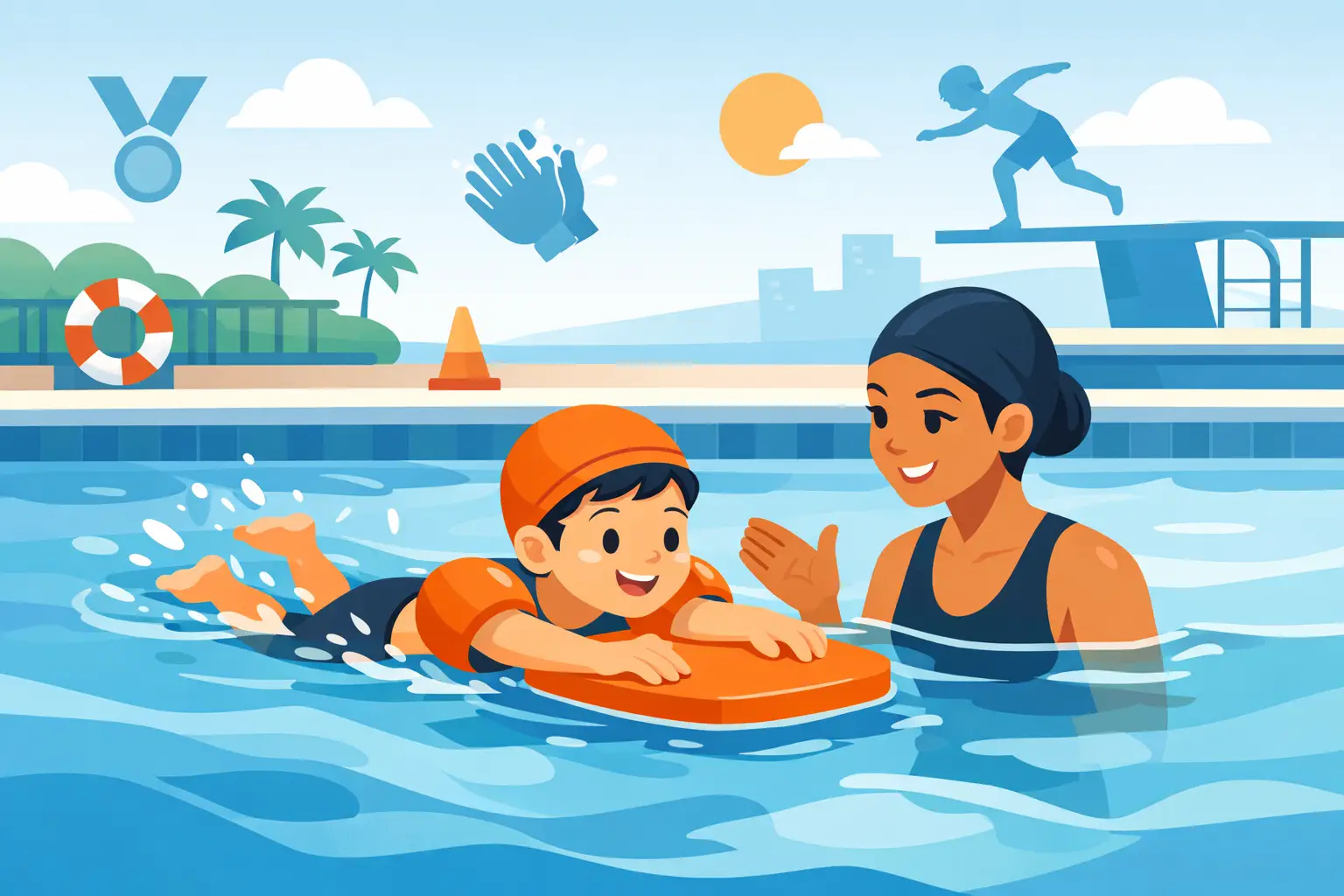
How to Pass SwimSafer Stage 1 With Confidence
A child who can move comfortably across a pool but freezes when asked to float on their back may not be ready for assessment yet. Knowing how to pass SwimSafer Stage 1 is not about rushing through a checklist. It is about helping a beginner become calm, responsive, and safe in the water before test day.
For many children, Stage 1 is their first formal swimming certification. Parents naturally want to see a pass, but the more valuable outcome is a child who understands basic water rules, can regain composure in the water, and has the confidence to attempt new skills independently. With structured coaching and consistent practice, these foundations can develop quickly.
What SwimSafer Stage 1 Is Designed to Build
SwimSafer Stage 1 is an entry-level water safety and swimming program for beginners. It introduces essential skills such as safe pool behavior, water entry and exit, submersion, floating, and basic movement through the water. The assessment is not intended to reward speed or a perfect-looking stroke. It checks whether the learner can perform essential skills safely and with enough control for the next stage of progression.
This distinction matters. A child may be energetic, love splashing, and still need more practice before assessment. Another child may be quiet or cautious but ready because they can listen to instructions, relax their body, and complete each task without panic. Readiness is measured by safe execution, not personality.
Assessment requirements can be updated or administered slightly differently depending on the current SwimSafer framework and assessor instructions. Your child’s coach should prepare them according to the current requirements rather than relying on an old checklist or a friend’s experience.
How to Pass SwimSafer Stage 1: Train the Core Skills
The strongest preparation happens in regular lessons, where skills are introduced in a logical order and repeated until they feel familiar. Children who only practice a few days before assessment often remember the actions but lack the calmness to perform them independently.
Practice safe entries and exits every lesson
Safe entry and exit are basic but meaningful skills. Your child should know where to enter, how to hold the pool edge when instructed, and how to leave the pool without scrambling or turning away from the wall. The goal is controlled movement, not jumping far or making a big splash.
At this stage, children should also learn that they enter the water only when permitted, check that the area is clear, and avoid pushing or playing roughly near the pool edge. These behaviors are part of water safety, not separate classroom rules.
Build comfort with putting the face in water
Submersion is often the skill that determines whether a beginner progresses smoothly. A child who holds their breath, squeezes their eyes shut, or immediately stands up may need more confidence-building before assessment.
Start with short, positive repetitions. Blowing bubbles with the mouth and nose helps children understand how to control breathing. From there, they can gradually place their face in the water, retrieve an object, or submerge briefly while holding a trusted coach’s hands. Avoid forcing a fearful child underwater. Pressure can create a longer-term fear that slows future progress.
A good sign of readiness is when your child can submerge after a clear instruction and return to the surface calmly. They do not need to enjoy every attempt, but they should be able to do it without distress.
Make front and back floating feel safe
Floating teaches a child that water can support their body. It is also one of the most useful survival foundations they will carry into later SwimSafer stages.
For a front float, children need a relaxed body position, face in the water when required, and arms and legs extended with minimal tension. For a back float, the challenge is usually trust. Many beginners lift their head, bend at the waist, or cycle their legs because they are worried about water reaching their ears or face.
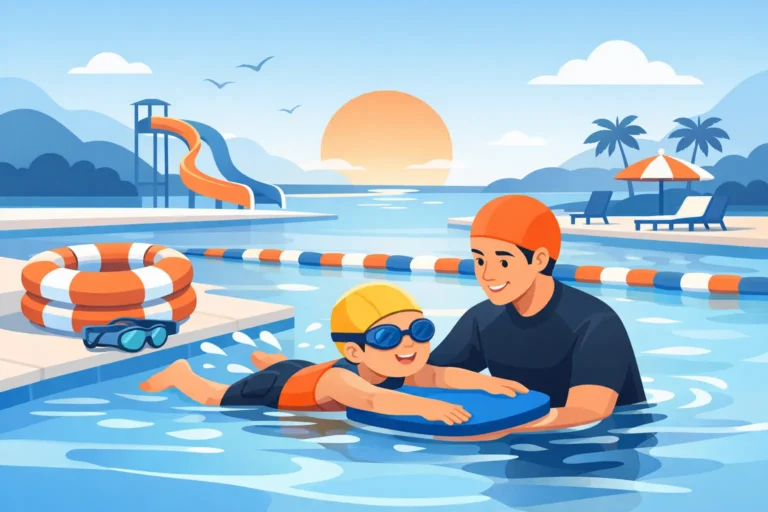
Coaches typically build this skill with gradual support, then reduce support as the child gains control. Parents can help by using reassuring language: “Look up, keep your tummy high, and let the water hold you.” Avoid telling a child to “don’t sink,” as this can increase tension. A relaxed swimmer floats better than a frightened swimmer trying hard to stay up.
Develop a short, controlled swim or glide
Stage 1 movement tasks are designed for beginners, so efficient freestyle technique is not the expectation. What matters is that the child can travel through the water with purpose, using an appropriate assisted or unassisted movement as required by the assessment.
A child should practice moving away from a wall, keeping the body long, and reaching a target without stopping halfway to stand. Kicking with straight but relaxed legs, looking down or up according to the skill, and continuing to the end are more useful than fast, rushed movements.
If your child can complete a distance during class but only when a coach stays directly beside them, ask whether they are ready to perform it independently. A small amount of encouragement is normal. Constant physical support is a signal that more practice is needed.
Prepare for Water Safety Questions and Instructions
Stage 1 involves more than physical tasks. Learners are expected to show basic awareness of safe behavior around water and to follow instructions. This may include understanding why they should not run near the pool, why they should ask permission before entering, and what to do if they feel tired or uncomfortable.
At home, keep the conversation simple. Ask questions during everyday routines: “What do we do before getting into a pool?” or “Should we push someone near water?” Short, repeated discussions help children answer naturally rather than memorize complicated wording.
Listening skills also matter on assessment day. Teach your child to stop, look at the instructor, and wait for the full instruction before starting. Children sometimes know the skill but lose marks or become unsettled because they begin too early, copy another swimmer, or do a different task than requested.
The Best Way to Prepare in the Week Before Assessment
The final week is for consistency, not cramming. Continue normal lessons and allow the coach to identify any skill that needs extra attention. If a child has been practicing regularly, one or two focused sessions may be enough to refresh confidence. If they are still fearful of submersion or unable to float without support, delaying the assessment may be the safer and more productive decision.
Help your child arrive rested, hydrated, and early enough to settle in. Choose goggles that fit well if goggles are part of their usual training, but do not introduce unfamiliar equipment on the day. A leaking or overly tight pair of goggles can distract a beginner who is already nervous.
Keep your language calm. Rather than saying, “You must pass,” try, “Show your coach what you have practiced.” This shifts the focus from pressure to performance. Children often respond better when they see assessment as a chance to demonstrate progress, not a high-stakes event.
Common Reasons Children Need More Time
Needing more time at Stage 1 is common and should not be treated as failure. The most frequent barriers are fear of putting the face in water, difficulty relaxing during floating, inconsistent attendance, and limited ability to follow multi-step instructions.
Some children need a slower introduction because of a previous negative water experience. Others simply need more repetition before their movements become automatic. In either case, a structured class with a qualified coach is more effective than repeatedly asking the child to “be brave.” Confidence grows when children experience small, repeatable successes.
Private coaching can be useful for learners with significant water fear or a specific skill gap, while group lessons often help children build independence by observing peers. The right format depends on the child’s temperament, current ability, and timeline for certification.
Give Progress the Time It Needs
AQZOG prepares beginners through structured SwimSafer training that develops water confidence, safety awareness, and test readiness step by step. The aim is not simply to get a certificate quickly, but to ensure every child has the control and confidence needed to progress safely.
A Stage 1 pass is a meaningful first achievement. More importantly, it gives your child a dependable starting point for every future swimming and water safety skill they learn.