Sequence in Swimming: Does It Matter for Safety?
A child can kick confidently with a board and still be unready to swim safely in deep water. An adult can learn freestyle quickly but struggle to recover after an unexpected gulp of water. That is why the question, “sequence in swimming, does it matter?” has a clear answer: yes. The order in which skills are taught affects safety, confidence, technique, and long-term progress.
Swimming is not simply a collection of strokes. It is a chain of decisions and physical responses: enter safely, control breathing, float, move, change direction, rest, and exit the water. When learners skip key foundations, they may look capable in a familiar pool setting but lack the control needed when conditions change.
Why Sequence in Swimming Matters
A structured sequence gives each new skill a secure base. Before a learner is asked to coordinate arms, legs, and side breathing, they need to be comfortable placing their face in the water, exhaling steadily, and recovering to a stable float. Before they practice distance swimming, they need to know how to rest, orient themselves, and return to safety.
This order matters because swimming places several demands on the body at once. A beginner who is still anxious about submerging their face cannot fully focus on body position. A swimmer who holds their breath will usually tense their neck and shoulders, disrupting balance and making efficient movement much harder. Trying to correct every issue at once can create frustration rather than progress.
For children, sequence also shapes confidence. Small, visible achievements – blowing bubbles, floating independently, gliding a short distance, then turning back to the wall – show them that water is manageable. Each success earns the next challenge. This is far more effective than pushing a child into a stroke before they have learned how to regain control.
For adults with water fear, the need for sequence is even more pronounced. An adult may understand instructions intellectually but still react physically to water with panic, breath-holding, or stiffness. Patient water familiarization and recovery skills come before stroke refinement. Progress is still possible, but it must be built on control, not pressure.
The Safe Learning Order for New Swimmers
The exact lesson plan should reflect age, ability, confidence, and goals. A toddler’s introduction to water will not look like an adult beginner program, and a swimmer preparing for a formal assessment needs specific test practice. Yet the core progression remains consistent.
Water Familiarization Comes First
New swimmers first learn how water feels. This includes safe pool behavior, holding the wall, entering and exiting appropriately, splashing, putting the face in the water, and blowing bubbles. These activities may appear simple, but they establish trust and breathing control.
A learner who can calmly submerge, open their eyes when appropriate, and exhale underwater is better prepared to listen, move, and recover. For young children, this stage should be encouraging and unhurried. Confidence cannot be rushed, but it can be developed through consistent exposure and clear coaching.
Floating and Recovery Build Independence
The next priority is buoyancy and recovery. Learners practice front and back floats, body rotation, and returning to a standing position or the pool wall. They learn that they do not need to fight the water to stay supported.
This is a critical safety stage. If a swimmer unexpectedly loses their footing, they need an automatic response: relax enough to float, orient themselves, and move toward support. A child who can recover calmly from a front float to a back float has learned more than a drill. They have gained a practical survival skill.
Propulsion Follows Body Control
Once floating and breathing are more reliable, swimmers can develop kicking, gliding, and basic arm actions. Coaches should focus on a long, balanced body position before chasing speed. Fast kicking with dropped hips or a lifted head uses unnecessary energy and often reinforces poor habits.
At this point, short distances are useful. A swimmer can repeat a focused movement several times without becoming exhausted or losing technique. The goal is not to complete a full pool length as quickly as possible. The goal is to make controlled movement repeatable.
Stroke Coordination Comes After the Basics
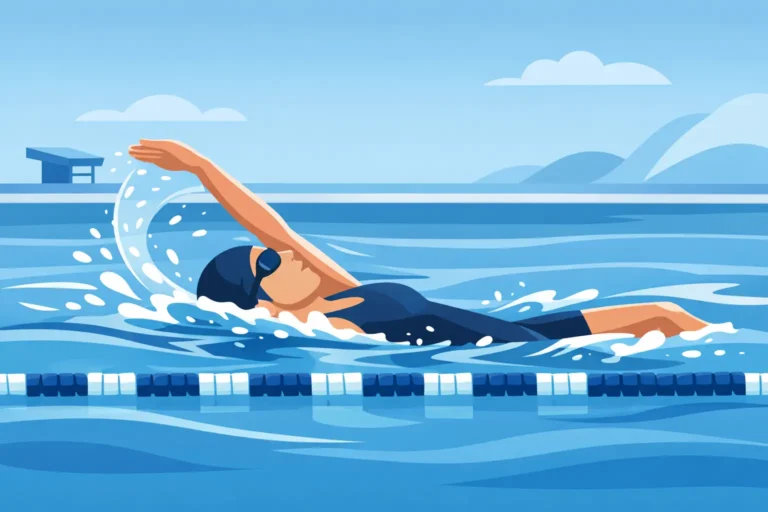
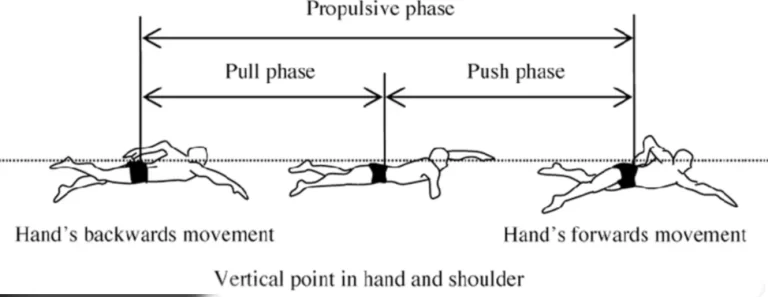
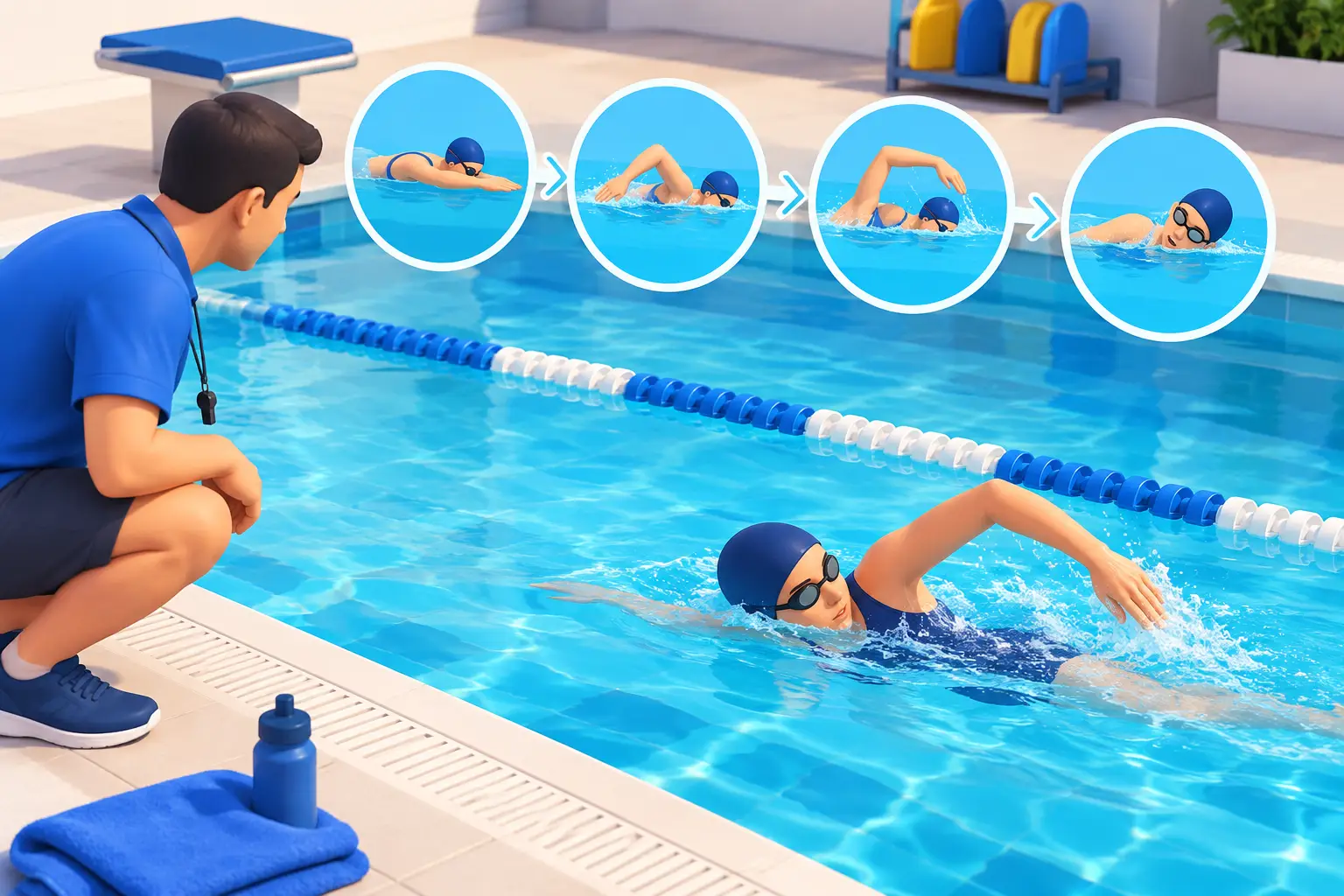
Freestyle, backstroke, breaststroke, and butterfly all require timing. Freestyle, for example, combines a stable body line, alternating arm action, steady kicking, and breathing without lifting the head. When the foundations are missing, learners often compensate by stopping, grabbing for the wall, or forcing their head upward for air.
A good progression breaks the stroke into manageable parts, then reconnects them. The swimmer learns what proper movement feels like before adding more distance or speed. This approach may seem slower in the first few lessons, but it usually prevents lengthy corrections later.
Survival Skills Must Stay Part of the Sequence
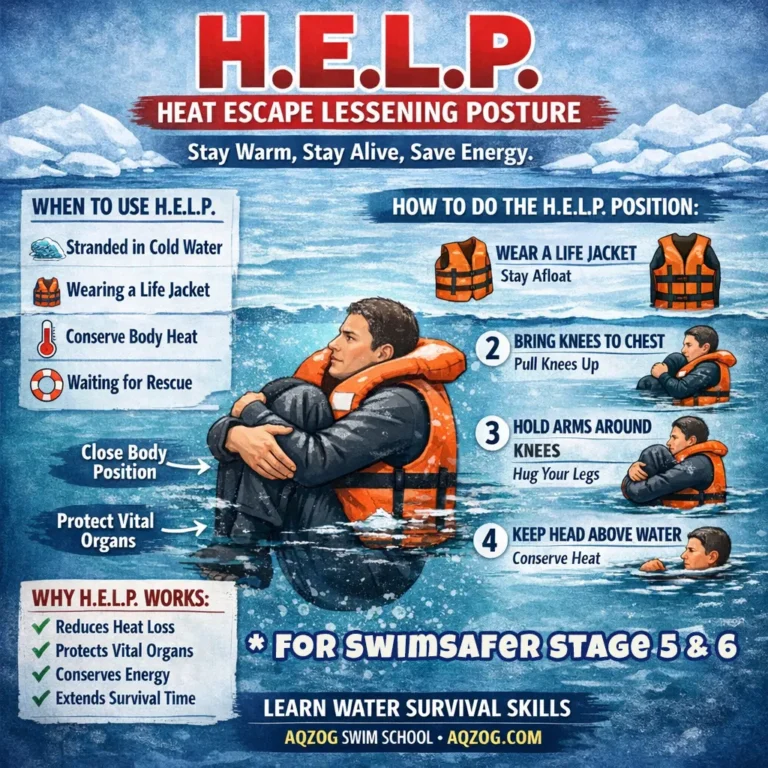
Stroke development should never replace water survival training. Learners need opportunities to practice floating, treading water, changing direction, swimming to a designated point, and exiting the pool safely. They should also understand basic rules around supervision, depth, pool edges, and responding calmly when tired.
For children working toward SwimSafer progression, these skills are not extras. They are central to certification readiness and real-world safety. Assessment preparation is strongest when skills have been developed progressively throughout lessons, not drilled only in the weeks before a test.
What Happens When Skills Are Taught Out of Order?
Skipping ahead can produce quick short-term results, especially when a learner is eager to swim independently. A child may manage a few strokes across shallow water. An adult may complete a lap using determination and fitness. But speed without control can hide gaps.
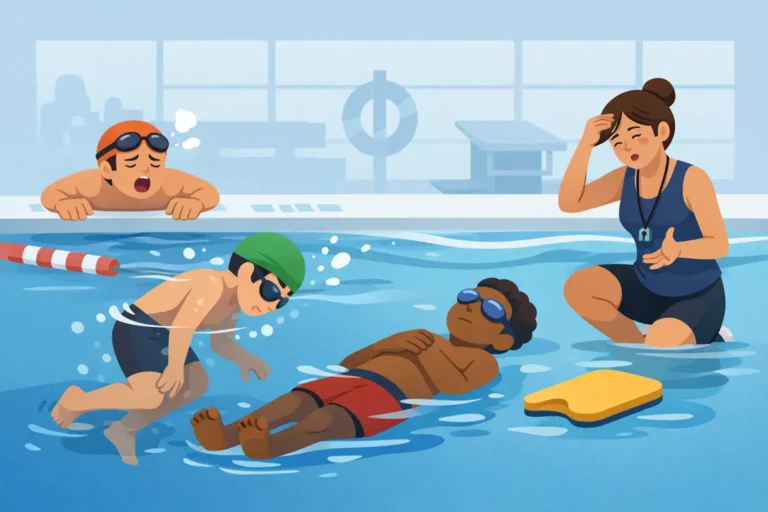
Common signs of rushed progression include breath-holding, panic when water reaches the face, a swimmer who cannot float without kicking, poor recovery after stopping, or a strong dependence on goggles, flotation devices, or the pool wall. None of these automatically means the learner has failed. They simply indicate that a foundational skill needs attention.
There are also technical consequences. Poor breathing patterns can lead to strained necks and inefficient freestyle. Weak body alignment can make breaststroke tiring. A learner who has not developed water awareness may be able to perform a stroke in a lane but feel lost in deeper water or during a formal practical test.
The answer is rarely to push harder. It is to return to the missing link, practice it deliberately, and then rebuild forward. Structured progression is flexible enough to revisit earlier skills without treating that step as a setback.
Does Every Swimmer Need the Same Sequence?
No. Sequence matters, but every swimmer does not move through it at the same pace. A confident seven-year-old may progress quickly through water familiarization but need extra time on breathing. A toddler may spend longer building comfort and independence. A fit adult may develop propulsion rapidly while needing more practice to relax and float.
Goals also change the emphasis. A competitive swimmer needs refined technique, pace control, and race-specific skills. A triathlon learner needs open-water awareness and sustained efficiency. A SwimSafer candidate needs reliable completion of required practical and theory components. Still, none of these pathways should ignore the fundamentals of breathing, balance, recovery, and safety.
Experienced coaching makes the difference. Rather than applying one fixed timetable, a coach observes what the swimmer can do consistently, identifies what limits the next step, and sets a practical target. At AQZOG, this progression-led approach supports learners from early water introduction through structured SwimSafer preparation, stroke improvement, and lifesaving-oriented development.
How Parents Can Support the Right Progression
Parents do not need to coach strokes from the poolside. Their most valuable role is to reinforce calm, consistency, and realistic expectations. Celebrate the skills that may not look dramatic: a child who puts their face in willingly, floats for a few seconds, or returns safely to the wall is making meaningful progress.
Avoid comparing children by age, speed, or the distance they can cover. A swimmer who completes a length with calm breathing and stable technique is often further along than one who rushes through it while distressed. Regular lessons, clear goals, and enough time to repeat skills create better results than occasional intense practice.
If your child is approaching an assessment, ask whether they can perform each requirement independently and consistently, not just once. Test readiness is built through understanding and reliable execution. Mock practices are useful because they reveal whether a swimmer can apply skills in sequence without constant prompting.
The best next step is not always the fastest stroke or the deepest pool. It is the skill that gives the swimmer more control. When lessons follow that principle, confidence becomes real, safety becomes practical, and every new distance has a stronger foundation behind it.