Flotation Aids Safety for Confident Young Swimmers
A child who happily kicks across a pool wearing arm floaties can look more capable than they are. Remove the aid, and their body position, breathing, and confidence may change immediately. That gap is the central issue in flotation aids safety: these products can support supervised water play and early learning, but they cannot replace swimming ability, close adult supervision, or water survival training.
For parents, the goal is not to avoid every flotation aid. It is to use the right aid for the right situation, understand its limits, and help children progress beyond dependence on buoyancy.
What Flotation Aids Can and Cannot Do
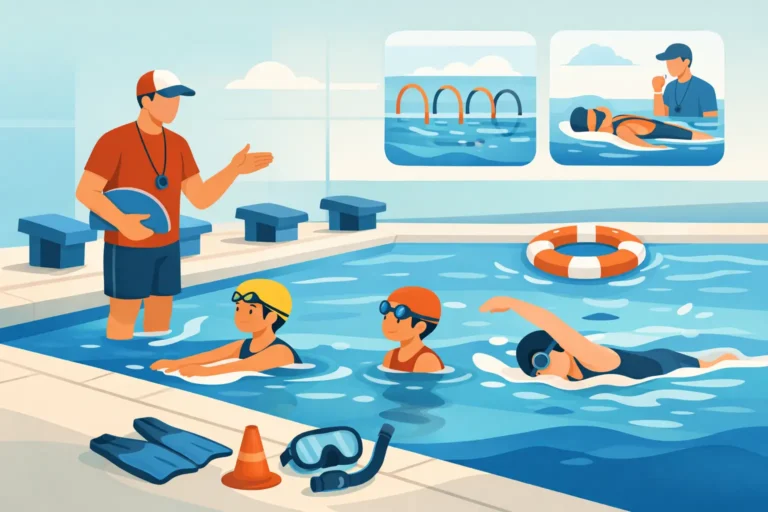
Flotation aids add buoyancy, helping a child stay closer to the surface while they move, kick, or become familiar with the water. In a lesson setting, a coach may use a noodle, kickboard, belt, or other training equipment for a specific drill. The equipment gives the child time to focus on one skill, such as straight-leg kicking or blowing bubbles, before combining it with other movements.
That is very different from treating a flotation device as a safety system. Most recreational aids are not designed to turn an unconscious child face-up, keep the airway clear, or protect a child who is separated from an adult. They also do not teach a child how to recover after slipping into water unexpectedly.
A properly fitted, approved life jacket has a separate role. It is intended for boating, open water, docks, and situations where swimming ability may not be enough. Even then, it is not a substitute for supervision. The child must still be within close, active reach of a responsible adult.
The Flotation Aids Safety Problem Parents Often Miss
The concern is not simply whether an aid floats. It is what the aid teaches the child’s body to expect.
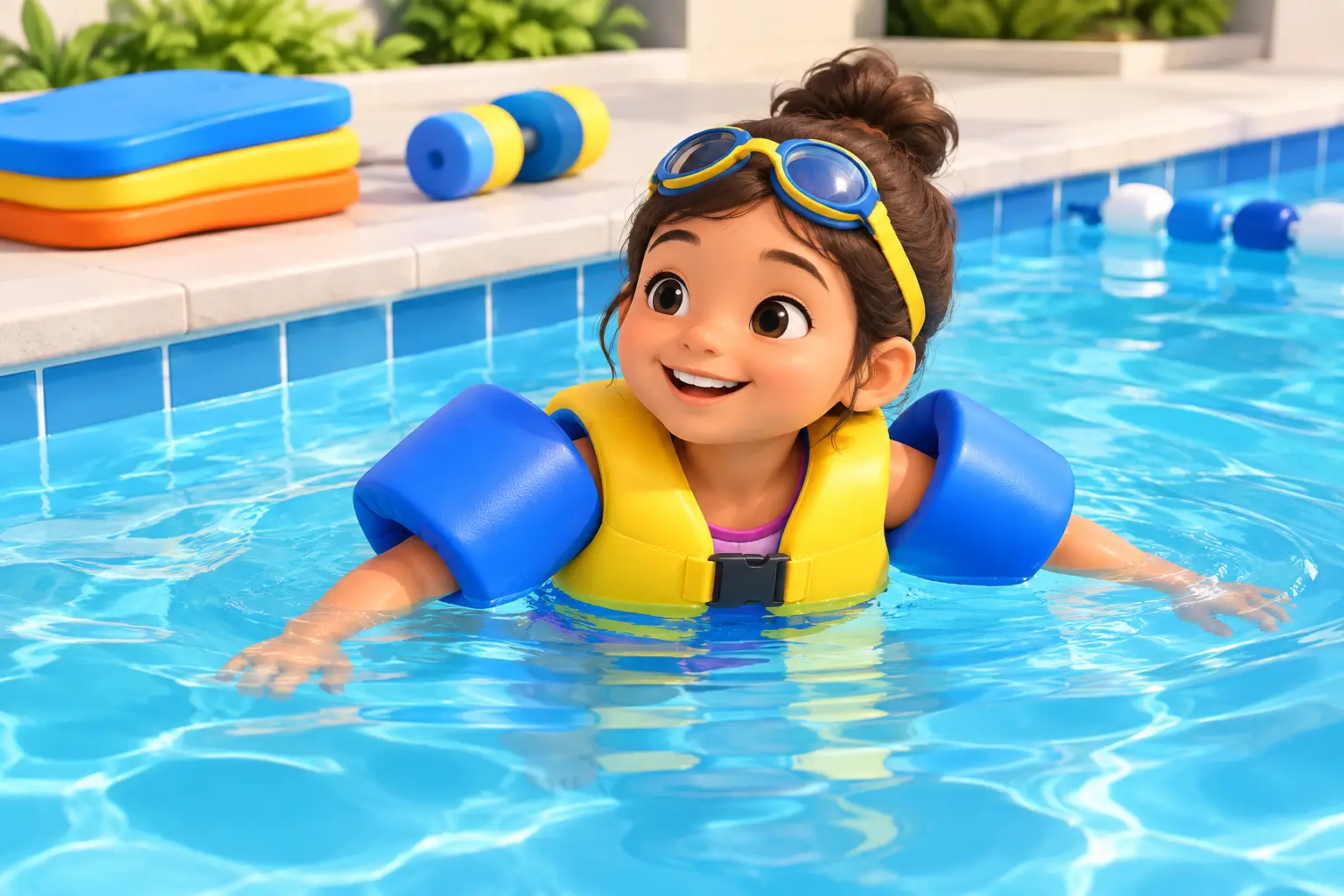
Arm floaties, puddle jumpers, and some buoyancy suits can hold a child in a more upright position. An upright position may feel secure, but efficient swimming requires a more horizontal body line, relaxed breathing, and the ability to move forward without relying on the arms being held at the surface. A child who is used to being supported high in the water may struggle to float independently, roll onto their back, or place their face in the water calmly.
There is also a confidence issue. Children can begin to believe they can swim because they can travel across a pool while wearing a device. Parents may understandably read that movement as progress. Real progress is different: the child can enter safely, regain the surface, float or tread water, move to a safe point, and exit with control.
This does not mean flotation aids are harmful in every circumstance. It means they must be introduced honestly. Tell children, in simple language, that the aid helps them float and that they still need an adult nearby. Avoid saying, “You can swim now,” when the device is doing most of the work.
Match the Aid to the Activity
The best choice depends on where the child is swimming, how close the supervising adult is, and what skill is being practiced.
For a boat ride, a dock, or open water, use a properly sized life jacket approved for that purpose. Check the weight range, buckles, straps, and fit each time. A life jacket that rides up around the child’s ears or allows them to slip out is not providing reliable protection. Children should practice wearing it in the water before an outing, because the sensation of floating in a life jacket can be unfamiliar.
For a shallow, closely supervised pool session, simple tools such as noodles or boards can be useful for short, coach-led activities. They are learning tools, not personal flotation devices. They should be removed when the drill is complete so the swimmer also practices unsupported skills.
For casual pool play, wearable aids may offer temporary support, but they require extra care. They can create a false sense of security, restrict natural arm movement, and make some children reluctant to try independent floating. If an aid is used, stay within arm’s reach and build regular device-free practice into the session.
Inflatable toys, loungers, and rafts should never be viewed as safety equipment. They can tip, drift, deflate, or encourage children to venture farther from the edge than they can manage alone.
Supervision Is the Safety Layer That Does Not Change
No product can watch a child. At pools, beaches, and water parks, active supervision means an adult is present, attentive, and ready to respond. It does not mean checking from a lounge chair, relying on an older sibling, or assuming a lifeguard is responsible for one child’s every movement.
For young children and weak swimmers, the supervising adult should stay in the water or at the edge within immediate reach. Put away phones, avoid long conversations, and designate one adult as the water watcher when several adults are present. Children can become distressed quietly, especially when their face is in the water or when they are trying not to panic.
This standard also applies during swim lessons. A qualified instructor creates a controlled learning environment, but parents should still follow pool rules, communicate medical or confidence concerns, and ensure children understand what to do if they feel tired, cold, or frightened.
Build Skills That Work Without Equipment
The strongest path to water confidence is structured progression. Instead of measuring success by how far a child travels with floaties, measure the skills they can perform independently and consistently.
Early learners should become comfortable entering and exiting safely, getting their face wet, exhaling into the water, and returning to the wall. As confidence grows, they can learn front and back floating, rolling from front to back, gliding, kicking with a horizontal body position, and short-distance swimming without support.
Water survival skills matter just as much as strokes. A child who unexpectedly enters the water may need to turn around, find the wall, float to rest, or call for help. These are practical skills that should be practiced repeatedly in age-appropriate ways, not reserved for advanced swimmers.
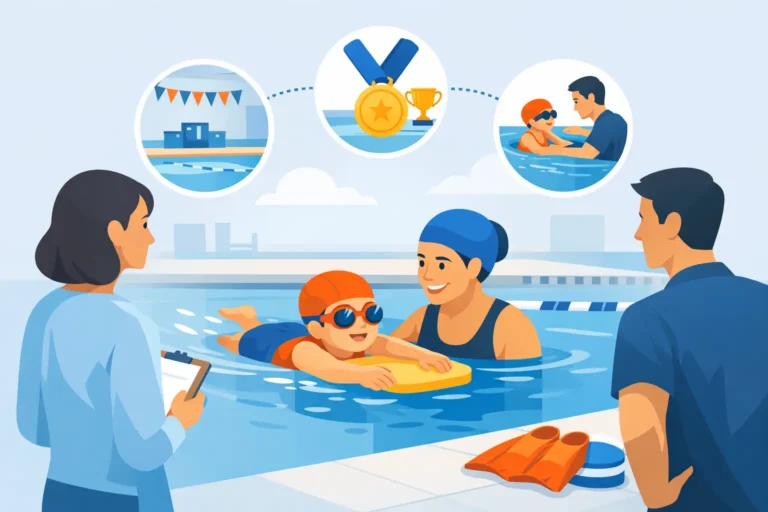
For school-age children, formal progression provides useful benchmarks. A structured program can assess whether a swimmer can complete skills with control under instruction rather than only when holding a float or following another child. That makes lessons more than a weekly activity. They become preparation for real pool, beach, and water-safety situations.
At AQZOG, this progression-focused approach places water confidence and survival skills alongside stroke development. Children are encouraged to use equipment as a learning tool when appropriate, then steadily reduce support as their balance, breathing, and independence improve.
When a Child Is Afraid to Swim Without Floaties
Some children resist removing flotation aids because the device has become their security blanket. Forcing an abrupt change can increase fear, so the better approach is gradual and guided.
Start in shallow water with close support. Let the child practice putting their face in, blowing bubbles, and floating on their back while an adult or coach supports them lightly. Then reduce contact for a few seconds at a time. A child who learns, “I can float for three seconds,” has gained a real foundation that can grow into five seconds, then ten.
Keep the language calm and specific. Praise actions rather than labels: “You kept your body long,” “You rolled onto your back,” or “You reached the wall by yourself.” This builds confidence based on skills, not on the feeling of being held up by equipment.
If fear remains intense, private or small-group instruction can help. The child may need more repetition, a quieter setting, or a coach who can adjust the pace without pressure. Fast results do not come from rushing. They come from practicing the right skill at the right stage.
A Better Question Than “Do They Need Floaties?”
Ask what your child needs to do safely in the water today. If the answer is stay protected during a boat trip, choose a correctly fitted life jacket. If the answer is learn to kick in a lesson, a coach may use a training aid briefly. If the answer is play in the pool, provide active supervision and opportunities to practice without wearable buoyancy.
The confidence parents want is not confidence borrowed from a device. It is the quiet, repeatable confidence of a child who knows how to float, breathe, move, recover, and reach safety when support is removed.