How to Break Through an Adult Swimming Plateau
You can swim several laps without stopping, yet your pace has not changed for months. Or perhaps freestyle still feels exhausting despite regular pool time. An adult swimming plateau is frustrating because effort is present, but measurable improvement is not. The answer is rarely to simply swim more. Most plateaus come from a specific technical, breathing, confidence, or training gap that needs a clear correction.
For adult learners, this matters beyond lap speed. Better technique reduces fatigue, supports water safety, and gives you the confidence to swim in deeper water, train for an event, or progress toward a personal goal without feeling stuck.
Why an Adult Swimming Plateau Happens
Swimming is a highly technical movement skill. Small errors in body position, timing, or breathing create resistance in the water. A swimmer may work harder to compensate, but extra effort can reinforce the same inefficient habit.
A plateau often appears after the beginner stage. You have learned how to float, kick, breathe, and move across the pool. At this point, basic survival skills are no longer the main challenge. The next gains require greater precision: a balanced body line, a relaxed recovery, an effective catch, and breathing that does not interrupt the stroke.
Adults also bring different barriers to the pool than children. Some have a long-standing fear of deep water. Others train around work, family, and limited pool access, so each session needs to count. Fitness may be improving while technique stays unchanged. In that case, the swimmer can complete more laps but still feels breathless and slow.
Start With a Clear Diagnosis
Before changing your training plan, identify what is actually holding you back. A plateau is not one problem with one solution. A swimmer who drops their hips needs a different correction from someone who lifts their head to breathe or crosses one arm over the centerline.
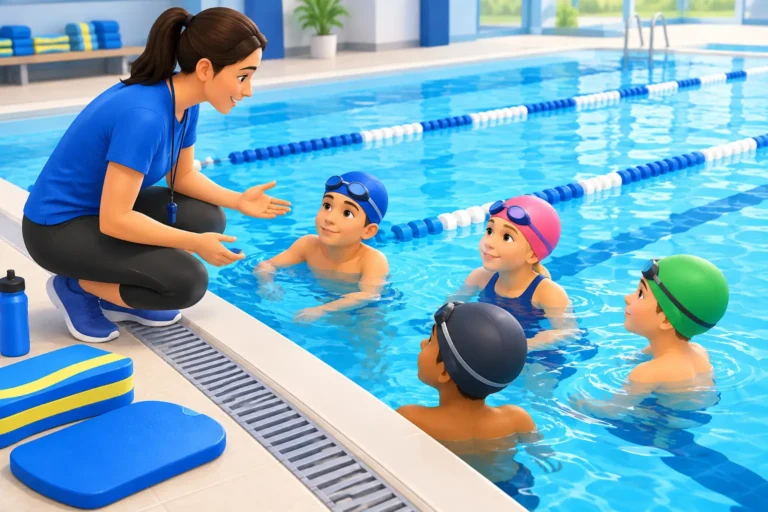
A qualified coach can observe the full stroke from poolside and, where appropriate, use video feedback to identify patterns that are hard to feel while swimming. This is especially valuable for adults who learned through self-practice, online videos, or occasional recreational swimming. You may know that something feels wrong, but not know which movement is causing it.
Check Body Position First
The water rewards balance. When the head is lifted too high, the hips and legs often sink. This increases drag immediately, making every stroke harder. Many adult swimmers respond by kicking harder, which raises fatigue without solving the cause.
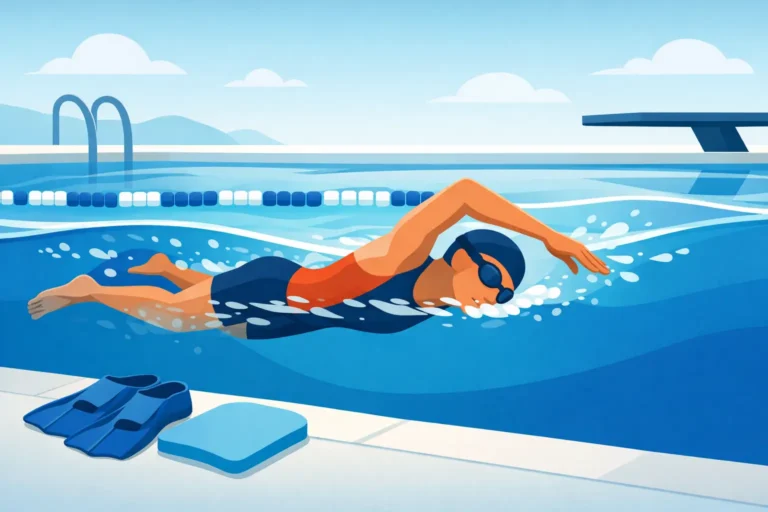
Aim for a long, supported body line. Look down and slightly forward rather than toward the far wall. Keep the neck relaxed, press the chest gently into the water, and allow the legs to follow near the surface. The goal is not to force the body flat, but to create a stable position from which the arms and kick can work efficiently.
Fix Breathing Before Adding Distance
Breathing is one of the most common reasons swimmers stop progressing. Holding the breath underwater creates tension and makes the next inhale rushed. Lifting the head forward to breathe disrupts alignment and may cause the legs to drop.
Practice a continuous, relaxed exhale into the water. When it is time to breathe, rotate with the body and take a quick breath to the side. One goggle should remain in the water. If side breathing still feels uncomfortable, reduce the distance and work on controlled drills rather than pushing through long, stressful laps.
For swimmers with water anxiety, this step must be taught progressively. Confidence comes from repeatable control, not from being forced into deeper water before you are ready.
Improve the Catch, Not Just the Arm Turnover
Fast arm turnover can look like hard work, but it does not always create forward movement. If the hand slips through the water without gaining purchase, you will expend energy with little return.
After the hand enters, extend with control and set the forearm so it can press water backward. Avoid pulling straight down or bending the elbow too early. A stronger catch should feel connected through the hand, forearm, shoulder, and core. It takes practice, and it should be built gradually to avoid shoulder strain.
Train With a Purpose for Each Session
Swimming the same comfortable distance at the same pace is useful for general fitness, but it may not move you beyond a plateau. A productive program gives each session one primary purpose: technique, aerobic endurance, speed, or confidence in a specific skill.
Technique work should happen when you are fresh. Short repeats, focused drills, and rest between efforts allow you to notice changes in position and timing. Endurance work can follow once the stroke remains stable. If form collapses completely after a few laps, the distance may currently be too demanding for the skill level.
A balanced week for an adult swimmer might include one technique-focused session, one steady endurance session, and one session with shorter controlled intervals. The exact plan depends on your goal. A first-time lap swimmer needs consistent breathing and safe deep-water confidence. A triathlon trainee may need open-water awareness, pacing, and more efficient bilateral breathing. A swimmer preparing for a practical assessment needs reliable skills under test conditions.
Use Drills Carefully
Drills are useful only when they solve a known problem. Repeating a drill without understanding its purpose can become another habit that does not transfer to full stroke swimming.
For example, side-kicking practice can help a swimmer feel balance during breathing rotation. Catch-up swimming can encourage a longer line, but overdoing it may create an unrealistic pause in the stroke. Fist swimming can improve awareness of the forearm, but it is not a replacement for learning a correct catch.
Use a drill for a short distance, then immediately swim regular freestyle while applying one clear sensation from it. Ask yourself whether your body line stayed higher, your exhale felt calmer, or your pull held water more effectively. That connection is what makes drill work useful.
Do Not Ignore Strength, Mobility, and Recovery
Pool technique is the priority, but the body must be ready to perform it. Tight shoulders can limit a relaxed arm recovery. Poor ankle flexibility can reduce kick efficiency. Limited core control can make it difficult to hold a balanced position while breathing.
Simple dryland support can help: shoulder mobility, thoracic spine rotation, core stability, and light leg strength. The objective is not to build maximum gym strength. It is to give the swimmer enough movement quality and stability to maintain sound technique in the pool.
Recovery matters too. Adults often fit swimming around busy schedules and may try to make up for missed sessions with a single demanding workout. That approach can lead to sore shoulders, poor form, and lower confidence. Two or three consistent, purposeful sessions are usually more effective than irregular all-out efforts.
Set a Measurable Progress Marker
A plateau feels endless when progress is judged only by whether swimming feels easy. Use simple markers that match your current goal. You might track the number of lengths completed with continuous side breathing, the time needed to cover a set distance, the number of strokes per length, or the ability to maintain form in deep water.
Choose one marker at a time. If you try to improve speed, distance, breathing, kick, and stroke count in every session, it becomes difficult to see what is working. Small, visible gains build confidence and give your training direction.
At AQZOG, structured adult coaching focuses on this type of progression: identify the limiting skill, practice it with clear feedback, and then apply it in full swimming. Private or small-group instruction can be particularly effective when a swimmer has a specific fear, an upcoming assessment, or a performance goal that general lap swimming has not addressed.
When to Seek Coaching Instead of Pushing Harder
If you are consistently breathless after short distances, cannot breathe without stopping, experience shoulder pain, or feel unsafe in deeper water, do not simply add more laps. These are signs that focused instruction may be more valuable than more volume.
Coaching is also worthwhile when you have practiced regularly for several weeks without a change in pace or comfort. An experienced instructor can separate a fitness limitation from a technical limitation and give you corrections in the right order. That prevents the common cycle of trying harder, becoming more tired, and losing motivation.
Progress in swimming is rarely a straight line. The breakthrough often comes after one precise adjustment that makes the whole stroke feel lighter. Give yourself a clear skill target, practice it consistently, and let safer, more efficient movement become the foundation for every lap that follows.