Swimming Certification Versus Recreational Lessons
A child who happily splashes at a pool party may still freeze when asked to float without help, swim to a wall, or respond to an unexpected fall into water. That difference is at the heart of swimming certification versus recreational lessons. Both can make time in the water more enjoyable, but they are built for different outcomes: one prioritizes structured, assessed safety skills, while the other often prioritizes comfort, activity, and enjoyment.
For parents, the best choice is rarely about finding the hardest class or the quickest badge. It is about matching instruction to a swimmer’s current ability, water exposure, and long-term needs. For adult learners, the same principle applies. A relaxed weekly class can be the right first step, while a formal pathway may be essential for a career goal, school requirement, or lifesaving progression.
What recreational swim lessons are designed to do
Recreational lessons are usually designed to help swimmers become comfortable, active, and capable in the water. A beginner may learn to put their face in, blow bubbles, kick with support, and move a short distance. More confident swimmers may work on freestyle, backstroke, breaststroke, turns, or general stamina.
The strengths of recreational instruction are flexibility and enjoyment. The pace can be adjusted to the learner, and classes may emphasize stroke development, fitness, confidence, or simply building a positive relationship with water. This can be particularly valuable for toddlers, nervous beginners, and adults returning to swimming after many years.
However, recreational progress is not always tied to a common benchmark. A swimmer may move up when the coach sees consistent improvement, but there may be no practical assessment, theory component, or formal record of demonstrated water survival skills. That does not make the lesson ineffective. It simply means the outcome is skill development rather than certification.
What swimming certification adds
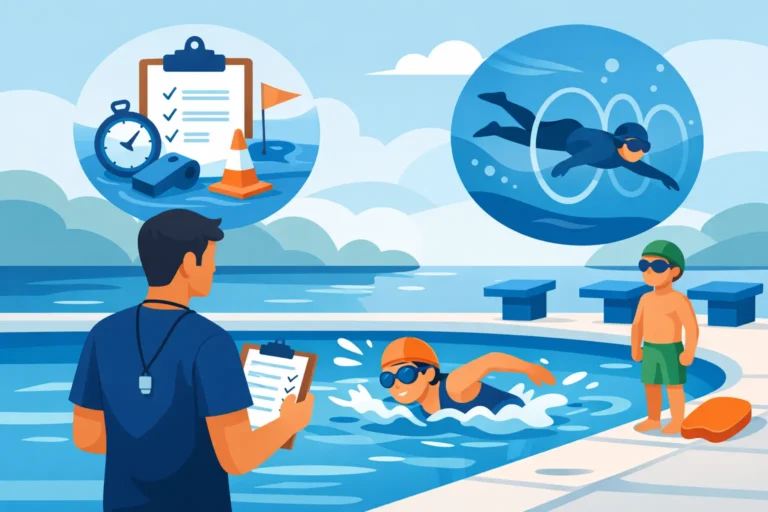
Swimming certification follows a defined syllabus with stated performance standards. Swimmers must demonstrate specific skills, often under assessment conditions, before progressing. Depending on the program, those skills can include safe entry, floating, treading water, controlled breathing, survival swimming, changing direction, swimming a required distance, and responding appropriately in water-related situations.
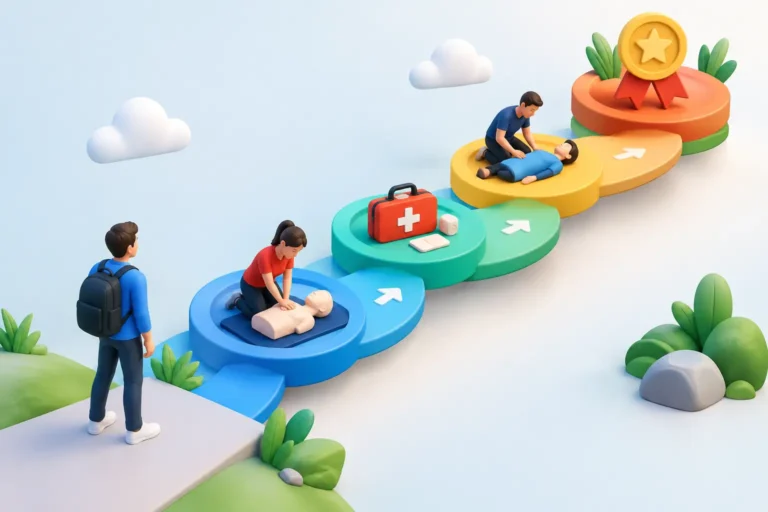
A certification pathway adds three things that recreational learning may not always provide: clear milestones, measurable evidence of ability, and accountability. Parents can see what their child is expected to master at each stage. Learners know what they are practicing and why. Coaches can identify gaps before an assessment rather than relying on confidence alone.
In Singapore, SwimSafer is a familiar example of this structured approach. It places water safety and survival competence alongside stroke development. A swimmer is not only encouraged to travel through the water efficiently, but also to understand safer decisions around water and demonstrate practical responses when conditions are less comfortable.
Certification should not be viewed as a piece of paper alone. The certificate is the result of demonstrated readiness. A well-run program uses each stage to build durable habits: checking surroundings, entering water safely, staying calm, floating to recover, moving toward safety, and knowing when to seek help.
Swimming certification versus recreational lessons: the practical difference
The most visible difference is assessment. Recreational classes may celebrate improvement through coach feedback, new distances, or stronger strokes. Certification classes work toward a specific standard that must be demonstrated consistently. That can create a stronger sense of purpose for swimmers who respond well to goals and clear progression.
The second difference is content. Recreational classes can spend more time on technique, games, fitness, and individual interests. A certification-focused program must cover prescribed skills, including water survival and safety knowledge. This can make lessons more structured, especially as a swimmer approaches a practical test.
The third difference is pace. In a recreational setting, a child may spend longer refining a favorite stroke or gaining confidence before moving on. In a certification pathway, progression still needs to respect readiness, but instruction is organized around the competencies needed for the next stage. A rushed assessment benefits no one. The goal is genuine ability, not merely completing a level.
Finally, certification offers external recognition. That may matter when a school, aquatic program, volunteer pathway, or future lifesaving course expects documented competence. Recreational lessons can build the same foundational abilities, but they may not provide formal proof that those abilities have been assessed.
Which option is right for your child?
For a child with little water experience, the first question is not whether they need a certificate. Ask whether they can remain calm, listen to instruction, and participate comfortably in a structured class. A gentle water introduction program may be the best starting point for toddlers and anxious beginners. Confidence comes before test readiness.
Once a child can participate independently and follow basic safety instructions, a structured certification track often becomes a strong choice. It gives parents a visible roadmap and ensures that water survival is developed alongside swimming strokes. This is particularly valuable for children who regularly visit pools, attend school programs, or spend time near water during holidays.
Recreational lessons may be the better fit when a child already holds a relevant certification but wants to improve endurance, racing technique, starts, turns, or a particular stroke. They can also work well for families who want a low-pressure weekly activity without a target assessment date.
Many swimmers benefit from both. A child might follow a certification pathway during the school term, then use private coaching or holiday intensives to correct technique, build endurance, and prepare for the next assessment. The formats are not opponents. They serve different parts of the swimmer’s development.
What adults should consider
Adults often choose recreational lessons because the immediate goal is comfort: putting their face in the water, learning to float, or swimming a lap without stopping. That is a sensible starting point. For a water-fear learner, patient coaching and repeated success in a controlled environment matter more than an early test date.
Certification becomes more relevant when an adult needs measurable competence. This may include parents who want to supervise children more confidently, learners entering aquatic work, people preparing for lifesaving-oriented training, or swimmers who want a disciplined progression plan. Formal assessment can also reveal weaknesses that casual lap swimming may hide, such as difficulty treading water or recovering after fatigue.
Adults training for fitness or triathlon may need a different balance. Efficient freestyle, breathing rhythm, pacing, and open-water awareness can be more relevant than a child-focused certification syllabus. A qualified coach should help match the program to the actual goal instead of treating one pathway as the answer for every swimmer.
How to judge the quality of either program
Whether you choose certification or recreational lessons, look beyond the class label. Ask how swimmers are grouped, how progress is tracked, and how coaches handle fear or slower development. A safe, productive class should have clear expectations, active supervision, and a progression that does not push a learner past their current control.
For certification training, ask whether the coach teaches the full range of required skills rather than rehearsing only the easiest test items. Practical assessments can feel unfamiliar when a swimmer has only memorized a sequence. Good preparation builds adaptability, calmness, and understanding.
For recreational lessons, ask how the instructor ensures that fun does not replace essential safety learning. Games can be useful teaching tools, especially for young children, but every swimmer should still learn core habits such as safe entry, floating, breathing control, and reaching a safe point without panic.
At AQZOG, structured progression can include weekly lessons, focused private coaching, holiday intensives, and mock practical preparation so swimmers can develop at a pace that supports both confidence and assessed readiness.
Choose the next goal, not just the next class
A recreational class can turn hesitation into enjoyment. A certification pathway can turn enjoyment into reliable, demonstrable water competence. Neither route should be selected because it sounds more impressive. Select the one that gives the swimmer a meaningful next goal and enough support to achieve it safely.
If your child cannot yet float, recover, and move to safety with control, prioritize those foundations before chasing faster strokes or higher stages. If they already have those foundations, a structured certification goal may give their progress the direction it needs. The most valuable outcome is a swimmer who enters the water with confidence, respects its risks, and knows what to do when conditions are not perfect.