How to Learn Back Float Quickly and Safely
A back float can look effortless when someone else does it. For a beginner, it can feel like the moment the ears enter the water, the body starts to sink. The good news is that most children and adults can learn back float quickly when they understand one key principle: floating is not about forcing the body upward. It is about relaxing into a position that lets the water support you.
For young swimmers, the back float is a fundamental water-survival skill. For adults who are nervous in deep water, it is often the first skill that replaces panic with a practical plan. A controlled float gives a swimmer time to breathe, rest, orient themselves, and call for help if needed. That is why qualified swim instruction treats it as more than a beginner exercise.
Why the Back Float Is Harder Than It Looks
Most floating problems begin with tension. When a swimmer stiffens the neck, lifts the head to look at their feet, clenches the hands, or holds their breath, the hips commonly drop. Once the hips sink, the swimmer may kick harder, lose balance, and become even more anxious.
Body composition can affect how easily a person floats, but it does not decide whether they can learn the skill. Children, lean adults, and muscular swimmers may need more precise body position than someone with greater natural buoyancy. The goal is not to copy another person’s float. The goal is to find a calm, balanced position that works for that swimmer.
A successful back float is built on three connected skills: controlled breathing, a relaxed head position, and hips that stay near the surface. If one area is out of place, the float becomes much harder.
How to Learn Back Float Quickly: Start in Shallow Water
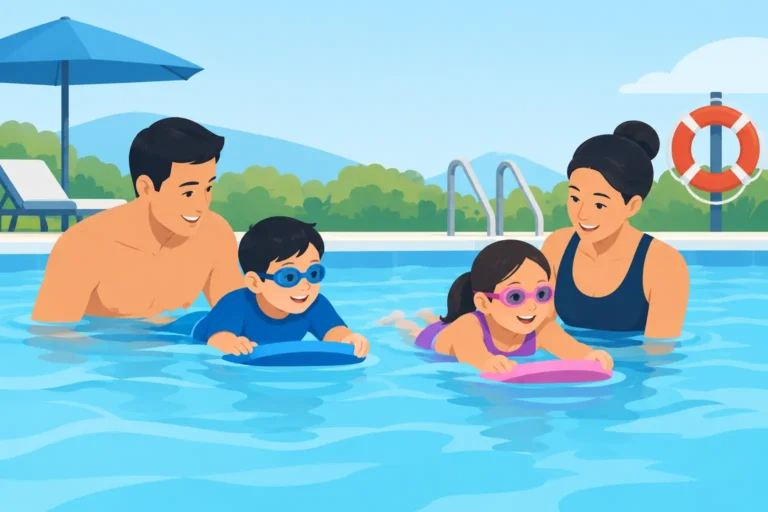
Use water where the swimmer can comfortably stand with their face above the surface. For children, an adult or coach should remain within arm’s reach. A beginner should never practice floating alone, especially when they are still fearful, fatigued, or unfamiliar with the pool.
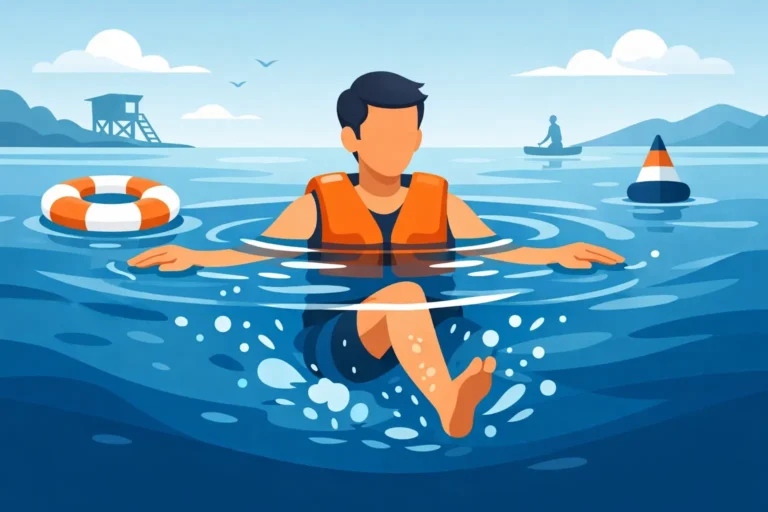
Start with the swimmer standing upright. Ask them to take a normal breath, look up toward the ceiling or sky, and slowly lean backward. Their ears should enter the water first. The back of the head rests in the water while the chin stays slightly up, as though they are making a small space between the chin and chest.
The common mistake is trying to keep the entire face too high. This causes the head to tilt forward and pushes the hips down. Instead, remind the swimmer that water can support the ears and the back of the head. Their eyes should look upward, not toward their knees or the pool wall.
As the shoulders settle, encourage the arms to open gently to the sides. They do not need to be perfectly straight. Many beginners feel more stable with the hands just below the surface and the palms facing upward. This creates a wider base of support without frantic paddling.
Next, focus on the hips. A useful coaching cue is: “Belly button up, toes light.” The swimmer should press the belly gently toward the surface and allow the legs to rise behind them. Small, relaxed kicks may help at first, but hard kicking usually bends the knees and makes the legs sink.
The Best Breathing Pattern for a Back Float
Breathing should stay normal. Holding a large breath can make a swimmer feel buoyant for a moment, but it often increases anxiety and tension. Teach the swimmer to inhale calmly and exhale slowly through the nose or mouth while floating.
For children, short practice attempts work best. Begin with three to five seconds, then return to standing. Repeat several times until the child can relax. Build to 10 seconds, then 20 seconds, rather than demanding a long float immediately.
Adults with water fear may benefit from an even slower progression. First, practice putting only the ears in. Then rest the back of the head in the water while holding the pool edge. After that, release one hand, then both hands for a few seconds. Progress is faster when the swimmer feels in control of each step.
A swimmer who coughs, swallows water, or becomes distressed should stand up, reset, and try again later. Pushing through fear is not efficient training. Calm repetition produces better body awareness and more reliable safety skills.
Use Support Correctly
A coach’s hands, a noodle, or the pool wall can be helpful during the first few attempts. Support should give the swimmer confidence, not become something they depend on forever.
When assisting a child, support the upper back or shoulders lightly rather than holding the head. This lets the swimmer learn how their own body feels in the water. As confidence improves, reduce the support gradually. Move from full support to fingertips at the shoulders, then to a nearby hand ready to help if needed.
Float aids are useful for some learners, particularly toddlers and highly nervous beginners. Still, they can change body position. A swimmer who floats well with a noodle may not yet be ready to float independently. Make sure practice includes short unsupported attempts once the swimmer is calm enough.
Fix These Common Back Float Problems
If the legs keep sinking, check the head first. Looking forward, tucking the chin, or lifting the head almost always pulls the lower body down. Return the gaze upward and let the ears rest in the water. Then ask the swimmer to straighten the legs softly, with toes near the surface.
If the swimmer rolls sideways, the arms may be uneven or the body may be tense on one side. Open both arms equally and keep the shoulders level. A gentle sculling motion with the hands can help, but it should be slow and controlled.
If water reaches the nose, the swimmer may be tipping too far back or exhaling poorly. Raise the chin just slightly, keep the body long, and practice gentle nose breathing. Some beginners prefer to hold their nose initially, but this should be a temporary confidence aid rather than the final technique.
If a child becomes upset, shorten the task. Ask for “ears in, eyes up” rather than a full float. Celebrate that smaller success, then return to it several times. Confidence building is measurable progress, not simply persuading a child to tolerate discomfort.
Turn the Float Into a Water-Survival Skill
An independent back float is more valuable when the swimmer can enter it deliberately and recover safely. Once a swimmer can float for 15 to 30 seconds in shallow water, practice moving from standing to floating, then returning to standing without assistance.
The next progression is a back float with a gentle kick. This introduces backstroke body position while teaching the swimmer how to keep their airway clear. After that, practice rolling from front to back. A swimmer who can roll onto their back after putting their face in the water has a practical recovery skill that can reduce panic.
For school-age children working toward formal swimming progression, a dependable back float supports later skills such as treading water, survival swimming, backstroke, and water-entry recovery. The standard should be calm control, not a rushed pass. A child who can float while relaxed, breathe normally, and follow safety instructions is building a far stronger foundation than one who manages a single tense attempt.
When a Lesson Helps You Progress Faster
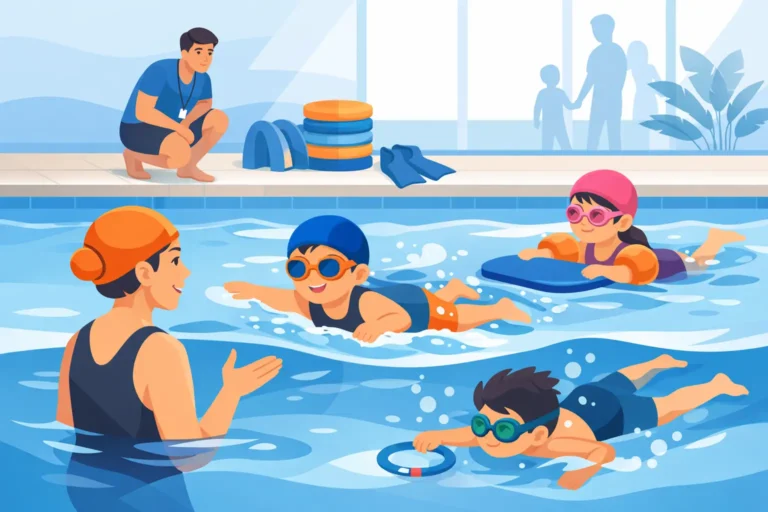
Many families can practice basic floating in a safe shallow pool, but structured coaching can shorten the learning curve. An experienced instructor can spot the small details that are difficult for parents to see: a tucked chin, tight shoulders, bent knees, or a breath-holding habit. They can also select the right progression for a toddler, a school-age child, or an adult returning to the water after years away.
Private instruction may be especially helpful for swimmers with significant fear, sensory sensitivities, previous negative water experiences, or a near-term swimming assessment. Group classes can be highly effective when the swimmer is comfortable learning alongside peers and benefits from regular weekly practice. The right format depends on the learner’s confidence, goals, and required pace of progression.
Back floating should never be presented as a trick. It is a calm, repeatable water-safety response. Practice it in supervised conditions, keep sessions positive, and measure progress in small improvements. The moment a swimmer realizes they can stop, breathe, and let the water hold them is often the moment real water confidence begins.