SwimSafer Stage 4 Requirements Explained
Stage 4 is where a child’s SwimSafer progress becomes visibly more capable. The SwimSafer Stage 4 requirements move beyond basic water confidence and ask swimmers to demonstrate control, stamina, survival awareness, and dependable technique in deeper water. For parents, this stage is reassuring because it shows that a swimmer can make safer decisions and keep moving effectively when conditions are less comfortable.
This is not simply a faster swimming badge. Stage 4 develops the skills a swimmer needs to respond calmly after entering deep water, travel with efficient strokes, rest when needed, and recognize safer choices around pools and open-water environments. It is a meaningful step for children working toward stronger personal survival skills, school requirements, or future lifesaving progression.
What SwimSafer Stage 4 Represents
SwimSafer Stage 4 is commonly described as the Personal Survival and Stroke Development stage. By this point, swimmers should already be comfortable putting their face in the water, floating, treading, and swimming with basic coordination. The focus now shifts to performing those skills with greater distance, consistency, and purpose.
A Stage 4 swimmer is expected to show that they can manage themselves in deep water rather than rely on the pool wall, an instructor, or flotation equipment. They must also show clearer stroke technique. A child who can complete one strong length but loses form, panics during a float, or stops repeatedly may need more preparation before assessment.
The stage is especially valuable for children who enjoy recreational swimming but have not yet learned what to do after an unexpected fall into water. Good technique matters, but survival competence is the center of the program.
SwimSafer Stage 4 Requirements: Key Skill Areas
Assessment details, task sequences, and distances can be updated by the administering authority or school. Families should always confirm the current test brief with their instructor. However, Stage 4 preparation generally centers on four connected areas.
- Deep-water entry and recovery: Swimmers must enter deeper water safely and regain control without rushing or grabbing for support. This may involve a compact jump or another safe entry, followed by surfacing, orienting themselves, and beginning the required survival or swimming task.
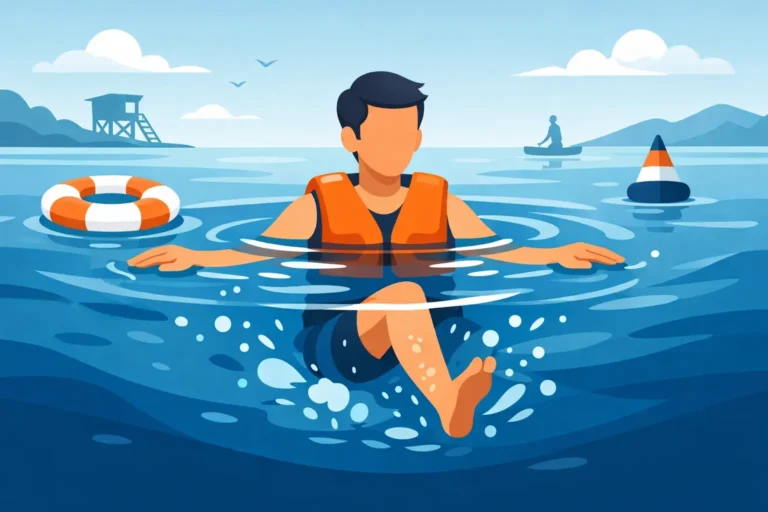
- Personal survival skills: Children practice floating, treading water, sculling, changing body position, and resting in the water. They learn that survival is not always about swimming as fast as possible. A calm float, an efficient tread, and controlled breathing can conserve energy while a swimmer waits for help or decides where to exit.
- Recognized strokes over longer distances: Stage 4 requires more than a short demonstration of front crawl, breaststroke, or backstroke. Swimmers need to maintain a suitable body position, rhythmic breathing, and a steady kick as they cover longer distances. The goal is not competition speed. It is efficient, repeatable movement with enough stamina to finish safely.
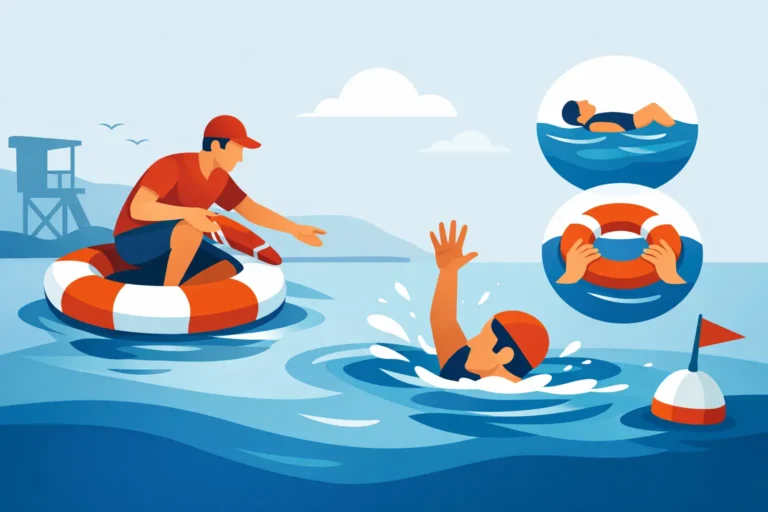
- Water safety knowledge and judgment: Swimmers are expected to understand basic safety principles, including safe behavior at pools, why adult supervision matters, and what to do if they or someone else gets into difficulty. This component reinforces a key lesson: confident swimmers still follow safety rules.
Survival Skills Must Be Calm, Not Rushed
One common Stage 4 challenge is the moment after entering deep water. Some swimmers kick hard immediately, lift their head high, and tire themselves before they begin the main task. Others can swim well in lanes but become unsettled when asked to float or tread away from the wall.
Coaching should teach a clear recovery routine: surface, take a breath, find a stable body position, and choose the next action. The swimmer may need to tread, scull, float, turn, or swim. Practicing this sequence repeatedly builds a response that is calm rather than automatic panic.
Sculling is often underestimated. When used well, it helps a swimmer keep the mouth and nose clear of the water with minimal effort. It also supports body rotation and position changes, making it useful during survival tasks and when transitioning between floating and swimming.
Stroke Development Is About Efficiency
At Stage 4, poor technique becomes more obvious because the required swims are longer. A front crawl swimmer who breathes by lifting the whole head may lose momentum quickly. A breaststroke swimmer with a rushed kick may move only a short distance per stroke. A backstroke swimmer who bends at the hips may create drag and struggle to stay straight.
The best preparation is not to force children through repeated long swims with weak form. Coaches should correct one or two key habits at a time, then allow swimmers to repeat the skill successfully. For example, a swimmer may first work on long exhalation in front crawl, then add side breathing, and finally build distance while holding that rhythm.
Different children need different priorities. A confident child with limited stamina may need paced distance practice. A strong swimmer who fears deep water may need more survival entries and floating work. Test readiness depends on the whole skill set, not one impressive stroke.
How to Know Whether Your Child Is Ready
A swimmer nearing Stage 4 assessment should be able to enter deep water without hesitation, recover independently, and continue with the next skill. They should complete practice swims without frequent stops, hold a float or tread with control, and listen carefully to instructions before beginning.
Parents can watch for practical signs during lessons. Does your child remain composed after water enters their goggles or face? Can they rest without immediately reaching for the wall? Do they understand why running near a pool or entering water without permission is unsafe? These everyday behaviors often tell you as much about readiness as a timed practice swim.
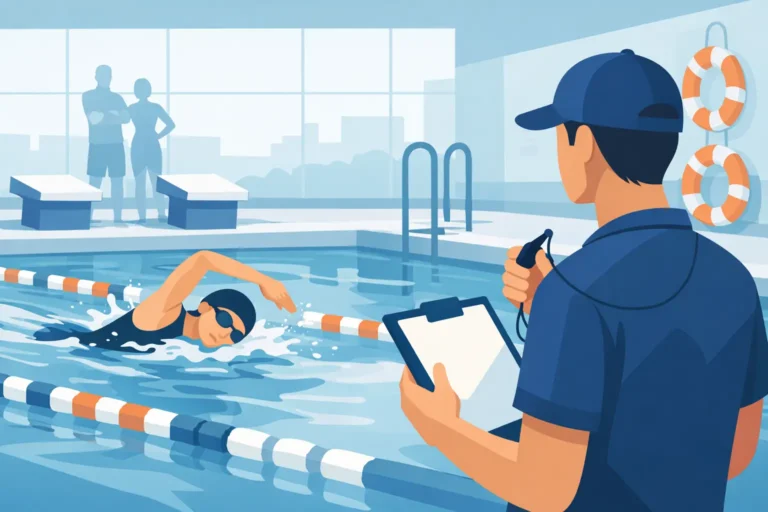
It also helps to distinguish between nervousness and lack of readiness. A child may feel nervous before an assessment and still pass comfortably because their skills are secure. In contrast, a child who appears relaxed but cannot consistently complete survival or stroke tasks needs more guided practice. A mock practical assessment is useful because it reveals whether a swimmer can perform under test conditions, not only during familiar weekly drills.
A Productive Stage 4 Training Plan
Regular lessons remain the strongest foundation for Stage 4. Skill retention matters in swimming, particularly for breathing, floating, and survival responses. Long gaps between sessions can make a previously confident child hesitant, especially if they have not spent much time in deep water.
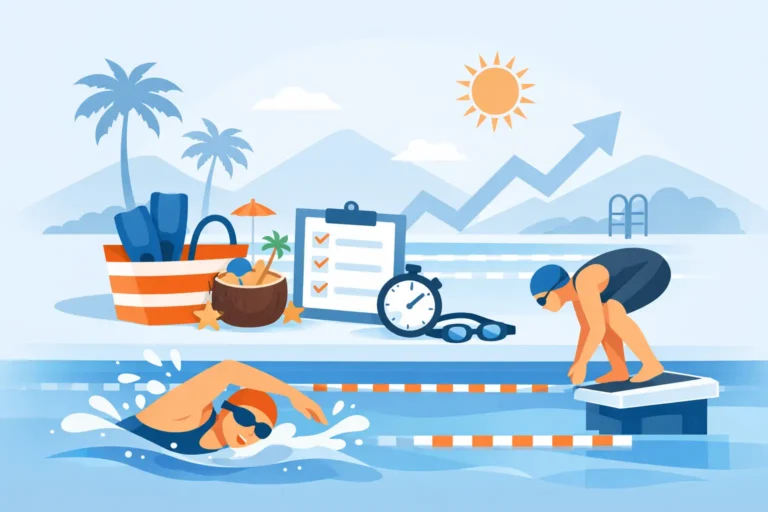
Focused training should alternate technical work with practical survival practice. One session may emphasize front crawl breathing and breaststroke timing; another may focus on deep-water entries, treading, sculling, and recovery. Combining these skills later in the program helps swimmers understand how each element works together.
Short home conversations can support theory preparation. Ask your child what they would do if they saw a friend struggling in the water. The correct response is not to jump in without thinking. They should seek an adult or lifeguard, call for help, and use safe assistance where available. This reinforces responsible judgment without creating unnecessary fear.
At AQZOG, structured SwimSafer coaching can include progressive skills practice, theory preparation, and mock practical tests so families can identify gaps before the assessment. This approach gives swimmers a clear target while keeping water safety at the center of every lesson.
Common Reasons Swimmers Need More Practice
The most frequent obstacle is inconsistent breathing. When a swimmer holds their breath for too long, they tense their body, lose rhythm, and become tired earlier. Controlled exhalation in the water is one of the simplest improvements a child can make.
Another issue is depending too heavily on the wall. During normal lessons, it is natural for children to pause at the edge. For Stage 4, they must learn to rest in the water itself through floating, treading, or sculling. Building this confidence gradually is safer and more effective than pushing a fearful swimmer too quickly into deep water.
Finally, some children treat the assessment as a race. They rush entries, kick too hard, and sacrifice technique. Remind them that a controlled completion is better than a fast but untidy attempt. Stage 4 rewards capable, safe swimming.
A child who completes Stage 4 has gained more than another certificate. They have practiced how to stay composed, conserve energy, and keep moving in water with greater independence – skills that make every future swim safer and more confident.