What Happens in SwimSafer Test?
A lot of parents ask the same question just before assessment day: what happens in SwimSafer test, and will my child be expected to perform everything perfectly on the spot? The short answer is no. The test is structured, progressive, and designed to check whether a swimmer can demonstrate the required skills for that stage safely and consistently.
That matters because SwimSafer is not just about collecting certificates. In Singapore, it is built around survival skills, stroke development, and practical confidence in the water. When swimmers understand what the assessment looks like, they usually perform better because the day feels familiar rather than intimidating.
What happens in SwimSafer test sessions
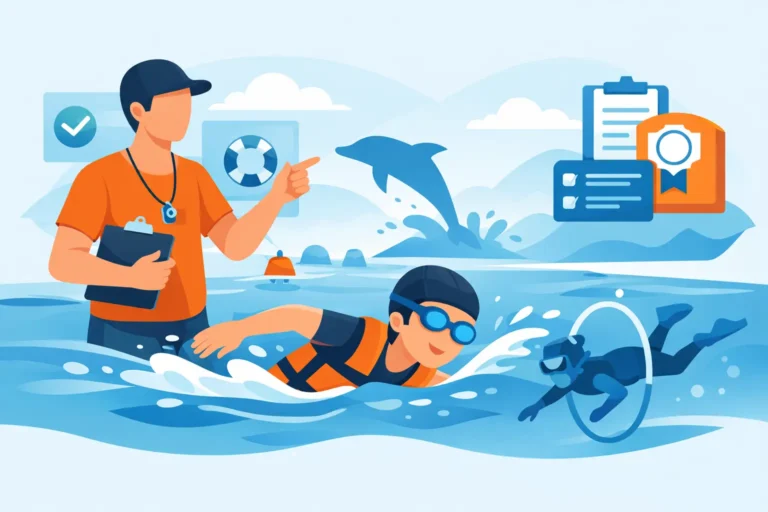
A SwimSafer test is a practical assessment based on the stage your child or adult learner is attempting. The assessor observes specific skills in the water and checks whether the swimmer meets the required standard for that level. Depending on the stage, those skills can include entries, floating, breathing control, movement through the water, stroke technique, sculling, treading water, and basic survival or rescue-related tasks.
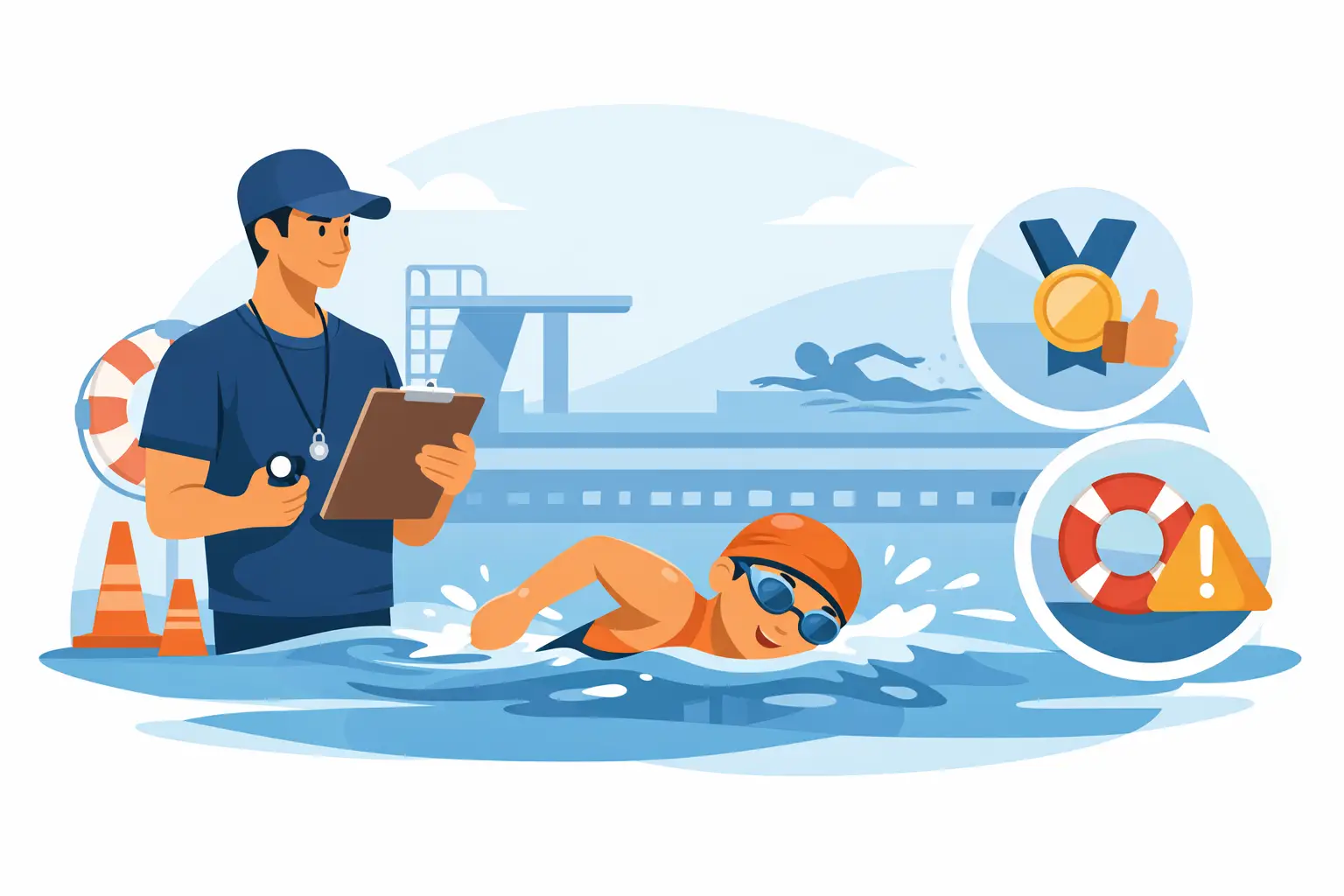
The exact sequence can vary slightly by venue and assessor, but the structure is usually straightforward. Swimmers are grouped, called one by one or in small batches, and guided through each item in the stage checklist. Some tasks are done over short distances, while others focus on control and body position rather than speed.
For younger swimmers, the assessment often feels like an extension of class practice. For older children and adults, it is more clearly test-oriented, especially in higher stages where stamina, technique, and water safety judgment become more demanding.
The SwimSafer test is stage-based, not one-size-fits-all
One reason people feel confused about what happens in SwimSafer test day is that there is no single universal checklist for everyone. The requirements depend on the stage being attempted.
At the early stages, assessors usually focus on water confidence and foundation skills. That includes safe water entry, submersion, front and back floating, gliding, kicking, and simple movement through the water. A swimmer does not need polished competitive technique at this point, but they do need enough control to show safety and basic propulsion.
At the middle stages, the test shifts toward stronger coordination and more independent swimming. Breathing technique, stroke efficiency, and endurance matter more. Swimmers may be asked to perform multiple strokes over set distances, tread water for longer, and show better body alignment.
At the higher stages, the expectations rise again. The swimmer may need to show stronger survival competence, better decision-making, and cleaner technique under assessment conditions. That is where preparation becomes especially important, because a child who can “sometimes do it in class” may still struggle if the skill is not yet consistent.
What assessors are actually looking for
Many parents assume the test is mainly about distance. Distance is part of it, but it is not the whole picture.
Assessors are usually looking at whether the swimmer can complete each task safely, correctly, and with enough control for that level. For example, a child may be able to move across the pool, but if breathing is panicked, body position is unstable, or instructions cannot be followed, that can affect the result.
In most cases, assessors are evaluating a combination of technical skill and water confidence. They want to see that the swimmer understands what to do, can perform it without excessive help, and remains composed in the water. That is why students who are calm and well-practiced often do better than students who rely only on energy or speed.
There is also a practical judgment element. A swimmer does not need to look like a competitive athlete, but the skill must meet the required standard for certification. If the stage requires treading water, the swimmer must truly maintain themselves in place. If the stage requires a stroke over a distance, the swimmer must complete it with recognizable technique and control.
Typical skills that may be tested
The exact items depend on the stage, but most SwimSafer assessments draw from a familiar set of aquatic skills.
These often include safe entry into the water, blowing bubbles or submersion, front and back float, push and glide, kicking on the front or back, recovery to standing, swimming with a defined stroke, coordinated breathing, treading water, and simple survival actions. In higher stages, there may also be sculling, underwater movement, longer distances, and more advanced water safety components.
This is why regular class attendance makes such a difference. The test is not supposed to introduce brand-new skills. It is meant to confirm skills that have already been practiced repeatedly in lessons.
How the day usually feels for swimmers
For most learners, the biggest challenge is not the skill itself. It is the pressure of being watched.
On test day, there may be unfamiliar assessors, more waiting around, and other swimmers performing nearby. Some children become more serious and focused. Others get distracted or suddenly nervous. Adults can experience the same thing, especially if they are returning to swimming after many years.
That is normal. A well-prepared swimmer should still be able to perform under those conditions because the movements are already familiar. This is one reason mock assessments are so useful. They help students experience test flow before the actual day.
A good coach will also prepare swimmers for the pace of assessment. In class, students may repeat a task several times. In a test, they may only get one clear opportunity to show it properly. That does not make the test unfair, but it does mean consistency matters.
Why some swimmers pass in class but not in the test
This is one of the hardest situations for parents to understand. A child may appear capable during lessons but still not pass every assessed item on test day.
Usually, the reason is consistency. In lessons, a swimmer might complete a skill well two or three times out of five. In an assessment, that skill needs to be demonstrated when asked, with enough quality to meet the standard. If the swimmer hesitates, forgets the sequence, panics with breathing, or breaks form significantly, the result may be affected.
Another issue is stage readiness. Sometimes swimmers are technically close, but not stable enough yet. This happens often with breathing, treading water, and stroke coordination. These are skills that can look acceptable one week and fall apart the next if the foundation is not firm.
That is why progression should be earned, not rushed. A certificate is valuable when it reflects real competence in the water.
How to prepare for what happens in SwimSafer test day
The best preparation is steady training, not last-minute cramming. Swimmers who attend lessons consistently and practice the exact stage requirements usually arrive calmer and more test-ready.
It helps to know the assessment items in advance and practice them in proper sequence. If a child is attempting a stage that includes multiple skills back to back, they should be comfortable transitioning from one task to the next without confusion. Endurance also matters more than some families expect. A swimmer may know the stroke but still struggle if they tire halfway through.
Parents can support the process by keeping the focus on readiness rather than pressure. Instead of saying, “You must pass,” it is often better to say, “Show the skills the way you practice them.” That keeps the swimmer centered on execution.
For learners who are borderline ready, targeted coaching can make a significant difference. AQZOG often sees the biggest improvements when swimmers work specifically on weak assessment items instead of repeating general lap practice.
What to bring and what to expect after the test
Practical details matter more than people think. Swimmers should arrive on time, wear proper swim attire, bring goggles that fit well, and avoid trying brand-new gear on the day itself. If a swimmer depends on goggles during training, poorly fitted goggles can become an unnecessary problem during assessment.
After the test, results are usually processed according to the assessment system in use. If the swimmer passes, they progress to the next stage. If they do not pass every component, that is not a dead end. It simply shows which areas still need work.
In many cases, that feedback is useful because it highlights the exact skills preventing progression. A focused training block after assessment can often turn a near-pass into a confident pass later.
The real purpose behind the test
Parents sometimes look at SwimSafer only as a milestone, but its real value is broader. The assessment checks whether a swimmer has reached a practical standard of safety, control, and independence for that stage.
That is especially important for children who spend time around pools, beaches, or water activity settings. Confidence without control is risky. Stroke ability without survival skill is incomplete. A strong SwimSafer result should reflect both skill progression and safer behavior in the water.
So if you are wondering what happens in SwimSafer test day, think of it less as a surprise exam and more as a checkpoint. The swimmer is asked to show what they already know, under clear assessment conditions, with safety and progression at the center. When training has been structured well, test day becomes much simpler – not because it is easy, but because the swimmer is genuinely ready.
The most helpful mindset is this: aim for real competence first, and the certification usually follows.