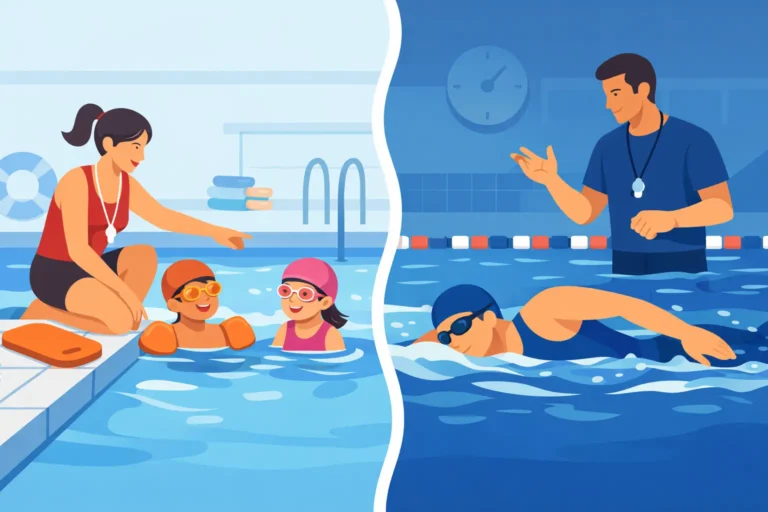
How to Teach Back Float Safely and Build Confidence
A back float is often the first moment a new swimmer realizes the water can support them. For a child, that moment can replace panic with calm. For an adult who fears water, it can be a major confidence breakthrough. Knowing how to teach back float well means creating that breakthrough without rushing, forcing, or compromising safety.
Back floating is not simply lying still. It is a water-survival skill that teaches a swimmer to relax, breathe, recover their balance, and stay calm if they become tired in the water. A strong foundation here supports later progress in treading water, elementary backstroke, backstroke, and SwimSafer-style survival skills.
Start With Safety and Readiness
Teach back float only when the learner is comfortable putting their ears in the water and can respond to simple instructions. A swimmer who is still frightened by splashing, face wetting, or losing contact with the pool floor may need more water-confidence practice first.
Choose a calm, shallow area where the learner can stand when needed. Stay close enough to support the head and upper back immediately. For young children and fearful beginners, the instructor should remain within arm’s reach throughout every attempt. Avoid starting in a crowded lane, near a pool edge with heavy traffic, or in water that is too cold for the learner to relax.
Explain the goal in simple terms: “The water will hold you when your body is long and relaxed.” Do not promise that floating will feel easy straight away. Some learners float naturally; others need repeated practice to release tension through their neck, hips, and legs.
How to Teach Back Float Step by Step
The most effective progression moves from supported floating to short, independent floating. Each step should feel achievable before the swimmer advances.
Begin With a Supported Back Float
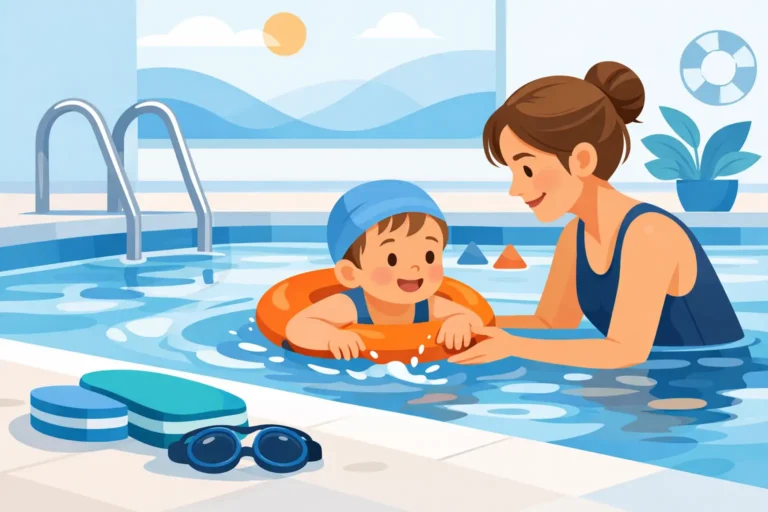
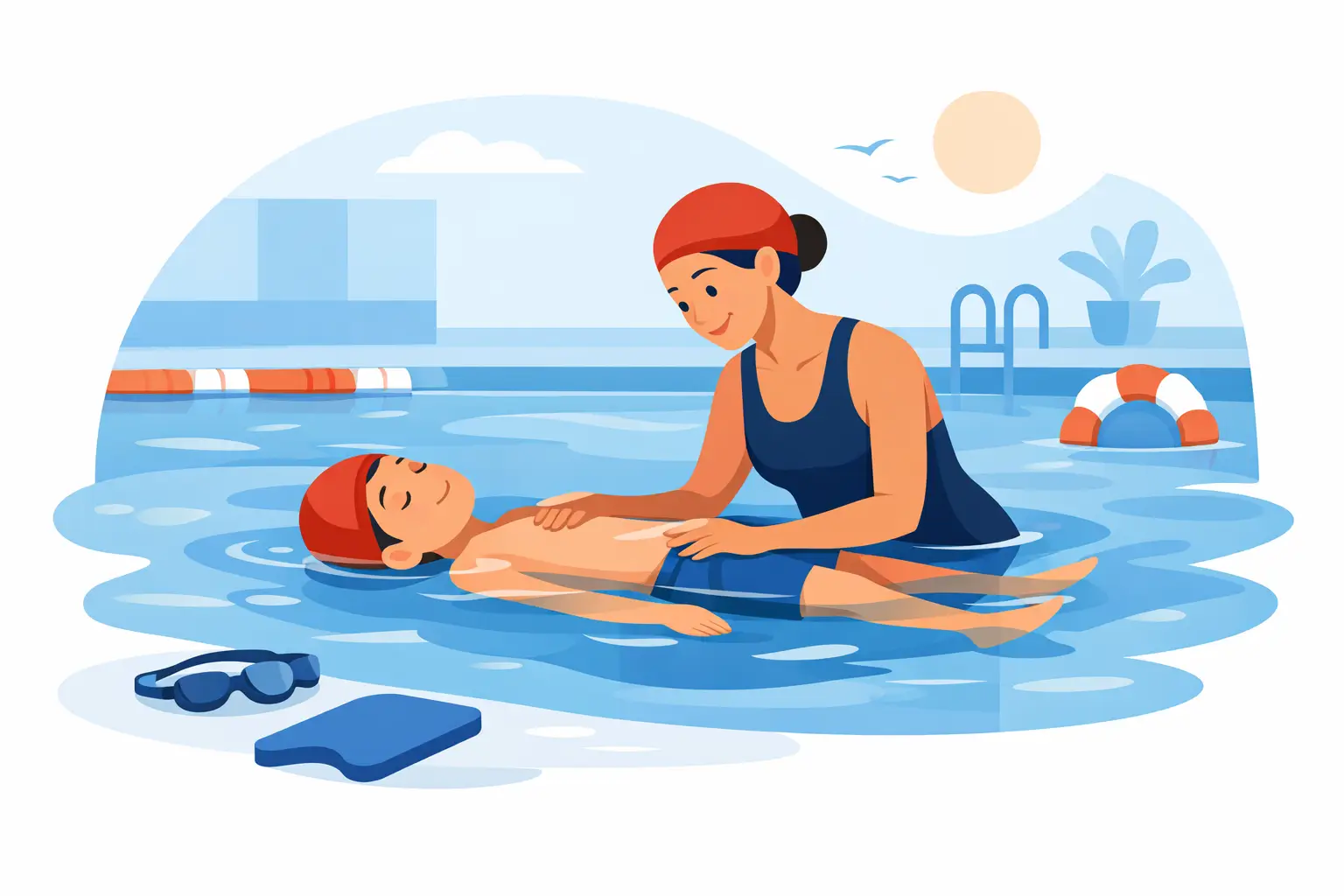
Ask the learner to stand facing you. Support the back of their head with one hand and the middle of their back with the other. For smaller children, keep your hands gentle but secure. Your support should give them stability without holding their entire body above the water.
Encourage them to look straight up, not toward their feet. When a swimmer lifts their head to look forward, their hips and legs usually drop. A simple cue such as “eyes on the sky” or “make your belly button tall” often works better than technical explanations.
Help the swimmer slowly lean back until their ears enter the water. Their arms can rest out to the sides like a wide letter T, or slightly above the shoulders. Legs should be long, with toes near the surface. Remind them to take slow breaths and keep their face relaxed.
Hold this position for three to five seconds at first. Then guide them back to standing. A quick, successful attempt is more valuable than keeping a nervous learner floating for too long.
Teach the Body Position That Creates Buoyancy
Many beginners believe they sink because they are not “good at floating.” Usually, the issue is body tension or position. Teach three practical points: ears in the water, hips pressed gently toward the surface, and a long body line.
A swimmer does not need perfectly straight legs. In fact, stiffly locking the knees can make them tense. Encourage long, quiet legs instead. A small amount of leg movement is normal, especially while a beginner learns balance.
If the hips drop, avoid pulling the swimmer upward by the arms. Instead, return attention to the head position. Lowering the head back into the water and opening the chest often brings the hips closer to the surface naturally.
Reduce Support Gradually
Once the swimmer can hold a relaxed supported position, reduce help one point at a time. Move from supporting both the head and back to supporting only the head. Then use just fingertips behind the head or shoulder blades. Finally, remove your hands briefly while staying ready to assist.
Count aloud so the swimmer knows the task has a clear finish: “One, two, three.” Build toward five seconds, then 10 seconds, before expecting a longer float. This structure gives children a measurable goal and helps adults recognize their progress.
For toddlers, success may look different. A toddler may initially float with a parent or instructor supporting the head and body for several seconds. The goal is comfort and a positive relationship with the water, not independent performance before the child is developmentally ready.
Add a Safe Recovery to Standing
A back float should always be taught with a recovery skill. The swimmer needs to know how to return to standing calmly rather than grabbing, kicking wildly, or lifting their head suddenly.
Teach them to bring their chin gently toward the chest, bend the knees, and roll slightly to one side. From there, they can place their feet beneath them and stand. Practice this recovery after every float attempt.
This sequence matters for water safety. A swimmer who knows they can float and regain their feet is more likely to remain composed when they lose balance in shallow water.
Common Problems and What They Usually Mean
When back float practice is not working, the answer is rarely “try harder.” Look for the specific cause and adjust the drill.
A learner whose legs sink may be lifting their head, holding their breath, or tightening their stomach and thighs. Return to supported floating and encourage a soft neck, long body, and steady breathing. A gentle touch under the lower back can help them feel where the water should support them.
A learner who flails their arms may be worried about losing control. Let them keep their arms wide and still rather than insisting on arms by their sides. Once confidence improves, gradually change arm positions.
If water enters the nose, check whether the swimmer is tipping their head too far back or taking fast breaths. The face should be comfortably upward, not strained. For some beginners, especially adults, practicing relaxed exhalation and ear submersion before back floating reduces this concern.
A child who refuses to lean back may need a different entry point. Try a “starfish” float while holding the wall, use a noodle only as a temporary confidence tool, or let the child rest their head on the instructor’s shoulder before moving into the supported position. Equipment can help a learner feel secure, but it should not replace direct supervision or correct body awareness.
Make Practice Feel Predictable, Not Pressured
Children learn faster when they understand what will happen next. Use the same routine: listen, lean back, float, count, recover, celebrate. Keep instructions short and specific. Instead of saying “Relax,” try “Let your ears rest in the water” or “Stretch your toes away from your body.”
Adults often need reassurance that difficulty is normal. Floating can feel vulnerable because the learner cannot see where they are going. Explain that buoyancy varies with body shape, lung volume, and tension, but nearly every swimmer can improve their back-float position with calm practice and proper support.
Avoid comparing siblings, classmates, or other swimmers. A child who needs 10 short attempts may be learning exactly what they need: trust, recovery, and control. Progress should be measured by safer, calmer performance, not by who can float the longest on the first day.
Move From Floating to Real Water-Safety Skills
Once a swimmer can back float independently for 10 to 15 seconds, build useful next steps. Ask them to float, breathe calmly, and recover to standing. Then practice floating near the wall, turning onto the stomach, or moving from a short swim into a back float for rest.
For school-age swimmers working toward formal progression, back floating should connect to broader survival skills: safe entries, controlled submersion, front float, rolling, treading water, and reaching an exit point. For adults, the same skill supports confidence in deeper water and provides a practical rest position during longer swims.
The progression depends on the learner. A young beginner may need several lessons to become comfortable with ears in the water. A confident child may move quickly into rollovers and backstroke preparation. The right pace is the one that protects confidence while building reliable technique.
When Professional Coaching Helps
Professional instruction is especially helpful when a child is highly anxious, repeatedly drops their hips despite practice, or is preparing for a structured water-safety assessment. An experienced coach can spot small body-position errors, provide secure support, and adapt the progression without overwhelming the swimmer.
At AQZOG, structured lessons place floating within a wider pathway of water confidence, survival awareness, and measurable swimming progression. That approach matters because a back float is most valuable when the swimmer can use it calmly, recover safely, and apply it when it counts.
The next time you practice, make the goal small: one calm float, one controlled recovery, and one more reason for the swimmer to trust the water.