Can Swimming Make a Smarter Kid?
A child pauses at the pool edge, listens for an instruction, controls their breathing, remembers the next movement, and enters the water safely. Parents who ask whether swimming can make a smarter kid are usually asking a bigger question: can a weekly activity build skills that help children learn, focus, and make better decisions beyond the pool?
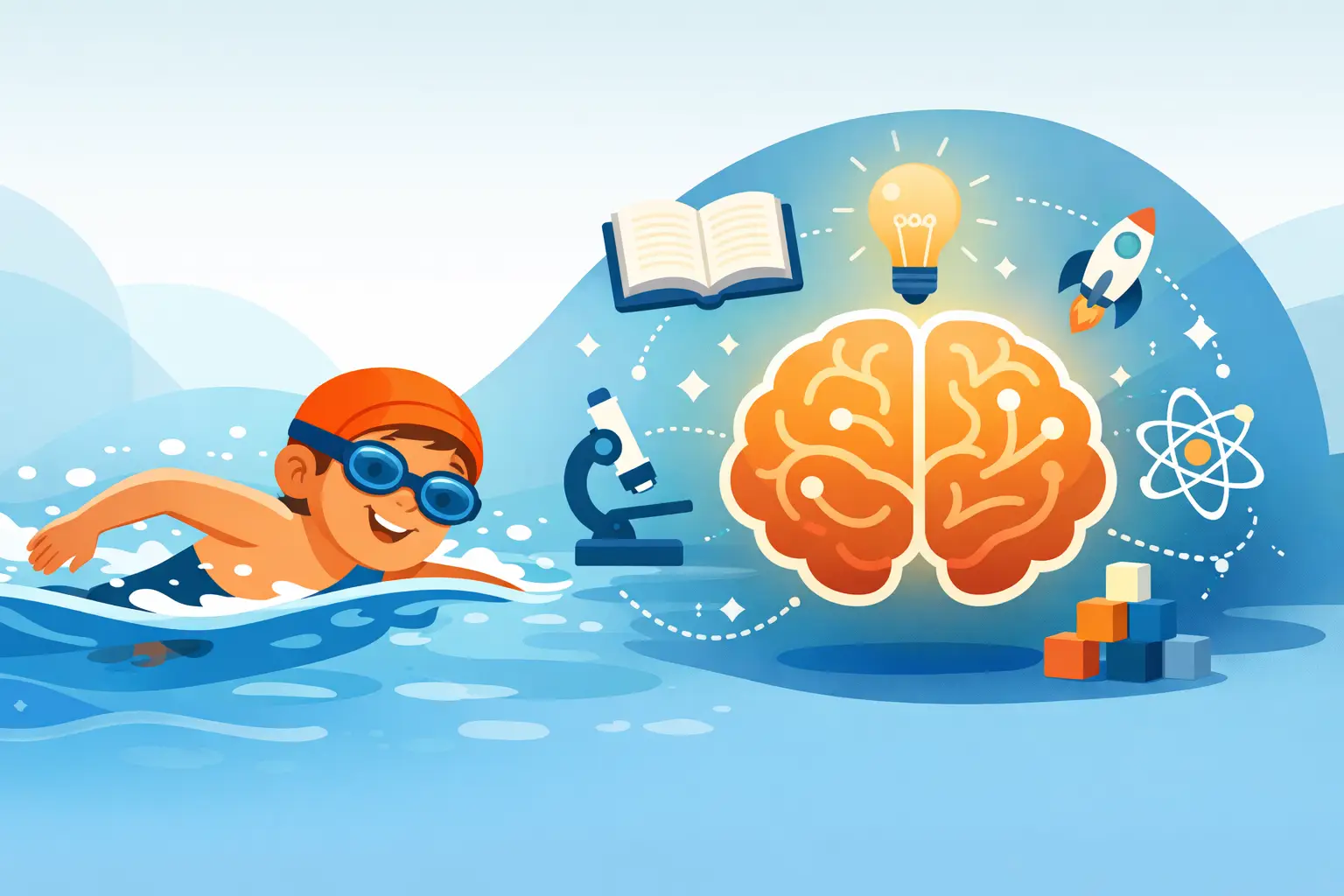
The answer is encouraging, with an important qualification. Swimming is not a shortcut to higher grades or a replacement for reading, sleep, and a supportive school environment. But structured swim instruction can strengthen habits closely connected to learning: attention, memory, body awareness, emotional regulation, confidence, and problem-solving. When lessons are progressive and safety-focused, children practice these skills repeatedly in an environment that demands calm thinking and clear responses.
How swimming can make a smarter kid in practical ways
Swimming asks children to coordinate their mind and body at the same time. They must listen to a coach, understand a sequence, control breathing, judge distance, and adjust their movements based on feedback. That is very different from simply splashing in a pool.
In a well-organized lesson, a child may first learn safe entry, then floating, then kicking, arm action, breathing, and coordinated strokes. Each new skill builds on the previous one. This kind of progression teaches children that improvement comes from paying attention, practicing correctly, and trying again when something feels difficult.
That learning pattern transfers. A child who understands that they can improve a back float through calm breathing and better body position is also learning persistence. They are less likely to see a difficult task as something they are simply “bad at.”
Swimming develops focus through active listening
Pool environments are stimulating. There is water movement, noise, other swimmers, and frequent changes in activity. To progress safely, children need to identify the coach’s instruction and act on it promptly.
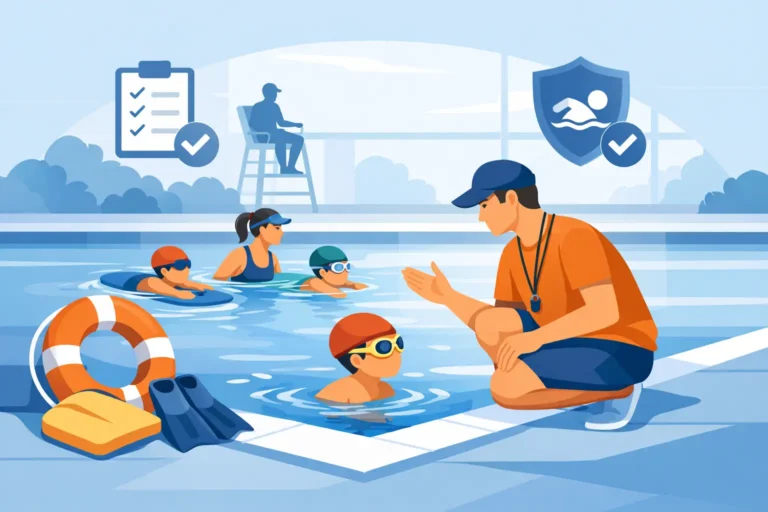
A good instructor gives short, clear directions such as “eyes up,” “hold the wall,” “kick from the hips,” or “turn and float.” Children learn to filter distractions, remember instructions, and apply corrections. Over time, this develops active listening rather than passive hearing.
For younger children, the attention span may be brief at first. That is normal. The right class structure uses age-appropriate tasks, repetition, and positive reinforcement so children can stay engaged without feeling overwhelmed. For school-age swimmers, more detailed stroke drills and safety scenarios build the ability to follow multi-step directions.
Breathing control supports emotional regulation
One of the most valuable skills in swimming is learning not to panic. Before children can put their face in the water, float independently, or travel farther from the wall, they need to manage discomfort and uncertainty.
Breathing practice is physical, but it is also emotional training. A child learns to exhale steadily, pause, reset, and continue. When water enters the nose or a first attempt does not go well, the coach helps the child respond with a practical action rather than fear.
This does not mean every child will immediately become calm and confident. Water-fear learners often need more time, smaller goals, and patient repetition. However, structured instruction gives them a safe way to experience challenge, recover, and recognize their own progress. That confidence can be meaningful in school, sports, and unfamiliar social situations.
The brain benefits come from purposeful practice
It is easy to overstate claims about exercise and intelligence. Swimming alone does not guarantee that a child will become academically advanced. Genetics, family routines, school support, nutrition, sleep, and a child’s individual needs all matter.
What swimming can offer is purposeful practice. Unlike many activities where children repeat one familiar action, swimming requires ongoing adjustment. A child has to coordinate both sides of the body, orient themselves in the water, time their breathing, and understand how small changes affect movement.
For example, a swimmer learning freestyle may discover that lifting the head too high makes the legs sink. They then test a correction: turn the head to breathe, keep one goggle in the water, and return to a stable body line. This is observation, cause and effect, and problem-solving in action.
The pool also offers immediate feedback. When a child streamlines correctly, they travel more efficiently. When they relax in a float, their body stays higher. The result is visible and physical, which helps children understand why technique matters.
Memory grows through structured progression
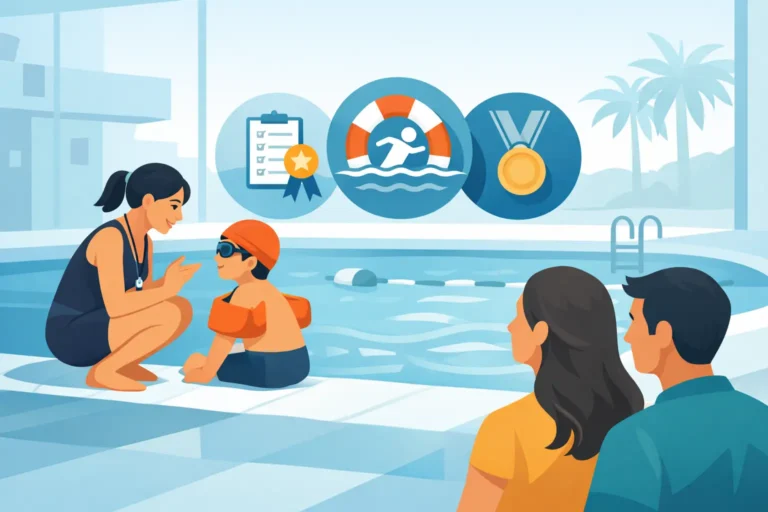
Formal swimming programs give children a clear pathway. They learn foundational safety skills before moving to more demanding strokes, deeper-water confidence, and survival-focused tasks. This makes progress measurable rather than vague.
Remembering skills from week to week matters. Children recall how to enter safely, how to return to the wall, how to float, and how to respond to a coach’s signal. As stages become more advanced, they combine skills into sequences that require greater concentration.
SwimSafer-style progression is especially useful because it connects swimming ability with water survival awareness. Children are not only learning how to move through water. They are learning when to assess risk, where safe exits are, why supervision matters, and what actions can reduce danger.
That combination of physical skill and judgment is a stronger outcome than stroke technique alone.
Water safety teaches children to make better decisions
The most meaningful reason for swimming lessons is not academic performance. It is safety. A child who has water confidence but lacks safety awareness can still make poor choices around pools, beaches, and waterways.
Structured instruction teaches children to respect water without becoming afraid of it. They learn that running on wet surfaces is unsafe, that entering water without permission is risky, and that tiring in deep water requires a calm survival response. They also learn to recognize their own limits.
This is where quality coaching matters. Fast progression should never mean skipping foundations. Some children are ready to move ahead quickly; others need additional practice with floats, breathing, or independent travel. A responsible program assesses readiness by demonstrated skill, not by age alone.
Parents should look for lessons that include water entry and exit, floating, treading or survival movement where appropriate, distance development, and practical safety instruction. These skills build independence while keeping safety at the center.
Confidence is useful only when it is earned
Children often become proud after passing a level, swimming a longer distance, or performing a skill they once avoided. That pride is valuable because it is tied to effort and demonstrated ability.
Empty praise can fade quickly. Earned confidence is different. A child knows they were nervous about submerging, practiced blowing bubbles, learned to recover, and eventually completed the task. They have evidence that they can work through difficulty.
This is also why regular attendance matters. Occasional recreational swims are enjoyable, but consistent lessons create the repetition needed for real skill retention. Weekly practice allows coaches to identify gaps early, reinforce safe habits, and set the next achievable goal.
For children preparing for formal assessments, mock practical practice and theory preparation can further reduce anxiety. Familiarity with expectations helps students focus on performing skills correctly rather than guessing what comes next.
How parents can support learning outside the lesson
Parents do not need to become swim coaches at home. In fact, giving too many technical instructions at the pool can confuse a child who is already working with a coach. The most helpful support is simple and consistent.
Ask your child what skill they practiced and what they want to improve next week. Praise effort, listening, and safe choices, not only speed or certificates. Make sure they arrive rested, hydrated, and ready to participate. If they are nervous, acknowledge the feeling without rescuing them from every challenge.
It also helps to keep expectations realistic. Toddlers may need time to separate comfortably, enjoy water play, and accept face wetting before formal stroke learning begins. Older beginners may progress quickly in some areas but need patience with breathing. A child’s best pathway depends on their age, confidence, prior exposure, and consistency of attendance.
AQZOG’s structured approach reflects this principle: progress should be visible, but it should also be safe, skill-based, and suited to the individual learner.
A smarter child is not simply one who memorizes more facts. It is a child who can listen, stay calm under pressure, assess a situation, practice with purpose, and trust their ability to improve. Swimming gives children a practical place to build those habits – while gaining a life skill that may one day protect them.