Water Safety Skills Every Family Should Practice
A child can look confident in shallow water and still be unprepared for an unexpected slip, a crowded pool, or a moment without their footing. That is why water safety is not simply about learning strokes. It is the ability to stay calm, make safe decisions, and use practical survival skills when conditions change.
For parents, the goal is not to create fear around water. It is to build respect, confidence, and capability through consistent instruction. For adults, it may mean replacing uncertainty with the skills needed to enjoy pools, beaches, and water activities with greater control.
Water Safety Begins Before Entering the Pool
The safest swimmers develop habits before they ever push off from the wall. Children should learn to wait for permission before entering the water, identify the shallow and deep areas, and recognize where the nearest exit is located. These routines may sound basic, but repetition matters. In a busy public pool, clear habits help a child respond correctly even when they are excited, distracted, or following friends.
Parents should also set clear expectations before each swim session. Explain where the child may swim, who is supervising them, and what they should do if they feel tired, cold, scared, or unable to touch the bottom. A child who knows it is acceptable to stop and ask for help is more likely to make a safe choice.
Pool rules are not punishments. They are a shared system that protects everyone in the water. Walking rather than running, avoiding rough play, keeping a safe distance from other swimmers, and listening immediately to lifeguards and instructors are all part of responsible swimming behavior.
Supervision Is Not the Same as Being Nearby
One of the most common mistakes around water is assuming that someone else is watching. At a family gathering, one adult may believe another adult is supervising. At a public pool, parents may rely too heavily on lifeguards while checking a phone, speaking with friends, or helping another child.
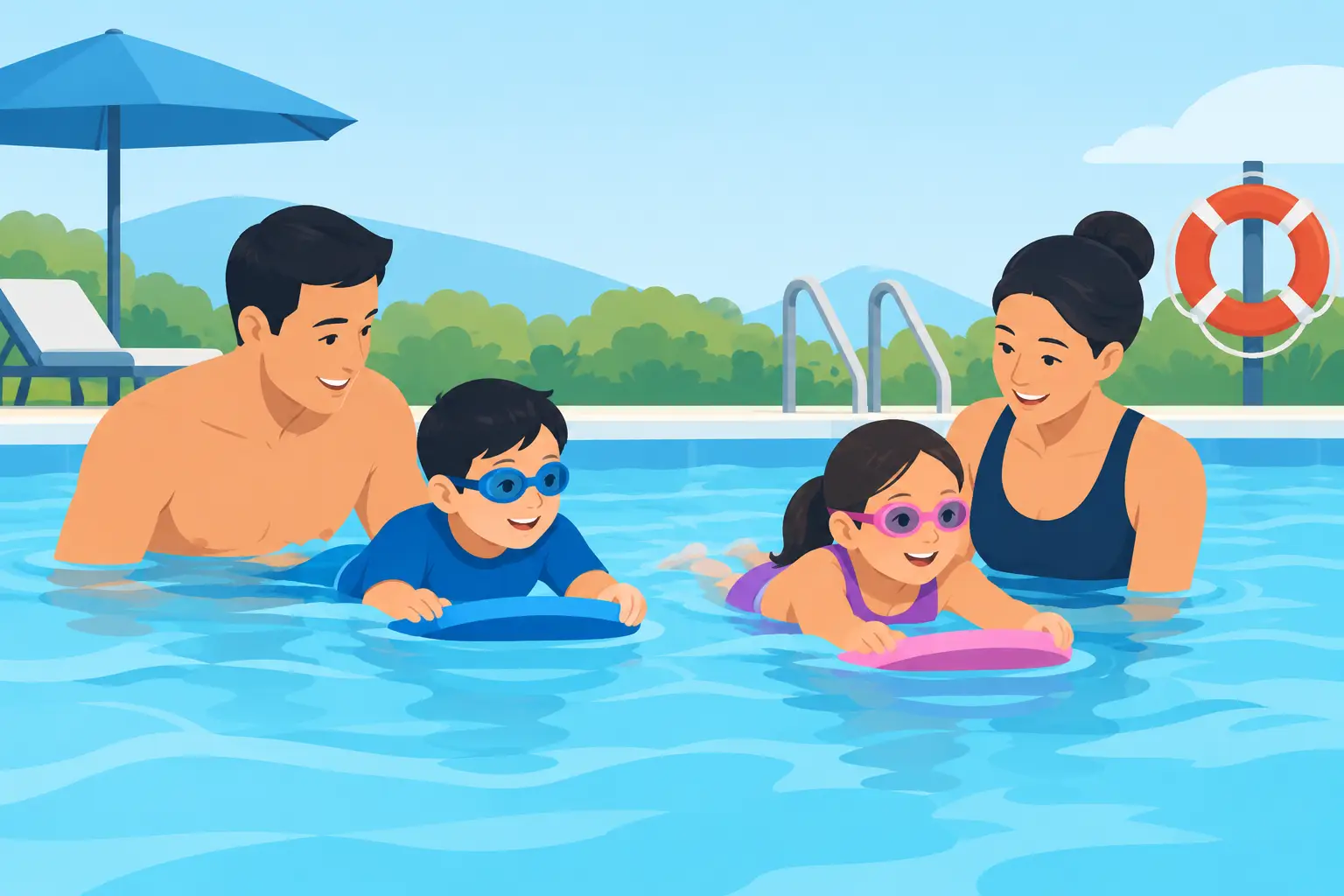
Lifeguards are essential, but they do not replace direct parental supervision. Young children and weaker swimmers require close, active attention. An adult should be within reach when a child is still developing independent water confidence, especially in deeper water or unfamiliar pools.
This does not mean children should never have space to practice independence. The right level of supervision depends on the swimmer’s actual ability, not their age, size, or enthusiasm. A child who can swim one length during a lesson may still struggle with fatigue, panic, or orientation in a larger recreational pool.
A useful family practice is to name one responsible water watcher at a time. That person stays focused on the children in the water until another adult clearly takes over. It is simple, direct, and far safer than making assumptions.
The Core Skills That Protect a Swimmer
Swimming strokes are valuable, but survival skills deserve equal attention. A strong water safety program teaches swimmers how to respond when they are not in ideal conditions. This includes entering water safely, returning to the wall, floating to rest, treading water, changing direction, and exiting without assistance.
For beginners, the first achievement may be as practical as recovering from a face-down position, rolling onto the back, and floating calmly. This skill can feel challenging at first, particularly for children who dislike water on their face or adults who have carried a fear of deep water for years. With structured practice, it becomes a reliable response rather than a frightening experience.
As confidence grows, swimmers should learn how to move safely through deeper water, orient themselves after entering, and conserve energy. They should also practice swimming while wearing light clothing when appropriate and under qualified supervision. Water does not always present itself as a clear, quiet pool with a nearby wall. Training should prepare swimmers for realistic situations without making lessons overwhelming.
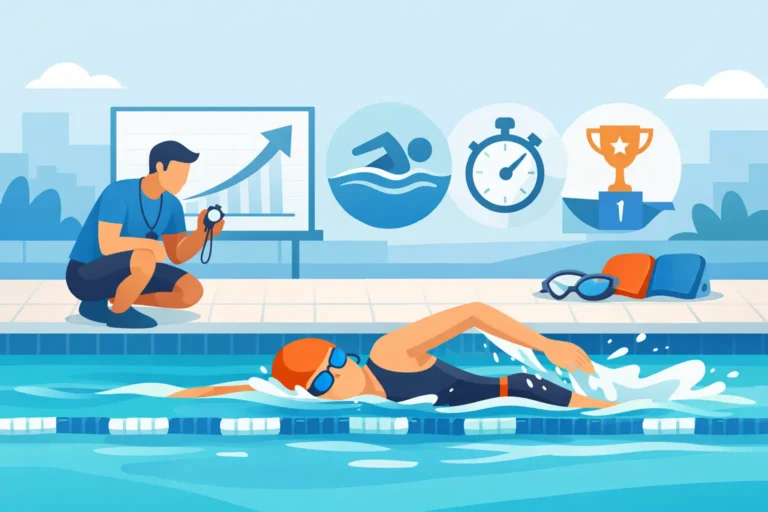
The most useful skills are the ones a swimmer can perform calmly and repeatedly. A rushed learner may copy a movement once, but real progress comes from consistent practice, correction, and measurable improvement.
Why floating and treading matter
Many people judge swimming ability by speed or by the ability to complete a freestyle lap. Yet a swimmer who can move quickly but cannot rest in deep water has a serious gap in their readiness. Floating and treading water give a swimmer time to breathe, assess their surroundings, and decide what to do next.
For young children, these skills also build emotional confidence. They learn that being unable to touch the bottom does not automatically mean danger. They have a response: stay calm, float or tread, look for the wall or an adult, and move deliberately.
Safe exits are a learned skill
Getting into a pool is usually easy. Getting out can be more difficult, especially when a swimmer is tired. Children should practice locating the pool edge, holding on securely, moving along the wall, and exiting safely. Different pools have different wall heights, ladders, and access points, so learners benefit from practicing in more than one controlled environment as their ability develops.
Structured Lessons Build Safer Decisions
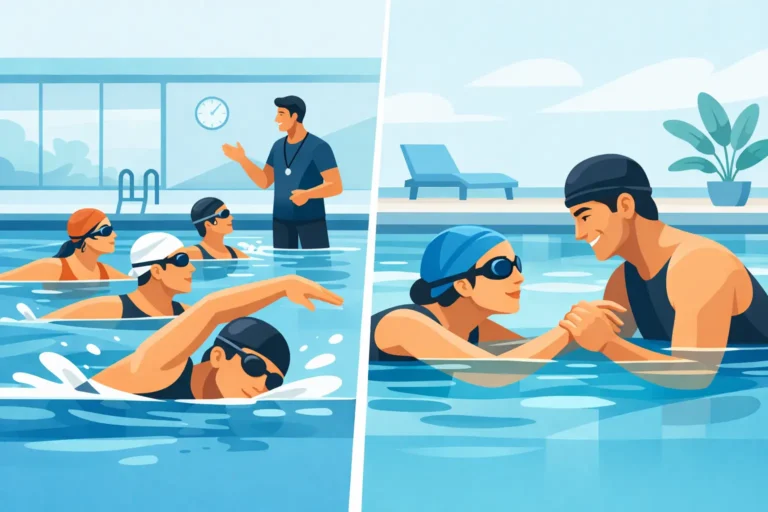
Informal pool play can help children become comfortable in water, but it should not be treated as a replacement for instruction. Play rarely provides systematic practice in breath control, floating, survival strokes, deep-water confidence, or emergency response.
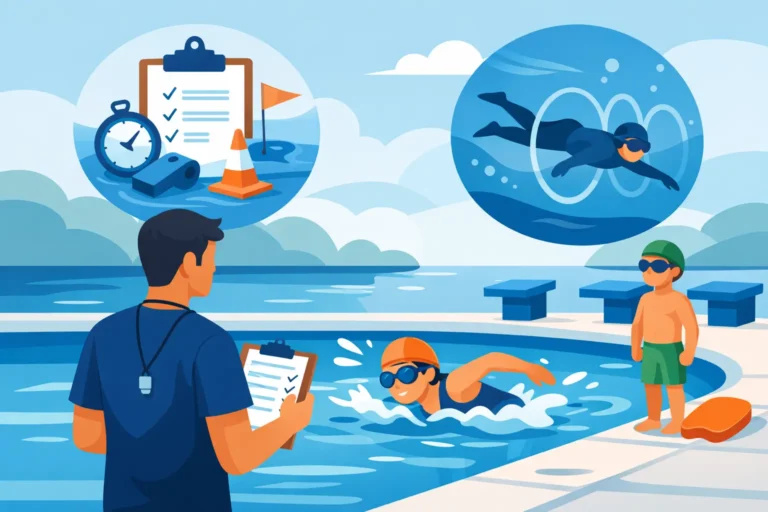
Structured lessons provide a progression. A qualified instructor can assess whether a swimmer is ready to move forward, identify habits that may create risk, and build skills in the correct order. For example, a learner who is anxious about submerging may need more work on breathing and body position before attempting longer distances. Pushing ahead too quickly can reduce confidence and create unsafe compensations.
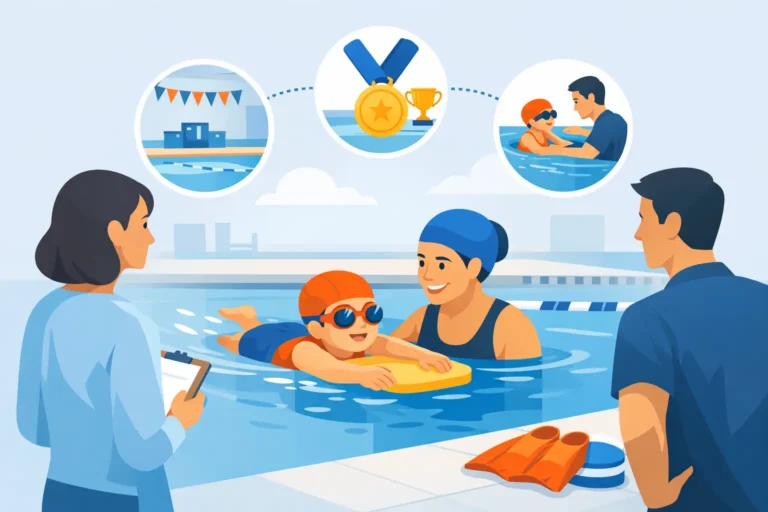
Certification-focused programs also give families a clear way to measure development. In Singapore, SwimSafer progression emphasizes personal survival, water safety knowledge, and practical swimming ability. The value is not only the certificate. The assessment process helps ensure a swimmer can demonstrate skills under appropriate conditions rather than simply claiming they can swim.
AQZOG approaches swimming as a life skill, combining water confidence with structured progression, survival readiness, and practical test preparation. This matters for children working toward SwimSafer stages, as well as adults who want a clear path from beginner skills to confident independent swimming.
Water Safety at Beaches, Water Parks, and Open Water
A pool is controlled. Open water is not. Waves, currents, changing depth, poor visibility, slippery surfaces, and weather can alter the risk level quickly. Even a capable pool swimmer should avoid overestimating their readiness in the sea, a lake, or a river.
Families should choose designated swimming areas, follow posted warnings, and enter only when conditions are suitable. Children should remain close to a responsible adult, even if they are strong swimmers. Inflatable toys and flotation devices can be enjoyable, but they are not safety equipment and should never replace supervision or swimming ability.
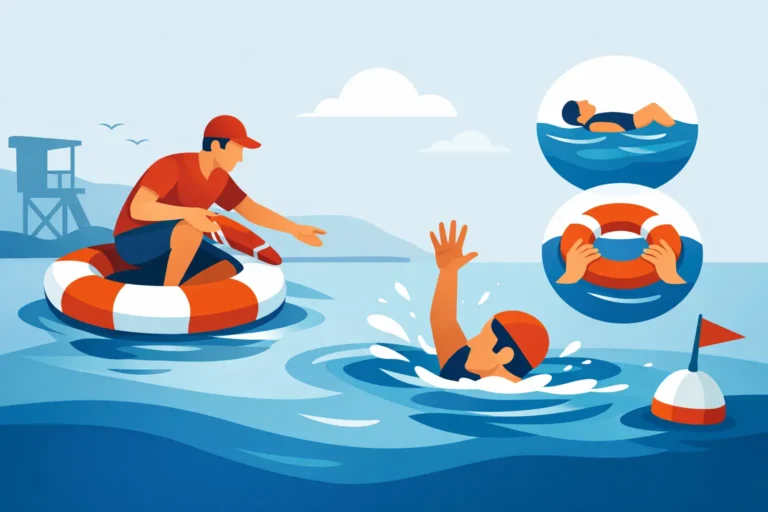
At beaches, teach children to look for lifeguard instructions and to recognize that water conditions can change during the day. If caught in a current, the priority is to stay calm, float or tread water, and signal for help rather than fight blindly against the water. Specific open-water rescue techniques should be taught by trained professionals, but the basic principle is universal: conserve energy and seek assistance.
What Parents Can Practice Between Lessons
Water safety improves when it becomes part of every swim, not just a topic discussed once. During supervised pool time, parents can ask children to point out the nearest exit, show how they would hold the wall, or practice rolling onto their backs to float. Keep the tone encouraging. The purpose is to reinforce safe responses, not turn every family swim into a test.
For school-age children, talk through realistic scenarios. What should they do if they are tired in deep water? What if a friend dares them to jump into an unfamiliar area? What if they see someone struggling? The safest answer is often to call for an adult or lifeguard rather than attempt a rescue alone. A distressed swimmer can pull an untrained helper underwater, so getting help is the responsible choice.
Adults should practice the same standards. If you are returning to swimming after years away, begin at the level that matches your current ability. Private coaching or a beginner class can be a faster and safer route than trying to relearn difficult skills independently.
Confidence in water should be earned through practice, not assumed because someone has spent time near a pool. Each lesson, each supervised swim, and each correctly repeated survival skill gives a child or adult a stronger foundation for the moments that matter most.