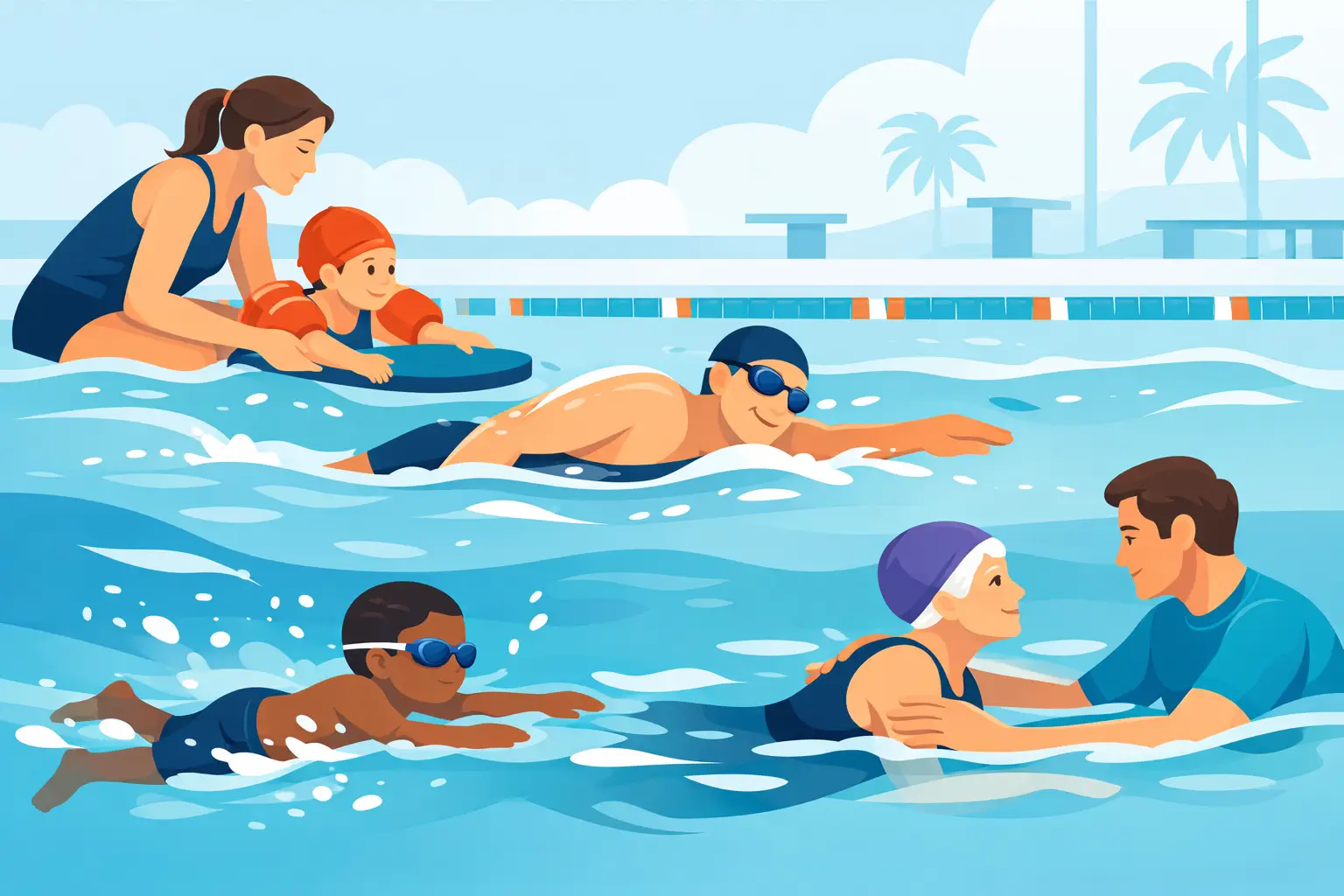
Swimming Lessons for All Ages Build Safer Swimmers
A child who can float, turn toward safety, and reach the pool edge has gained far more than a new weekend activity. An adult who finally puts their face in the water without panic has made equally meaningful progress. Swimming lessons for all ages work best when they treat every milestone as part of a clear safety pathway, not as a race to finish a stroke.
For families, swimming is a practical life skill in a country surrounded by water and filled with pools. For adults, it can be the confidence to join friends in the water, prepare for a fitness goal, or meet the requirements for a professional or lifesaving pathway. The starting point may differ, but the goal is consistent: develop calm, capable swimmers who know how to respond safely in and around water.
Why Swimming Instruction Should Be Age-Appropriate
Age is not the only factor that shapes a swimmer’s learning plan, but it changes how instruction should be delivered. Toddlers learn through routine, play, repetition, and close adult support. School-age children are ready to connect techniques with rules, practice independence, and work toward structured assessments. Adults often need a different kind of coaching altogether, especially if fear, a long gap since childhood, or a specific performance target is involved.
A well-run program does not place every beginner into the same lesson and hope that confidence follows. It identifies what the swimmer can already do, what may be holding them back, and which skills must come next. This makes progress easier to see and helps prevent a common problem: learners who can move through the water but do not yet have reliable survival skills.
Toddlers: Comfort Before Formal Technique
For toddlers, the first achievement is not a perfect kick. It is relaxed participation in the water. A thoughtful water introduction program helps young children become familiar with splashing, supported movement, bubbles, simple entries, and safe ways to return to an adult or the pool edge.
Parents should look for instruction that respects a toddler’s pace. Some children are ready to separate from a parent quickly, while others need more time to build trust. Pushing a fearful child to submerge before they are prepared can create resistance. At the same time, avoiding every new challenge can slow progress. Experienced coaching balances reassurance with small, repeatable goals.
Children: Build Skills That Hold Up in Real Situations
Once children are ready for more independent learning, lessons should move beyond basic paddling. They need to understand how to enter water safely, float and regain composure, move with purpose, breathe effectively, and exit the pool. These are the building blocks of water survival.
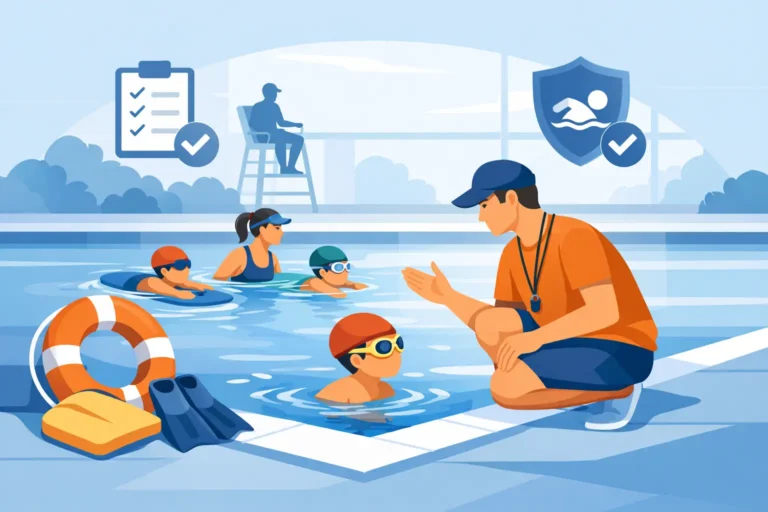
Structured stage progression gives families a practical way to monitor development. SwimSafer training, for example, combines swimming ability with personal survival and water safety knowledge. Children are not simply asked to swim farther. They learn to make safer decisions, manage fatigue, and apply skills in controlled scenarios.
This matters because confidence alone is not proof of readiness. A child may enjoy jumping into a pool yet still struggle to float after swallowing water or to return to an exit point when tired. Regular lessons turn enthusiasm into dependable capability.
Teens and Adults: Start Where You Are
Adults often delay lessons because they assume everyone else in class will be more advanced. In reality, adult beginners are common, and many need coaching that is calm, private, and specific. The first objective may be overcoming a fear of putting the face in water. For another learner, it may be breathing without lifting the head too high or swimming one length without stopping.
Private or semi-private instruction can be especially effective when an adult has a strong water fear, a tight schedule, or a focused goal such as freestyle efficiency, triathlon preparation, or a lifesaving qualification. Group lessons can offer motivation and regular practice, but the best format depends on the swimmer’s needs. Faster is not always better if rushed instruction leaves gaps in breathing, floating, or safety awareness.
What a Structured Lesson Pathway Looks Like
Quality swimming instruction follows a sequence. Skills are introduced, practiced, observed, and reinforced before the swimmer is expected to handle more demanding tasks. That structure protects learners from progressing on confidence alone.
A typical pathway begins with water familiarization and safe pool behavior. Swimmers then develop buoyancy, balance, submersion, breathing control, propulsion, and coordinated strokes. As capability grows, instruction should include deeper-water confidence, survival floating, treading water, directional changes, and safe exits. Formal stage training and practical test preparation can then confirm that learners meet the required standard.
For children taking SwimSafer assessments, test readiness should not start the week before the practical test. Mock practical tests and theory preparation are valuable because they reveal where a swimmer needs more support. A child may complete a skill during a normal lesson but lose focus when asked to perform it in a test sequence. Practice under assessment-like conditions builds familiarity without unnecessary pressure.
At AQZOG, this progression-centered approach supports learners from early water introduction through certification-focused training and beyond. The emphasis remains on measurable skill development, not short-term performance for a badge alone.
Choosing the Right Format for Your Family
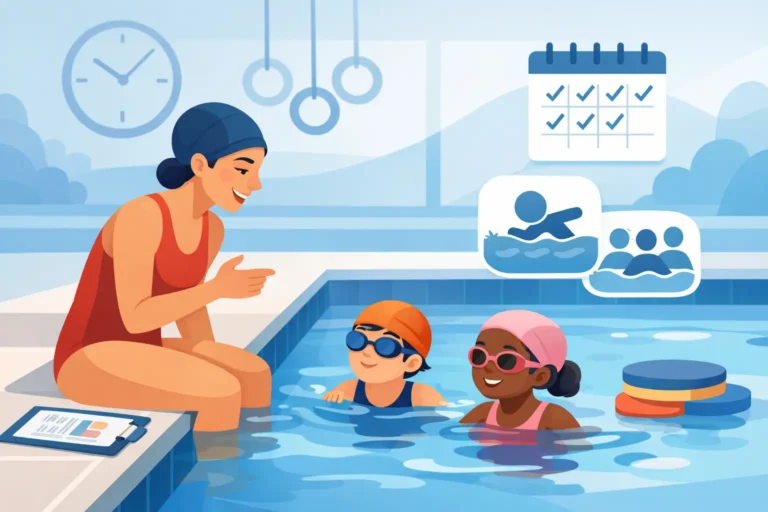
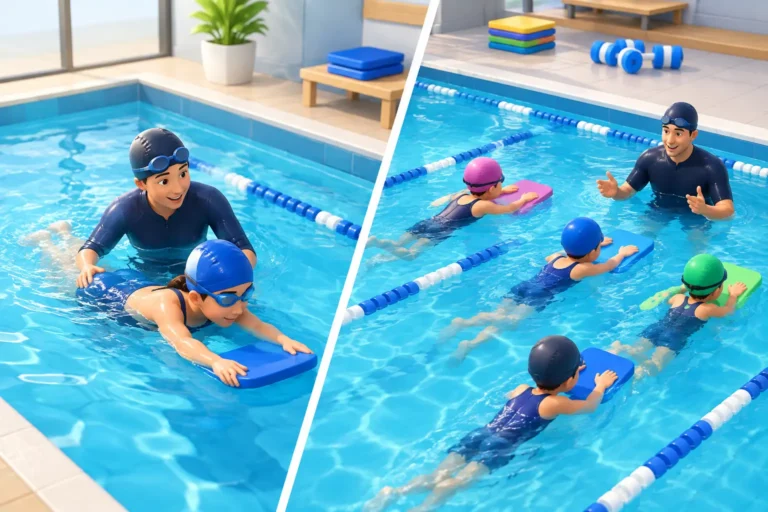
Weekly group classes are a strong choice for many children because consistency is what turns instruction into habit. The regular schedule gives swimmers time to absorb corrections, gain confidence alongside peers, and build one skill on top of another. It is also a practical option for families seeking steady progression over a school term.
Private coaching may be the better fit when a swimmer needs concentrated attention. This can include children preparing for a SwimSafer test, adults rebuilding confidence after a negative experience, or athletes refining technique for speed and endurance. Semi-private lessons work well for siblings or friends with similar ability levels, though they are less suitable when one swimmer requires significantly more support than the other.
Holiday intensive programs can accelerate a specific goal, particularly when a swimmer already has a foundation and can attend multiple sessions close together. They are useful for strengthening weak areas before an assessment or rebuilding momentum after a break. However, an intensive course does not replace long-term practice. Retention still depends on returning to the water regularly after the program ends.
How Parents Can Support Progress Outside Class
The most helpful support is not turning every family swim into another lesson. Children need time to enjoy the water. Still, parents can reinforce a few simple habits: listen to pool rules, ask permission before entering, stay within a safe depth, and practice only skills they have been taught and can perform confidently.
Avoid comparing siblings or classmates. Swimming progress is rarely linear. One child may learn to kick quickly but need extra time with breathing. Another may be cautious at first and then advance rapidly once trust is established. Celebrate specific achievements, such as floating independently for five seconds or completing a safe return to the wall, because those moments show genuine development.
For adults, the same principle applies. Short, regular practice sessions are usually more productive than occasional attempts to cover a large distance. Focus on one coached correction at a time. When breathing, body position, and relaxation improve, speed often follows naturally.
Signs a Swimmer Is Ready to Progress
Readiness is more than completing a skill once. A swimmer is ready for the next stage when they can repeat the skill with control, follow safety instructions, and remain composed when the task changes slightly. For example, a child who can float while relaxed may be ready to practice recovering from a float into a safe movement pattern. A swimmer who can complete one pool length may next need to demonstrate consistent breathing and a safe finish.
This is why qualified observation matters. A coach can see whether a learner is relying on panic-driven effort, holding their breath too long, or using a technique that will become difficult to correct later. Early feedback saves time and builds stronger habits.
Swimming lessons should leave every learner with something concrete: a safer response in water, a more confident stroke, a completed stage, or a clear next goal. Whether the first step is blowing bubbles or preparing for a formal assessment, steady instruction gives swimmers of every age a skill they can carry for life.