SwimSafer Assessment Review: What Parents Should Know
A SwimSafer assessment review should answer more than one question: “Will my child pass?” It should show whether your child can respond safely, calmly, and independently in the water. Certification matters, but the skills behind it matter more – especially when a child encounters deep water, falls in unexpectedly, or needs to make a safe decision under pressure.
For parents, the assessment can feel like a high-stakes day. For swimmers who have trained progressively, it is a practical opportunity to demonstrate skills they have practiced over time. Understanding what is being assessed, where children commonly lose confidence, and how to prepare without creating anxiety can make the experience much more productive.
What a SwimSafer Assessment Is Designed to Measure
SwimSafer is not simply a speed test or a test of who has the prettiest stroke. Its stages are built around a progression of water confidence, personal survival, swimming ability, and water safety awareness. As swimmers move forward, they are expected to perform with more control, greater endurance, and stronger judgment.
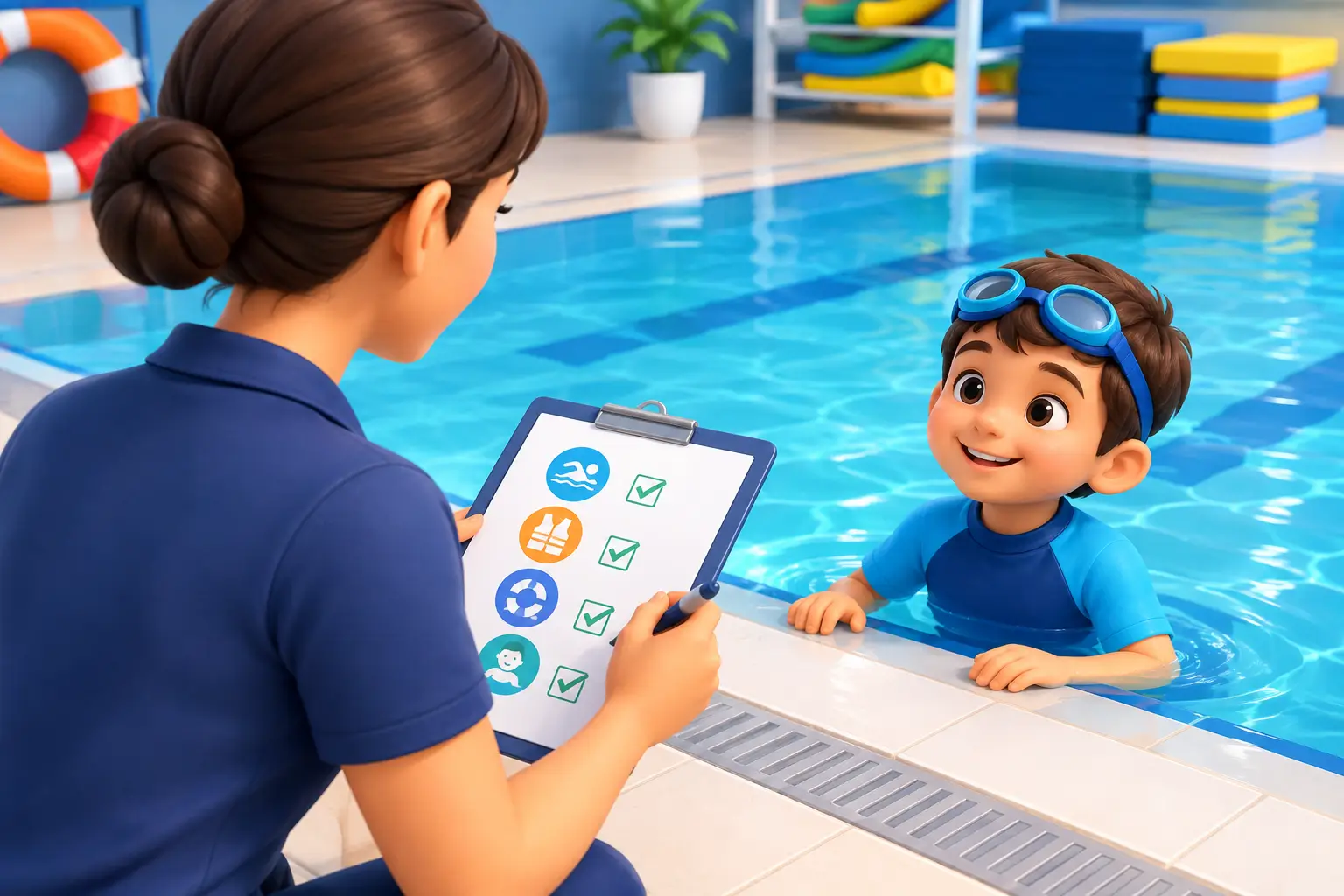
An assessor is looking for observable competence. Can the swimmer enter the water safely? Can they regain control after submersion? Can they float, rotate, tread water, move through the water, and reach safety using the required technique? At higher levels, can they apply survival skills with composure and demonstrate the knowledge expected for that stage?
The exact tasks, distances, and expectations depend on the SwimSafer stage and the current assessment requirements. That is why training should never rely on a parent’s memory of an older test or another child’s experience. A good program follows the current criteria while developing the underlying skills well beyond a last-minute checklist.
SwimSafer Assessment Review: The Skills That Matter Most
Children rarely struggle because they cannot perform one skill in isolation. More often, difficulty appears in the transition between skills. A child may be able to float during a relaxed lesson but panic when asked to enter, submerge, recover, and continue moving without stopping. They may swim the required distance in practice but lose rhythm when an assessor is watching.
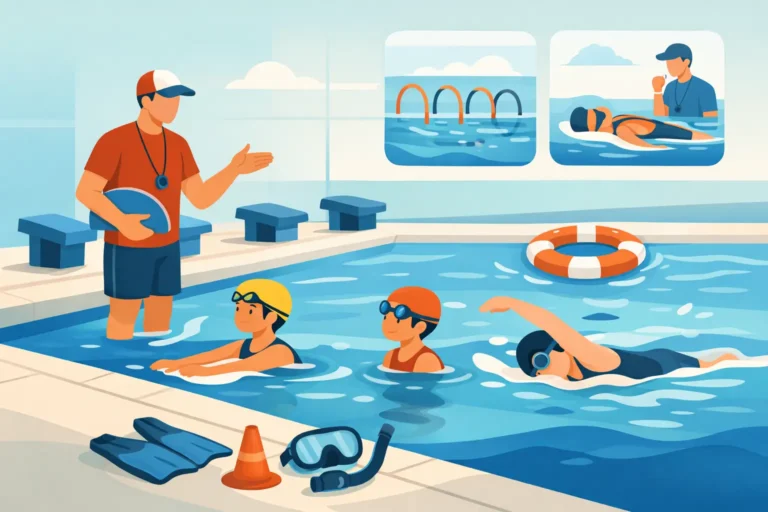
Water entry and recovery are foundational. Swimmers need to understand how to enter in the required manner, orient themselves after entering the water, and return to a stable breathing position. This is a water-survival skill, not a formality. Rushing the entry, holding the breath too long, or failing to regain balance can affect the rest of the attempt.
Floating and treading water also deserve focused preparation. These skills show whether a child can conserve energy and stay calm before moving toward safety. Some children use too much effort because they kick continuously or lift their head too high. Others have the skill but become tense when asked to hold it for a timed period. Repeated, calm practice helps them understand that stillness and controlled breathing are often more useful than force.
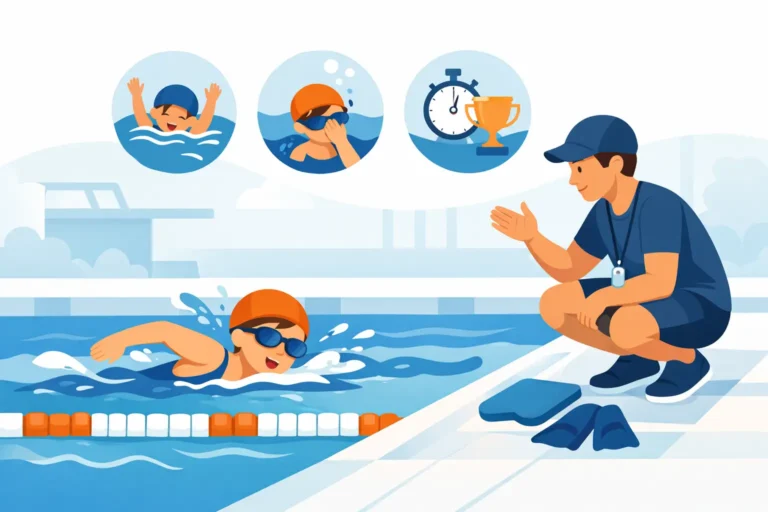
Swimming technique matters because it supports distance, direction, and efficiency. At the earlier stages, swimmers need dependable propulsion and breathing control. At more advanced stages, assessors may look for clearer stroke coordination, sustained movement, and the ability to complete tasks with less assistance or prompting. A child does not need to swim like a competitive athlete, but they should move with enough control to complete the task safely.
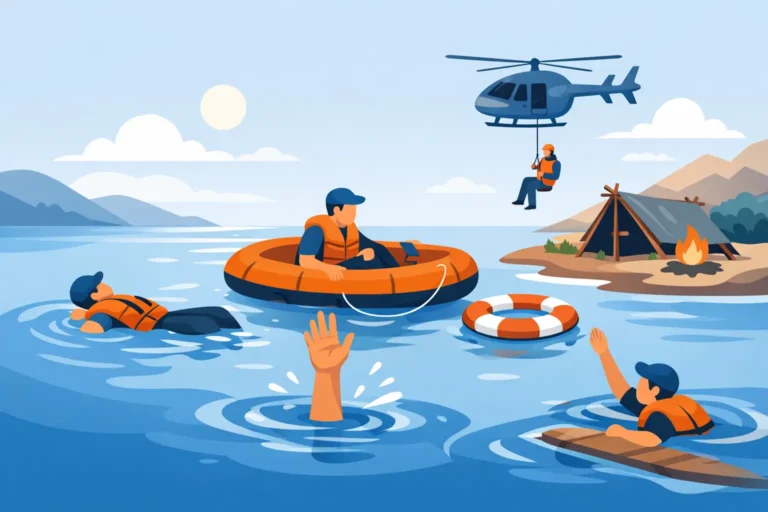
Safety knowledge should not be treated as a script to memorize the night before. Children should understand why they should not run near a pool, when to call for help, why they should not enter water alone, and how to identify safer choices around open water. When a child understands the reason behind a rule, they are more likely to remember it when it counts.
Why Strong Lesson Performance Can Still Lead to Test-Day Gaps
It can be frustrating when a child performs well in regular class but hesitates during an assessment. This does not always mean they are unprepared. Assessments create a different environment: swimmers may be asked to wait, perform independently, listen closely to directions, and complete skills in a fixed sequence.
Nerves are especially common among children who want to do well for their parents. Some rush through instructions. Some forget to breathe. Some stop after making a small mistake because they assume the attempt is over. The most helpful message is simple: listen, stay calm, and continue with the next safe action.
Attendance also has an effect. Swimming is a physical skill, and long gaps between lessons can reduce endurance, timing, and confidence. A child who has recently grown taller, changed schools, or returned from a holiday may need time to regain coordination. Progression is not always perfectly linear, particularly for younger swimmers.
Readiness can also differ across skills. A swimmer may have the distance but not the water-survival control, or understand the theory but need more work on independent execution. In these cases, moving straight into assessment because of age or peer pressure is rarely the best choice. A short period of targeted practice can build a much stronger foundation.
How to Prepare Without Turning It Into Pressure
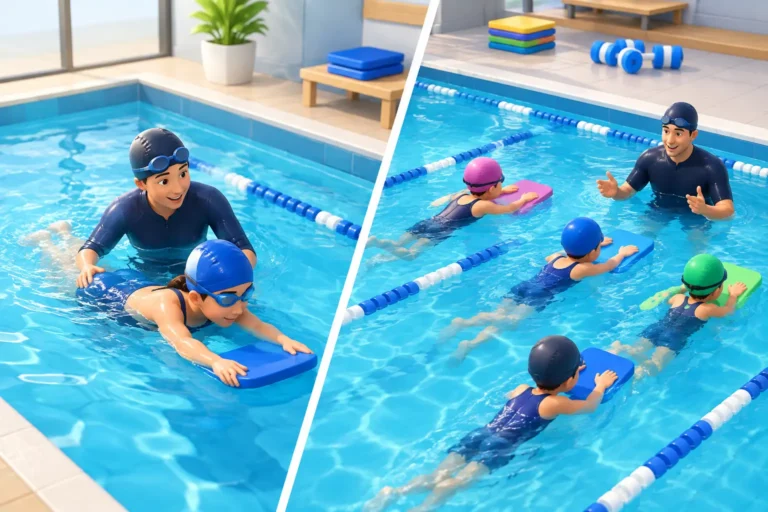
The best preparation starts weeks before the assessment. Regular lessons give coaches time to identify weak areas, correct technique, and repeat skills in different conditions. This is more effective than trying to cram every task into a single intensive session.
Parents can support the process by asking for a clear readiness update. Useful questions include whether the child can perform the skills independently, whether they can complete the required distances with controlled breathing, and whether they remain calm when tasks are practiced in sequence. A good instructor should be able to explain what is going well and what needs attention in practical terms.
Mock practical tests are valuable because they make the assessment format familiar. The swimmer learns to listen to an assessor, wait for instructions, complete tasks in order, and recover if they feel nervous. A mock test should not be used to frighten a child. It should be used to reveal gaps early, so training can be focused and encouraging.
The day before the assessment, avoid exhausting extra practice. Ensure your child has slept well, eaten normally, packed the required swim items, and knows when and where to arrive. On the day, arrive early enough that they are not rushing to the pool deck. Calm routines support calm swimming.
Avoid giving several technical reminders at the last minute. A long speech about kicking, breathing, floating, and passing can overload a nervous child. One or two familiar cues are enough, such as “Listen first” and “Stay relaxed in the water.” Let their training do the work.
What Happens If a Swimmer Is Not Yet Successful
Not achieving a pass on the first attempt can be disappointing, but it is useful feedback rather than a label. The right next step is to identify the exact component that needs work. Was it confidence during entry? Stamina over a required distance? Treading water? Understanding the instructions? A specific review creates a specific training plan.
Parents should be cautious about treating a retest as something to rush. If the gap is minor and the swimmer is otherwise secure, a focused practice period may be appropriate. If the child shows fear, inconsistent breathing, or weak survival skills, more time in structured lessons is the safer choice. Certification should reflect real capability, not a one-day result achieved through luck or pressure.
At AQZOG, assessment preparation is approached as part of a wider progression pathway: skill development first, mock practice next, then test readiness when the swimmer can perform with confidence. This gives children a stronger chance of showing what they know while keeping the focus where it belongs – safe, independent movement in water.
The Value That Lasts Beyond the Certificate
A SwimSafer certificate is a meaningful milestone for children and a useful marker of progress for parents. Yet the greater achievement is watching a swimmer make safer choices, recover calmly after entering the water, and trust their ability to move toward safety.
Give your child time to build those habits properly. When assessment day arrives, the goal is not simply to collect the next certificate, but to see real confidence and water safety in action.