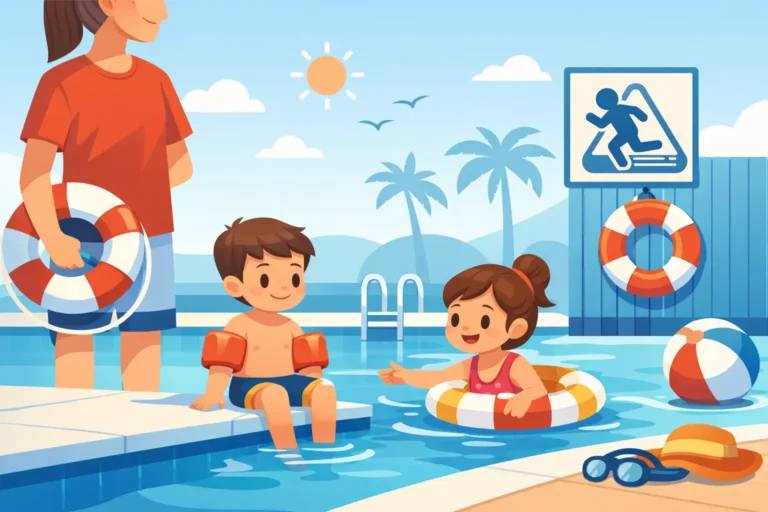
Children Pool Confidence Exercises That Work
A child gripping the pool wall with both hands is not being difficult. They are communicating that the water still feels unpredictable. The most effective children pool confidence exercises do not rush that feeling away. They give children small, repeatable wins until they can breathe, float, move, and recover with greater control.
For parents, confidence can look like a child finally putting their ears in the water or letting go of the wall for three seconds. For a swim instructor, those moments are meaningful foundations for water safety, stroke development, and future assessment readiness. The goal is not to make a child fearless. It is to help them respond calmly and skillfully when they are in the water.
Why Pool Confidence Must Come Before Stroke Technique
A child who is anxious in the water has limited attention for kicking patterns, arm recovery, or breathing timing. Their body may stiffen, their head may stay high, and every correction can feel like another demand. Starting with confidence changes the learning environment. The child learns that water can be entered safely, that their face can get wet without panic, and that they have practical ways to regain balance.
This matters beyond recreational swimming. Water confidence supports safer decisions around pools, better participation in structured lessons, and stronger readiness for survival skills. A child who can relax on their back, return to the wall, and control their breath is building abilities that matter when conditions are less than ideal.
Confidence is also not a fixed personality trait. A naturally cautious child may progress steadily when exercises are introduced in the right sequence. A bold child may appear confident but still lack control, especially when asked to float or submerge. Good instruction looks at observable skills rather than labeling a child as brave or fearful.
Children Pool Confidence Exercises in the Right Order
The most productive exercises move from supported contact with the water to independent movement. Progression should be based on the child’s comfort and control, not simply their age or the number of lessons completed.
1. Water Acclimation at the Pool Edge
Begin where the child can sit comfortably with their feet in the water or stand in shallow water with firm footing. Ask them to scoop water onto their arms, shoulders, cheeks, and hair. They can make small splashes with their hands, then use their feet to create a gentle kick.
This may seem basic, but it gives a hesitant child choice and predictability. Avoid suddenly splashing a child’s face or pulling them into deeper water as a joke. Surprise may create a short burst of excitement, but it can also undo trust. Let the child control the first contact, then encourage the next small step.
2. Bubble Blowing for Breath Control
Breath control is one of the clearest building blocks of pool confidence. Start by having the child blow across the water like they are moving a toy boat. Next, ask them to place their lips in the water and make bubbles. When that feels comfortable, they can place their nose and mouth in, then progress to full-face submersion.
Use short, clear cues: breathe in above the water, then blow bubbles below it. A child should never be asked to hold their breath for extended periods or compete to see who can stay underwater longest. The objective is controlled exhalation, not endurance.
A useful sign of progress is when the child lifts their face out of the water calmly and takes a relaxed breath rather than coughing, wiping frantically, or immediately grabbing for an adult.
3. Assisted Front and Back Floats
Floating teaches children that they do not need to fight the water. For a front float, support the child beneath the chest or hold their hands while they extend their body long and look down. For a back float, support the head and upper back while encouraging the child to look upward and keep their hips close to the surface.
Many children find back floating harder because they cannot see where they are going. Start with very short attempts, even two or three seconds, and bring them upright before they become distressed. As they improve, reduce support gradually. The child should feel that the adult is close enough to help but not doing the entire float for them.
Keep language specific. Instead of saying, “Relax,” try “Look at the ceiling,” “Put your tummy up,” or “Make your body long like a pencil.” Children respond better when they know what action to take.
4. Wall Holds, Monkey Walks, and Safe Returns
The pool wall is a child’s first reliable safety point. Teach them to hold it with both hands, move sideways along it, and travel toward a designated exit point. This activity is often called a monkey walk because the child moves hand-over-hand while facing the wall.
Then practice a simple return: move a short distance away from the wall with support, turn back toward it, reach, and hold on. Gradually increase the distance only when the child can complete the task calmly. This is more valuable than pushing a child to swim farther before they understand where safety is.
At AQZOG, structured progression treats these recovery skills as essential, not as an extra after a child has learned a recognizable stroke. A child who can find and hold the wall has a practical response when they lose balance or become tired.
5. Supported Kicking and Short Glides
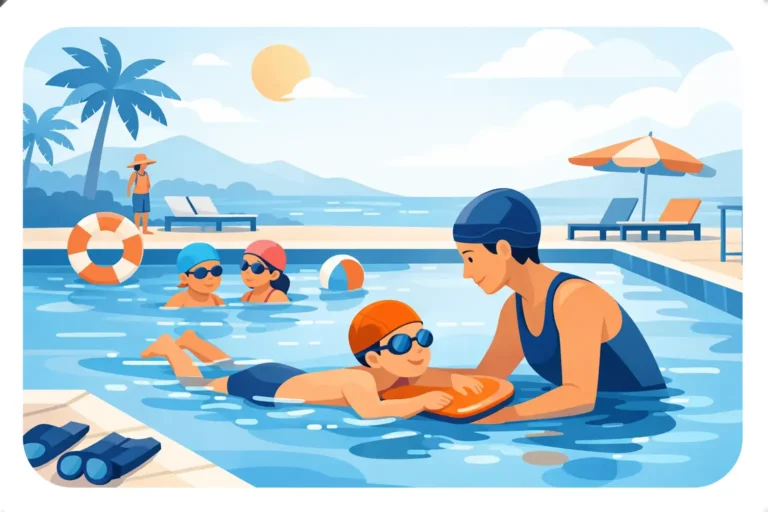
Once bubbles and floating are becoming familiar, introduce movement. Hold the child’s hands or use a stable support while they kick from the hips with relaxed legs. Keep the distance short. A successful three-foot movement with a calm face is more useful than a frantic ten-foot effort.
Short glides are the next step. From the wall, ask the child to place both hands together, push gently, and glide toward an adult. The push should be controlled, not explosive. The child learns that forward movement can be quiet and balanced rather than a scramble to keep their head above water.
Kickboards can help some children focus on leg action, but they are not required and can create a false sense of security if used too early. If a child clings rigidly to the board with their head held high, return to supported body-position work instead.
How Parents Can Build Confidence Without Adding Pressure
Practice works best when it is brief and positive. Ten focused minutes can be more effective than an hour in which a child becomes cold, tired, or overwhelmed. End on a task the child can do successfully, such as blowing bubbles or holding the wall, so they leave the pool with a clear memory of achievement.
Praise the action, not just the outcome. “You put your whole face in and blew bubbles” tells a child exactly what they did well. “You are such a good swimmer” may sound encouraging, but it gives less useful feedback and can create pressure to perform.
Parents should also avoid comparing siblings or classmates. Children develop confidence at different rates depending on previous exposure, temperament, sensory preferences, and motor skills. The right question is not whether a child is progressing as quickly as someone else. It is whether they are gaining more control than they had before.
When a Child Needs More Structured Support
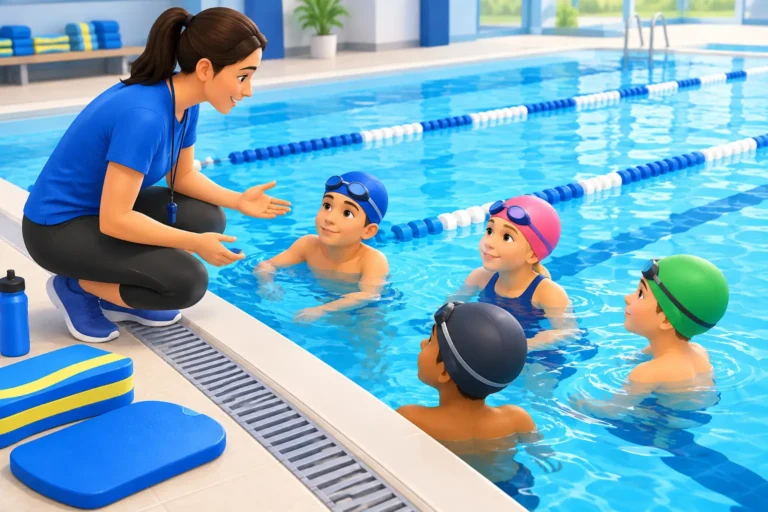
Some hesitation is normal, especially after a long break from lessons or an unpleasant water experience. However, a child may benefit from qualified instruction if they repeatedly panic during face wetting, refuse to release the wall, cannot recover their standing position in shallow water, or show a large gap between apparent confidence and actual safety skills.
A structured lesson environment helps because each skill is taught in sequence, repeated with consistent cues, and adjusted to the child’s readiness. Group lessons can be motivating for children who learn well by watching peers. Private instruction may be a better fit for a highly anxious beginner, a child needing focused correction, or a learner preparing for a specific water safety assessment. Neither format is automatically better. The right choice depends on the child’s needs and the quality of the progression.
Make Every Small Win Count
Pool confidence grows through evidence. Each time a child blows bubbles without rushing, floats with less support, or returns to the wall independently, they learn that they can manage the water. Keep the next challenge small enough for success, repeat it until it feels familiar, and let those quiet achievements build the calm, capable swimmer you want them to become.