Guide for Stroke Correction That Builds Speed
A swimmer can be energetic, brave, and willing to practice, yet still struggle to move efficiently through the water. The reason is often not effort. It is technique. This guide for stroke correction explains how swimmers can identify the habits that slow them down, correct them safely, and turn practice into measurable progress.
For children, better technique supports water safety, SwimSafer progression, and confidence during practical assessments. For adults, it can reduce fatigue, improve fitness, and make lap swimming feel far less frustrating. The right correction depends on the swimmer’s age, stroke, comfort level, and current ability, but the process always begins with observation rather than guesswork.
Why Stroke Correction Matters Before More Training
Swimming is a skill of coordination. A small error in head position, breathing timing, body alignment, or kick can create resistance that affects the entire stroke. When a swimmer repeats that error across many laps, they may become fitter without becoming more efficient.
Correction helps a swimmer use less energy for the same distance. A child who lifts the head too high in freestyle may let the hips sink and then kick harder to stay afloat. An adult who crosses one arm over the center line may lose balance, pull off-course, and strain the shoulder. In both cases, the visible problem is only part of a larger movement pattern.
This is why simply telling a swimmer to “go faster” rarely works. Faster swimming should come after stable body position, controlled breathing, and a repeatable stroke rhythm. Speed built on poor mechanics often reinforces the very habits that need to change.
Start With One Clear Stroke Goal
Trying to correct everything in one lesson can overwhelm a swimmer, especially a young child or a nervous beginner. A stronger approach is to select one main goal that will create the greatest improvement.
For example, a freestyle swimmer may first work on keeping the head neutral and looking down rather than forward. Once the body is flatter and more balanced, breathing becomes easier. Only then should the swimmer focus heavily on arm recovery or a stronger pull. In breaststroke, the first priority may be learning the correct sequence: pull, breathe, kick, glide. Without that sequence, adding more power usually makes the stroke less effective.
A good goal is specific and observable. “Keep one goggle in the water when breathing” is easier to practice than “improve your freestyle.” “Finish each kick with straight, together legs” gives a breaststroke swimmer a clear action to repeat.
Guide for Stroke Correction: Assess the Whole Body
Effective stroke correction looks at how each part of the body affects the next. Coaches commonly assess body position, kick, arm action, breathing, timing, and turns. The swimmer may show a problem in one area while the cause begins somewhere else.
Body position comes first
A streamlined body moves through the water with less drag. In freestyle and backstroke, the swimmer should feel long through the spine, with hips close to the surface. The head should remain relaxed and aligned with the body. Looking forward while swimming freestyle is one of the most common causes of dropping hips and excessive fatigue.
For butterfly and breaststroke, the body naturally rises and falls more than in freestyle. Even so, swimmers should avoid lifting the chest too high. A high lift creates resistance and makes it difficult to return smoothly into the glide.
Useful correction drills often include kicking with a board, side-kicking, streamline glides, and short swims focused only on maintaining balance. These drills should be supervised for beginners, particularly children who are still developing breathing confidence.
Correct the kick without treating it as an afterthought
A kick does more than provide propulsion. It supports balance and rhythm. In freestyle, an effective kick begins from the hips with relaxed ankles. Many swimmers bend too much at the knees, creating a cycling motion that adds drag rather than helping them travel forward.
Breaststroke requires a different correction. The heels should recover toward the body, the feet should turn outward, and the legs should press back and around before coming together into a streamlined glide. A wide, uneven, or rushed kick can slow the swimmer significantly. Because breaststroke kicking places demand on the knees and hips, swimmers should never force a large range of motion if it causes pain.
In backstroke, a common issue is kicking too deeply under the water. Short, steady kicks near the surface are generally more efficient and help maintain body position.
Improve the catch and pull
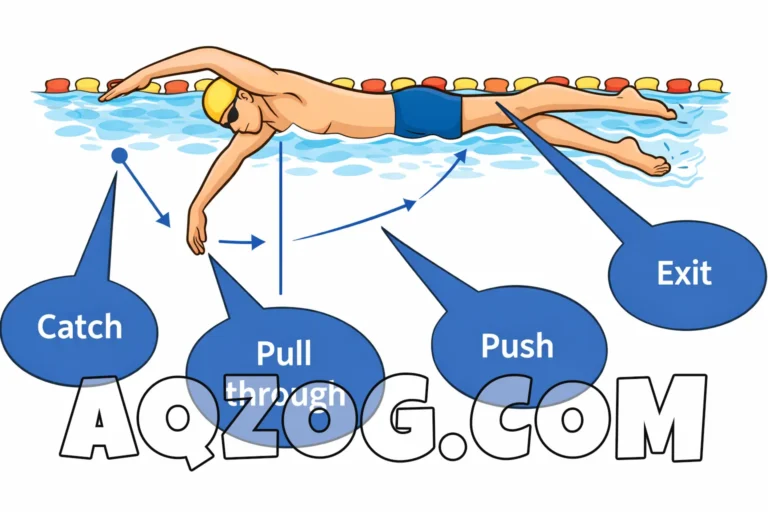
The catch is the moment the hand and forearm begin to grip the water. A swimmer who pulls with a straight arm may move water downward instead of backward, reducing forward progress. In freestyle, the elbow should generally remain higher than the hand during the early pull, allowing the forearm to press water behind the body.
Young swimmers do not need complicated technical language to learn this. Simple cues work well: “Reach long, then pull the water behind you” or “Show your elbow to the ceiling before your hand exits.” Adults and advanced swimmers may benefit from more detailed video feedback to see whether one arm is entering too wide, crossing over, or finishing early.
The goal is not to copy one exact shape. Swimmers have different flexibility, strength, and body proportions. The goal is a stable, pain-free movement that creates forward propulsion.
Fix Breathing Before It Creates Fear
Breathing is where many stroke problems begin. A swimmer who holds their breath tends to become tense, lift the head abruptly, and lose rhythm. A child who has had water enter the nose or mouth may rush the breath and avoid putting the face fully into the water.
Freestyle breathing should be practiced with a slow, continuous exhale underwater. When it is time to inhale, the swimmer rotates the body and head together rather than lifting straight up. One goggle can remain in the water, helping the swimmer keep a low and balanced breath.
For breaststroke, the breath happens as the arms sweep in and the body rises naturally. The swimmer should inhale quickly, place the face back in the water, then exhale during the kick and glide. Breathing late often makes the stroke look rushed and disconnected.
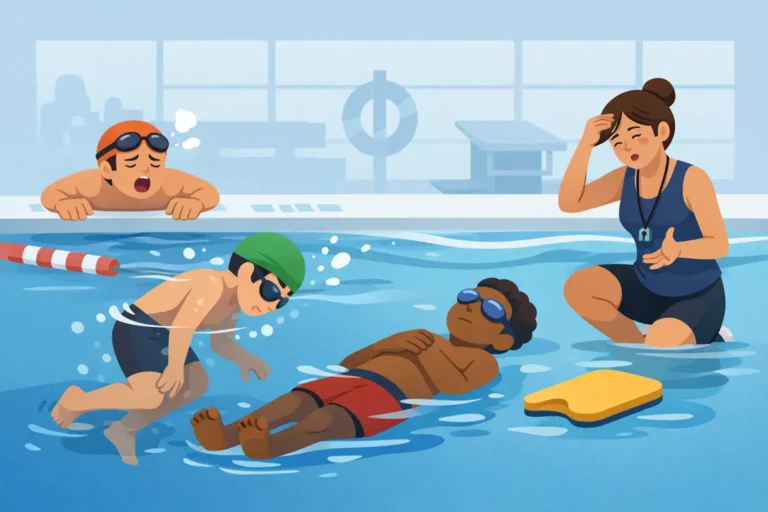
For fearful swimmers, correction may need to begin at the pool wall or in shallow water. Bubble blowing, supported floating, and short face-in glides build the comfort needed for real stroke work. Pushing an anxious swimmer into full laps too early can slow progress rather than accelerate it.
Use Drills With a Purpose
Drills are valuable only when the swimmer understands what they are practicing. Repeating a drill without feedback can turn a temporary exercise into another bad habit. Keep drills short, focused, and followed by a few full strokes so the swimmer can apply the feeling to normal swimming.
A practical correction sequence may include:
- A short demonstration of the target movement
- One drill that isolates the skill
- A brief swim using the corrected movement
- Immediate feedback with one simple cue
- A repeat attempt before moving to the next skill
For instance, side-kicking can teach freestyle balance, but the swimmer should soon transition into freestyle with the same relaxed head position and body rotation. A breaststroke glide drill should lead back into the full pull-breathe-kick-glide pattern. The connection between drill and stroke is where improvement becomes visible.
Measure Progress Beyond Speed
Time trials are useful for confident swimmers preparing for competition or fitness goals, but they are not the only measure of improvement. For children working toward SwimSafer outcomes, progress may look like a calmer face-in swim, more controlled treading water, safer deep-water entry, or the ability to complete a required distance without stopping.
For adult beginners, progress may mean breathing without panic, swimming two lengths with less fatigue, or feeling balanced enough to practice independently. For advanced swimmers, it may mean fewer strokes per length, a more consistent split time, or less shoulder discomfort after training.
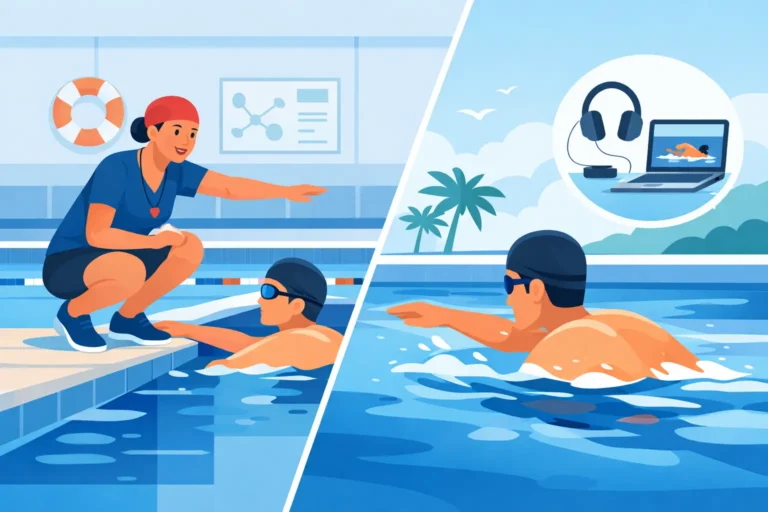
Video can be helpful because swimmers often feel that they are doing one thing while their body is doing another. However, video should support coaching, not replace it. A trained coach can identify whether a visible error is caused by timing, fear, mobility, strength, or misunderstanding of the skill.
Know When to Slow Down or Seek Coaching
Some corrections can be practiced independently, especially by swimmers with an established foundation. Others require close supervision. Children, weak swimmers, and anyone rebuilding confidence after a frightening experience should work with an instructor in a controlled environment.
Pain is also a reason to pause. Shoulder, neck, knee, or lower-back discomfort should not be treated as a normal part of stroke correction. The swimmer may need a technique adjustment, reduced training volume, or advice from a qualified health professional before continuing.
Structured lessons offer a clear advantage because feedback is immediate and progression is planned. At AQZOG, swimmers are coached through age-appropriate skill development that connects stroke technique with water safety, confidence building, and certification readiness.
The best correction is the one a swimmer can repeat calmly and safely. One well-timed adjustment at a time can turn difficult laps into controlled movement, and controlled movement is where lasting confidence in the water begins.