Adult Beginner Lessons or Self Learning for Swimming
The first time an adult puts their face in the water, the challenge is rarely fitness. It is control. Can you breathe without panicking, float without gripping the wall, and recover calmly if water enters your nose? Choosing between adult beginner lessons or self learning shapes how safely and confidently you build those foundations.
For some adults, self-learning feels private and flexible. For others, a structured lesson is the quickest route past fear, confusion, and repeated bad habits. Neither route is automatically right for everyone, but they do produce very different results.
What adult beginners need before technique
A beginner does not need to start with perfect freestyle. Before stroke development, they need water awareness, breath control, buoyancy, and safe recovery skills. These are practical abilities that help a swimmer stay composed when something does not go as planned.
Many adults can move through the water while still feeling unsafe. They may kick hard, lift their head to breathe, or depend on goggles and pool walls for reassurance. That can look like progress, but it often limits endurance and makes deep water feel intimidating.
A well-structured beginner pathway starts smaller. It teaches relaxed exhalation, supported floating, gliding, turning, and safe standing or recovery. Once those movements are dependable, swimming strokes become easier to learn because the body is no longer fighting the water.
Adult beginner lessons or self learning: the real difference
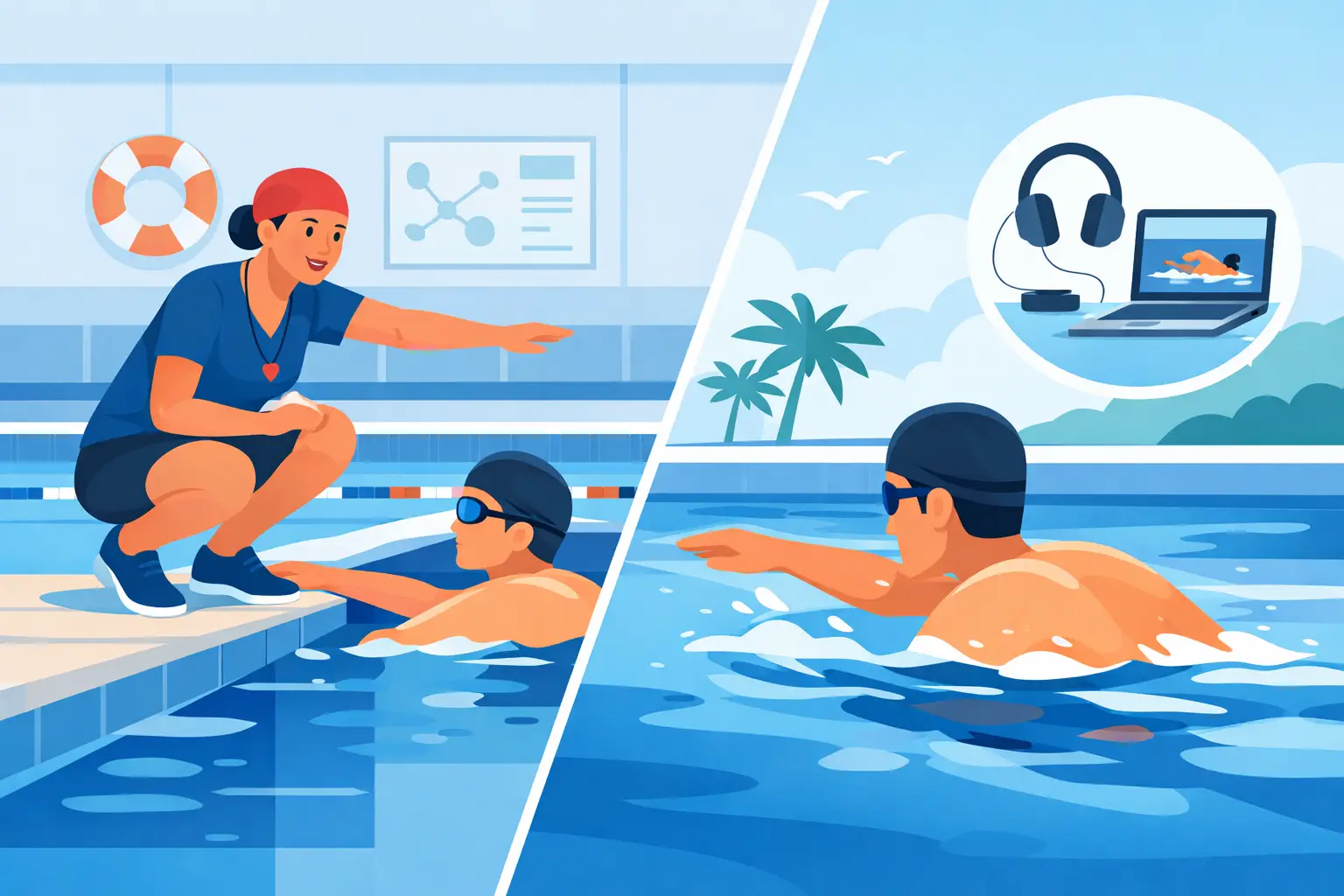
The main difference is feedback. Self-learning lets you choose your own pace, while lessons provide observation, correction, and a progression plan. In swimming, that distinction matters because a small technical error can create a large confidence problem.
For example, an adult who holds their breath underwater may feel exhausted after only a short distance. They may believe they lack fitness when the real issue is breathing rhythm. A coach can identify that pattern immediately and give a simple drill to correct it. Alone, the swimmer may repeat the same movement for weeks.
Lessons also create accountability. A scheduled class gives busy professionals a protected time to practice. This is especially useful for adults who have postponed learning for years because work, family, or embarrassment kept getting in the way.
Self-learning offers freedom, but freedom can become inconsistency. One week of frequent practice followed by three weeks away from the pool makes it harder to retain body position and breathing habits. A clear program keeps skills in sequence and makes progress measurable.
When self-learning can work well
Self-learning is not a poor choice by default. It can work for an adult who already feels calm in shallow and deep water, has basic floating ability, and understands how to practice safely. It can also be useful as extra practice between formal lessons.
The best self-directed swimmers use short, focused sessions rather than trying to do everything at once. They might spend one session practicing relaxed bubble breathing and front floats, then another on push-and-glide positions. Repetition matters more than swimming long distances with tense technique.
Self-learning is most effective when the goal is modest and specific, such as becoming more comfortable in the pool, improving a basic kick, or building fitness after prior instruction. It is less suitable when the swimmer has significant water fear, cannot float independently, or wants to prepare for a swim test, open-water event, or lifesaving pathway.
There is also a safety consideration. Avoid practicing alone, especially in deep water. Choose a supervised pool, stay within an appropriate depth, and do not attempt breath-holding challenges or underwater distance training without qualified guidance.
Why structured lessons often produce faster results
A structured adult lesson does more than teach a stroke. It organizes the learning process so each skill supports the next one. The sequence may begin with water entry and exhalation, then move to floating, gliding, kicking, side breathing, and coordinated freestyle or breaststroke.
This order reduces overwhelm. Instead of hearing, “Just relax,” a beginner receives clear actions to practice and a reason each one matters. That makes confidence more repeatable. The swimmer knows what to do when they feel unstable, short of breath, or nervous in deeper water.
Qualified coaching is particularly valuable for adults who carry fear from a past experience. Some learned that swimming meant being thrown into deep water or forced to complete a distance before they were ready. A supportive instructor can rebuild trust gradually, without rushing exposure or ignoring anxiety.
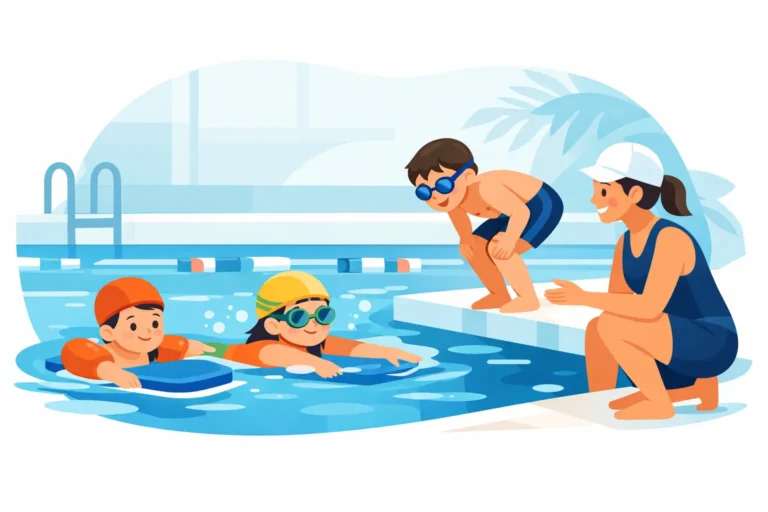
Lessons can also be adapted to the learner. Private coaching provides close attention and may suit adults with a strict deadline, strong fear, or a specific goal such as triathlon preparation. Small group classes can offer encouragement, regular practice, and a more affordable route. The best format depends on how much individual correction and scheduling flexibility you need.
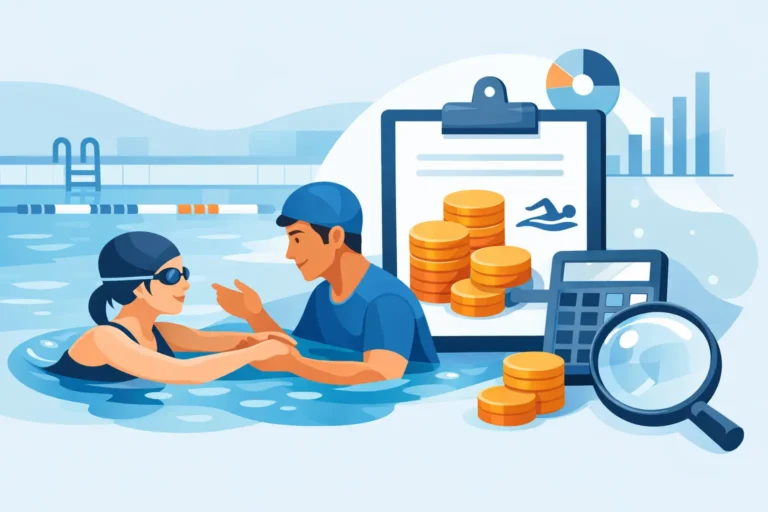
Cost is not just the lesson fee
Self-learning usually has the lower immediate cost. You pay for pool entry, basic equipment, and your own time. That can be attractive if your schedule changes often or you already have reliable fundamentals.
However, the cheaper option can become expensive in time. Repeating inefficient kicking, poor head position, or tense breathing may delay progress for months. Some adults eventually seek lessons after becoming frustrated, then need to unlearn habits before advancing.
Structured lessons cost more upfront, but they can be more efficient when a learner needs a clear result: swimming independently, passing a required assessment, improving endurance, or feeling safe while accompanying children in the pool. Progress checks also show whether you are truly ready for the next skill instead of guessing.
Think about value in relation to your goal. If you simply want light pool exercise and already swim comfortably, independent practice may be enough. If you want water confidence that holds up beyond the wall, professional instruction is usually a stronger investment.
A practical decision guide for adult beginners
Choose self-learning if you are already comfortable submerging, floating, and moving safely through water, and you can practice consistently in a supervised pool. Set one skill goal per session and stop before fatigue causes your technique to collapse.
Choose adult beginner lessons if you avoid putting your face in water, struggle to float, panic in deep water, or do not know what to practice next. Lessons are also the better choice if you want structured progression, stroke correction, test readiness, or visible milestones.
A blended approach is often ideal. Attend a weekly lesson for instruction and use one additional short session to repeat the drills you were given. This combines expert feedback with enough repetition for movements to feel natural.
How to make your first learning plan work
Start with a realistic target. “I want to swim” is broad; “I want to float, breathe calmly, and swim one pool length with control” gives you a practical direction. Early success should be measured by calmness and consistency, not speed.
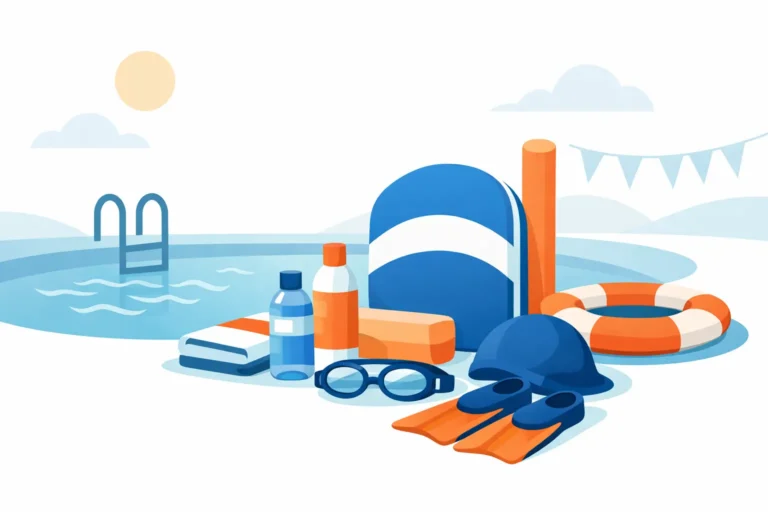
Wear comfortable goggles that fit properly, but do not rely on them as your only source of confidence. Practice both with and without them in shallow water when appropriate, so a small equipment problem does not cause panic. A swim cap, kickboard, and fins can support certain drills, but they should not replace core skills.
Most importantly, give yourself permission to learn as an adult. Adults often expect immediate results because they understand instructions quickly. Swimming is different: your body needs repeated exposure to develop balance, timing, and relaxed breathing. Good instruction shortens the path, but no method removes the value of patient practice.
The goal is not to prove that you can force your way across a pool. Build the kind of water confidence that lets you pause, recover, breathe, and continue with control. That is the foundation from which every stronger swim begins.