How to Pass Swim Theory Without Guesswork
A swim theory test is not a test of who can memorize the most words. It checks whether a swimmer can make safe decisions before, during, and after an unexpected situation in the water. If you are wondering how to pass swim theory, start by treating every question as a real safety choice: What is the safest action? Who needs help? When should you call for an adult or lifeguard?
For parents, this shift matters. A child may be comfortable swimming laps yet need more guidance to explain why they should not enter water alone or why they must use a reaching aid instead of jumping in after someone. For adult learners, theory can feel unfamiliar after years away from school. The good news is that the material becomes much easier when it is connected to practical lessons, not studied as a page of facts.
What Swim Theory Is Really Testing
Swim theory supports the water-survival skills learned in structured swimming programs. The exact questions, format, and expectations can vary by stage, age group, school, or assessment provider. However, most theory assessments look for the same foundation: awareness, judgment, responsibility, and basic knowledge of safe behavior around water.
A strong answer is usually not the fastest, bravest, or most dramatic response. It is the response that reduces danger. That may mean staying out of the water, alerting a lifeguard, calling for help, using a suitable rescue aid, or moving carefully away from a hazard.
This is why children should avoid learning answers by rote alone. If a question changes slightly, memorized wording can fail them. Understanding the reason behind each rule gives them the confidence to answer unfamiliar questions correctly.
How to Pass Swim Theory: Learn the Safety Logic
Most questions fall into a few connected themes. Rather than revising them as separate chapters, learn how they work together.
Know the pool rules and their purpose
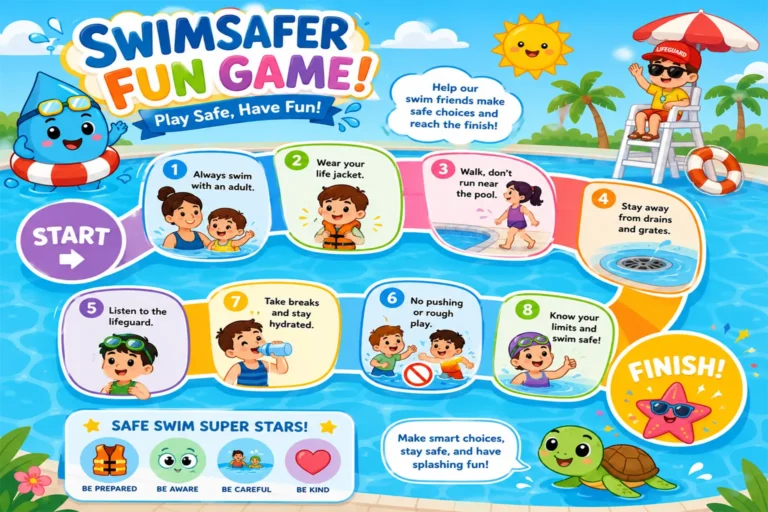
Rules such as walking on pool decks, waiting for permission before entering, not pushing others, and following the lifeguard’s instructions may sound simple. In a test, students should be able to explain the reason. Wet surfaces are slippery. Sudden entry can injure another swimmer or put a non-swimmer into water that is too deep. Lifeguards need swimmers to respond immediately so they can prevent an incident from becoming an emergency.
Ask your child to finish the sentence: “This rule keeps people safe because…” If they can explain it in their own words, they are more prepared than a child who can only repeat the rule.
Understand water hazards beyond the pool
Theory often covers water environments such as beaches, lakes, rivers, canals, and public pools. Each setting has different risks. A pool may have depth changes, crowded lanes, and slippery decks. Open water can bring currents, waves, changing weather, limited visibility, uneven ground, and no immediate lifeguard supervision.
The safest choice depends on the setting. At a supervised pool, a swimmer may tell the lifeguard about a problem. Near open water, the right decision may be to stay out, move to a safer area, and get a responsible adult. Teach the principle first: never assume water is safe simply because it looks calm.
Remember the safe rescue sequence
One of the most valuable theory topics is what to do when someone is in difficulty. The instinct to jump in can be strong, especially for a caring child or a confident swimmer. But an untrained rescuer can quickly become a second casualty.
The preferred response is to call for help and use a safe method of assistance from land whenever possible. This can include reaching with an appropriate object, throwing a flotation aid, or directing the person toward an edge. In a pool setting, alerting a lifeguard is urgent. The key lesson is simple: help without putting yourself in danger.
Students should also understand that they must not enter the water unless they are trained, capable, and it is safe to do so. A theory test may present a scenario that sounds urgent. Calm judgment is still the correct answer.
Learn basic emergency awareness
Swimmers should know how to recognize that a situation needs adult or emergency support. A person may be in trouble if they cannot call out, are struggling to keep their face above water, are suddenly motionless, or appear panicked. The response is to get help immediately, not wait to see whether the person recovers.
For younger children, keep the language direct: shout for an adult, tell the lifeguard, do not run away, and do not jump in. Older students can practice explaining how they would report what happened and where it happened. Clear information helps adults respond faster.
A Revision Method That Builds Real Recall
Cramming the night before can work for a spelling quiz. It is less effective for safety knowledge, especially when a learner feels nervous. Use short, repeated practice sessions instead. Ten focused minutes after a swim lesson often works better than a long study session at the end of the week.
Start with one topic, such as pool rules. Ask three or four questions aloud, then ask the learner to explain the reason behind each answer. Move next to a scenario: “You see someone struggling near the deep end. What do you do first?” Encourage a complete answer rather than accepting one word. This helps children organize their thoughts for written, oral, or coach-led assessments.
Visual practice is useful too. At the pool, point out the depth markers, exit points, lifeguard station, lane ropes, and no-running signs. Ask what each feature tells swimmers to do. The familiar environment makes the information easier to remember during the test.
A simple home routine can include:
- reviewing one safety topic after each lesson
- practicing two scenario questions aloud
- asking the swimmer to explain one rule in their own words
- correcting misunderstandings immediately and calmly
Do not overload younger children with long definitions. A clear sentence they understand is more useful than a perfect phrase they cannot apply.
Practice Scenario Questions, Not Just Facts
Theory assessments often test decision-making through short situations. These questions can confuse learners because more than one action may sound helpful. Teach them to look for the answer that protects everyone, including the rescuer.
For example, if a friend falls into deep water, “jump in quickly” may seem kind. But if the student is not trained for a water rescue, the safer response is to call a lifeguard or adult, use an available flotation aid if appropriate, and keep a safe position. If a question asks what to do before swimming, “check for supervision and follow pool rules” is stronger than “start with my favorite stroke.”
Parents can make practice feel natural by using everyday prompts. What should you do if thunder is heard near the pool? Why should you wait for the instructor before entering? What do you do if you feel tired while swimming? The goal is not to frighten children. It is to make safe choices feel automatic.
Avoid the Mistakes That Cost Easy Marks
The most common mistake is answering based on confidence rather than safety. Strong swimmers may assume they can solve every problem in the water. Theory tests reward restraint, communication, and correct procedure.
Another mistake is missing key words in the question. Words such as “first,” “safest,” “best,” and “immediately” change the answer. Encourage students to read the full question once, identify what it is asking, then answer. Rushing is rarely helpful.
Some learners also give answers that are too vague. “Get help” is a good start, but “alert the lifeguard and tell them where the person is” shows clearer understanding. For written answers, use short, complete sentences. For oral questions, speak slowly enough for the assessor to hear the full response.
Finally, do not treat theory as separate from swimming practice. When water safety is discussed only before an assessment, it can feel abstract and harder to retain. A structured program should reinforce safety language throughout lessons, from entering the pool safely to recognizing fatigue and practicing responsible behavior near water.
Test-Day Habits for Children and Adults
Arrive with enough time to settle in. A rushed learner is more likely to misread simple questions. Bring any required materials, listen carefully to instructions, and ask for clarification if a word or question is not understood. Asking does not mean the swimmer is unprepared. It shows responsible test behavior.
During the assessment, pause before answering scenario questions. Think through the order: stay safe, call for help, use the safest available assistance, and follow the directions of trained adults. This mental sequence can prevent impulsive answers.
At AQZOG, theory preparation works best when it is paired with practical safety habits and assessment-focused coaching. Mock questions can reveal whether a swimmer understands the reasoning behind an answer, while regular lessons give those answers a real-world context.
A passed theory test is a meaningful achievement, but the greater result is a swimmer who knows when to stop, when to ask for help, and how to respond responsibly around water. Keep talking about those choices after the assessment. They are the habits that travel with a child from the pool to every future water environment.