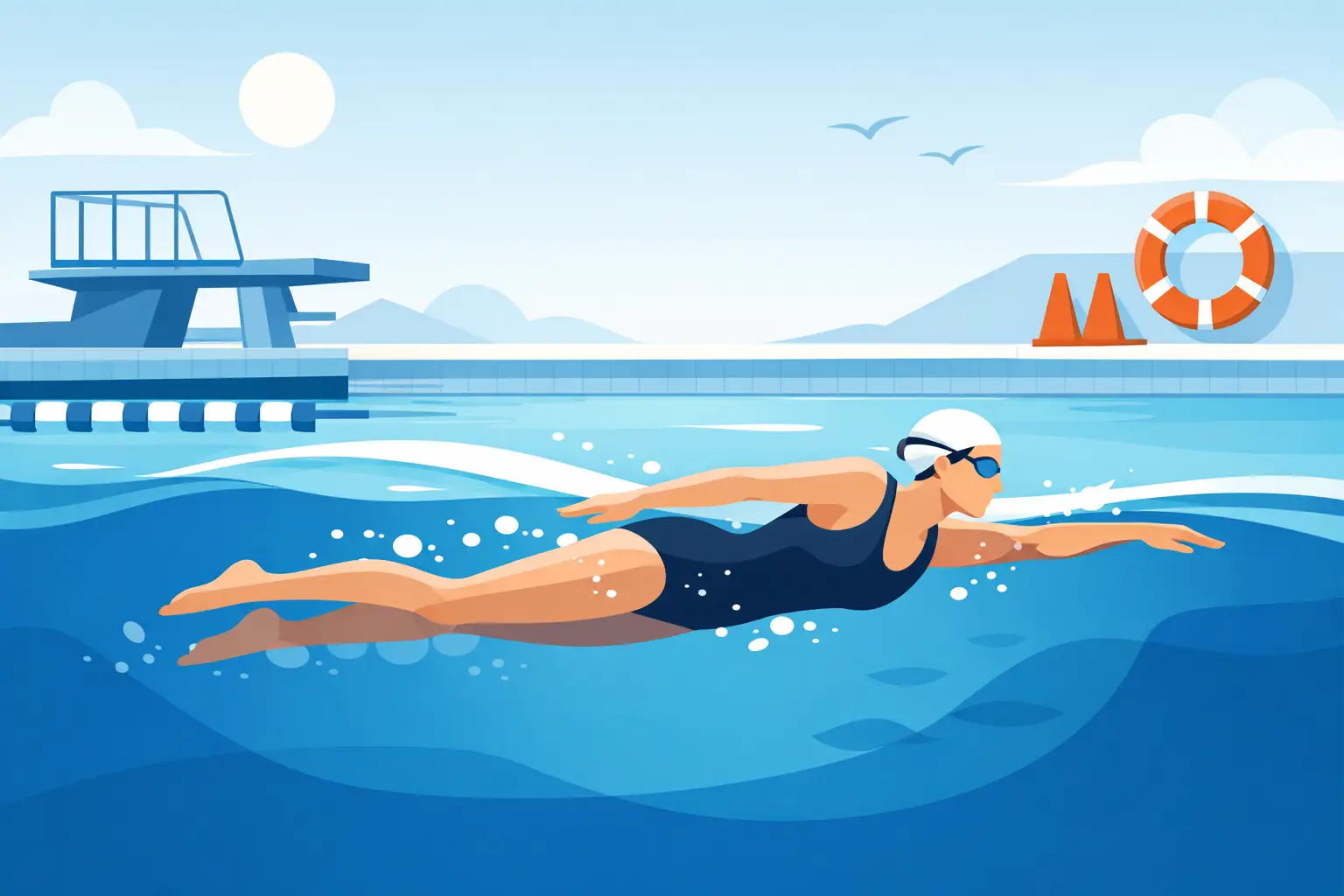
The Art of Swimming Gracefully, Built Safely
A swimmer who moves gracefully does not look as though they are fighting the water. Their body stays long, their breathing is controlled, and each stroke has a clear purpose. That ease is not a talent reserved for competitive athletes. The art of swimming gracefully is a skill built through safe technique, repeated practice, and the confidence to stay calm when the water feels unfamiliar.
For children, graceful swimming often begins with something more basic: feeling secure enough to put their face in the water, float independently, and recover a standing position. For adults, it may mean replacing rushed movements and breath-holding with a more efficient rhythm. In both cases, good form supports a more important outcome – safer, more capable swimmers.
The Art of Swimming Gracefully Starts With Control
Grace is not about making swimming look pretty. It is the visible result of control. When a swimmer is balanced and relaxed, they create less resistance, use less energy, and have more attention available for their surroundings. This matters in a busy public pool, during a SwimSafer assessment, or whenever a swimmer needs to respond calmly to an unexpected situation.
A common mistake is trying to move faster before learning to move well. Children may kick hard with bent knees, lift their heads to breathe, and tire quickly. Adults who are nervous in deeper water may rush their arms or pull their knees toward their chest. These habits can keep the body upright, which increases drag and makes every length feel harder than it should.
The better approach is structured progression. First establish water confidence and recovery skills. Then develop floating, gliding, breathing, kicking, and stroke coordination. Speed can come later. A swimmer who understands body position will usually improve faster than one who repeatedly practices a poor stroke pattern.
Balance Comes Before Stroke Power
Water rewards a long, balanced body line. In freestyle, the head should remain neutral, with the eyes looking down and slightly forward rather than directly ahead. Looking forward may feel safer at first, but it causes the hips and legs to sink. Once the lower body drops, the swimmer must kick harder just to stay level.
A balanced swimmer allows the water to support them. The chest presses gently into the water, the hips stay close to the surface, and the legs trail behind with minimal drag. This is why gliding drills are so valuable for beginners and advancing swimmers alike. They teach the body what a streamlined position feels like before arm movements complicate the task.
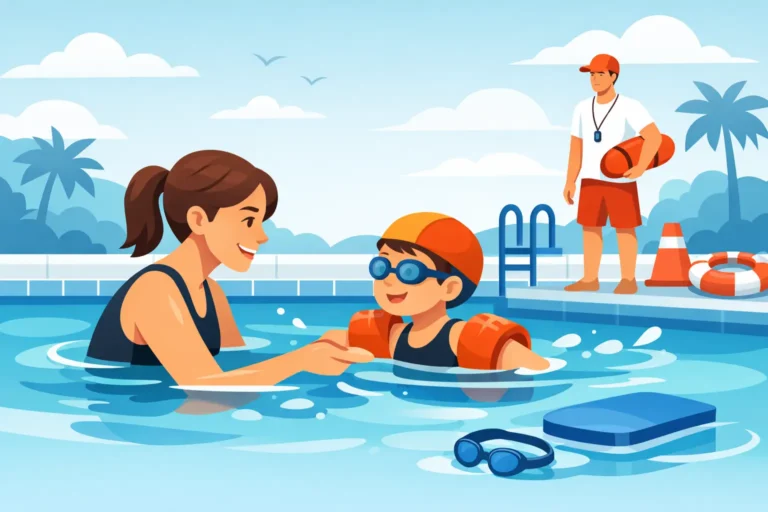
For young learners, the goal is not to force a perfect shape. A qualified coach should give clear, age-appropriate cues and allow the child to progress at a comfortable pace. A toddler learning to float with support needs reassurance and repetition. A school-age swimmer preparing for SwimSafer needs more independence, stronger recovery skills, and measurable consistency.
Calm Breathing Changes Everything
Many swimmers lose their rhythm at the moment they need to breathe. They lift their head, stop kicking, and pull down with both arms. The result is a sudden loss of balance, followed by panic or fatigue.
Graceful breathing is continuous. The swimmer exhales gently into the water, then turns or lifts only enough to inhale. In freestyle, the body rolls slightly to the side while one goggle remains in the water. In breaststroke, the breath fits naturally into the stroke cycle: pull, breathe, kick, glide.
Beginners often need time to become comfortable with bubbles, face immersion, and water entering the nose. There is no benefit in rushing past this stage. Controlled breathing is both a technical skill and a confidence-building skill. Once swimmers trust that they can breathe, they stop treating every stroke as an emergency.
How Graceful Swimming Is Built Through Practice
Good coaching breaks swimming into skills that can be observed and improved. Rather than telling a learner to “swim better,” an instructor can correct one priority at a time: a dropped elbow, a wide kick, a late breath, or a lack of glide. This gives swimmers a clear target and makes progress visible.
Start each practice with a short water-readiness routine. A swimmer should be able to enter safely, regain a stable float, rotate from front to back, and return to the wall. These are practical safety abilities, not optional warm-ups. They also help a nervous swimmer settle into the session before stroke work begins.
Next, practice streamlined glides. Push off the wall with arms extended, hands together, head between the arms, and legs straight behind. The goal is to travel quietly, not forcefully. If the legs sink immediately, check the head position and whether the swimmer is tightening their shoulders or holding their breath.
From there, add a controlled kick. Freestyle kicking should start from the hips with relaxed ankles, producing small, steady movements. Large splashes and deep knee bends waste energy. Breaststroke kicking requires a different pattern and should be taught carefully, since timing and leg recovery have a major effect on efficiency.
Finally, connect the arms and breathing only when the swimmer can maintain balance. This step may take longer for some learners. That is normal. A child who needs additional repetition before moving to a full stroke is not falling behind. They are building a foundation that makes later progression more secure.
Freestyle: Length, Rotation, and Rhythm
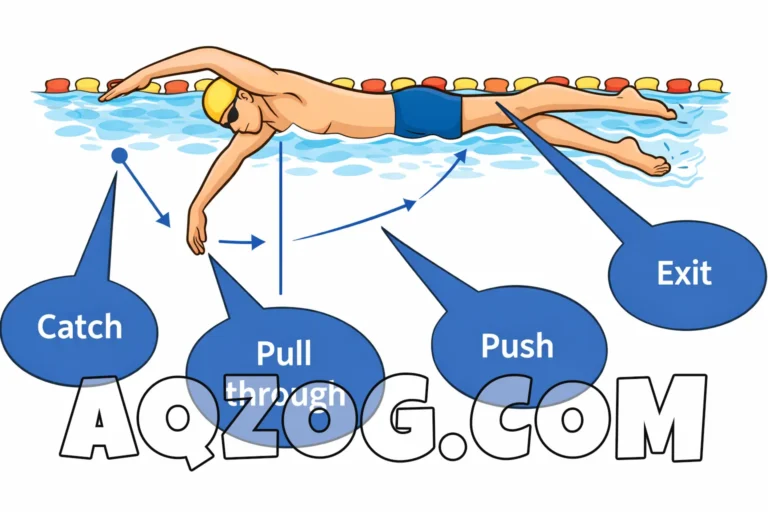
Freestyle is often the first stroke swimmers use for continuous distance, but it can become exhausting when the arms spin without direction. A graceful freestyle stroke reaches forward, catches the water, pulls beneath the body, and exits cleanly near the hip. The recovering arm stays relaxed rather than being thrown over the water.
Body rotation is also essential. The shoulders and hips roll together from side to side, allowing the arm to reach farther and making side breathing easier. Too little rotation can strain the shoulders. Too much rotation can cause the swimmer to snake through the water. The right amount depends on the swimmer’s flexibility, speed, and stage of development.
For test-focused learners, technique must remain reliable when they are tired or under assessment pressure. That means practicing distances progressively, maintaining safe lane awareness, and learning to recover without distress if a breath or stroke goes wrong.
Breaststroke: Patience in the Glide
Breaststroke can look calm and elegant, yet it is frequently rushed. The stroke works best when each part has a defined sequence: pull, breathe, kick, glide. Skipping the glide turns breaststroke into a high-effort struggle and often causes the hips to drop.
The glide is where the swimmer travels on the work already completed. It builds efficiency and gives the body time to reset in a streamlined position. Younger swimmers may initially rush because they are eager to keep moving. Adults may rush because pausing feels uncomfortable. In both cases, patience improves the stroke.
A coach should also watch the kick closely. A wide, uneven, or poorly timed kick can strain the knees and limit forward movement. Correcting it early is more effective than trying to fix it after the swimmer has repeated the wrong pattern for months.
Safety Is Part of Good Technique
A graceful swimmer knows that strong technique includes sound judgment. They check pool depth before entering, follow lane etiquette, understand when to rest at the wall, and avoid swimming beyond their current ability. Confidence should be based on demonstrated skills, not assumption.
This is especially important for parents choosing lessons. A child may look comfortable splashing in shallow water while still lacking the skills to float, tread water, or recover in deeper water. Structured instruction should develop both stroke ability and water survival awareness, with progression matched to the learner’s readiness.
At AQZOG, this progression is reinforced through coached practice that connects water confidence, stroke development, and SwimSafer readiness. The aim is not simply to complete a lesson or pass a stage. It is to help each swimmer demonstrate dependable skills in real pool conditions.
Give Each Swimmer Time to Find Their Rhythm
There is no single pace for learning graceful swimming. A confident child may need to slow down and refine technique. A fearful adult may make rapid progress once breathing and floating feel safe. The right program balances encouragement with standards, so learners are challenged without being pushed past the point where control is lost.
Practice quality matters more than endless laps. A few focused lengths with a clear technical goal can improve a swimmer more than a long session spent reinforcing fatigue and poor habits. Film feedback, coach observation, and regular skill checks can all help identify what needs attention next.
The most graceful swimmers are not those who never make mistakes. They are the ones who can recognize when their body position changes, reset their breathing, and continue with calm control. Give the fundamentals the time they deserve, and the water will begin to feel less like something to overcome and more like a place where confident movement is possible.