How to Train Triathlon Swimming for Race Day
A triathlon swim is not won by simply swimming the most laps. It is earned through calm breathing, efficient technique, controlled pacing, and the ability to stay composed when the water is crowded or unfamiliar. If you are learning how to train triathlon swimming, begin by building the skills that make every stroke safer and more economical before chasing distance.
For adult beginners, this may mean becoming genuinely comfortable putting your face in the water, floating, breathing to the side, and swimming continuous lengths without panic. For experienced pool swimmers, the next priority is translating good form into open-water readiness. Both pathways benefit from structured progression and clear, measurable goals.
Start With a Safe Swimming Baseline
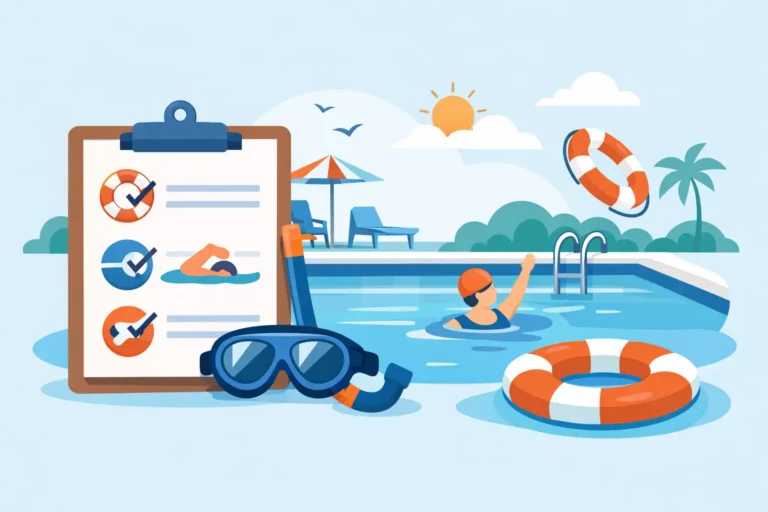
Before starting a triathlon-focused plan, assess what you can currently do without stopping or losing technique. The key question is not only, “How far can I swim?” Ask whether you can breathe consistently, maintain a relaxed body position, and recover your rhythm after a small interruption.
A useful baseline is the ability to swim 100 to 200 yards continuously at an easy effort. If that feels difficult, focus first on foundational water confidence and freestyle mechanics. Training hard while holding your breath, lifting your head to breathe, or fighting to stay afloat usually reinforces inefficient habits. It can also make the sport feel more intimidating than it needs to be.
Swimmers with water fear should not force the process. Begin in a supervised pool environment where you can practice exhaling underwater, rolling to breathe, floating on your front and back, and moving calmly to the pool wall. A qualified coach can correct issues early and give you a progression that fits your current ability.
How to Train Triathlon Swimming With Better Technique
Triathlon swimming rewards efficiency. A smooth swimmer who uses less energy can exit the water ready to bike and run well. A swimmer who battles the water may finish the same distance exhausted, even if they are strong and fit on land.
Keep your body long and balanced near the surface. Look mostly down rather than forward, as lifting the head causes the hips and legs to drop. Rotate through the torso to breathe instead of twisting only the neck. Exhale steadily while your face is in the water, then take a quick, relaxed breath when you turn to the side.
Your stroke should begin with a clean hand entry and a controlled catch, followed by a pull that presses water backward. Avoid crossing your hands over the centerline, which often causes the body to snake from side to side. A compact, steady kick is generally enough for most triathletes. Saving the legs matters because they will have work to do after the swim.
Drills are useful when they solve a specific problem. Side-kicking drills can improve balance and breathing position. Catch-up drills can help you feel a longer body line, but do not overuse them if they create a pause that makes your normal stroke less natural. Short technique repeats, with enough rest to reset, are usually more valuable than repeating drills without purpose.
Build Endurance in Stages
The best swim plan depends on your race distance, current fitness, schedule, and access to water. Still, most new triathletes do well with two to three swims per week. Consistency matters more than one exhausting session followed by several missed workouts.
One session should be technique-led, using short repeats such as 25s, 50s, or 100s with rest. Another should develop sustainable endurance. The third, if your schedule allows, can include moderate intervals and race-specific skills.
Rather than increasing distance every week without a plan, progress one variable at a time. You might add a few repeats, reduce rest slightly, or make one continuous portion longer. Keep increases sensible, especially if you are also raising bike or run volume. Shoulder irritation, declining stroke quality, and persistent fatigue are signs that your training load needs adjustment.
Here is a simple example for a swimmer preparing for a shorter triathlon who can already swim 200 yards continuously:
- Session one: 200 yards easy, then 8 x 50 yards with relaxed form and 20 to 30 seconds of rest, followed by 100 yards easy.
- Session two: 200 yards easy, then 3 x 200 yards at a steady effort with 30 to 45 seconds of rest, followed by 100 yards easy.
- Session three: 200 yards easy, then 12 x 25 yards slightly faster with good form, followed by 4 x 50 yards that include sighting practice.
- Over several weeks: gradually extend the steady repeats or combine them into a longer continuous swim while keeping your breathing controlled.
Distances are only starting points. A beginner may use 25-yard repeats, while a more prepared athlete may work in 100- and 200-yard intervals. The goal is to develop confidence at race effort, not to prove fitness in every workout.
Practice Pace, Not Just Distance
Many athletes swim their early training sets too hard and their race too cautiously. A better approach is to learn several gears: easy recovery swimming, sustainable aerobic swimming, and short controlled efforts that prepare you for starts, turns, and changes in pace.
Use a repeatable test every few weeks, such as a timed 400-yard swim or several 100-yard repeats with consistent rest. Record your times, perceived effort, and how well you held technique. Improvement may show up as faster pace, lower effort at the same pace, or less variation between repeats.
Do not compare your pace too closely with another athlete’s. Body position, swim background, age, pool length, and race conditions all affect speed. Your most useful benchmark is whether you can hold your own efficient rhythm for the distance you plan to race.
Train for Open Water Before Race Day
Pool fitness is valuable, but open water introduces different demands: limited visibility, no lane lines, other swimmers nearby, sun glare, currents, waves, and the challenge of swimming straight. These conditions are manageable when you practice them progressively and always prioritize safety.
When permitted and supervised, include open-water sessions before your event. Never swim alone. Choose an approved location, check weather and water conditions, use a bright swim buoy where appropriate, and stay close to a support person or group. If you are new to open water, begin near shore and practice short out-and-back efforts rather than immediately attempting your full race distance.
Sighting is one of the most important race skills. Every few strokes, briefly lift your eyes forward just enough to locate a buoy or landmark, then return your head to a normal position. Do not hold your head up for long, because that disrupts balance and wastes energy. In the pool, practice sighting by placing a visible object at the end of your lane and looking forward during selected strokes.
Also practice swimming beside others. You may get splashed, touched, or pushed slightly off line at the start of a race. The response is not to sprint in panic. Roll to your breathing side, regain your rhythm, sight, and continue. Confidence comes from rehearsing calm responses in a controlled setting.
Make Race-Day Choices That Protect Your Swim
A good race begins before you enter the water. Know the course layout, entry method, likely water temperature, and whether wetsuits are allowed. Arrive early enough to warm up lightly, test your goggles, and observe where the sun may affect visibility.
Start at a position that matches your ability. Strong, competitive swimmers may choose the front. Newer swimmers often benefit from starting to one side or slightly behind the main group, where there is more room to settle into a rhythm. This may add a small amount of distance, but it can prevent a stressful opening minute that costs far more energy.
Your first goal is controlled breathing, not speed. Build into your pace over the first few minutes, sight regularly, and avoid weaving from buoy to buoy. If anxiety rises, slow down, roll onto your back if needed and safe to do so, or use a calm breaststroke briefly to reset. Water safety and clear decision-making always come before a target finish time.
Get Coaching When Progress Stalls
Triathlon swimmers often come from cycling or running, where effort feels familiar and easy to measure. In the water, technique has a larger effect on performance. A small correction to body position, breathing timing, or hand entry can save more energy than simply adding another hard interval.
Structured coaching is especially helpful if you cannot swim continuously with ease, feel anxious in deep water, have recurring shoulder discomfort, or are preparing for your first open-water event. AQZOG’s progression-focused coaching approach emphasizes safe foundations, measurable skill development, and confidence before advanced race training.
Give yourself enough time to improve. A few consistent months of purposeful swimming can change not only your race split, but also how you feel when you leave the water. The most satisfying goal is to reach the first transition calm, capable, and ready for the rest of the race.