SwimSafer Training Singapore for Safer Swimmers
A child who can move confidently across a pool is not necessarily prepared for an unexpected fall into water, deep-water fatigue, or the need to call for help safely. That distinction is why SwimSafer training Singapore matters to many families. It develops practical survival awareness alongside swimming ability, giving children a structured route from early water confidence to recognized assessment readiness.
For parents, the goal is bigger than earning a certificate. Good SwimSafer preparation helps a child understand what safe behavior looks like around water, respond calmly when conditions change, and make measurable progress through skills that are taught, practiced, and assessed in sequence.
What SwimSafer Training Singapore Is Designed to Build
SwimSafer is Singapore’s national water safety program for children. Its stages combine swimming skills with personal survival, water safety knowledge, and simple rescue awareness. Rather than treating swimming as a collection of strokes, the program asks a more useful question: can the swimmer stay safe and make good decisions in and around water?
Training commonly begins with foundational abilities such as entering and exiting the water safely, submerging with control, floating, kicking, and moving through the water. As swimmers progress, they work toward greater independence in deep water, more efficient stroke development, survival sequences, and stronger awareness of hazards.
The pace should suit the swimmer, not a calendar date. A child may learn front crawl quickly but need more time to relax in deep water. Another may be comfortable floating but require focused practice coordinating breathing for a longer swim. Both are normal. Structured coaching identifies the specific gap, then gives the swimmer repeated, purposeful practice until the skill is dependable.
Safety Skills Need More Than One Good Attempt
A child may complete a skill once during a lesson because the coach is close by, the pool is calm, and the task is familiar. Assessment readiness requires more consistency. The swimmer needs to understand the instruction, perform the sequence with control, and remain composed when moving from one task to the next.
This is especially relevant for survival components. Treading water, floating, changing direction, putting on a flotation device where required, or swimming after a simulated fall can feel very different from a standard lap. Regular practice builds the calm decision-making that parents want to see.
How Structured SwimSafer Stage Training Works
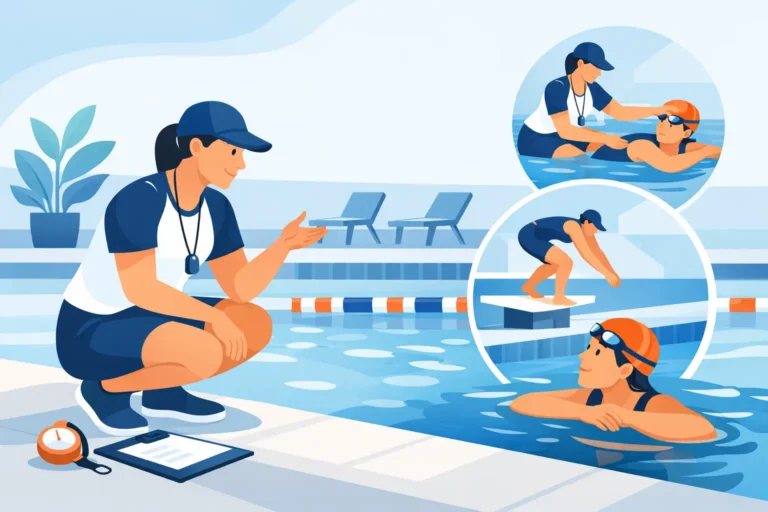
Effective SwimSafer stage training follows progression, not guesswork. Coaches first observe the swimmer’s current comfort level, water confidence, stroke coordination, and ability to follow safety instructions. From there, lessons focus on the requirements and supporting skills appropriate for that stage.
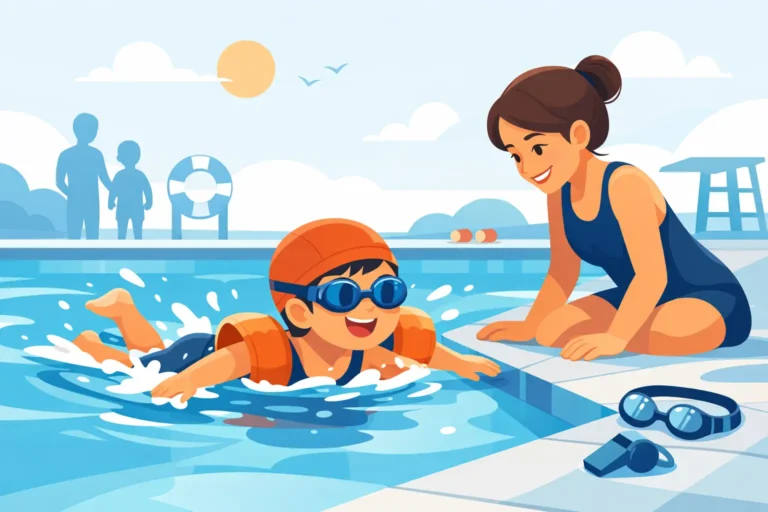
For younger or newer swimmers, coaching may prioritize body position, breathing control, buoyancy, and simple entries and exits. These are not minor details. A relaxed, balanced body position makes floating easier, reduces panic, and creates a better foundation for every later skill.
For swimmers moving into higher stages, lessons typically demand more endurance, stronger technique, and smoother transitions between survival and stroke tasks. Practice should include both isolated skill work and complete sequences. Learning a component in small steps is helpful, but the swimmer must eventually connect those steps without stopping or relying on reminders.
At AQZOG, this progression-led approach allows coaches to prepare swimmers for both real water confidence and formal assessment expectations. Weekly classes give children time to retain skills, while focused holiday programs, private coaching, and mock practical tests can be useful when a child needs targeted preparation.
Group Lessons, Private Lessons, and Intensives
The best format depends on the child’s starting point and timeline. Weekly group lessons are often a strong choice for steady development. Children benefit from routine, learn alongside peers, and have time between classes to absorb new movements and instructions.
Private lessons can be valuable for children who are fearful of water, have missed a key foundation, need rapid correction before an assessment, or learn best with one-to-one attention. The trade-off is that private coaching is more intensive and may move faster, so it works best when the swimmer is ready to practice consistently.
Holiday intensive programs can help a child regain momentum or prepare for an upcoming stage assessment. They are not a shortcut around skill development. A short series can sharpen execution and build familiarity, but swimmers still need genuine confidence in the water. If a child becomes anxious or fatigued during longer sequences, more gradual training may produce the better long-term result.
What Parents Should Look For in a SwimSafer Program
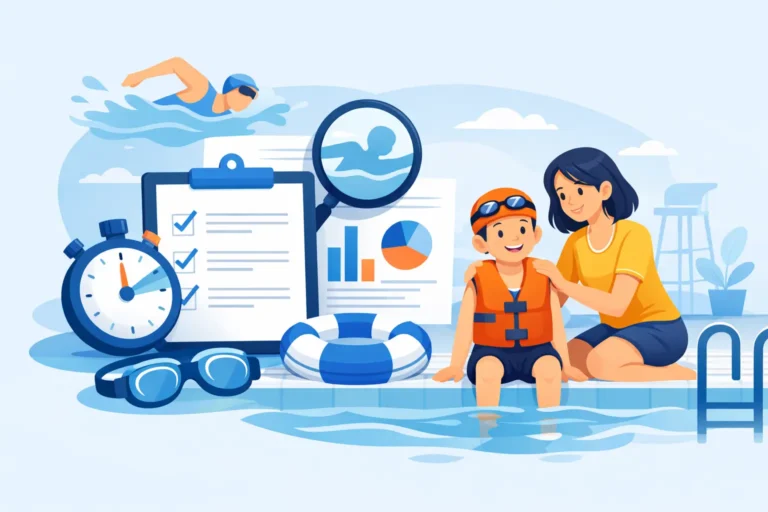
A SwimSafer program should make progress visible. Parents should be able to understand what their child is learning, why a skill matters, and what needs improvement before assessment. Vague assurances that a child is “doing fine” are less useful than clear feedback about water confidence, stroke distance, survival control, and readiness.
Look for coaching that balances encouragement with standards. Children should feel safe making mistakes, but they should not be rushed through a stage simply to reach the next certificate. Passing an assessment without secure basics can create problems later, particularly when stage requirements become more demanding.
Location and scheduling also matter. A convenient public pool location makes attendance easier, and consistent attendance is one of the biggest drivers of progress. When lessons are frequently missed, swimmers often spend valuable class time rebuilding confidence instead of advancing.
Parents should also ask whether the program includes practical assessment preparation and theory guidance. SwimSafer is not only about completing physical tasks. Children need age-appropriate understanding of safe pool behavior, risks around open water, and what to do when they see someone in trouble. Strong programs teach children to seek adult help and use safe rescue principles rather than encouraging risky heroics.
Preparing Your Child for a SwimSafer Assessment
Assessment preparation should start before the final few lessons. When skills are introduced early and revisited regularly, the test feels like a familiar demonstration of what the child can already do. Last-minute drilling can improve familiarity, but it cannot reliably replace confidence developed over time.
In the weeks before an assessment, children benefit from practicing full task sequences with clear instructions and realistic pacing. Mock practical tests can reveal where hesitation occurs. Perhaps the child can swim the required distance but loses focus after an entry. Perhaps they know the theory answers but need to speak more clearly or listen carefully before beginning a task.
At home, parents can support progress without trying to become the coach. Ask simple questions after class: What safety rule did you learn? Which skill felt easier today? What will you practice next week? These conversations reinforce learning while keeping the pressure low.
On assessment day, practical preparation matters. Arrive early, bring the required swimwear and equipment, and encourage your child to listen carefully. Remind them that controlled effort is better than rushing. A swimmer who pauses, resets their breathing, and follows instructions is showing the composure that water safety training is meant to build.
Why Certification Is Only One Part of the Outcome
A SwimSafer certificate is a meaningful milestone. It recognizes that a swimmer has met a defined standard and gives families a clear record of progression. But its lasting value lies in the habits behind it: checking surroundings, respecting water depth, knowing personal limits, and staying calm enough to use learned skills.
That is why the right training environment combines technical instruction with consistent safety messages. Children who understand the reason behind a rule are more likely to apply it at a hotel pool, a water playground, a beach, or during a school activity.
Every child begins somewhere different. The most useful next step is not to compare your child with another swimmer, but to place them in a structured program where confidence, survival skills, and certification readiness can grow together – one dependable lesson at a time.