Toddler Swimming Lessons Singapore for Safe Starts
A toddler who can happily enter the pool, hold the wall, listen for a safety cue, and return to a parent or instructor has already started building a meaningful foundation. Toddler swimming lessons Singapore families choose should focus on these practical skills first, not on rushing children toward perfect strokes or forcing them to put their faces in the water before they are ready.
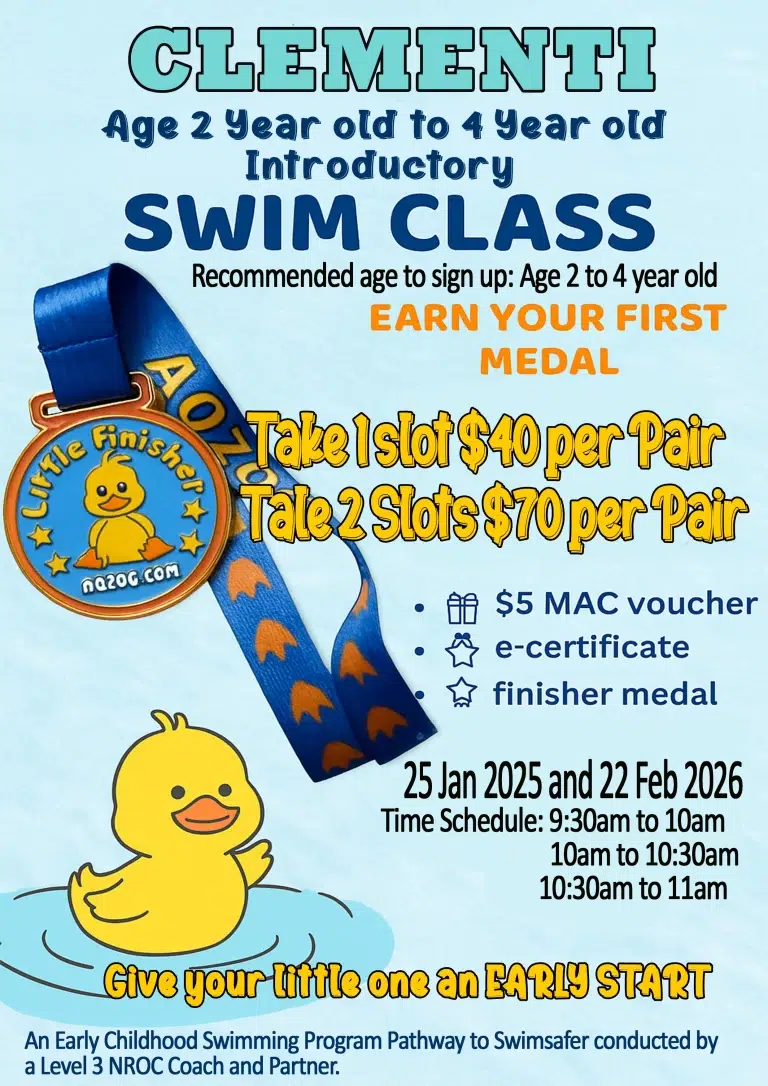
For young children, swimming education is about familiarity, safety habits, and confidence built one small success at a time. A structured program gives parents a clear way to support that progress while helping toddlers develop the comfort and control they will need for future SwimSafer training.
What Toddlers Should Learn in the Pool
Toddler lessons are not miniature versions of school-age swim classes. A child aged two, three, or four is still learning to follow instructions, manage emotions, coordinate movement, and feel secure away from a parent. Good instruction respects that developmental stage while setting clear goals.
The first priority is safe water orientation. Toddlers learn how to enter and exit appropriately, move with support, hold the pool wall, respond when their name is called, and understand simple rules such as waiting for permission before entering the water. These behaviors matter because water safety begins before a child ever attempts a float or kick.
Next comes comfort in the water. This may include splashing, blowing bubbles, getting the ears wet, placing the chin or mouth in the water, and eventually putting the face in briefly. Progress is not always linear. Some toddlers accept face wetting on the first lesson; others need several weeks of calm repetition. The correct pace is the one that builds confidence without creating fear.
Once a child is settled, instructors can introduce assisted floating, kicking, reaching, turning back toward the wall, and short movements through the water. These are early survival-oriented skills. They help a toddler recognize that they can move, recover, and seek support in the pool.
Why Structured Toddler Swimming Lessons Singapore Parents Need Matter
A casual splash session can be fun, but structured lessons provide something different: consistent progression. Toddlers benefit from familiar routines, repeated safety language, and achievable goals. When each lesson builds on the last, children are more likely to retain skills and arrive at the pool ready to participate.
Structure also helps parents see what is actually improving. Rather than judging progress only by whether a toddler can swim independently, look for signs such as calmer entries, better listening, willingness to submerge the face, stronger kicking, and the ability to travel a short distance with less assistance. These gains are real and prepare a child for the next stage.
In Singapore, where families frequently visit condominium pools, public pools, hotels, and water play areas, early water awareness has practical value. No swim lesson replaces active adult supervision, but an alert and confident toddler is better equipped to respond to simple safety instructions around water.
A quality program should also have a plan beyond the first few weeks. Toddler water introduction should lead naturally into beginner swimming skills, then into formal SwimSafer progression when the child is developmentally ready. This long-term pathway prevents children from having to relearn basic water confidence later.
Group, Semi-Private, or Private Lessons?
The right lesson format depends on your toddler’s temperament, prior water experience, and your family’s goals.
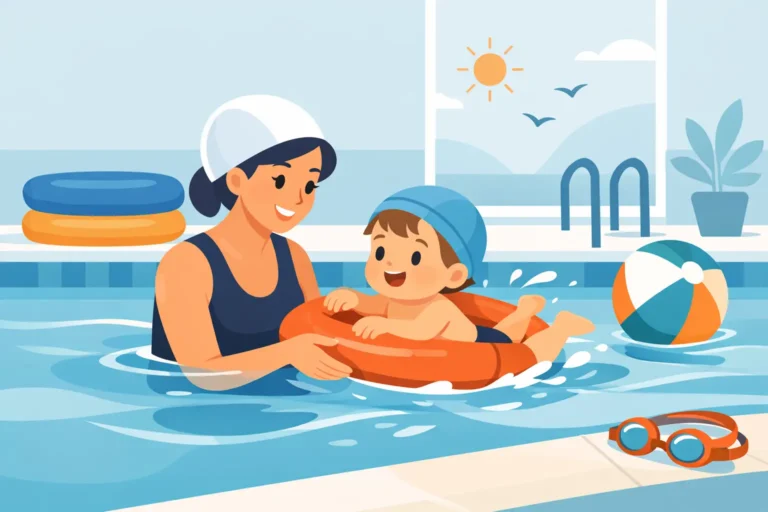
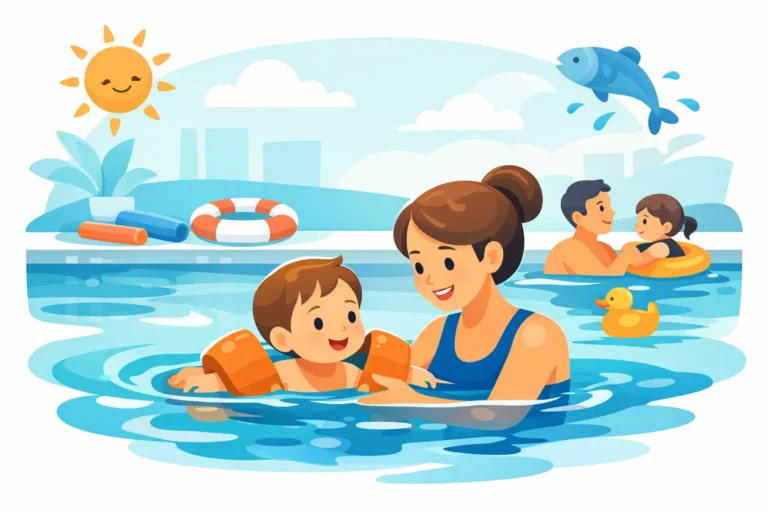
Group lessons can be a strong choice for toddlers who enjoy watching and copying other children. They learn turn-taking, listening, and class routines alongside water skills. The social setting can motivate a hesitant child, although children who are easily distracted may take longer to settle into the class environment.
Semi-private lessons offer more individual attention while keeping a familiar sibling or friend nearby. This format can work well for children of similar ability levels who are comfortable learning together. If one child is far more confident than the other, however, separate instruction may create a more suitable pace.
Private coaching is useful for toddlers with significant water fear, sensory sensitivities, a specific safety concern, or a need for rapid personalized progress. It also suits families with limited schedules. More attention does not automatically mean a child will progress faster, though. Young children still need time to process new experiences and practice skills repeatedly.
What a Good Toddler Lesson Looks Like
A productive toddler lesson should feel encouraging and purposeful. There may be songs, games, toys, and imaginative activities, but each activity should serve a skill objective. For example, collecting a floating toy can encourage reaching and kicking, while a simple jump-and-return activity can teach entry confidence and turning toward the wall.
Experienced instructors balance encouragement with boundaries. They do not shame a child for crying or refusing an activity, yet they also avoid letting every lesson become unstructured play. The instructor should know how to redirect attention, simplify a task, and build trust without losing sight of water safety objectives.
Parents should expect clear communication. You should understand what your child practiced, which skills are developing, and what can be reinforced safely outside class. At AQZOG, the emphasis is on structured improvement, with water confidence and safety habits forming the base for later skills and assessment readiness.
How Parents Can Support Progress Between Lessons
You do not need to conduct a second swim class on your own. In fact, too much pressure can make a toddler resistant to the pool. The best support is calm, consistent exposure within your child’s comfort level.
Use simple phrases that match the lesson environment, such as “wait for permission,” “hold the wall,” or “blow bubbles.” Keep pool visits positive and short when necessary. If your toddler is tired, hungry, or overwhelmed, it may be better to practice sitting at the edge and kicking than to insist on a full session.
When practicing, stay within arm’s reach at all times. Avoid testing a child’s independence by moving farther away or asking them to jump in unexpectedly. Confidence should come from successful, supervised practice, not from frightening surprises.
Praise effort specifically. Instead of saying only “good job,” try “you held the wall by yourself” or “you put your ears in the water.” Specific praise helps toddlers understand what they accomplished and makes the next attempt feel more manageable.
Signs Your Toddler Is Ready to Progress
There is no single age when every child should move from water introduction into beginner stroke work. Readiness is based more on behavior and consistency than on a birthday.
A toddler may be ready for the next level when they enter the water with minimal distress, accept brief face wetting, follow simple instructions, float with reduced support, kick purposefully, and show interest in moving toward a target. They do not need to perform every skill perfectly. They do need enough comfort to learn safely without becoming overwhelmed.
Some children need longer in the introductory phase, especially after a frightening water experience or a break from lessons. That is not failure. It is a reason to maintain a supportive routine and let competent instruction rebuild trust gradually.
Questions Parents Often Ask
How early can a toddler start swimming lessons?
Many children can begin parent-supported water introduction from around 18 months, depending on the program and the child’s readiness. Independent participation is often more successful from age two or three, when toddlers can better follow routines and communicate their needs.
Will toddler lessons make my child water-safe?
Lessons build valuable skills and awareness, but no toddler is ever completely water-safe. Active, close adult supervision remains essential around every pool, bathtub, beach, and water-play area.
How often should a toddler attend?
Weekly lessons are effective for most families because they provide consistency without overwhelming the child. Holiday intensives can help some children gain momentum, but regular practice over time usually creates the strongest foundation.
Choose lessons that treat every small skill as part of a larger safety journey. When your toddler learns to enjoy the water while responding calmly, moving with purpose, and respecting pool rules, you are giving them more than an enjoyable weekly activity. You are helping them begin a life skill that can grow with them for years.