7 Top Toddler Pool Confidence Games for Safety
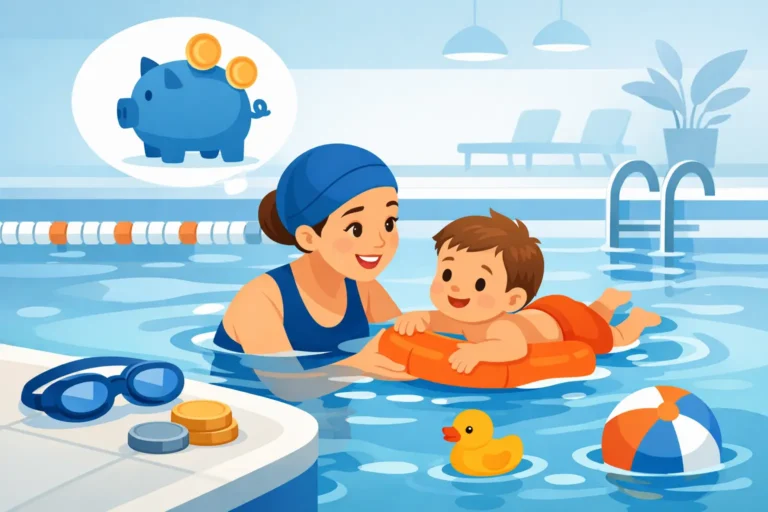
A toddler who clings tightly at the pool edge is not being difficult. They are communicating that the water still feels unpredictable. The best top toddler pool confidence games turn that uncertainty into small, repeatable successes: entering safely, holding the wall, putting the face near the water, floating with support, and responding to a caregiver or coach.
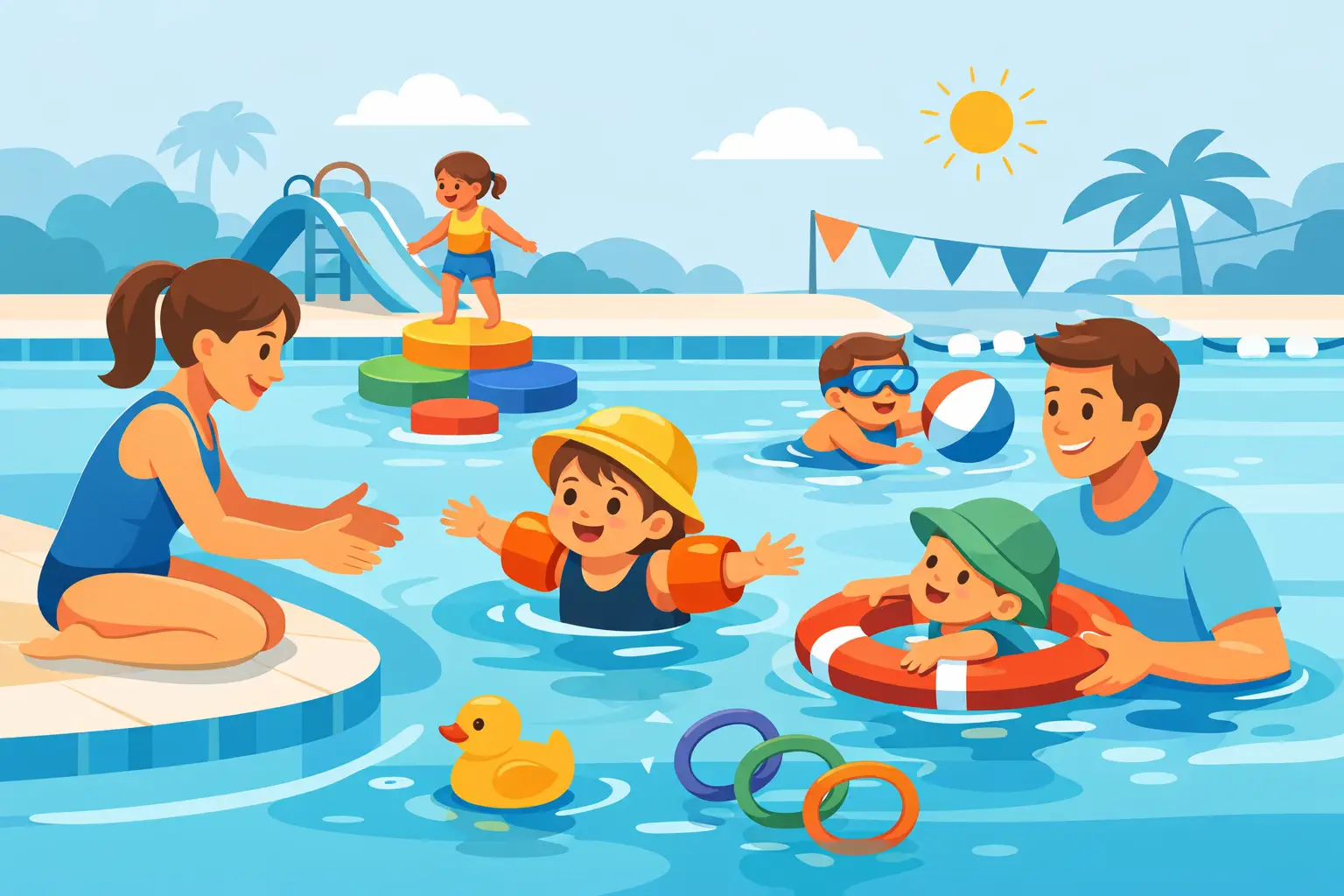
For young children, confidence should never mean pushing them to jump in or submerge before they are ready. Real water confidence comes from trust, clear routines, close supervision, and a progression that lets a child feel successful at each step. These games are designed for toddlers who are accompanied within arm’s reach by an adult in a shallow, calm pool area.
What Makes a Toddler Pool Game Build Real Confidence?
A productive pool game has a skill behind it. It may look like play, but it should reinforce a safety behavior, such as returning to the wall, waiting for permission, kicking toward an adult, or relaxing with supported buoyancy. The game should be short enough for a toddler’s attention span and easy enough to repeat without frustration.
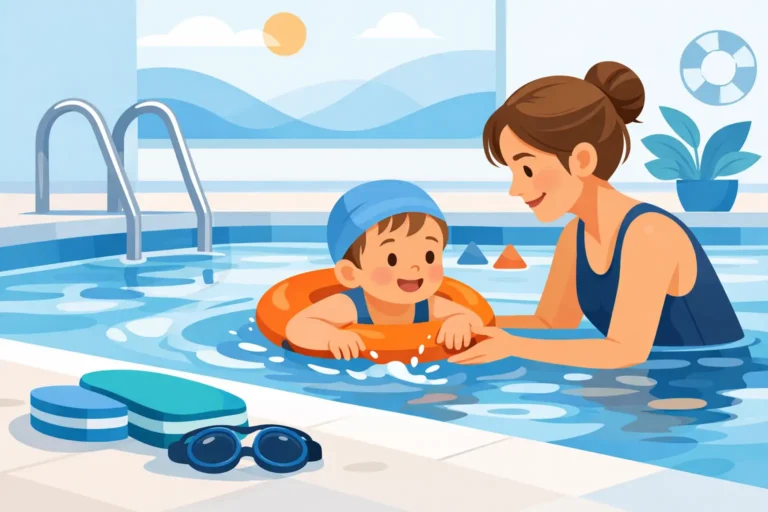
Choose a spot where your child can stand comfortably or where you can maintain secure hands-on support. Avoid crowded areas, deep water, strong splashing, and games that encourage children to run on deck. An adult should remain within touching distance at all times. Floatation toys can make an activity enjoyable, but they are not a substitute for supervision or swimming ability.
Most importantly, follow your toddler’s signals. A child who turns away, stiffens, cries continuously, or refuses an activity needs a simpler version, a break, or reassurance. Calm repetition works better than pressure.
7 Top Toddler Pool Confidence Games
1. Wall Walk and High-Five
Start at the pool wall with your toddler holding the edge using both hands. Ask them to move sideways toward you, one hand at a time, until they reach your waiting high-five. Keep the distance short at first – even two or three hand movements count as success.
This game teaches one of the most valuable early water-survival habits: find and hold the wall. Once your child is comfortable, stand a little farther away and encourage them to travel along the edge. Use simple, consistent words such as “hands on the wall” and “move to Mom” or “move to Dad.”
For a toddler who is hesitant, place your hand gently under their torso while they keep one or both hands on the wall. The goal is not speed. It is learning that the wall is a safe place to return to.
2. Treasure Reach
Place a brightly colored floating toy just beyond your toddler’s reach while they hold the wall or sit on the pool step. Invite them to stretch, reach, and bring the treasure back to you. Begin with the toy close enough that they can succeed without letting go.
Treasure Reach develops balance, hand coordination, and willingness to lean toward the water. It is also a gentle introduction to moving the face closer to the surface. As confidence grows, you can hold the toy slightly farther away while supporting your child under the chest or armpits.
Do not turn this into a contest or ask a reluctant child to reach below the surface. A floating treasure is enough for early sessions. The useful outcome is a relaxed body position and a positive association with reaching into water.
3. Bubble Birthday Cake
Ask your toddler to “blow out the candles” by making bubbles on the water’s surface. You can count three, sing a short birthday tune, or pretend that a floating toy is the cake. Demonstrate first with your own mouth close to the water, then invite your child to copy.
Blowing bubbles is an early breath-control skill. It helps children understand that water near the mouth can be managed calmly, rather than feared. Start with lips touching the water. Later, a child may be ready to place their chin, then nose, near the surface while blowing bubbles.
Never force face submersion. Some toddlers will happily progress to putting their whole face in; others need many sessions of surface bubbles. Both responses are normal. Confidence grows when the child controls the pace.
4. Motorboat Kicks
Support your toddler under the arms, around the rib cage, or with their hands resting on the pool ledge. Say, “Start your motorboat,” and encourage long, gentle leg kicks. You can make a quiet engine sound and point the “boat” toward a nearby toy or the wall.
This activity introduces a horizontal body position without demanding independent swimming. It also gives toddlers a clear purpose for kicking: moving forward to a destination. Keep your support steady and avoid lifting the child high above the water, which can create a vertical cycling motion rather than useful kicking.
Some children kick immediately; others keep their legs still because they are concentrating on staying secure. Celebrate any attempt. A few relaxed kicks with good support are more meaningful than a long, tense activity.
5. Safe Step-In, Safe Return
With your hands ready, have your toddler sit on the pool edge or stand on a shallow step. Use a consistent cue such as “Ready, set, step in.” Help them enter feet first, turn toward you, and then return to the wall or step with assistance.
This game creates a safe entry routine. Toddlers learn that they enter only when an adult gives permission, that they look for their caregiver or coach, and that the wall or step is their first destination. These habits matter far more than dramatic jumps.
If your child is not ready to step in, begin by sitting and swishing the feet. Next, help them slide from sitting into your arms. Progress should be based on calm body language, not on how quickly a child can perform the next variation.
6. Animal Float Parade
Hold your toddler securely under the shoulders or across the upper back and ask them to become an animal. A starfish stretches wide and stays still. A turtle looks down and makes small kicks. A sleepy seal lies back with ears near the water while you support the head and shoulders.
Animal Float Parade makes buoyancy less intimidating because the child has a simple image to follow. It can introduce both front and back supported floating, which are key foundations for later swimming and water-survival skills.
Back floating can be difficult for toddlers who dislike water near their ears. In that case, keep the head well supported, use a brief “one, two, three” count, and return upright before discomfort builds. A relaxed two-second float is a better result than forcing a longer one.
7. Red Light, Green Light to the Wall
Stand a short distance from the wall while supporting your toddler in the water. On “green light,” encourage gentle kicks or arm movements toward the wall. On “red light,” pause and help them reach for the edge with both hands. Once they are holding on, offer praise and let them rest.
This game combines listening, movement, and a reliable safety destination. It is especially helpful for toddlers who enjoy action but need reminders to stop and hold the wall. Over time, reduce your support only when your child can remain calm and consistently reach the edge.
Keep the distance very short. The purpose is not to test endurance or independence. It is to build the repeated pattern of moving toward safety and securing a handhold.
How to Use These Games in a Productive Pool Session
A toddler does not need an hour of activities to learn effectively. Ten to 20 calm minutes can be highly productive when the session has a predictable rhythm. Begin with a familiar game such as Wall Walk and High-Five, introduce one small new challenge, then finish with an activity your child already enjoys.
Rotate games instead of trying to complete all seven in one visit. For example, one session may focus on bubbles, supported kicking, and a safe step-in. Another may focus on wall skills, reaching, and a short back float. Repetition is not boring for toddlers when they know what comes next and receive specific praise.
Use praise that identifies the skill: “You kept two hands on the wall,” “You waited for the signal,” or “You blew calm bubbles.” This teaches children what they did well and reinforces behaviors that support later independent swimming.
When Play Should Lead to Structured Lessons
Parent-led games are a strong introduction, but they cannot replace a structured learn-to-swim pathway. As toddlers become comfortable, they need qualified instruction that develops safe entries, exits, floating, propulsion, listening skills, and gradual independence in an age-appropriate order.
A structured program also helps parents see measurable progress rather than relying on whether a child simply appears happy in the water. At AQZOG, early water introduction is built around safety, confidence building, and clear progression, so children develop habits that support future swimming and formal skills assessment.
The best pool game ends while your toddler still feels successful. Leave them with a high-five, a clear reminder that they held the wall or blew bubbles, and the confidence to try one small new skill at the next session.