Swimming Is the Least-Impact Sport for Children
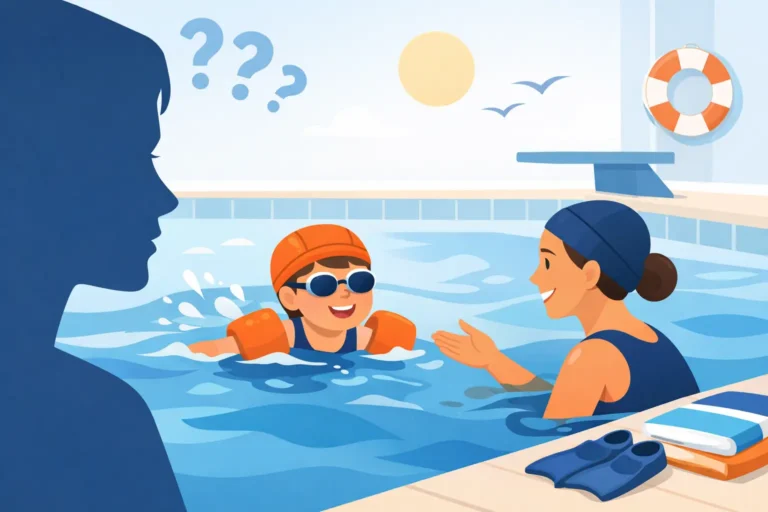
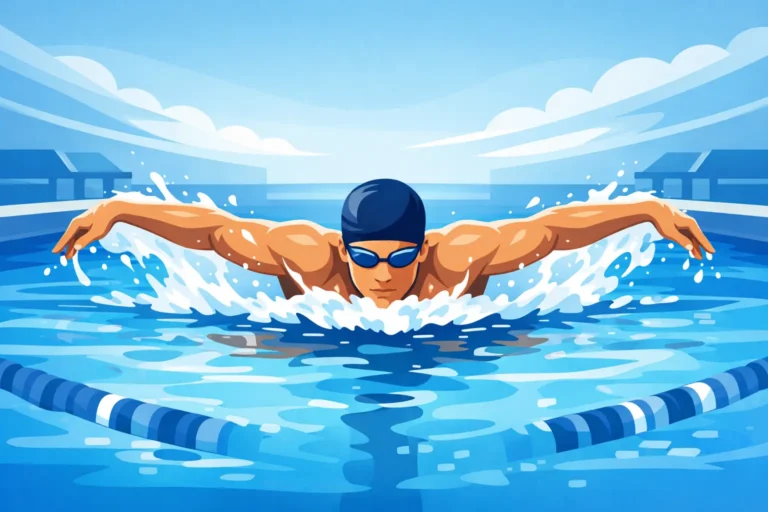
A child lands from a jump, stops suddenly in a game, or changes direction on a hard court hundreds of times during a typical sports session. In the pool, water supports much of the body while your child learns to move with control. That is why many parents say swimming is the least-impact sport for your child, especially during years when growing bodies are building coordination, strength, and confidence.
The phrase needs one important correction: swimming is not completely impact-free, and no activity is free from risk. A child can still overwork a shoulder, use poor technique, or become unsafe in water without close supervision. But compared with running, jumping, contact sports, and court-based activities, swimming generally places far less repetitive force on the joints. With structured instruction, it can give children a valuable combination of physical development and practical water survival skills.
Why Swimming Is the Least-Impact Sport for Children
On land, every stride and landing sends force through the feet, ankles, knees, hips, and spine. Those forces are not automatically harmful. In fact, healthy impact can help children develop bone strength. The concern is repetition, poor movement patterns, early specialization, or a workload that outpaces a child’s conditioning.
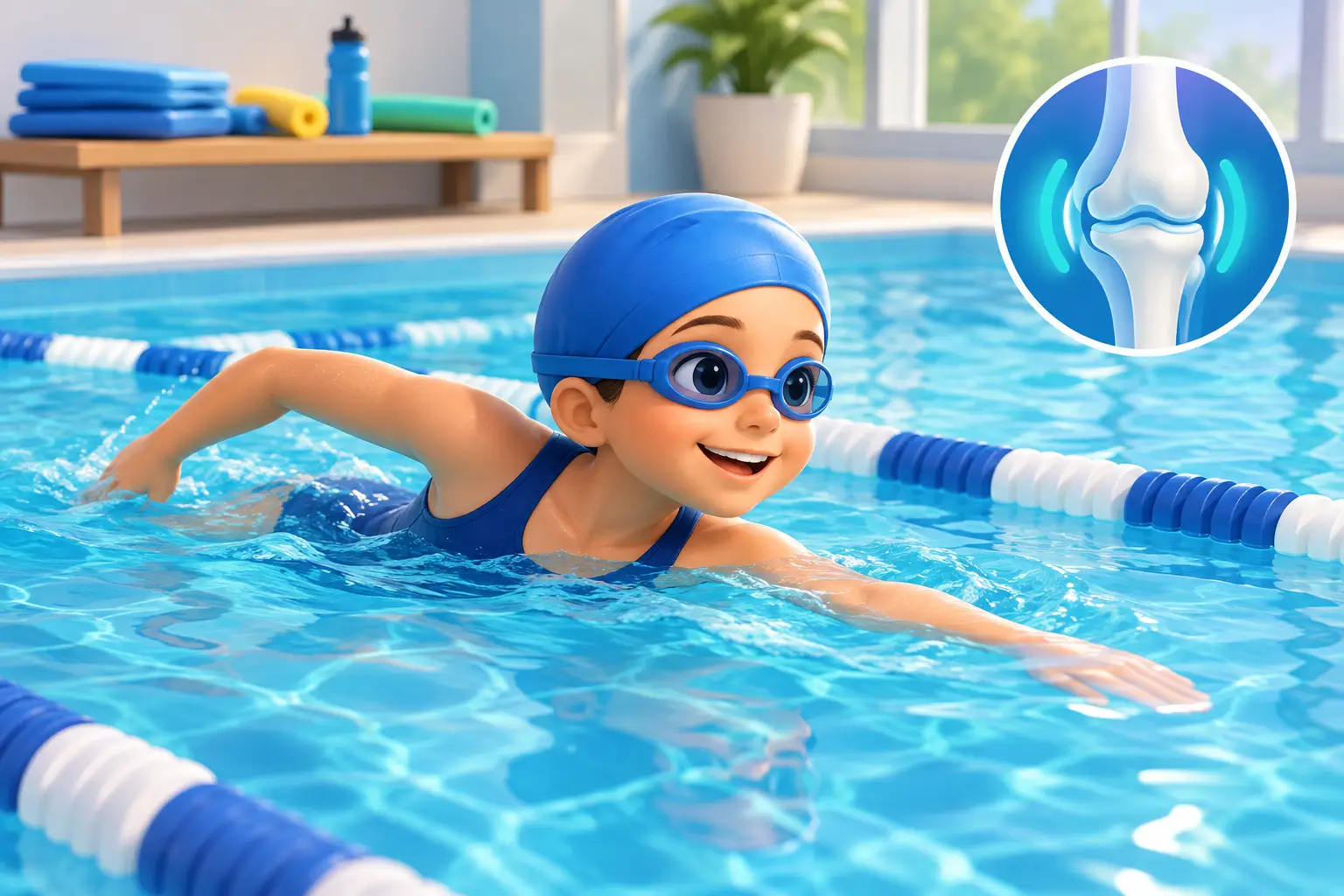
Water changes the equation. Buoyancy supports body weight, reducing the load placed on joints during movement. A child can kick, float, rotate, reach, and travel through the water without the repeated pounding that comes with laps around a track or drills on a court.
This makes swimming particularly useful for children who are still developing balance and body awareness, as well as those returning to activity after a minor knock or strain. It can also be an encouraging starting point for children who feel intimidated by high-contact or highly competitive sports. In the pool, progress can begin with simple wins: putting the face in, floating independently, moving a few meters, then breathing calmly while swimming.
Low impact does not mean low effort. Water creates resistance in every direction. A well-planned lesson develops endurance, core stability, mobility, coordination, and controlled breathing without requiring children to lift heavy loads or absorb repeated landings.
The Bigger Benefit: Swimming Is a Safety Skill
Parents often choose swimming because it is gentle on the body. The stronger reason to learn is safety. A child who can move confidently in water, return to a safe point, float or tread water, and respond calmly to instructions has skills that matter far beyond a weekly activity.
In Singapore, water is part of family life. Public pools, condominiums, holidays, school programs, and water play all create opportunities for children to be near water. Confidence alone is not enough. A child needs correct habits, realistic awareness of personal limits, and practice responding to common water situations.
That is where a structured progression matters. Early lessons should not be judged only by whether a child can swim a recognizable stroke. Before speed and distance, children need water orientation, safe entry and exit, breath control, floating, body position, and the ability to recover when movement does not go as planned.
As these foundations become reliable, stroke development can be introduced with better results. Children who understand balance in the water are usually more able to learn efficient kicking, arm recovery, timing, and breathing. They are not simply copying a stroke. They are building control.
Confidence Must Be Earned, Not Rushed
Some children enter the pool eager to splash. Others hold tightly to the wall or avoid putting their face in the water. Both responses are normal, and neither should dictate the pace of the entire learning journey.
Rushing a fearful child through a skill can create resistance that lasts longer than the lesson itself. On the other hand, allowing a confident child to rely on unsafe habits can slow progress and create false confidence. Good coaching meets the child at the current level, sets a clear next goal, and repeats skills until they are dependable.
For toddlers, that may mean learning to hold a safe position with an adult, becoming comfortable with water on the face, and practicing simple movements with close support. For school-age children, it may mean progressing toward independent floating, coordinated strokes, deep-water confidence, and formal SwimSafer readiness.
What Low Impact Does and Does Not Mean
Swimming is often a smart choice for active children, but it is not automatically the right answer for every child in every season. A child with an injury, pain, asthma, skin irritation, ear concerns, or a medical condition should follow advice from a qualified health professional. Coaches also need to know when a child is recovering from illness or struggling with fatigue.
Technique matters because repetitive poor movement can place stress on the shoulders, neck, hips, or lower back. This is more likely when children swim long distances before they have the strength and skill to maintain form. Young swimmers do not need to train like adult competitors to gain the benefits of swimming.
A sensible program balances skill practice with rest, varies activities, and prioritizes quality over endless laps. Children should leave lessons feeling challenged and successful, not exhausted or anxious. If a child reports pain during swimming, that is a signal to stop, assess, and adjust rather than push through.
Swimming also does not replace all land-based movement. Running, climbing, jumping, and playing support bone health and overall athletic development. For many children, the best routine includes swimming alongside active outdoor play or another age-appropriate sport. The advantage of swimming is that it offers a lower-impact training option while adding a life-saving capability.
How Structured Lessons Create Better Results
A casual pool visit can help a child enjoy the water, but it rarely provides a reliable learning sequence. Children need regular practice, clear correction, and measurable goals. Without these, they may remain dependent on flotation aids, avoid deeper water, or develop habits that are difficult to change later.
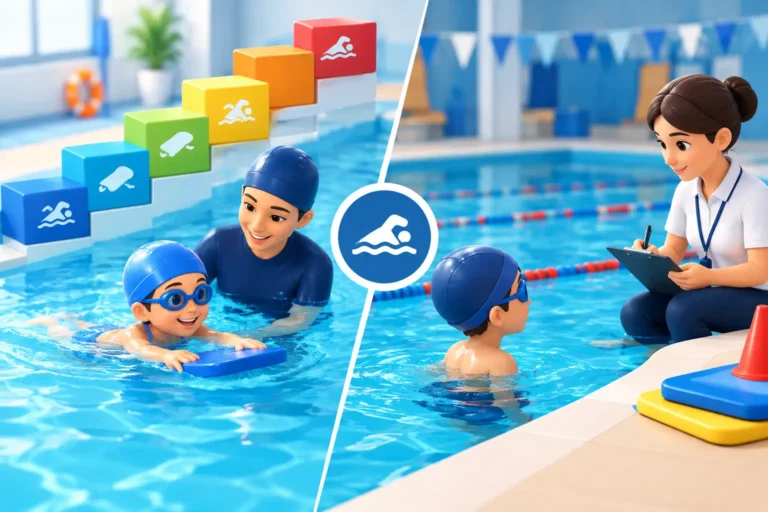
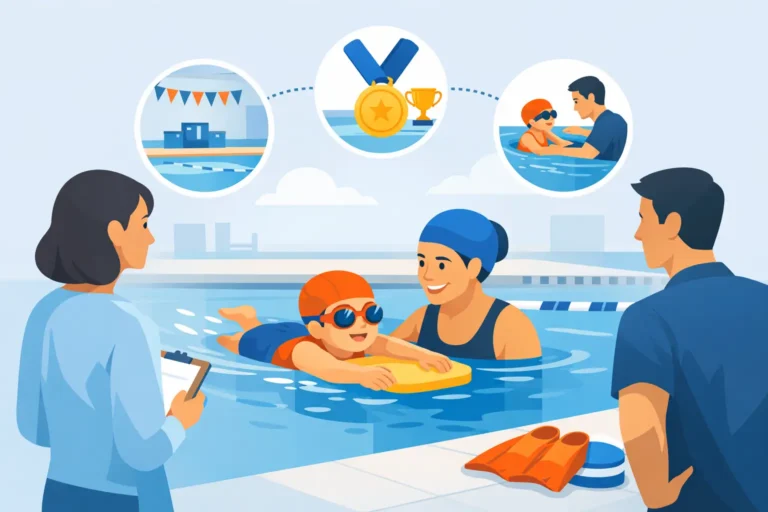
Structured lessons give each stage a purpose. Beginners first learn safe pool behavior and comfort in water. They then work toward buoyancy, propulsion, breathing, and independent movement. Once core skills are consistent, instructors can refine strokes, introduce distance targets, and prepare children for assessments and survival-focused tasks.
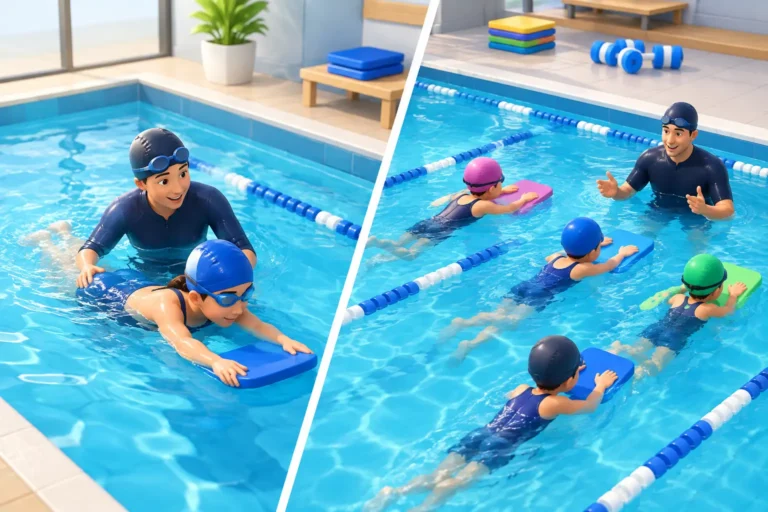
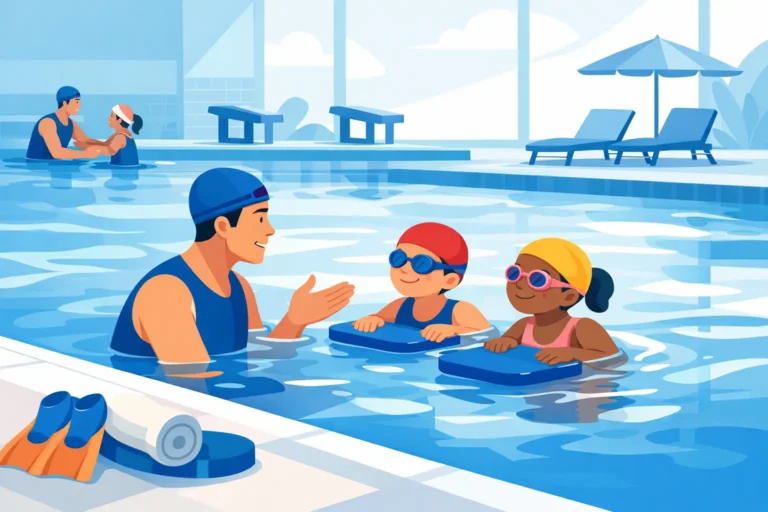
The best class format depends on the child. Group lessons can build motivation, listening skills, and familiarity with learning alongside peers. Private coaching may suit a child who needs individual attention, has a specific fear, is preparing for an assessment, or needs faster correction of technique. Semi-private instruction can offer a middle ground for siblings or friends with similar ability levels.
At AQZOG, progression-focused lessons are built around these practical outcomes: water confidence, correct technique, safety awareness, and readiness for the next skill level. For families following the SwimSafer pathway, training should also include practice that reflects assessment expectations rather than leaving preparation until the last minute.
Signs Your Child Is Progressing Well
Progress is not always measured by swimming farther each week. Look for calm, repeatable behaviors. Your child may begin entering the pool with less hesitation, placing their face in the water voluntarily, floating with a more relaxed body, or recovering more quickly after a missed breath.
As skills advance, watch for stronger body position, more controlled kicking, improved timing, and the ability to listen and respond while in the water. These are meaningful signs that a child is gaining independence rather than depending on luck, momentum, or an instructor’s constant support.
Formal certificates can be valuable milestones, particularly when they reflect verified safety and swimming skills. Still, the real test is whether your child can apply what they have learned calmly and safely in an appropriate water setting.
Choosing a Program That Respects Growing Bodies
Ask how the program groups children, how instructors assess starting ability, and how skills progress from one level to the next. A strong program should be able to explain what your child is learning now, why it matters, and what comes after it.
Look for coaches who correct technique early, maintain active supervision, and make water safety part of every lesson rather than a separate topic. Small details matter: safe entry, awareness of depth, controlled breathing, respectful behavior around others, and knowing when to stop are all part of becoming a capable swimmer.
Swimming gives children a rare opportunity to become fitter without constant pounding on growing joints, but its lasting value is more personal than that. Each relaxed float, controlled breath, and safely completed lap helps a child feel more capable around water. Start with a program that respects your child’s pace, teaches the right foundations, and turns confidence into skills they can carry for life.