SwimSafer Stages Versus School Assessment
A child may be comfortable in weekly swim lessons yet feel nervous when a school assessment date appears on the calendar. That is where understanding SwimSafer stages versus school assessment matters. Both support safer, more confident swimmers, but they do not always serve the same purpose, run in the same setting, or reveal the same level of readiness.
For parents, the goal should not simply be to collect a certificate. The stronger outcome is a child who can enter the water calmly, follow safety instructions, move efficiently, and respond with control when conditions become challenging. A well-planned SwimSafer pathway builds those skills over time, while a school assessment provides an opportunity to demonstrate them under assessment conditions.
What SwimSafer stages are designed to build
SwimSafer is a structured progression that develops swimming ability alongside water survival knowledge and practical safety skills. Each stage asks children to demonstrate age-appropriate competence before moving forward. The progression is purposeful: swimmers begin with water confidence and safe entry, then develop propulsion, breathing control, strokes, survival actions, and increasingly independent decision-making in and around water.
This matters because a child who can travel across a pool is not necessarily ready to manage an unexpected fall-in, float long enough to regain composure, or move to safety while wearing clothing. SwimSafer recognizes that swimming is an essential life skill. Technique matters, but survival awareness, calm decision-making, and confidence under pressure matter too.
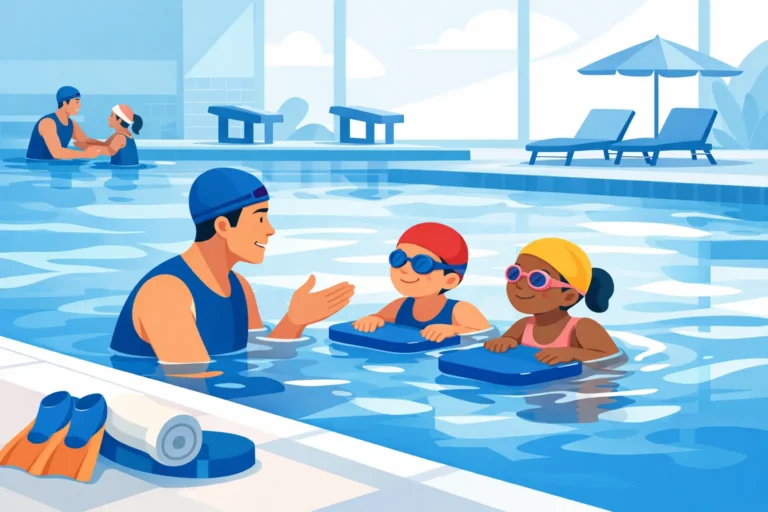
At AQZOG, training is organized around measurable progression rather than casual pool time. Coaches break down the skills required at each level, identify gaps early, and give swimmers repeated practice until movements become more reliable. This is especially valuable for children who are capable during a familiar lesson but lose focus or confidence in a new group environment.
Stages measure more than a single swim distance
Parents often focus first on the distance their child must swim. Distance is important, but it is only one part of stage readiness. Depending on the stage, an assessment may also involve safe water entry, submersion, floating, rotation, treading water, sculling, survival swimming, specific strokes, and water safety knowledge.
The exact requirements should always be confirmed against the current stage criteria and assessment arrangement. Standards and administration details can change, and children should be prepared for the skills actually expected on the day. Good preparation means practicing the full sequence, not only the skill a child enjoys most.
How school assessment works
A school assessment is usually part of a school-based swimming program or assessment schedule. It may give students access to structured aquatic education within the school setting, often alongside classmates and within a fixed number of sessions. For many families, this is a useful introduction to formal water safety learning.
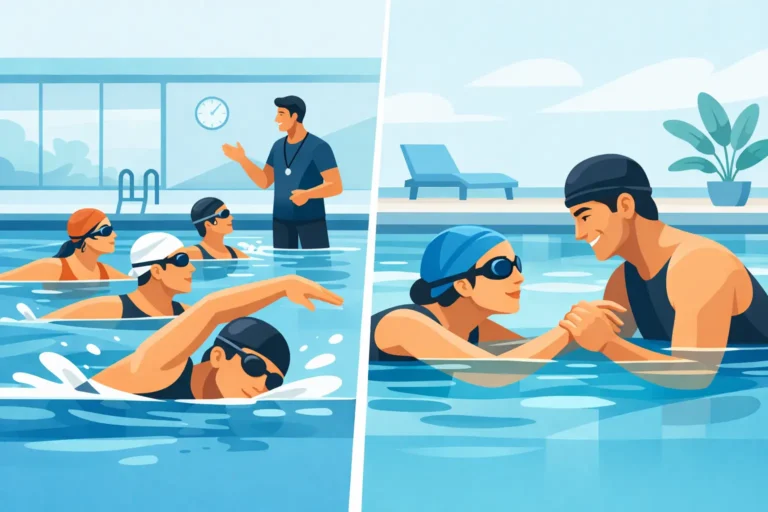
However, a school setting has practical limits. Teachers and instructors must work with a larger group, follow the school timetable, and accommodate children with very different starting abilities. Some swimmers arrive already comfortable in deep water; others may still be learning to put their face in. The pace has to serve the group.
That does not make school assessment less meaningful. If it is conducted under the required SwimSafer assessment framework, a successful result can represent formal stage achievement. The difference is that school assessment is the assessment opportunity and delivery setting, while SwimSafer stages are the structured competency standards the child is working toward.
A child’s experience will therefore depend on how much instruction, practice time, and individual feedback is available before the assessment. One child may be ready after school sessions alone. Another may need more targeted coaching to reach the same standard safely and confidently.
SwimSafer stages versus school assessment: the key difference
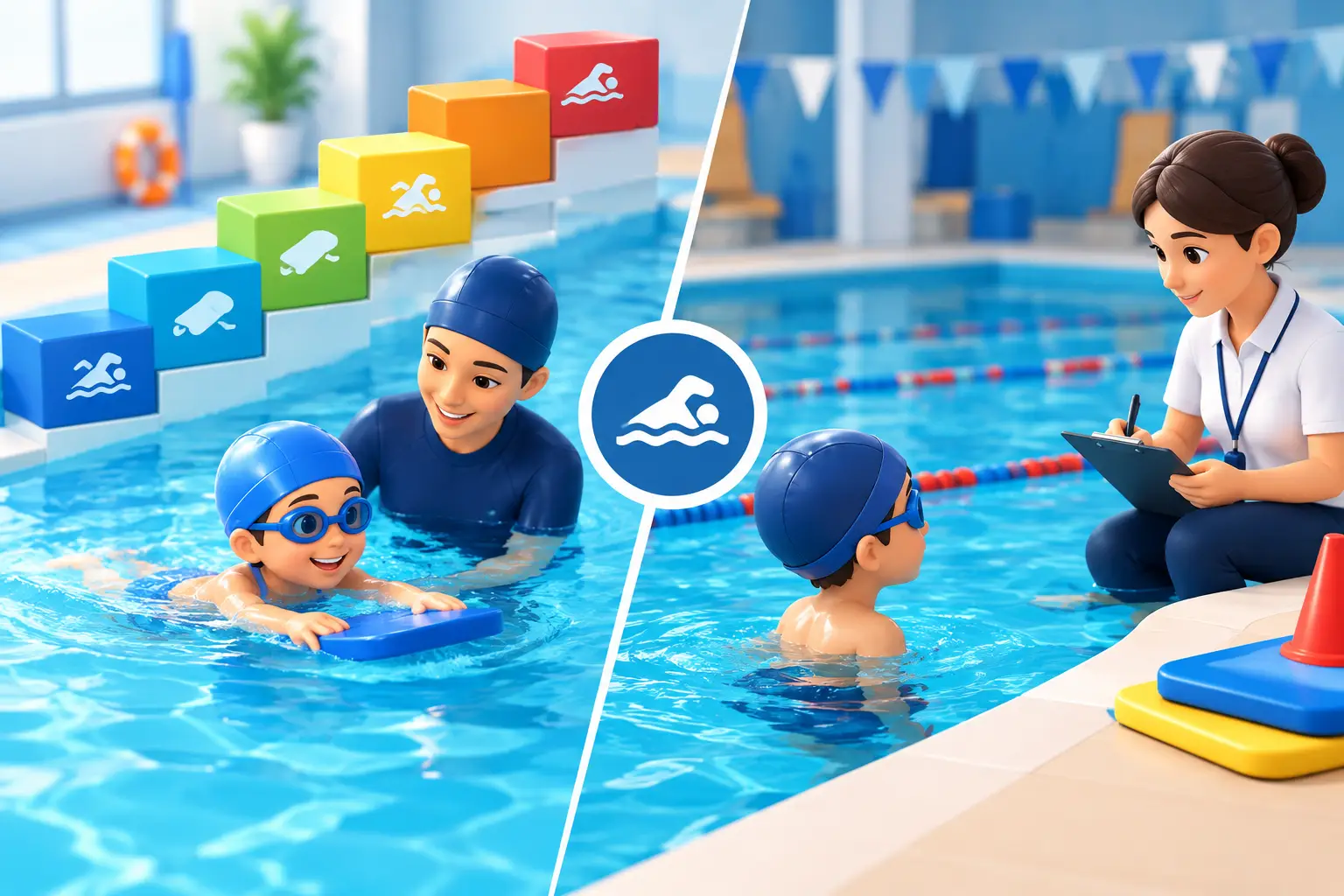
The simplest way to view the comparison is this: SwimSafer stages define what a swimmer needs to know and demonstrate. School assessment is one possible route through which a child may be taught, observed, and assessed against those expectations.
A stage is about competency. An assessment is about demonstrating that competency on a particular day, in a particular setting.
This distinction helps parents avoid two common mistakes. The first is assuming that attendance in a school program automatically means a child has mastered every skill. Regular participation is valuable, but mastery requires consistent performance. The second is treating an unsuccessful assessment as proof that a child cannot swim. A child may have the underlying ability but struggle with nerves, unfamiliar instructions, cold water, pacing, or one weak component in a multi-skill sequence.
The right response is not pressure. It is targeted practice.
Why some children perform differently at school
Children are sensitive to context. In a regular class, they may know the coach, understand the lesson routine, and receive reminders before every attempt. At a school assessment, they may wait longer, watch peers go first, feel observed, or receive instructions only once.
Assessment performance can also be affected by transitions. A child may swim a front crawl well in isolation but become disorganized after an entry, a float, and a change in direction. Another may have enough stamina for the required distance but rush, lift their head repeatedly, and lose breathing rhythm.
These are not reasons to lower the standard. They are reasons to prepare properly. Children need to practice complete assessment sequences, not just isolated drills. They also benefit from learning how to listen, wait calmly, ask for clarification when appropriate, and reset after a mistake.
When additional preparation makes sense
Extra preparation is useful when a school assessment is approaching and a child has uneven skills. It is also valuable after a break from lessons, a change of school, a previous unsuccessful attempt, or a long period without deep-water practice.
Parents should look beyond whether their child says, “I can swim.” A more useful question is whether the child can consistently complete the required skills with safe form and without constant prompting. Consistency is what turns a good attempt into assessment readiness.
Focused coaching can identify whether the real issue is technical, physical, or emotional. For example, a child may need help with side breathing, but the deeper cause may be tension and poor body position. A swimmer who refuses to jump into deeper water may not lack courage; they may not yet trust their ability to surface, orient themselves, and regain control.
Private or small-group sessions can be particularly effective when time is limited. They allow the coach to spend more time on the exact stage components, correct habits immediately, and build familiarity with practical test flow. A mock assessment can then show whether the child is ready or whether more practice is the safer choice.
A practical preparation plan for parents
Preparation should begin early enough that practice feels normal, not stressful. Weekly lessons build the foundation, while a test-focused review closer to the assessment helps children connect individual skills into a complete performance.
Start by confirming the stage and the current requirements. Next, observe your child across the whole skill set: entries, floating, movement, breathing, strokes, and survival actions. If one area is uncertain, address it before the final week. Last-minute drilling may increase anxiety, especially for a swimmer who is already worried about deep water.
It also helps to use encouraging, specific language at home. Instead of saying, “Don’t fail,” say, “Show the safe skills you have practiced.” Instead of promising that the test will be easy, remind your child that they can take each instruction one at a time. Confidence grows when children know what to expect and have evidence that they can do it.
Parents should also maintain perspective. Stage progression is valuable, but rushing a child through a level before key survival skills are secure can create gaps later. A short delay to strengthen floating, breathing control, or deep-water confidence is often a better investment than moving ahead with uncertainty.
Certification is strongest when it reflects real confidence
A SwimSafer result should represent more than a completed school requirement. It should reflect a child’s growing ability to make safer choices around water, move with control, and cope when swimming becomes demanding.
Whether your child is preparing through school, weekly classes, or focused assessment coaching, aim for readiness that lasts beyond test day. The most reassuring moment is not receiving the certificate. It is seeing your child enter the water with calm awareness, use the skills they have learned, and know how to get themselves to safety.