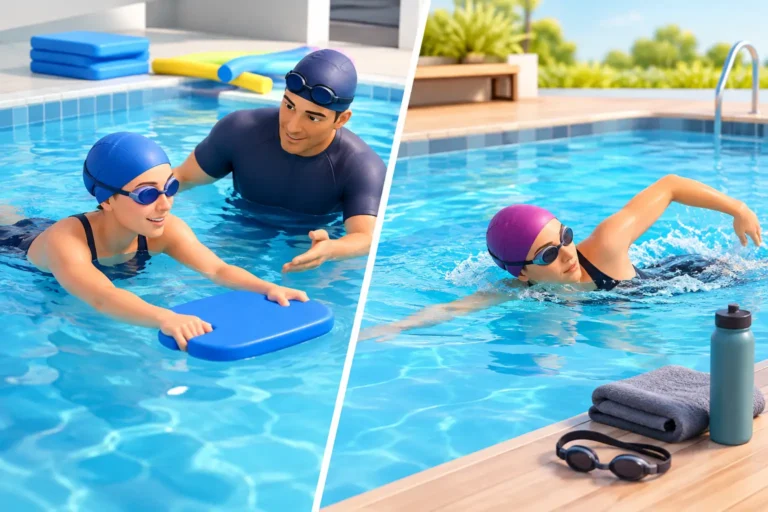
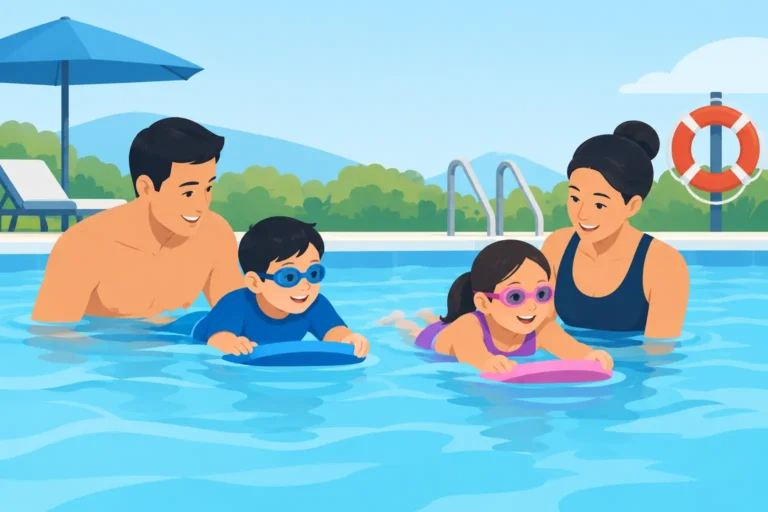
The Lifesaving Pathway for Young Swimmers
A child who can move confidently through the water is not automatically prepared for an emergency. The lifesaving pathway for young swimmers goes further than strokes and distance. It teaches children how to recognize risk, stay calm when tired or surprised, make safe decisions, and seek help without placing themselves in danger.
For parents, that distinction matters. Pools, beaches, water parks, and boating activities can all present changing conditions. Structured swimming lessons should build competence step by step, with measurable skills that support both everyday water confidence and formal SwimSafer progression.
What a Lifesaving Pathway Should Build
Lifesaving development begins with a simple goal: help a child become safe, capable, and aware in and around water. That requires more than learning freestyle quickly. A strong program develops water entry and exit skills, controlled breathing, floating, treading water, distance swimming, and the ability to orientate after entering deep water.
As children progress, they also need to understand judgment. They should know when not to enter the water, why they should call an adult or lifeguard for help, and how to use an object or reach assist rather than attempting a risky rescue. These decisions can be just as valuable as physical swimming ability.
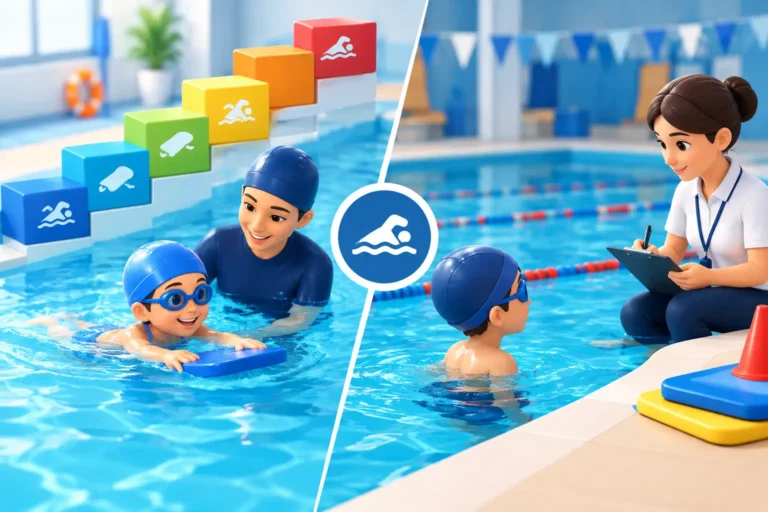
For young learners, lessons must be age-appropriate. A preschooler may first need comfort putting their face in the water, rolling onto their back, and returning safely to the pool edge. A school-age swimmer can begin practicing sustained treading, survival strokes, and more formal rescue-awareness scenarios. The right next step depends on the child’s confidence, coordination, attention span, and current swimming skills.
Start With Water Confidence, Not Pressure
Children learn safety skills more effectively when they feel secure with their instructor and environment. Rushing a fearful child into deep-water drills can create resistance, while holding back a confident child for too long can slow progress. Experienced coaching balances encouragement with clear standards.
Early lessons should make essential behaviors familiar: entering only when permitted, listening for instructions, moving safely on wet surfaces, and finding the wall after a short swim. Children should also practice recovering from common situations, such as goggles filling with water or losing their footing in a shallow area.
Confidence is not the same as overconfidence. A child who enjoys jumping in may still struggle to float calmly or swim back to safety when fatigued. Structured assessment helps coaches identify these gaps before moving a swimmer into more demanding survival and certification work.
Core survival skills to develop first
Before a young swimmer focuses on speed or advanced technique, they should be able to demonstrate control in foundational situations. This includes safe entries, submersion recovery, front and back floating, changing position in the water, and moving to safety without panic.
Treading water is especially valuable because it gives a swimmer time to assess their surroundings. Even a short period of controlled treading can help a child regain composure, signal for help, or choose the safest route to the pool edge. Distance swimming then builds the endurance needed to reach safety when the exit is not close by.
Progress From Survival Skills to Water Safety Judgment
A well-designed lifesaving pathway for young swimmers connects physical ability with decision-making. Children should understand that helping does not always mean entering the water. In many situations, the safest response is to shout for an adult, alert a lifeguard, call emergency services, or extend a flotation aid from a stable position.
This is an important lesson for confident swimmers. Children sometimes assume that being able to swim means they can rescue a distressed friend. In reality, a panicked person may grab onto a rescuer, creating danger for both individuals. Coaches should teach young swimmers to prioritize their own safety while using simple, practical non-contact rescue principles.
At an appropriate level, swimmers can practice recognizing hazards such as deep-water drop-offs, slippery decks, drains, crowded lanes, changing weather, and unfamiliar open-water conditions. Pool confidence does not automatically transfer to the sea, where waves, currents, reduced visibility, and distance from shore can change the risk significantly.
Use SwimSafer as a Measurable Progression Framework
For families in Singapore, SwimSafer offers a recognized structure for developing swimming proficiency and water survival knowledge. Its staged approach gives parents a clearer picture of what a child can do, what they are preparing for next, and where further practice is needed.
The value is not only the certificate. A properly prepared swimmer develops practical competence through repeated instruction, observation, and assessment. This includes controlled entries, survival sequences, stroke development, water safety knowledge, and age-appropriate rescue awareness.
Test readiness should never mean last-minute drilling alone. Children perform better when their weekly lessons have already developed the required skills in a calm, consistent way. Mock practical tests can be useful because they help swimmers understand instructions, manage nerves, and identify specific areas that need refinement before assessment day.
AQZOG’s structured lessons support this type of progression by matching swimmers with appropriate class levels, helping families work toward clear safety and certification outcomes rather than relying on unplanned practice.
Why repetition matters
Water safety skills need to become reliable under pressure. A child may complete a back float once during a relaxed lesson, but the real goal is to perform it when they are tired, startled, or asked to recover after an unexpected entry.
Regular practice develops automatic responses. Over time, a swimmer learns to regain breathing control, orient toward safety, and make deliberate choices rather than reacting with panic. Weekly instruction is often the best fit for steady development, while holiday intensive programs can help reinforce skills or prepare a child who needs focused improvement before a test.
Choose the Right Lesson Format for the Child
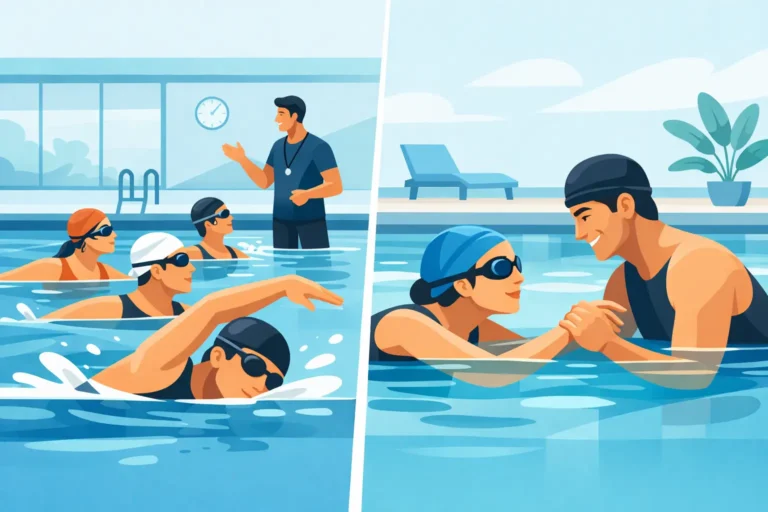
Group classes are effective for many children because they provide routine, peer motivation, and regular progression. They are particularly suitable for swimmers who can follow instructions and benefit from practicing alongside others at a similar level.
Private coaching may be a better choice for a child with water fear, a specific technical weakness, a tight assessment timeline, or a need for more individualized attention. Semi-private lessons can work well for siblings or friends with comparable abilities, provided neither child’s progress is held back by a large skill gap.
The best format depends on the starting point and the goal. A beginner needs patient foundations. A child approaching a SwimSafer assessment may need targeted work on selected practical tasks, stamina, or theory knowledge. Parents should look for a program that assesses the swimmer honestly and recommends a realistic pathway rather than promising immediate advancement.
How Parents Can Reinforce Safety Between Lessons
Parents do not need to become swim coaches to support progress. The most useful reinforcement is consistent safety language. Remind children to ask permission before entering water, identify the nearest exit, stay within their ability, and tell an adult if they feel tired, cold, unwell, or unsure.
During family pool visits, allow children to practice skills their coach has already introduced, but avoid turning every outing into a test. Short, positive practice of floating, kicking, or swimming to the wall can build familiarity. Keep close supervision at all times, especially around younger children and weaker swimmers. Swimming lessons improve ability, but they do not replace active adult supervision.
It also helps to praise calm decision-making, not only distance or speed. A child who chooses to stop, hold the wall, and ask for help is showing a water safety skill worth recognizing.
Build Capability That Lasts Beyond the Next Certificate
The strongest swimmers are not simply those who collect stages quickly. They are swimmers who can assess a situation, control their breathing, conserve energy, and make safe choices when conditions are unfamiliar.
A structured pathway gives young swimmers a meaningful direction: confidence first, survival skills next, then stronger strokes, endurance, rescue awareness, and formal certification readiness. Each stage should prepare them for greater independence without asking them to take unnecessary risks.
The next useful step for any family is simple: assess what the child can reliably do in the water today, then choose instruction that builds the skills they will need when an adult is not within arm’s reach.