Breaststroke Correction for Adult Learners
A breaststroke that feels exhausting is rarely a fitness problem alone. Adult swimmers often work hard but travel slowly because the kick, pull, breath, and glide are happening at the wrong moments. Effective breaststroke correction for adult learners starts by identifying the one habit that is disrupting the stroke, then rebuilding a safer, more efficient sequence.
For adults, correction must also respect confidence levels. A swimmer who is still uncomfortable putting their face in the water needs a different starting point from a fitness swimmer trying to improve lap times. The goal is not to copy a competitive swimmer immediately. It is to develop a controlled breaststroke that supports water safety, endurance, and measurable progression.
Why Adult Breaststroke Problems Persist
Many adults learned breaststroke informally. They may have picked it up during childhood, copied friends, or relied on it as their only way to keep their head above water. That history can create deeply ingrained movement patterns: a wide scissor kick, a large arm pull, or constant head-up swimming.
These habits can feel natural because they help the swimmer stay afloat in the short term. Over a full lap, however, they cause drag, fatigue, and loss of rhythm. The swimmer may respond by kicking harder or pulling wider, which usually makes the problem worse.
A structured correction process separates the stroke into manageable parts before putting it back together. This is especially valuable for adult learners, who often want to understand why a change works before they can commit to practicing it consistently.
The Correct Breaststroke Sequence
Breaststroke is a rhythm stroke. The basic order is pull, breathe, kick, glide. Each action prepares the next one.
The arms begin from a long, streamlined position. Sweep outward and then inward only as far as needed to bring the body forward for a breath. As the hands recover forward, the heels draw up. The kick then drives the body into a straight line, followed by a brief glide.
The glide is not a pause where the swimmer loses momentum. It is the reward for a clean kick and narrow body position. Adult swimmers commonly skip this phase because they feel rushed to take the next breath. Learning to trust the glide is often one of the fastest ways to make the stroke calmer and more economical.
Keep the Pull Smaller Than You Think
A wide, deep pull is one of the most common breaststroke errors. It may lift the head higher, but it also drops the hips and creates significant resistance. For recreational and developing swimmers, the hands should generally stay in front of the shoulders rather than sweeping back toward the ribs.
Think of the pull as a movement that sets up the breath, not as the main source of propulsion. In breaststroke, the kick should provide most of the forward drive. A smaller arm action helps the swimmer return quickly to a long body line.
Breathe Forward, Then Return to the Water
Breathing should be quick and purposeful. Lift the chin only enough for the mouth to clear the surface, take a breath, then place the face back into the water as the arms extend forward.
Looking ahead for too long causes the legs and hips to sink. For adults who feel anxious with face-down swimming, this may take time. A coach can use shallow-water drills, supported glides, and short distances to build comfort without forcing the learner into a rushed full stroke.
Breaststroke Correction for Adult Learners: The Kick
The breaststroke kick is technical, and it is often the area that needs the most patient correction. A useful starting cue is: heels up, toes out, press around, snap together.
The heels recover toward the body while the knees remain relatively narrow. The feet turn outward, then sweep backward and around. The finish matters: the legs should come together firmly, with the feet pointed behind the swimmer. This creates the streamlined position that carries the body forward.
A wide knee recovery is a frequent problem. When the knees spread far apart, the swimmer creates drag before the kick even begins. Another common issue is kicking downward like freestyle. Breaststroke propulsion comes from pressing water backward with the insides of the feet, not from pushing the water toward the pool floor.
Kickboards can help isolate the movement, but only when used correctly. Holding a board too high may encourage the swimmer to lift the head and arch the back. For some adults, practicing the kick on the back is more revealing because they can see whether the knees are opening too wide and feel whether the legs finish together.
Timing: Stop Pulling and Kicking at Once
When the arms and legs work simultaneously, breaststroke can feel powerful but becomes inefficient. The body never reaches a full streamlined line, and each stroke turns into a struggle against the water.
A simple timing drill is to say the sequence quietly: “pull, breathe, kick, glide.” The hands shoot forward first. The legs complete their kick only after the arms are extending. Then the swimmer holds a long, stable line before starting again.
The length of the glide depends on the swimmer’s speed, ability, and purpose. A beginner may need a shorter glide to maintain confidence and rhythm. A more experienced swimmer may need to avoid over-gliding, where momentum fades completely before the next pull. Correct timing is not about making every stroke slow. It is about removing wasted movement.
Body Position and Streamline
Breaststroke becomes easier when the body moves as close to horizontal as possible. The head, chest, hips, and legs should travel forward in a connected line rather than rising and falling dramatically with every cycle.
After the kick, squeeze the legs together, extend both arms forward, and let the ears rest between the upper arms. Keep the eyes directed down and slightly forward. This position reduces drag and gives the swimmer a stable moment to reset before the next stroke.
Adults with tight ankles, hips, or knees may find the ideal kick position difficult at first. Flexibility does affect breaststroke, particularly the ability to turn the feet outward. But flexibility is not an excuse to force the joints. A qualified coach should adjust drills and expectations, especially for swimmers with knee discomfort or a previous injury. Pain is not a normal part of technical correction.
Drills That Build Real Improvement
Good drills have a clear purpose. Repeating laps with poor form only reinforces the same error, so adult learners should alternate focused drills with short swims where they apply one correction at a time.
A two-kick, one-pull drill can help swimmers feel the glide and avoid rushing. A breaststroke kick on the back helps narrow the knee recovery and improve the snap of the feet. Pull-breathe-glide practice with a buoy or light support can teach a smaller, more controlled arm action. Short-distance breaststroke with deliberate pauses after each kick can reinforce the full streamline.
The best drill depends on the error. A swimmer whose hips sink may need breathing and body-line work before spending time on kick power. A swimmer with a strong kick but poor rhythm may benefit more from sequencing drills. This is why individualized feedback produces faster improvement than generic lap practice.
What Structured Coaching Changes
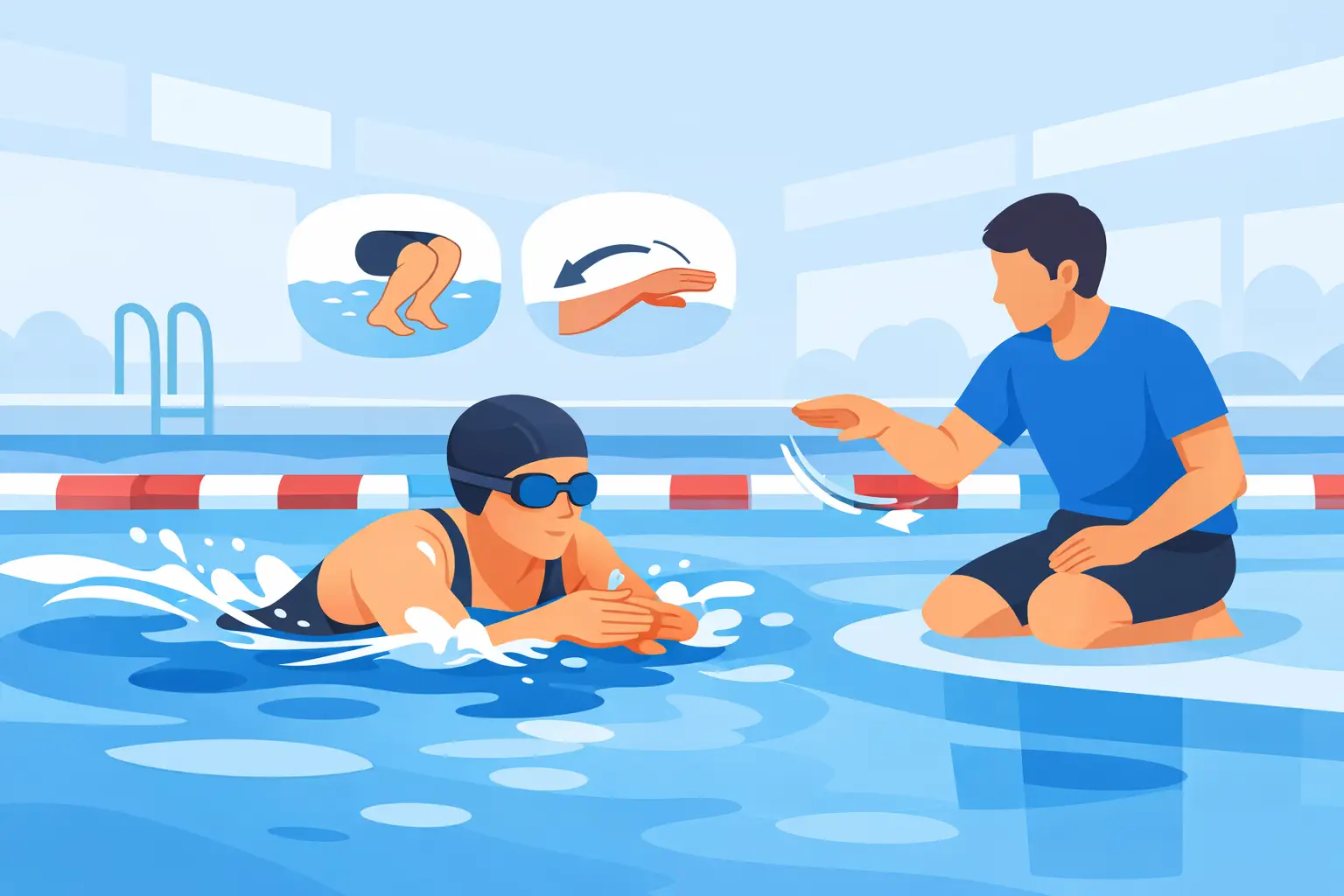
Adult learners often make progress quickly when they receive specific feedback rather than broad instructions such as “kick harder” or “keep going.” A coach can observe whether the issue begins with the head position, the arm recovery, the knee width, foot angle, or timing between movements.
At AQZOG, structured swimming instruction emphasizes confidence, water safety, and progressive skill development. For adults, that means building a breaststroke that is useful beyond a single lesson: a controlled stroke for lap swimming, fitness goals, deeper-water confidence, and continued progression toward personal or assessment-based targets.
Video feedback can also be useful, but it should support coaching rather than replace it. Underwater and poolside views may show a swimmer exactly where their legs separate or when their head stays up. The next step is translating that observation into a simple correction the swimmer can repeat safely.
Practice for Consistency, Not Exhaustion
Two focused practice sessions each week can be more effective than one long session spent swimming with poor technique. Begin with a short warm-up, choose one technical priority, practice it through drills, then finish with a few controlled lengths of full breaststroke.
Do not try to correct every detail in one session. For one week, the priority may be returning the face to the water. The next week, it may be narrowing the knees during recovery. Small, repeatable improvements create a dependable stroke far more effectively than chasing speed too early.
A better breaststroke should feel quieter and more controlled: fewer frantic movements, a cleaner kick finish, and enough glide to travel forward with confidence. That is the standard worth practicing toward, one well-timed stroke at a time.