Mock Swim Test: Build Confidence Before Test Day
A child can complete every skill confidently during a regular lesson and still freeze when an assessor calls their name, asks for a sequence, and watches from the pool deck. That is the gap a mock swim test is designed to close. It gives learners a realistic practice run before assessment day, so the test environment feels familiar rather than intimidating.
For parents, a mock test provides a clear answer to an important question: Is my child truly ready, or do they simply need more guided practice? For adult learners, it replaces uncertainty with practical feedback on the skills that need to be demonstrated safely and consistently. The goal is not to create pressure. It is to build calm, capable swimmers who understand what to do when it counts.
What Is a Mock Swim Test?
A mock swim test is a structured practice assessment that mirrors the flow, expectations, and skill demands of an upcoming practical swimming evaluation. In a SwimSafer-focused pathway, it may include water entry, swimming strokes, personal survival skills, movement in deep water, and responses that show awareness of water safety.
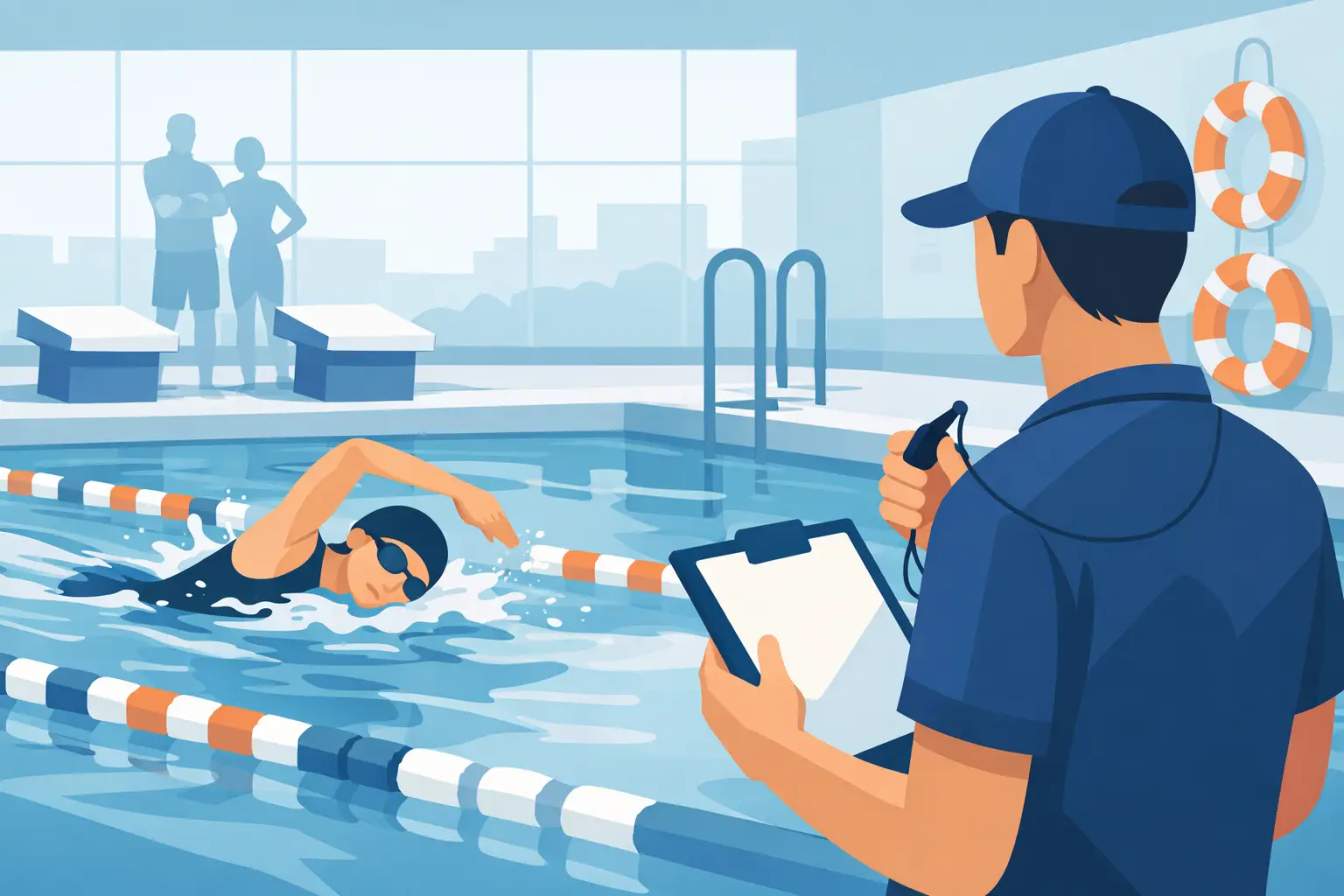
Unlike a normal lesson, the coach takes a more observational role. The learner performs skills in sequence, with fewer prompts and less mid-task correction. This matters because formal assessments measure not only whether a swimmer has learned a skill, but whether they can carry it out independently, safely, and in the required order.
A well-run mock test should still be supportive. It is not a pass-or-fail label placed on a child after one session. It is a diagnostic tool that identifies readiness, builds familiarity with the assessment format, and directs the next stage of training.
Why a Mock Swim Test Matters Before SwimSafer Assessment
Test readiness is different from lesson attendance. A swimmer may have attended class consistently, improved their freestyle, and become comfortable putting their face in the water. Yet assessment day can introduce distractions: an unfamiliar coach, other candidates nearby, waiting time, nerves, or a skill being requested in a different sequence.
A mock test helps learners manage those variables before the official assessment. They learn to listen carefully, wait for instructions, ask for clarification when appropriate, and reset after a small mistake. These are valuable habits for school-age children, but they are equally useful for adults returning to swimming after years away from the pool.
It also protects the purpose of certification. SwimSafer progression is centered on practical water safety, not on collecting badges quickly. If a learner needs more time to stabilize a skill, extra preparation is the responsible choice. A few targeted lessons can be far more productive than rushing into an assessment before the swimmer is ready.
What Coaches Look For During a Mock Test
The exact criteria depend on the learner’s stage and the assessment requirements, but coaches generally look beyond a single successful attempt. They assess consistency, control, safety awareness, and the swimmer’s ability to follow directions independently.
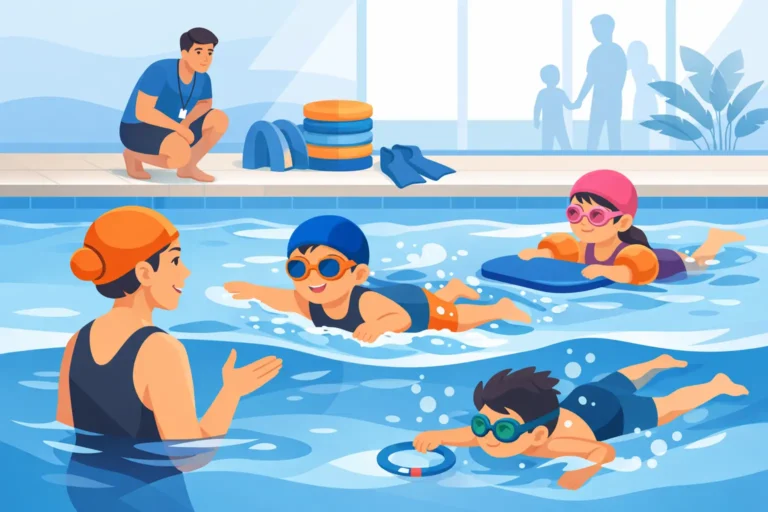
For younger children, confidence may be visible in simple but meaningful ways: entering the water without panic, recovering from a float, moving toward a safe point, or keeping their body relaxed while breathing. For more advanced swimmers, the focus may shift toward efficient stroke technique, endurance, deep-water confidence, treading water, survival sequences, or lifesaving-oriented skills.
A coach will also notice the details that parents may not easily spot from the poolside. Does the child lift their head repeatedly while swimming? Do they lose balance during a rotation? Can they maintain a float without constant reassurance? Does an adult swimmer understand the instruction but lose technique when fatigued? These observations make the feedback useful and specific.
The Best Time to Schedule a Mock Swim Test
A mock test is most valuable when the learner has already covered the required skills in lessons but still has time to improve before the official assessment. Scheduling it too early can be discouraging because the swimmer may not yet have learned the full skill set. Leaving it until the day before the test may reveal gaps without allowing enough time to correct them.
For many learners, a mock assessment several weeks before the scheduled practical test creates the right balance. The coach can identify priority areas, plan focused revision, and then check whether the swimmer has improved under test-like conditions.
Timing depends on the learner. A child who is technically capable but anxious may benefit from more than one short simulation, especially if they are new to formal assessments. A confident, experienced swimmer may only need one mock test to confirm readiness and fine-tune a few details. Adults with water fear should progress at a pace that preserves trust and safety rather than being pushed toward a fixed date.
How Parents Can Help Without Adding Pressure
Children often read their parents’ emotions before they process their own. If test day is framed as a major event that must go perfectly, even a capable swimmer may feel worried. A more helpful message is simple: this is an opportunity to show what you have practiced, and the coach will help you know what to work on next.
Before a mock test, make sure your child arrives rested, hydrated, and early enough to settle in. Familiar goggles that fit properly can prevent unnecessary discomfort. Avoid introducing new equipment or giving a long list of last-minute reminders. One or two cues, such as “listen to the coach” and “take your time,” are usually enough.
Afterward, ask open questions. “Which part felt easiest?” or “What would you like to practice more?” keeps the conversation focused on learning. Praise effort, attention, and bravery, not only a result. That approach supports long-term confidence in and around water.
Turning Mock Test Feedback Into Progress
The value of a mock test lies in what happens next. Strong feedback should separate skills that are secure from skills that need focused repetition. Vague comments such as “practice more” are not enough. A learner needs to know whether the main issue is technique, confidence, stamina, understanding of the sequence, or safety control.
For example, a child may complete a front crawl distance but struggle to breathe calmly. The next lessons should prioritize body position, rhythmic breathing, and relaxed repetition rather than simply asking for more laps. If a learner hesitates during a deep-water entry, the coach may build confidence through progressive entries, recovery practice, and clear safety routines.
At AQZOG, structured preparation is especially useful because it connects each practice session to a measurable goal. Instead of guessing whether a swimmer is ready, families can see which abilities are established and which need further coaching before assessment.
Common Mistakes to Avoid
The most common mistake is treating a mock test as an unofficial exam that determines a swimmer’s potential. One difficult session does not erase weeks of progress. Nerves, fatigue, or an unfamiliar pool environment can affect performance, which is exactly why a practice assessment is worthwhile.
Another mistake is focusing only on stroke distance. Swimming farther is valuable, but SwimSafer readiness also involves survival skills, control, decision-making, and safe behavior in the water. A swimmer who looks fast but cannot stay composed during a recovery skill may need more balanced preparation.
Finally, do not compare children too closely. Two learners of the same age can develop water confidence at very different rates. The right benchmark is safe, independent performance against the appropriate stage requirements, not whether another child progresses sooner.
A mock swim test gives swimmers something better than false reassurance: a clear, practical picture of their readiness. With the right coaching and time to address feedback, assessment day can become a calm opportunity to demonstrate real water safety skills.