9 Top Signs of Swim Readiness
A child who loves bath time is not always ready for swim lessons. An adult who wants to learn quickly is not always ready to progress at the same pace either. The top signs of swim readiness are less about age alone and more about whether a learner can respond, regulate, and stay safe enough to benefit from structured instruction.
That distinction matters. Starting too late can delay water confidence and safety skills. Starting too early, or with the wrong expectations, can lead to frustration for the swimmer and the family. Readiness is the point where lessons stop feeling like exposure only and begin producing measurable progress.
What swim readiness really means
Swim readiness is the ability to participate in lessons in a way that supports learning, safety, and steady progression. For toddlers and children, that includes emotional comfort, listening skills, and basic body control. For adults, it often includes willingness to enter the water, follow instruction, and manage fear well enough to practice.
This is why two learners of the same age can have very different starting points. One may be comfortable putting the face in the water and copying simple actions. Another may still panic with splashing or cling tightly to the wall. Neither is failing. They simply need different entry points.
In structured programs, readiness is not about pushing a student into the next stage because of age. It is about making sure the learner can absorb the lesson, respond to coaching, and build real water survival habits.
Top signs of swim readiness in children
1. They can separate from a parent without distress
For young children, this is one of the clearest signs. If a child can stay with an instructor, follow a short activity, and remain reasonably settled without a parent in the water, lessons tend to be more productive.
This does not mean there will be no tears at all. Some children need a few sessions to adjust. What matters is whether they can recover, re-engage, and begin responding to the coach. If distress continues throughout the session and the child cannot participate, it may be better to start with gentler water introduction before expecting skill development.
2. They can follow simple one-step instructions
Swimming lessons are built on response. Sit on the edge. Hold the rail. Kick your legs. Blow bubbles. A child who can understand and attempt these basic instructions is usually in a much better position to learn safely.
This is especially important in group classes. Even if a child is energetic and eager, they need enough listening ability to stop, wait, and act on cue. Confidence without control can create safety risks around water.
3. They are comfortable with water on the face
A child does not need to love submersion on day one. But some tolerance for splashing, rinsing, or brief face contact with water is a helpful readiness sign. Children who immediately panic when water touches the eyes or nose often need more gradual exposure first.
This is where many parents misread readiness. Enjoying the pool while clinging to an adult is different from accepting water contact calmly. Swim learning depends on breathing control, facial comfort, and trust in the environment.
4. They show basic body coordination
Good swim readiness often appears in simple physical actions. Can the child kick both legs when asked? Reach forward? Hold onto the wall? Move from sitting to standing with reasonable balance?
They do not need advanced coordination. They just need enough body awareness to imitate movement and practice safely. A coach can build technique, but the learner must be able to attempt the movement in the first place.
5. They can focus for short periods
No young child is expected to concentrate for an hour like an older student. Still, a readiness sign is the ability to stay with a task for short bursts, then move to the next instruction. Even a few focused minutes at a time can lead to strong progress when lessons are structured well.
If attention is extremely limited, the issue may not be swimming itself. The child may simply need a shorter format, more repetition, or a private setting where the coach can adjust pace more precisely.
6. They are curious, not just playful
Play helps children feel safe, but curiosity drives learning. A swim-ready child often shows interest in trying. They watch the coach, copy another child, ask to jump again, or attempt to blow bubbles after seeing it demonstrated.
That willingness matters. Progress comes faster when a learner is not only enjoying the water but also engaging with the lesson.
Top signs of swim readiness in adults
7. They are willing to enter the water and stay present
Adult beginners often assume readiness means being unafraid. That is not true. Many capable adult learners begin with anxiety. The real sign is whether they can enter the water, listen, and remain engaged instead of shutting down.
Fear can be coached. Avoidance is harder to coach because no practice happens. An adult who says, “I am nervous, but I want to learn,” is often more ready than someone who wants results but refuses foundational exercises.
8. They can follow a progression without rushing
Adults sometimes want immediate stroke results. In reality, readiness includes accepting sequence – breathing first, floating next, propulsion after that, then coordination. Learners who respect progression usually improve faster because they build on stable fundamentals.
This is especially relevant for those preparing for water confidence benchmarks, SwimSafer-related goals, or practical assessments. Strong outcomes come from mastering the basics, not skipping them.
9. They understand basic water safety cues
A swim-ready adult should be able to respond to simple safety directions such as holding the wall, waiting for instruction, using a shallow area appropriately, and recognizing when panic is building. That awareness creates a safer learning environment and supports confidence under pressure.
For children, this same principle looks like stopping when told, waiting at the edge, and understanding that water is not a space for uncontrolled movement. Skill and safety must develop together.
When a learner is interested but not fully ready
Not being fully ready does not mean delaying lessons indefinitely. It means choosing the right type of lesson and the right goal.
A toddler who cannot yet separate may benefit from water familiarization and parent-supported exposure. A school-age child who is highly fearful may do better in private lessons before joining a group. An adult with past trauma may need slower pacing and repetition focused on breathing and floating before stroke work begins.
This is where experienced instruction makes a major difference. Structured coaching meets the swimmer where they are, instead of forcing a standard timeline. At AQZOG, that progression-first approach is central because readiness is not just about enrollment. It is about placing each learner into a format where real improvement can happen safely.
Why readiness matters for long-term progress
The top signs of swim readiness are not just about having a smoother first lesson. They influence how quickly a learner builds confidence, how safely they behave in the water, and whether they can progress toward recognized milestones.
When readiness is present, students absorb correction more easily. They repeat skills with less resistance. They recover faster from mistakes. That creates momentum, and momentum is a major part of successful swimming education.
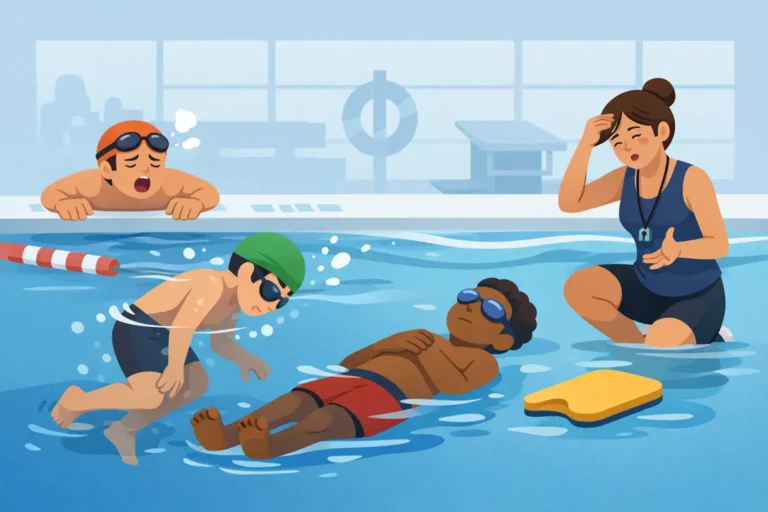
When readiness is ignored, families often think the program is the problem when the issue is actually timing or lesson fit. A child placed in a busy group before they can listen may appear stubborn when they are simply overwhelmed. An adult pushed into deep water too soon may seem unmotivated when they are operating from fear.
Good instruction solves part of this. Good placement solves the rest.
A practical way to judge swim readiness before enrolling
Look at behavior, not just enthusiasm. Ask whether the learner can tolerate water contact, respond to basic instruction, and stay regulated long enough to practice. For children, notice how they behave around transitions, not only how they behave while playing. For adults, be honest about fear level, comfort with gradual progression, and willingness to repeat basic drills.
If the answer is “somewhat,” that is often enough to begin in the right setting. Readiness does not have to be perfect. It simply has to be sufficient for safe participation and steady learning.
That is usually the best mindset for parents and adult beginners alike. You are not looking for a perfect starter. You are looking for a learner who can begin, respond, and grow.
Swimming is a life skill, and readiness is the first step in building it well.