Swim Mock Test Singapore Preparation That Works
A SwimSafer assessment can feel very different from a regular lesson. A child who swims comfortably during class may hesitate when asked to perform skills in sequence, listen for instructions, or demonstrate water survival under observation. A swim mock test Singapore program gives swimmers the chance to experience that format before the actual assessment, with clear feedback on what is ready and what still needs focused practice.
For parents, the goal is not simply to help a child pass a stage. It is to confirm that the swimmer can apply safety skills calmly and correctly. For adult learners, a mock practical test can reveal the same thing: whether technique holds up when the task, distance, and sequence matter.
What a Swim Mock Test Is Designed to Do
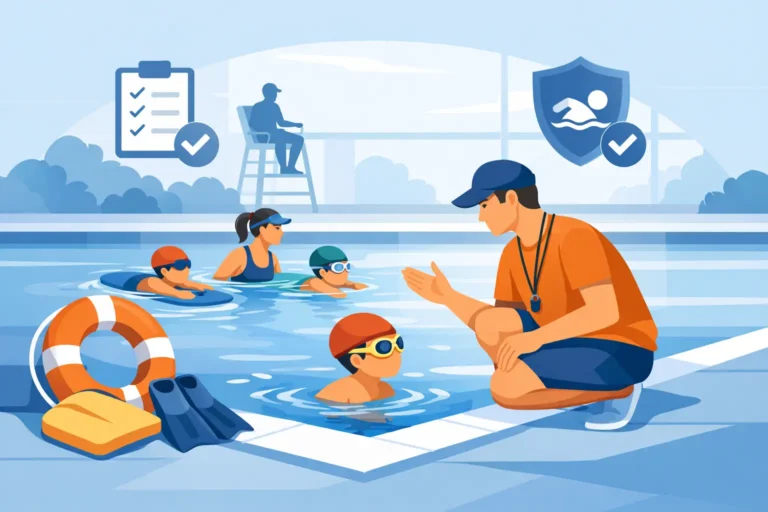
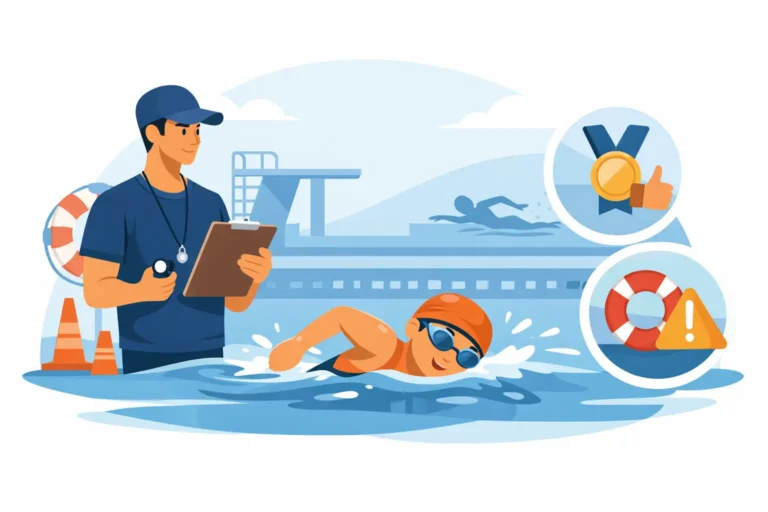
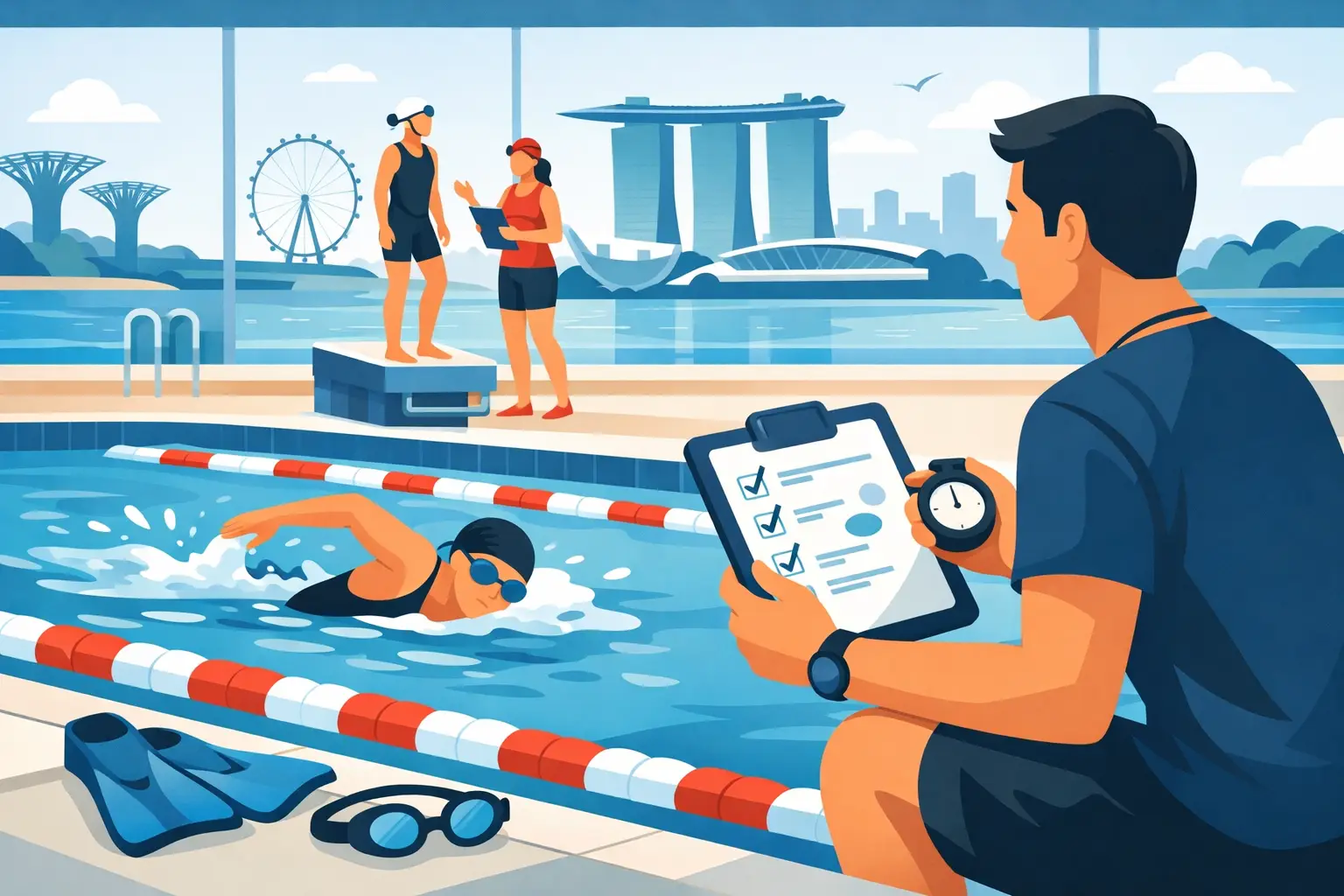
A swim mock test is a practice assessment that follows the structure and expectations of a practical swimming test as closely as possible. The coach observes the swimmer completing relevant skills, then provides a practical readiness review. This may include stroke actions, entries and exits, floating, underwater confidence, water survival, propulsion, and responses to verbal instructions.
It is not an official certification assessment. Its value lies in preparation. Instead of finding out about a weak skill on test day, swimmers receive a clear opportunity to correct it beforehand.
A good mock test also measures more than whether a swimmer can complete an action once. The coach looks for control, safety awareness, consistency, and the ability to recover after a small mistake. A swimmer who can float only when reminded, for example, may need more independent practice before being fully test-ready.
Why Mock Testing Helps Before SwimSafer Assessment
SwimSafer progression is built around increasingly capable swimmers. As stages advance, expectations move beyond basic confidence in the pool. Swimmers must show stronger technique, better endurance, greater awareness of risk, and more reliable survival skills.
Regular lessons build these abilities over time. A mock test checks whether the swimmer can bring them together on request. That distinction matters. During a weekly class, a coach may break a skill into several parts and give immediate prompts. During an assessment-style session, the swimmer needs to understand the task, prepare independently, and complete it safely.
For many children, familiarity is the biggest benefit. They learn what it feels like to wait for instructions, perform in front of an assessor, move through a sequence, and continue even if they feel nervous. The experience reduces surprises and helps replace uncertainty with confidence.
Parents also gain a more useful picture of progress. A child may say, “I can do it,” but mock-test feedback identifies whether the skill meets the expected standard consistently. This makes the next few lessons more purposeful instead of relying on last-minute repetition.
What Coaches Commonly Assess
The precise requirements depend on the swimmer’s current stage and the assessment pathway. Coaches should always prepare swimmers according to the applicable SwimSafer criteria and their individual development. Still, a mock session commonly reviews four connected areas:
- Water entry, exit, and safe movement around the pool
- Floating, rotation, breathing control, and recovery to a safe position
- Propulsion through kicking and recognized swimming strokes
- Water survival awareness, including calm decision-making and self-rescue habits
At earlier stages, the priority may be comfort in the water, safe entry and exit, front and back floats, and basic movement. At higher stages, swimmers may be expected to show stronger stroke coordination, longer distances, more advanced survival actions, and better judgment around aquatic environments.
Technique matters, but it should never be separated from safety. A swimmer with a fast freestyle stroke but poor breathing control may struggle when tired. A swimmer who can float but panics when asked to turn from front to back needs more confidence-building work. The right preparation addresses both the visible action and the decision-making behind it.
How to Prepare for a Swim Mock Test Singapore Families Can Trust
Preparation works best when it starts early enough to allow real improvement. Booking a mock test the day before an assessment may expose problems, but it leaves little time to solve them. Ideally, swimmers should complete a mock session with enough lessons remaining for corrective coaching and a second review if needed.
Build Consistency, Not One Good Attempt
A test-ready swimmer should be able to repeat key skills with reasonable control. Children sometimes perform well once, then lose focus or forget a sequence on the next attempt. Coaches help by practicing the same skill in varied orders, with fewer prompts, until the swimmer understands the purpose and can respond independently.
At home, parents can support preparation without turning every conversation into a test. Ask simple questions such as, “What do you do if water gets in your goggles?” or “How do you rest safely in deep water?” Let the child explain in their own words. This reinforces understanding and can reveal where reassurance is needed.
Practice Listening and Following a Sequence
Some swimmers are capable physically but miss points because they rush, begin before instructions are complete, or forget part of a task. Mock testing gives them a safe place to practice the assessment routine.
Encourage your child to pause, listen, and ask if they do not understand an instruction. Asking for clarification is better than guessing. Coaches can also teach swimmers to use a simple routine: listen, repeat the instruction in their mind, perform calmly, and finish in a safe position.
Treat Nerves as Part of Training
Nervousness does not mean a swimmer is unprepared. It often means the swimmer cares about doing well. The most helpful response is calm practice, not pressure.
Avoid telling a child that they “must pass.” Instead, focus on actions they can control: listen carefully, show their best technique, recover if something goes wrong, and stay calm in the water. This approach supports confidence while keeping water safety at the center of the experience.
Adults may feel test pressure too, especially learners returning to swimming after years away from the pool. A practical mock assessment helps adults identify whether anxiety affects breathing, body position, or stroke timing. Private coaching can be especially useful when a learner needs targeted work on one skill without the pace of a group session.
What Happens After the Mock Test
The most useful outcome is specific feedback. “Practice more” is not enough. Families should understand which skills are secure, which need refinement, and what the coach recommends before the official assessment.
For example, a swimmer may be confident with front crawl but need to improve back float recovery. Another may complete the required distance but lose form near the end, signaling that endurance and pacing need attention. A third may know every skill but become distracted during instructions, requiring more assessment-style practice.
A structured school such as AQZOG can use these observations to create a focused preparation plan within regular classes, holiday intensives, private coaching, or additional mock practice. The right option depends on the gap. A minor technique issue may improve in a few targeted lessons, while water fear or inconsistent survival skills may need more time and patient repetition.
It is also appropriate for a coach to recommend waiting before attempting the official test. That is not a setback. Delaying an assessment when essential skills are not yet reliable protects the swimmer’s confidence and keeps certification meaningful. Swimming progression should reflect genuine capability, not rushed completion.
Choosing the Right Mock-Test Support
Look for coaches who understand the SwimSafer pathway and can explain feedback in straightforward terms. The session should be organized, age-appropriate, and conducted with close attention to safety. Younger swimmers need encouragement and clear routines; older children and adults may benefit from more detailed technique feedback and measurable targets.
Convenience matters as well. A familiar public-pool environment can help a swimmer focus on the task instead of adjusting to an unfamiliar setting. However, the coach’s assessment experience and the quality of follow-up instruction matter more than convenience alone.
Ask whether the mock test includes a readiness discussion, how feedback is communicated, and whether there is a clear plan for the next lesson. A worthwhile session should leave families knowing exactly what to practice and why it matters.
A successful test is satisfying, but the lasting outcome is a swimmer who can enter the water with better judgment, stronger skills, and the confidence to respond calmly when conditions are not perfect. Give that progress the time it deserves, and test day becomes one more step in a safer swimming journey.