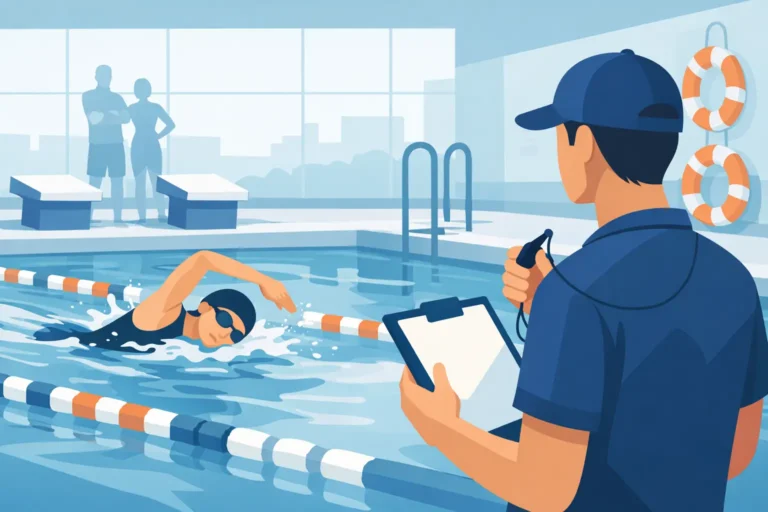
Group Lesson Review: What Parents Should Check
A child may leave a swim lesson smiling, but a useful group lesson review looks beyond whether they had fun that day. Parents should be able to see growing confidence in the water, safer decision-making, clearer stroke foundations, and steady readiness for the next SwimSafer stage. A well-run group class turns weekly pool time into measurable life-skill progress.
For many families, group lessons are the right starting point because children learn alongside peers while receiving structured coaching at a consistent pace. The key is choosing a class where the group supports learning rather than distracting from it. Here is what to assess before enrolling and what to watch for once lessons begin.
Start With Safety, Not Stroke Style
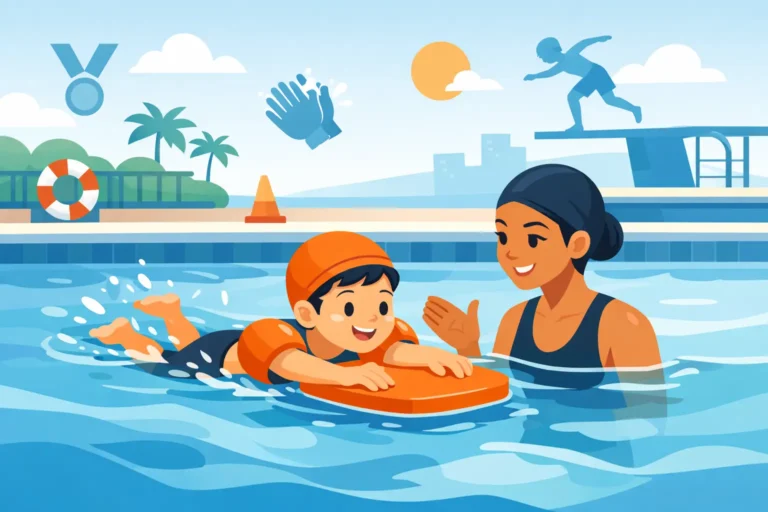
A child does not need a perfect freestyle stroke before they can gain meaningful water confidence. At the beginner level, the first signs of quality instruction are often practical: entering and exiting safely, listening for poolside instructions, putting their face in the water, floating with control, and recovering to a safe position.
A strong group program teaches safety as part of every lesson, not as a separate lecture. Children should understand how to wait at the pool edge, respect depth changes, move safely around other swimmers, and respond calmly when water enters their face. These habits matter at public pools, on family holidays, and during formal SwimSafer assessments.
Parents should also observe how the coach manages the class. Are children counted, positioned, and supervised appropriately? Does the coach correct unsafe behavior immediately and clearly? A warm, encouraging coach is valuable, but encouragement must come with firm standards around water safety.
Check Whether the Class Is Properly Matched
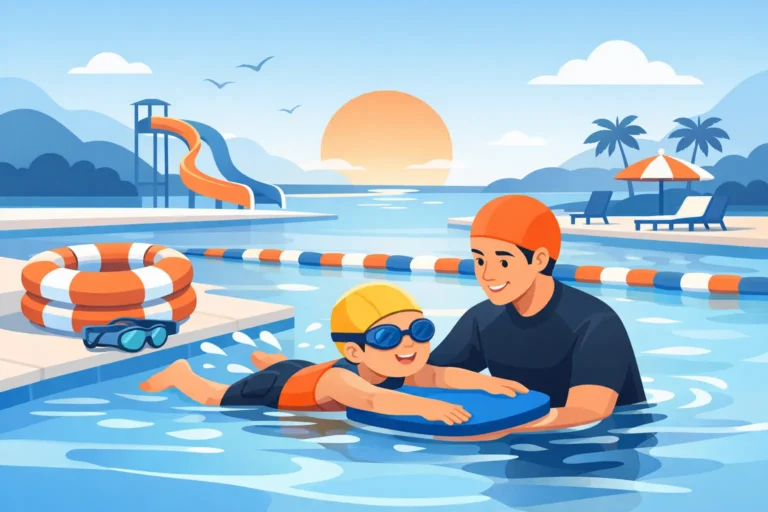
The best group size depends on age, confidence, skill level, and lesson goal. Toddlers need close guidance and a calm introduction to water. Young beginners need enough individual attention to practice floating, breathing, and kicking correctly. More advanced swimmers may benefit from a slightly larger group because repeated drills and peer pacing can build endurance and discipline.
What matters most is that swimmers in the class have similar needs. A complete beginner who is still reluctant to submerge should not be expected to keep pace with children practicing coordinated strokes. Likewise, a child preparing for a SwimSafer stage assessment needs instruction that is more targeted than general recreational swimming.
Ask how students are grouped and whether reassessment is available when a child progresses faster or needs more time. A structured school should be willing to recommend a different level, a smaller class, or private coaching when that will better support safe advancement. Staying in an unsuitable group simply to fill a timetable rarely produces the best result.
A Group Lesson Review Should Show Clear Progression
Good lessons have a visible sequence. Children should not spend each week doing random laps, playing water games, or repeating drills without understanding what they are working toward. Fun has a place in swim education, especially for younger learners, but it should reinforce a skill such as breath control, balance, directional movement, or water survival.
Look for a progression that moves from confidence to control, then from control to technique and assessment readiness. For example, a swimmer may begin by learning to blow bubbles and float independently. From there, they develop kicking, arm coordination, side breathing, and safe deep-water skills. Later stages may introduce stamina, survival sequences, rescue awareness, and more refined strokes.
The pace will not be identical for every child. Some learners become physically comfortable in water quickly but need longer to coordinate their breathing. Others may understand instructions well but need more repetitions to build strength. A credible program measures progress by demonstrated competence, not by how long a child has attended.
Observe the Coach’s Feedback
Children improve faster when feedback is specific. “Good job” builds motivation, but it does not tell a swimmer what to repeat or change. Effective coaches use simple, practical cues: keep your chin down, reach forward, kick from the hips, turn to the side to breathe, or hold your float longer before standing.
During a lesson observation, notice whether the coach watches each swimmer closely and gives corrections that match the child’s ability. The coach should recognize small wins while addressing the next skill gap. For a nervous learner, that may mean celebrating a first face submersion. For an advanced swimmer, it may mean refining a weak kick or improving endurance over a set distance.
Communication with parents also matters. Families should have a reasonable understanding of what their child is practicing, where they are progressing, and what may need attention between lessons. This does not require lengthy reports every week, but it should be more meaningful than “doing fine.”
Consider the Value of Peer Learning
A group setting can help children see that learning to swim takes practice. Watching another child attempt a floating drill or complete a new distance can make a challenge feel achievable. It also teaches swimmers to take turns, follow instructions, and remain aware of others sharing the lane.
However, peer learning only works when the class environment is focused. If children spend more time waiting than swimming, the lesson may not provide enough active practice. If the group is too mixed in ability, confident swimmers may become bored while beginners feel pressured. The right class creates positive momentum without turning every drill into a competition.
For adults, the same principle applies differently. A beginner adult group can reduce embarrassment and create accountability, while a fitness or triathlon-focused class can provide useful pacing. Adults with strong water fear, urgent test requirements, or highly specific technique goals may progress more efficiently through private or semi-private coaching.
Review SwimSafer Preparation Carefully
For Singapore families, formal SwimSafer progression is often a major reason to enroll. A class should prepare swimmers for more than a certificate. It should develop the water survival awareness, task familiarity, and confidence needed to perform safely under assessment conditions.
Ask whether the program follows a defined stage pathway and whether coaches identify readiness based on demonstrated skills. Mock practical tests and theory preparation can be especially useful before an assessment because they help swimmers understand the format without unnecessary anxiety. They also show parents whether a child needs more practice before test day.
Be cautious of promises that focus only on passing quickly. Fast progress is valuable when it comes from frequent practice, skilled correction, and a well-matched program. It is not helpful when children are rushed through skills they cannot yet perform safely and independently.
Know When a Group Class Is Not Enough
A group lesson is not automatically the best option for every swimmer at every stage. A child who has missed several lessons, is very fearful of water, or has a deadline for a practical test may need additional support. Private lessons can provide concentrated practice, while semi-private lessons suit siblings or friends with similar goals.
Holiday intensive programs can also accelerate progress because skills are practiced more frequently. This can be particularly effective for swimmers who have already built basic confidence and need consistency to strengthen technique. The trade-off is that intensive lessons require energy, focus, and enough recovery time for younger children.
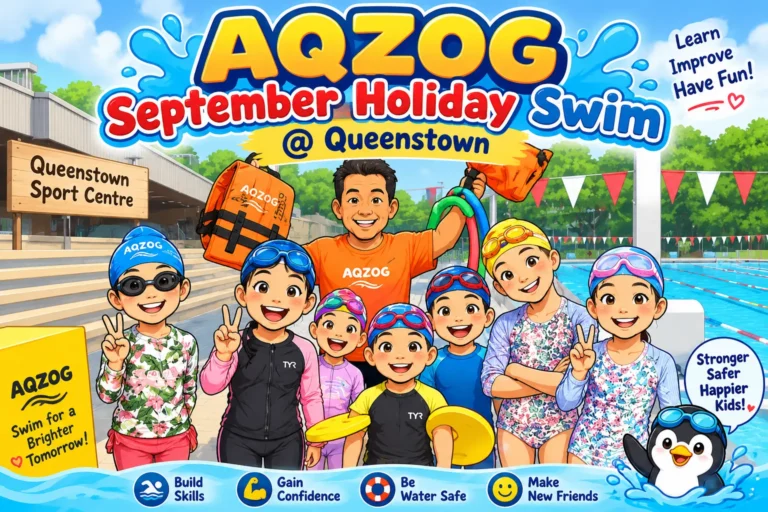
AQZOG uses structured group pathways alongside private, semi-private, and test-focused options so families can select the format that matches the swimmer rather than forcing every learner into the same timetable.
Questions Worth Asking Before Enrollment
Before choosing a class, ask how swimmers are assessed, how levels are organized, and what outcomes are expected over the next term. Ask about the coach’s experience with your child’s age group and whether the program includes water safety and SwimSafer readiness where relevant.
It is also reasonable to ask what happens if the class is not a good fit. A school that prioritizes progression should be able to explain its options clearly, whether that means moving levels, adding practice, or recommending a different lesson format.
The right group lesson should leave a swimmer more capable, not merely more tired. When children learn to respect the water, recover calmly, follow a progression, and take pride in each new skill, every lesson becomes a meaningful step toward lifelong safety and confidence.