Triathlon Swim Lessons for Race-Day Confidence
The swim is the shortest part of many triathlons, but it can decide how the rest of your race feels. Start too hard, panic in a crowded pack, or waste energy fighting the water, and the bike and run become far more difficult. Triathlon swim lessons give athletes a structured way to build efficiency, confidence, and practical race skills before race day.
For adult beginners, the goal may be completing the swim calmly and safely. For experienced pool swimmers, it may be learning to hold direction in open water, manage contact at the start, and exit the water with enough energy left to perform on the bike. Good coaching recognizes that these are different starting points and builds progression accordingly.
What Triathlon Swim Lessons Should Teach
Triathlon swimming is not simply about swimming freestyle quickly in a quiet pool lane. It requires a controlled stroke that holds together when breathing is disrupted, visibility is limited, and other swimmers are close by. Technique matters, but race application matters just as much.
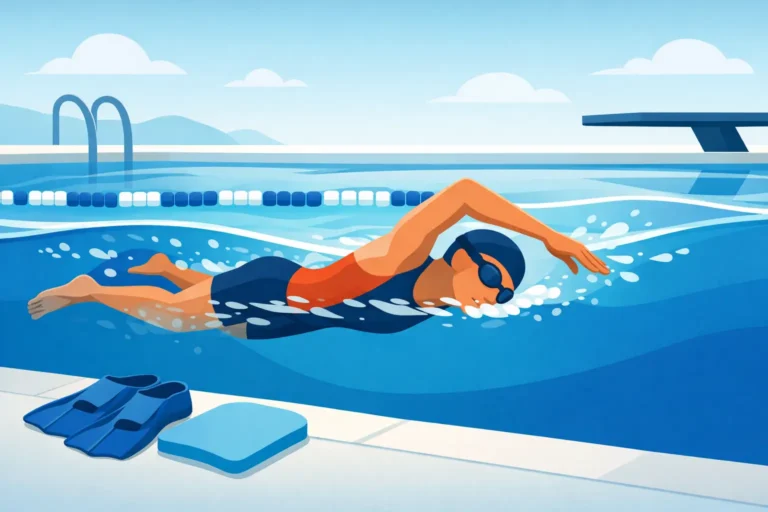
A structured program should first improve body position. When the hips and legs sit low, every stroke creates drag and demands extra effort. Coaches use targeted drills to help swimmers establish balance, a stable head position, and a long line through the water. This is especially valuable for athletes who can swim but feel exhausted after only a few hundred yards or meters.
Breathing is the next major priority. Many triathletes breathe comfortably to one side in a pool, then lose rhythm when waves, glare, or nearby swimmers affect that side. Lessons should build a relaxed exhale underwater and a dependable breathing pattern. Bilateral breathing can be useful for adapting to conditions, but it is not a requirement for every athlete. A swimmer who breathes well to one side and can switch sides when necessary may be better prepared than someone forcing a pattern that raises anxiety.
Efficient propulsion follows. Rather than relying on frantic arm turnover, swimmers learn to catch the water with a stable elbow, rotate through the torso, and finish each stroke without overreaching. Kicking is trained for balance and timing, not as the main source of power. In a triathlon, a hard kick can elevate the heart rate early and leave the legs less ready for cycling and running.
Start With an Honest Swim Assessment
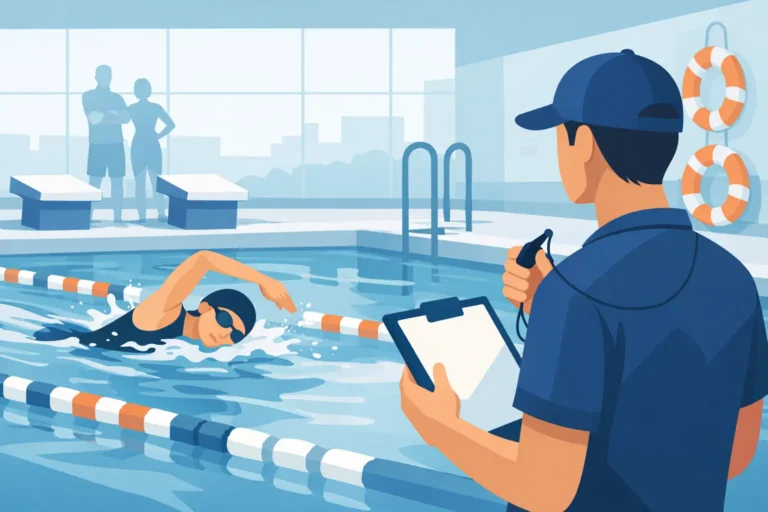
The right triathlon pathway begins with an assessment, not a generic workout. A coach should observe how you float, breathe, recover after a length, and respond when pace increases. They should also ask about your race distance, timeline, previous open-water experience, injuries, and comfort level in deep water.
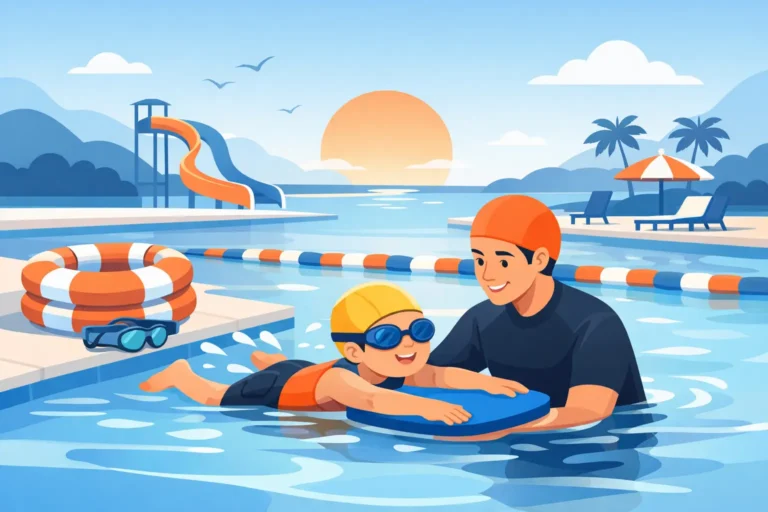
A complete beginner needs water confidence before race-specific speed work. This may include floating, controlled submersion, front and back glide, basic freestyle coordination, and learning how to rest without reaching for the wall. Trying to rush from fear of deep water to a long open-water event often creates poor habits and avoidable stress.
A recreational swimmer may already have the endurance to cover the distance but lose time through drag, poor timing, or inefficient breathing. In this case, focused technique correction can produce meaningful results without dramatically increasing training volume. A stronger swimmer may need help with pacing, drafting, sighting, and race simulations rather than basic stroke mechanics.
Progress should be measurable. That might mean swimming a set distance without stopping, maintaining stroke form at a prescribed pace, completing a controlled deep-water start, or sighting accurately while continuing forward. Measurable milestones build confidence because athletes can see that preparation is working.
Pool Skills That Transfer to Open Water
Pool training remains valuable because it provides a controlled environment for repetition and correction. A coach can slow a drill down, identify what is causing a dropped elbow or crossed-over entry, and help the swimmer repeat the correct movement until it becomes more natural.
The key is connecting pool skills to race conditions. Sighting should be practiced without lifting the head too high, which drops the hips and interrupts momentum. A swimmer can learn to take a quick forward look, identify a target, and return immediately to normal breathing. In a pool, this can be practiced every few strokes while holding a straight line.
Pacing also needs attention. Many athletes sprint the first 100 meters because of adrenaline, then struggle to settle down. Lessons can teach controlled starts, pace changes, and recovery strokes. Short intervals have a place, but they should support the ability to sustain an appropriate race effort.
Drafting is another skill worth practicing when appropriate. Swimming behind or beside another athlete can reduce effort, but it requires awareness and respect for space. Athletes should know how to move out of a crowded position without grabbing, pushing, or making sudden changes that affect others.
Open-Water Confidence Is a Safety Skill
Open water adds variables that a pool cannot fully reproduce: reduced visibility, water temperature, current, waves, changing weather, and an unfamiliar entry or exit. The answer is not to avoid open-water practice entirely, but to introduce it progressively under suitable supervision.
Before an open-water session, athletes should understand the route, entry point, exit point, weather conditions, and safety procedures. They should never train alone. A responsible progression may begin with short, supported swims close to shore, then add sighting, turns around markers, and controlled mass-start practice as confidence improves.
Learning how to reset is as important as learning how to go faster. If goggles leak, breathing becomes rushed, or contact causes anxiety, the swimmer should know how to roll onto the back, tread water, clear goggles, and regain composure. These are practical water-survival skills, not signs of weakness. A short reset can prevent a small problem from becoming a dangerous one.
At AQZOG, this safety-first approach reflects the same structured progression used across swim education: confidence comes from clear skills, repeated practice, and coaching that does not push an athlete beyond safe readiness.
Choose Coaching That Matches Your Race Goal
Private triathlon swim lessons are often the fastest option for athletes with a specific event date, a fear barrier, or a technique issue that needs close attention. The coach can tailor the session to your stroke, fitness level, and race distance. This format is particularly useful when the athlete needs fast, focused improvement or prefers a quieter learning environment.
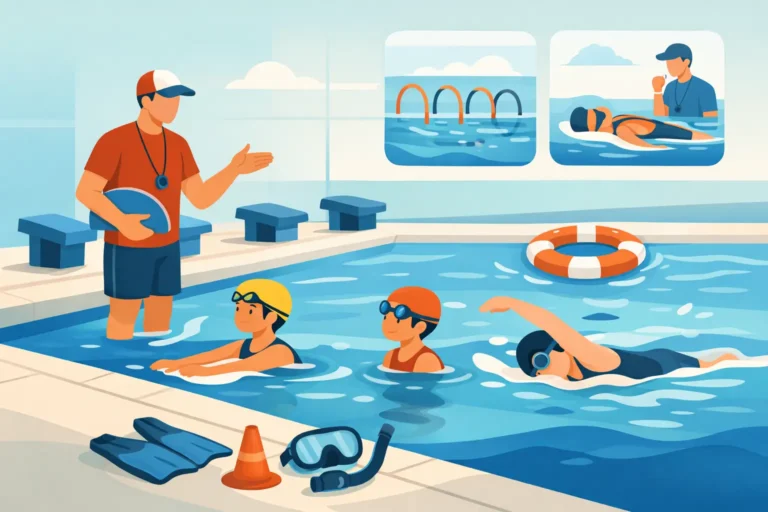
Small-group lessons can be valuable for swimmers who benefit from pacing alongside others and practicing race-relevant awareness. However, group coaching works best when swimmers have reasonably similar abilities. A complete beginner and a confident intermediate athlete may both be training for a triathlon, but they need different instruction.
Ask whether the coach can explain the purpose behind each drill and show how progress will be assessed. A good session should not leave you simply tired. You should know what changed in your stroke, what to practice between lessons, and what the next milestone looks like.
Build a Realistic Training Progression
Race readiness depends on consistency more than occasional long swims. Most athletes benefit from regular technique work alongside endurance sessions, with recovery built into the plan. The exact frequency depends on current ability, race distance, and available time. An athlete preparing for a sprint triathlon has different needs from someone targeting a long-course event.
Avoid measuring progress only by speed. A faster time is useful, but so is finishing a swim with controlled breathing, holding form after several intervals, or feeling calm in deep water. These gains make race-day decisions easier and reduce the chance that the swim takes more energy than it should.
Give yourself enough time to learn rather than trying to force confidence in the final weeks before an event. A calm, efficient swimmer is not necessarily the person with the most dramatic stroke. It is the athlete who can respond to conditions, protect their energy, and keep moving forward with control.