Best Toddler Swim Class Activities That Build Safety
A toddler who happily splashes at the pool edge is not necessarily ready to move safely through water. The best toddler swim class activities turn that excitement into useful habits: listening to a coach, returning to the wall, controlling breath, and staying calm when water reaches the face. For parents, those early skills are the beginning of real water confidence, not simply pool-time entertainment.
Toddlers learn through repetition, movement, songs, and clear routines. A strong class keeps activities playful while giving each one a practical purpose. The goal is not to rush a young child into independent swimming. It is to create positive, structured exposure to water while developing the safety behaviors needed for later swimming progression.
What Makes Toddler Swim Activities Effective?
The most productive activities are short, predictable, and age-appropriate. Toddlers have limited attention spans, so a coach should move from one focused exercise to another before frustration takes over. At the same time, the routine should repeat each week. Familiarity helps a child understand what comes next and reduces anxiety.
Every activity should answer a simple question: What skill is this building? A game that teaches a toddler to hold the pool wall has greater long-term value than a game that is fun but has no connection to safety or body control. The best programs balance enjoyment with measurable outcomes, including comfort with water on the face, safe entry and exit, supported floating, and basic propulsion.
Parent participation can be especially useful for beginners. A parent provides emotional security, while the instructor directs safe handling, positioning, and practice. As confidence grows, the child should gradually respond more directly to the coach. This transition matters because it builds listening skills and independence in a controlled setting.
Best Toddler Swim Class Activities for Water Safety
Wall Holds and Safe Returns
Holding the wall may look like a basic exercise, but it is one of the most valuable toddler water skills. The coach can ask children to place both hands on the edge, move sideways a short distance, then return to a designated spot. A simple cue such as “hands on the wall” should be practiced often and consistently.
This activity builds grip strength, orientation, and the instinct to seek a safe point after entering the water. Toddlers should also practice turning toward the wall from a supported position. It is not a substitute for close adult supervision, but it gives children an important response pattern when they are near the pool edge.
Gentle Entries and Climb-Out Practice
A structured toddler class should teach that entering water is always a supervised action. Start with seated entries, where the child turns around, lowers into the pool with assistance, and waits for the instructor or parent’s signal. Over time, a confident child may progress to a small assisted jump-in.
The key activity is what follows the entry. The toddler should immediately turn back, reach for the edge, and practice climbing out with help. Repeating the full sequence teaches a useful safety routine: enter safely, orient, return, and exit. Young children often want to repeat jump-ins many times, which makes this an ideal opportunity to reinforce the same skill without making it feel like a drill.
Bubble Blowing and Face-Wetting Games
Breath control is foundational to all later swimming. Before a toddler can learn coordinated kicking or arm movements, they need to be comfortable with water near the mouth, nose, and eyes. Bubble blowing begins with the mouth at the water surface and progresses gradually to brief face submersion when the child is ready.
Toys can make this activity engaging, but the objective remains clear. A coach may ask a child to blow a floating toy across a short distance or make “motorboat bubbles” while holding the wall. Never force submersion. A child who is pressured may become more fearful, while a child allowed to progress in small steps is more likely to build lasting confidence.
Supported Front Floats
A front float teaches a toddler that water can support the body. With hands under the chest or body, the instructor or parent helps the child stretch forward, extend the legs, and place the face near or into the water as comfort allows. The position may last only a few seconds at first.
The value is not just physical. A supported float asks the child to relax, trust the instruction, and maintain a long body shape. Those are the early building blocks for efficient swimming. It also helps coaches identify whether a child needs more work on face comfort, body tension, or listening before moving forward.
Back Floats With Calm Cues
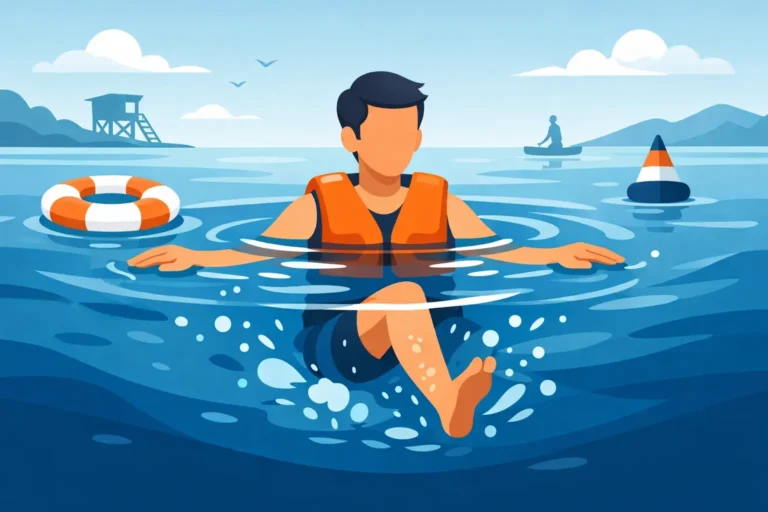
Back floating can be challenging because toddlers may dislike water near their ears or feel uncertain when looking upward. Yet it is an important water-survival position. A calm, supported back float can teach a child to rest, breathe, and remain still for a moment rather than panic.
Use simple cues such as “look up,” “ears in,” and “belly up.” The instructor should support the head and upper body carefully, reducing assistance only when the child shows readiness. Songs and counting are helpful here because they give the child a predictable time frame. A three-second float may become five seconds, then longer, without turning the lesson into a test.
Kicking to a Clear Target
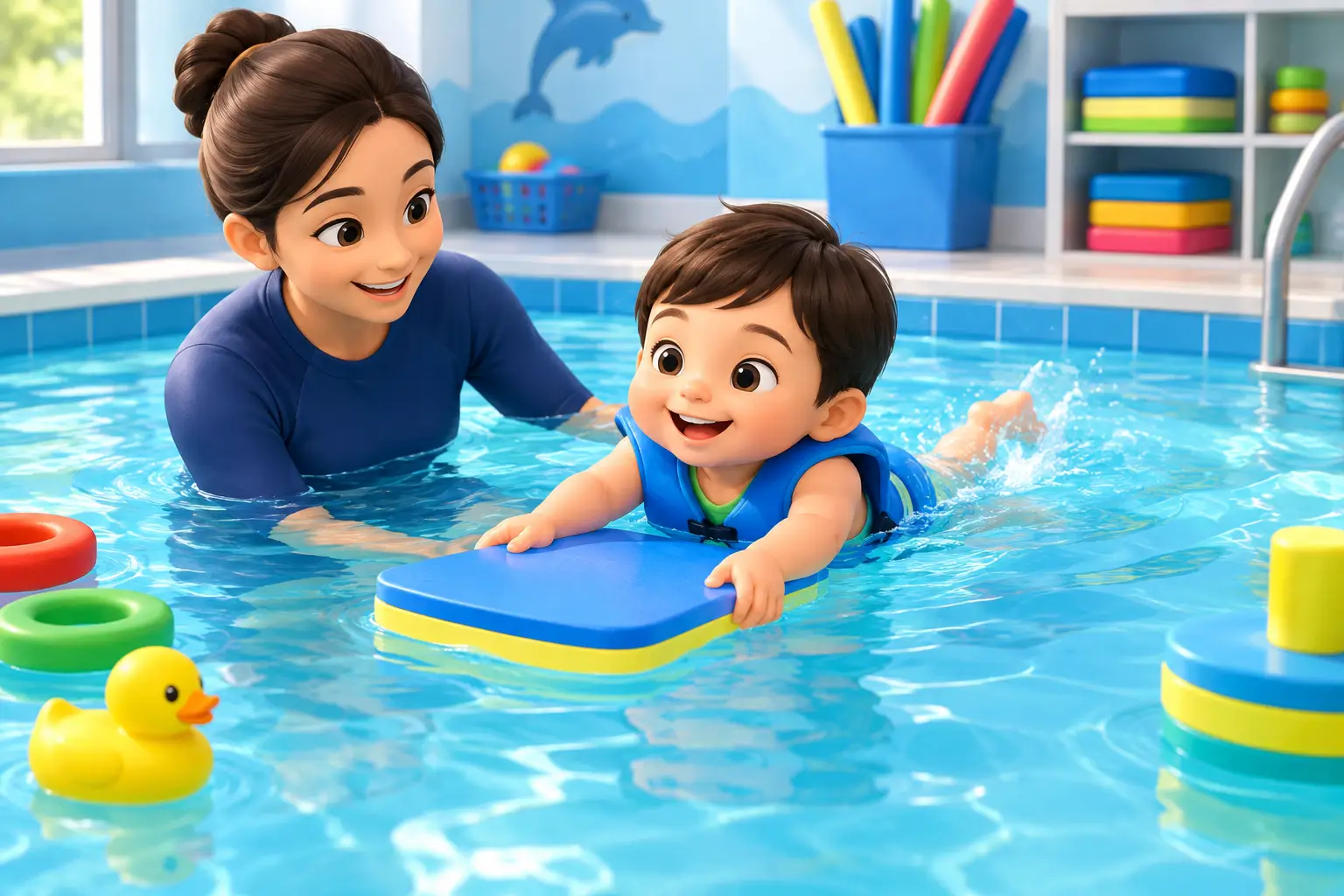
Toddlers respond well when they can see where they are going. A floating toy, a colored marker, or the coach’s waiting hands provides a clear target for short assisted kicks. The child can hold a board, the pool edge, or an adult’s hands while practicing straight-leg flutter kicks.
The purpose is not perfect technique at this stage. It is to connect kicking with forward movement and teach the child to maintain a horizontal body position. Keep distances short enough for success. If the target is too far away, a toddler may lose interest or begin to struggle, neither of which supports confidence building.
Reach, Turn, and Travel
This activity combines several early safety skills. From a supported position, the toddler reaches toward a toy or coach, turns back toward the wall, and travels a short distance with help. The child learns that changing direction in the water is possible and that the wall remains the priority destination.
As skills improve, the instructor may create a simple sequence: enter, turn, kick to the wall, hold on, and move sideways to the exit point. This is the type of structured progression that helps prepare children for more formal water-safety milestones later on.
How to Keep Activities Safe and Productive
The best activity can become ineffective if it is introduced at the wrong level. A toddler who cries when water reaches the cheeks should not be pushed into a long face-submersion exercise. Instead, the coach should work back through smaller wins: wet hands, wet chin, bubbles at the surface, then brief face wetting. Progress is rarely identical from child to child.
Class size also matters. Toddlers need close attention, particularly during entries, floats, and transitions around the pool. A qualified instructor should maintain active supervision, give one clear instruction at a time, and keep children within appropriate reach. Parents should remain alert even in organized lessons. Swim classes improve skills, but they do not remove the need for constant adult supervision around water.
Consistency produces better results than occasional long sessions. Weekly lessons allow toddlers to remember routines and build confidence without becoming overwhelmed. Between classes, parents can reinforce simple behaviors during supervised family pool time, such as asking the child to hold the wall, blow bubbles, or wait for permission before entering.
Choosing a Class With a Clear Progression Path
A quality toddler program should explain what children will learn and how coaches decide when they are ready to advance. Look for classes that prioritize water entry and exit, floating, breath control, safe returns to the edge, and listening skills before focusing on distance swimming.
For Singapore families, a program aligned with recognized water-safety progression can make the next steps clearer as a child grows. AQZOG uses structured instruction to help children develop confidence and practical water skills before moving toward more advanced swimming and SwimSafer preparation. The right pace depends on the child, but the pathway should always be visible to parents.
A successful toddler lesson ends with more than a smile. It gives a child one small skill they can repeat with growing confidence next week, whether that is holding the wall, making bubbles, or floating calmly for a few extra seconds. Those small, well-coached wins are where safe swimmers begin.