Jump Rope Benefits for Better Swimming Skills
A swimmer can have a strong kick and still struggle to hold pace through a longer set. That is why the question behind “jump rope benefit swimming” is worth asking. Jumping rope will not replace time in the pool, stroke correction, or water-safety practice. Used correctly, however, it can be a simple dryland tool for building rhythm, lower-body endurance, coordination, and confidence between swim lessons.
For children progressing through structured swimming levels, dryland training should support safe skill development, not add unnecessary pressure. For adult beginners and fitness swimmers, it should improve general conditioning without creating fatigue that affects technique. The value of jump rope depends on the swimmer’s age, goals, current fitness, and ability to use good form.
How Jump Rope Benefits Swimming Training
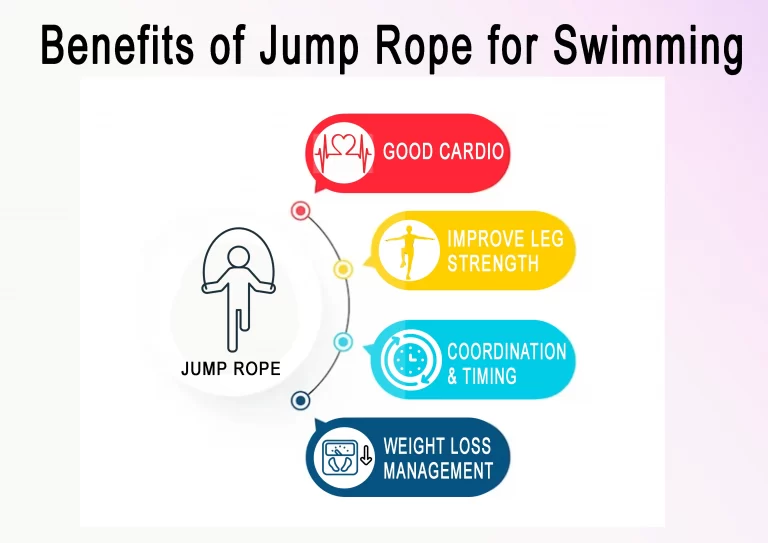
Swimming is a whole-body skill, but efficient swimmers rely heavily on timing. The hands, kick, breath, and body position must work together. Jump rope develops a similar sense of rhythm because the body must repeatedly coordinate small, controlled movements while staying balanced.
A beginner may start with basic two-foot jumps. A more experienced swimmer can use alternating steps, light high-knee patterns, or timed intervals. The goal is not to jump as fast as possible. It is to maintain relaxed shoulders, a steady bounce, and controlled breathing. Those habits transfer well to swimming, where excess tension often causes a swimmer to tire early.
Jump rope also builds calf, ankle, and lower-leg endurance. These areas help support streamlined kicking and stable body alignment, especially during freestyle and backstroke. A stronger lower body does not automatically create a better kick. Kicking technique still requires coaching in the water. But improved muscular endurance can help swimmers maintain a more consistent kick during longer practice sets.
For swimmers working on butterfly or breaststroke, rope work can be useful for general leg conditioning and timing awareness. The movement pattern is not the same as either swim stroke, so it should never be treated as a direct substitute for stroke drills. Think of it as supporting fitness, not copying technique.
The Conditioning Advantage Without Pool Access
Busy families do not always have access to a pool outside scheduled lessons. Rain, travel, school commitments, and public-pool schedules can interrupt a training routine. A jump rope takes very little space and provides a practical option for short, focused movement at home or outdoors.
Ten minutes of well-managed rope work can raise the heart rate quickly. For a recreational swimmer, that may improve general stamina for play, lessons, and school activities. For a fitness swimmer or triathlon trainee, it can add low-cost cardiovascular work on non-swim days.
There is a trade-off. Jumping is higher impact than swimming. Swimmers who have knee, ankle, shin, or foot pain should not push through discomfort. A swimmer returning from injury should follow advice from a qualified health professional before adding impact exercise. The best dryland plan is the one a swimmer can perform safely and consistently.
For many learners, especially adults new to exercise, walking, cycling, or simple mobility work may be a better starting point. Once basic fitness and balance improve, short rope intervals can be introduced gradually.
Why coordination matters in the water
Children often improve faster when they learn how to control their body on land as well as in water. Jumping rope requires them to track timing, react to the rope, land softly, and recover after a missed jump. These are small but useful coordination challenges.
That does not mean a child who can jump rope is automatically ready for deeper water. Water readiness requires separate skills: floating, breathing control, safe entries, turning, treading water, and responding calmly to instruction. Structured swim instruction remains the foundation of water confidence and safety.
Still, dryland coordination can help a child arrive at lessons more aware of posture, balance, and movement sequences. When taught with encouragement rather than pressure, it can also reinforce the idea that progress comes from repeated, manageable practice.
A Safe Jump Rope Routine for Swimmers
The most effective routine is usually short. Long sessions with sloppy landings can create fatigue without meaningful benefit. Start on a flat, non-slip surface with enough room around the swimmer. Supportive athletic shoes are generally a better choice than jumping barefoot, particularly on hard ground.
For younger children, begin with rope-free practice. They can mimic the wrist motion and perform small, quiet jumps in place. Once they are comfortable, use a properly sized rope and keep sessions playful. A rope that is too long or too short makes coordination harder and can lead to frustration.
A simple progression for most healthy swimmers is to start with 20 seconds of easy jumping followed by 40 seconds of rest. Repeat this four to six times, two days per week. When the swimmer can land quietly and maintain steady control, progress to 30 or 45 seconds of jumping with equal rest. Quality matters more than the number of jumps.
Older teens and adults with a solid fitness base can use intervals such as one minute of controlled jumping followed by one minute of recovery. Keep the effort moderate before a swim lesson or a technical pool session. A hard rope workout immediately before practicing new skills may leave the legs tired and make it harder to focus on body position and breathing.
Stop if there is pain, dizziness, repeated tripping caused by fatigue, or loss of landing control. Children should be supervised, especially when using a rope near furniture, pool decks, or other people.
Pair Rope Work With Swimming Goals
The best way to use dryland work is to connect it to a clear swimming objective. A child preparing for a swimming assessment may use light jumping to build general coordination, but the priority should remain water survival skills and test readiness. An adult working toward a longer freestyle distance may use rope intervals for conditioning, while dedicating pool time to breathing patterns, efficient rotation, and pacing.
For a swimmer who is anxious in the water, the first priority is not cardiovascular intensity. It is calm, coached exposure and confidence building. Dryland exercise can support general fitness, but it should not become another source of stress. Small achievements on land and in the pool both matter.
At AQZOG, structured progression keeps the focus where it belongs: safe, measurable swimming improvement. Dryland tools can complement that pathway when they are appropriate, but they cannot replace guided practice in floating, propulsion, survival skills, and stroke development.
What jump rope cannot do
It is useful to be clear about the limits. Jump rope cannot teach a swimmer to exhale underwater, recover safely after entering deep water, or maintain a streamlined position. It cannot correct a dropped elbow in freestyle or build the specific feel for water that comes from coached repetition.
It also cannot replace rest. Swimmers who already train frequently may need recovery more than another workout. If a child seems persistently tired, loses enthusiasm, or develops recurring aches, reduce the workload and review the schedule. Progress is built through consistent practice, sound instruction, and enough recovery to absorb both.
Keep the Routine Simple and Purposeful
Jump rope works best as a supporting habit, not a test of athleticism. Two short sessions each week can be enough to develop rhythm and basic conditioning, particularly for swimmers who spend most of their training time in the pool. Choose easy progressions, protect the joints with good surfaces and shoes, and leave plenty of energy for quality swimming practice.
A swimmer who learns to move with control on land, listen to coaching, and practice consistently is building habits that reach far beyond one workout. The next useful step is to match every dryland session to a clear pool goal, whether that is more confident breathing, stronger endurance, or safer progress through the next stage.