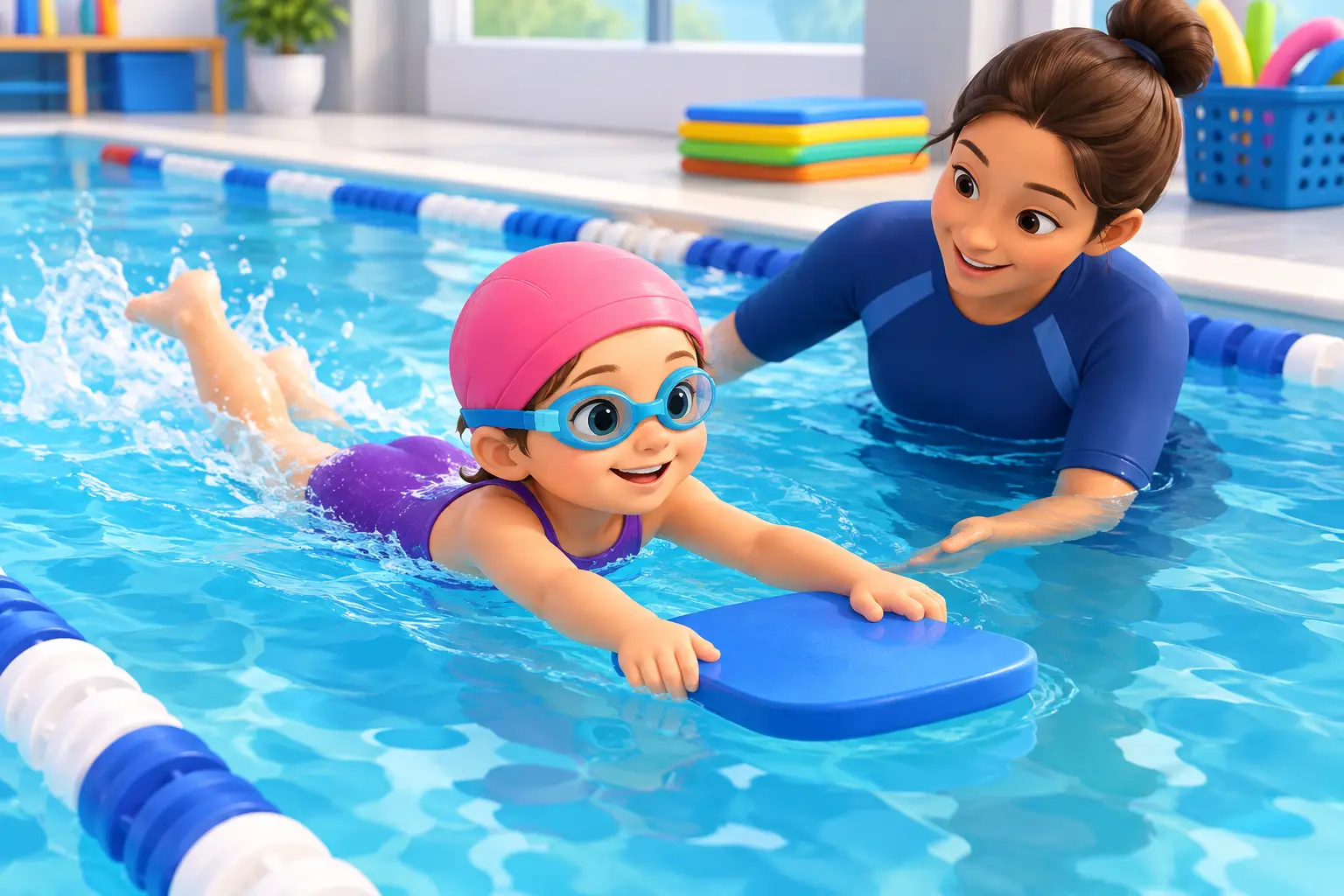
Can Swimming Improve Coordination for Children?
A child reaches for the pool wall, kicks too quickly, and loses their rhythm. A few weeks later, that same child can float, breathe, kick, and move forward with purpose. The change is not only about learning to swim. Can swimming improve coordination? Yes, when lessons are structured correctly, swimming develops the timing, balance, body awareness, and controlled movement that children need in and out of the water.
For parents, this matters because coordination supports more than sports performance. It affects a child’s confidence on stairs, playgrounds, bicycles, school activities, and in unfamiliar water. For adults, better coordination can make swimming feel less tiring and more secure, especially for beginners who struggle to combine breathing, arm movements, and kicking.
Why Swimming Improves Coordination
Swimming asks the body to perform several actions at once. A swimmer must keep their head and spine in a stable position, move the arms through a deliberate pattern, maintain a kick, control breathing, and understand where they are in the pool. Unlike running or walking, the water provides no solid surface under the feet. This requires the brain and body to communicate more precisely.
The water also slows movement down. That resistance gives learners time to feel what each arm, leg, and breath is doing. An experienced coach can then correct a dropped elbow, bent knee, rushed kick, or lifted head before the habit becomes harder to change.
Coordination does not appear simply because a child spends time splashing in a pool. It grows through repeated practice of clear skills, taught in the right order. This is why structured swimming lessons are more effective than random play when the goal is visible progress.
Balance Comes Before Efficient Movement
A swimmer who cannot balance in the water will usually overwork their arms and legs. They may pedal their feet, hold their breath too long, or lift their head to search for support. These reactions are common, especially among beginners, but they make coordinated swimming difficult.
Early water-confidence exercises teach a child to relax their body, float on the front and back, recover to a safe position, and move with controlled support. As balance improves, the swimmer can focus on a single movement without feeling overwhelmed. This creates the foundation for stronger stroke coordination and safer water survival.
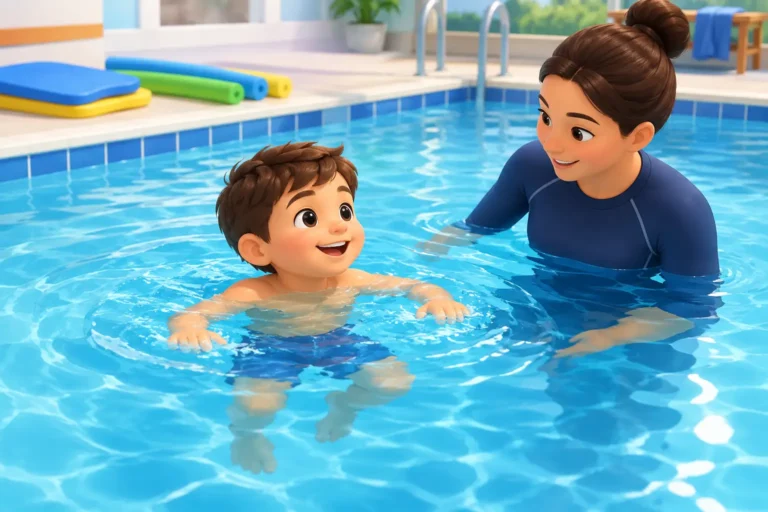
For toddlers, coordination may begin with simple actions: holding the wall, reaching for a toy, blowing bubbles, kicking while supported, and turning back toward an adult. These are small achievements, but they help children understand direction, buoyancy, and control.
Timing Connects Breathing, Arms, and Legs
Breathing is often the point where a stroke breaks down. A child may kick well but stop moving when it is time to take a breath. Another may pull strongly with the arms but forget to kick. Coordinated swimming means learning how each action fits into a sequence.
In freestyle, for example, the arms create a repeating pattern while the legs provide steady support. The swimmer turns to breathe at an appropriate moment rather than lifting the head forward. In breaststroke, the sequence is more defined: pull, breathe, kick, glide. Learning this order strengthens rhythm and helps swimmers move efficiently instead of fighting the water.
Coaches should not rush this process. Some learners can coordinate a full stroke quickly, while others need more time with drills that isolate one skill at a time. A child who has mastered floating and kicking may still need guided practice before adding side breathing. Moving ahead too early can reduce confidence and create unsafe habits.
How Swimming Develops Body Awareness
Body awareness is the ability to recognize where the body is and how it is moving. In the pool, swimmers learn to notice whether they are flat or upright, streamlined or curled, relaxed or tense. They also learn how a slight adjustment can change the result.
A pointed toe can improve a kick. Looking downward can help lift the hips. Extending the arms forward can create a more stable body line. These connections give learners practical feedback that they can feel immediately.
This awareness is especially helpful for children who appear awkward in physical activities or who need more time to organize movements. Swimming offers a lower-impact environment than many land sports. The water supports body weight, reducing the fear of falling while still requiring purposeful control.
That said, swimming is not a replacement for every form of movement. Running, climbing, ball games, and cycling develop coordination in different ways. Swimming is valuable because it adds skills that many land activities cannot fully teach: buoyancy control, breath control, directional awareness in water, and safe recovery when balance is lost.
Skills That Build Coordination Safely
A well-planned lesson progresses from simple movement to more complex combinations. Rather than asking beginners to swim a full length immediately, coaches can use short, focused activities that allow success at each stage.
Useful coordination-building skills include:
- Blowing bubbles with the face in the water, then lifting or turning to breathe calmly.
- Front and back floats that develop balance and confidence without constant support.
- Streamline push-offs that teach a long, aligned body position.
- Kicking drills with a board or controlled support to build leg rhythm.
- Arm drills that help swimmers feel the correct pull pattern before adding breathing.
- Safe entries, turns, and returns to the wall that reinforce water survival awareness.
Each drill has a purpose. A kickboard can help a beginner focus on leg movement, but using one for too long may cause the head and hips to sit too high. Likewise, swimming aids can provide confidence, but a child also needs carefully supervised opportunities to learn independent floating and recovery skills.
Swimming Improve Coordination Through Progression
The phrase “swimming improve coordination” is often used when parents notice that their child has become more controlled, confident, or physically capable after lessons. The reason is not one magical exercise. It is consistent progression.
At the beginner level, success may mean entering the pool safely, blowing bubbles, floating, and returning to the wall. At the next stage, swimmers begin coordinating kicks, arm actions, and breathing over short distances. Later, they refine stroke timing, turns, treading water, and survival sequences.
This progression is closely connected to SwimSafer preparation. A learner working toward formal stages needs more than the ability to complete a stroke. They must show water confidence, personal survival skills, safe decision-making, and controlled movement under assessment conditions. Building coordination early helps these skills feel familiar rather than stressful when practical test time arrives.
At AQZOG, structured coaching can help families see this development clearly through age-appropriate lessons, skill-based feedback, and a pathway that supports both water safety and certification readiness.
What Parents Can Look For
Progress is not always measured by how far a child swims. In fact, distance alone can hide weak technique or unsafe habits. Look for signs of control: your child can enter the water calmly, put their face in without panic, float with less assistance, recover to a safe position, and follow a simple movement sequence.
You may also notice changes outside the pool. Some children become more comfortable with physical challenges, better able to listen to movement instructions, or more willing to try a new activity after seeing themselves improve in water.
Consistency matters more than occasional long sessions. Weekly lessons give the body and brain time to remember patterns, while holiday intensive programs can be useful for learners who need focused practice before a SwimSafer assessment or after a long break. The best format depends on the swimmer’s age, comfort level, goals, and readiness to learn.
Coordination Benefits for Adult Learners
Adults can gain just as much from coordination-focused instruction, although the starting point may be different. Many adult beginners understand what they should do but struggle to do it all at once. They may tense their shoulders, hold their breath, or stop kicking when they turn to breathe.
Breaking the stroke into manageable parts helps adults replace anxiety with control. A private or small-group setting may be especially useful for water-fear learners, fitness swimmers returning after years away, or triathlon trainees who need efficient freestyle breathing. The goal is not to force a perfect stroke quickly. It is to create safe, repeatable movements that build endurance over time.
The most encouraging sign is often simple: a swimmer who once needed to think about every action begins to move with calm rhythm. Give that progress time, celebrate each controlled skill, and let sound technique guide the next step in the pool.