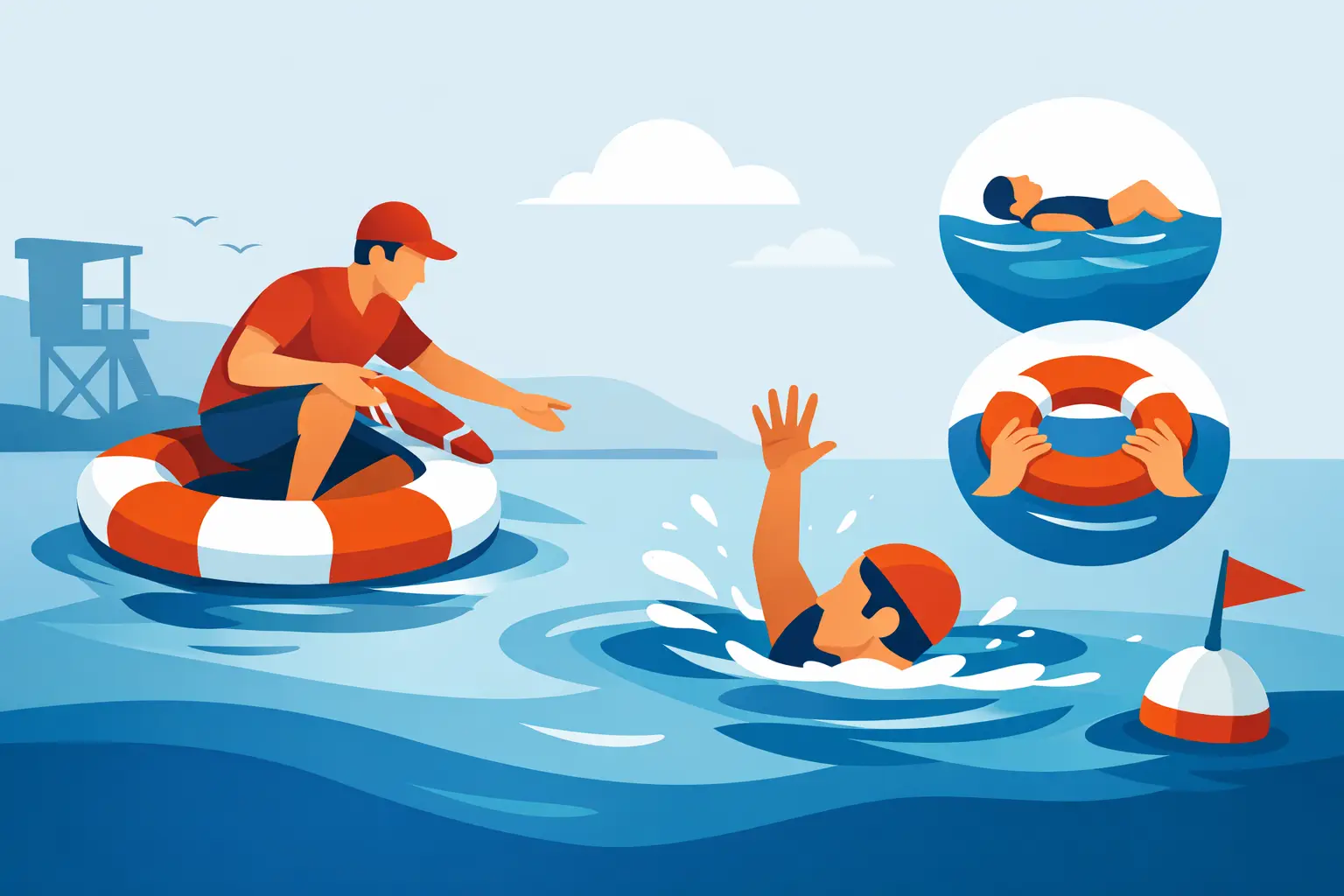
Swimming Survival Skills That Save Lives
A child who can swim a short lap is not always a child who can survive an unexpected fall into water. That difference matters. Swimming survival skills are not about looking polished or finishing fast. They are about staying calm, controlling breathing, floating, turning, moving to safety, and making good decisions under stress.
For parents, this is the standard that should come before strokes, badges, or speed. For adults, it is the foundation that turns fear into control. In structured swim training, survival always comes first because the water does not reward guesswork.
What swimming survival skills actually mean
Swimming survival skills are the practical actions that help a person stay safe in real water situations. That starts with breath control and orientation. If someone enters the water suddenly, panic is often the first risk, not lack of strength. A swimmer who can recover breathing, keep the face clear, and stay afloat has bought valuable time.
From there, survival includes floating on the back or front, treading water when appropriate, turning the body to find an exit point, and moving in a controlled way toward the wall or shallow area. For children, this may look simple from the pool deck. In practice, these are advanced safety behaviors because they rely on composure, body awareness, and repeated training.
This is why strong instruction does not treat survival as a side topic. It is the core of useful swimming. Competitive strokes can come later. Elegant technique can come later too. First, a swimmer needs the ability to manage an unplanned water moment.
Why basic swimming is not the same as survival
Many people assume that if a child can kick with a board or swim a few meters, they are safe. That assumption is risky. Pool conditions during class are controlled. Real-life incidents are not. Water entry may be sudden. Clothing may feel heavy. The swimmer may be startled, tired, or unable to touch the bottom.
A child who has learned only forward movement may still struggle to roll onto the back and rest. An adult who can do freestyle for fitness may still lose control if water enters the nose and panic takes over. Survival depends on recovery skills, not just propulsion.
This is where structured progression matters. A good program teaches swimmers how to respond after submersion, how to regain a breathing rhythm, and how to conserve energy instead of fighting the water. These are measurable skills, and they should be practiced until the response becomes reliable.
The core skills every swimmer should build
The first priority is breath control. A swimmer who can exhale in the water and inhale calmly above the surface has the base needed for almost every other safety skill. Without that control, even a physically capable person can become distressed quickly.
Next comes floating. Back floating is especially valuable because it allows breathing while reducing effort. Some learners pick this up quickly. Others need time because buoyancy, body shape, and confidence all affect the position. This is one of those areas where progress is not always linear. A child may float well one week and tense up the next. Good coaching expects that and trains through it.
Body rotation is another major survival skill. Being able to roll from front to back lets a swimmer shift from movement to rest. That transition can prevent exhaustion. It also helps children understand that they do not need to fight the water every second.
Then comes directional movement. Survival swimming is not about long-distance performance. It is about getting to safety efficiently. That may mean paddling to the wall, pushing off the floor, holding the edge, or climbing out with control. In structured lessons, these actions are practiced as part of a sequence, not as isolated tricks.
For more advanced swimmers, treading water and sculling add another layer of safety. These skills help in deeper water, but they should be taught at the right stage. Treading too early can create strain and poor habits. For beginners, floating and rolling are often more effective first targets.
Swimming survival skills for children
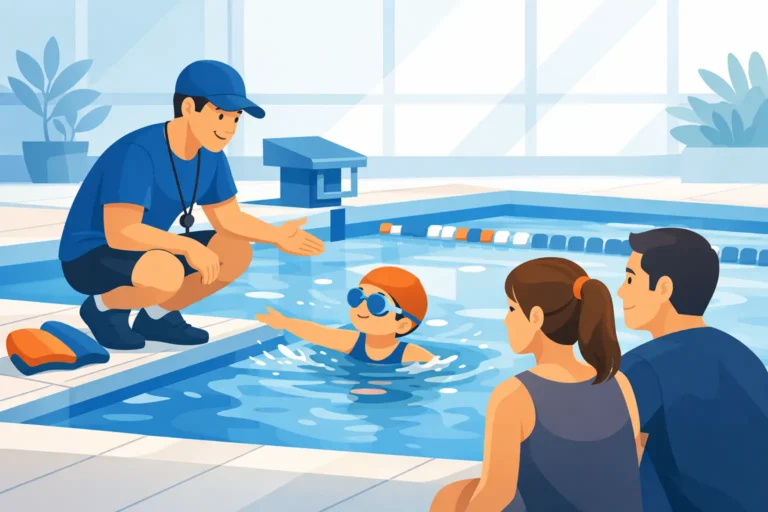
Children learn best when survival skills are taught with repetition, clear routines, and steady progression. The goal is not to pressure them into performing under fear. The goal is to make safe responses familiar enough that they can act without freezing.
Young learners need to get comfortable with water on the face, submersion, and returning to the surface in a calm state. They should learn to hold the wall, move along the edge, float with support and then with less support, and travel short distances to a safe point. These are not small wins. They are the building blocks of water confidence with purpose.
Parents should also understand that confidence without control is not the same as readiness. Some children look fearless in the pool but still lack the judgment and breathing skills needed for safety. Others look cautious but are actually building stronger technical habits. Progress should be judged by skill consistency, not personality.
In Singapore and similar swim education systems, staged benchmarks are useful because they create a visible pathway from water introduction to tested survival competence. That structure helps families see what has been learned and what still needs work.
What adults often need to relearn
Adults usually arrive with one of two challenges. They either never learned properly, or they learned strokes without learning survival. In both cases, the solution is not to rush into lap swimming. It is to rebuild from the basics with control.
Adult beginners often need focused work on breathing, floating, and relaxation. Fear is common, especially in deeper water. That is not a weakness. It is a training factor. Good instruction breaks the skill into small, repeatable actions so the learner experiences success early and often.
For adults who already swim for exercise, survival training may expose gaps they did not know they had. Can they float and recover without goggles? Can they stop mid-swim, roll onto the back, and breathe comfortably? Can they tread water without wasting energy? These are practical checks worth doing.
How structured lessons improve real safety
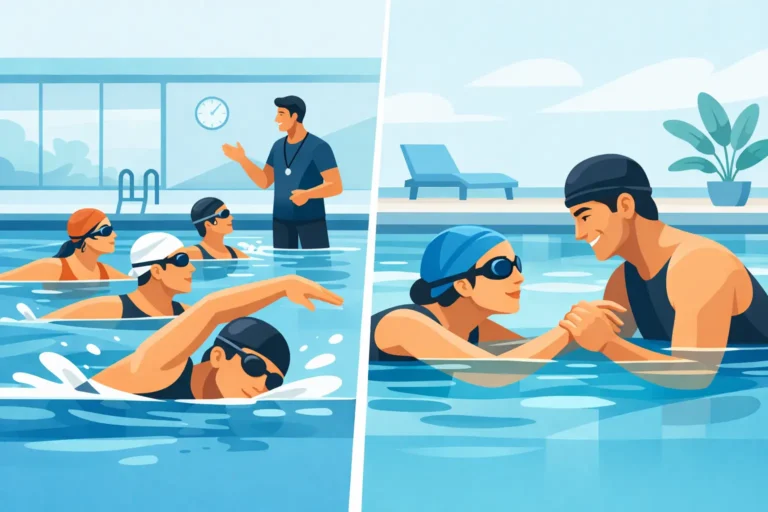
Survival skills improve fastest when they are taught in sequence. Random practice creates random results. A swimmer who learns submersion, breath control, floating, rotation, and directed movement in an organized progression is much more likely to retain those responses.
This is why experienced coaching matters. Instructors do more than demonstrate. They correct timing, body position, breathing rhythm, and panic responses. They also know when to progress and when to reinforce. Moving too fast can create false confidence. Moving too slowly can limit development. The right pace depends on age, readiness, and consistency.
AQZOG has built its teaching approach around this kind of structured progression, with strong alignment to survival outcomes and formal swim development. For families and adult learners, that matters because safety training works best when it is systematic, not improvised.
What parents and learners should look for
Not all swim lessons emphasize survival to the same degree. When choosing a program, look beyond class size or convenience. Ask what safety behaviors are taught first. Ask whether floating, turning, safe entry and recovery, and movement to the wall are part of the progression. Ask how instructors assess readiness for the next stage.
It is also worth asking how skills are practiced under mild variation. A swimmer who can only perform after a perfect push-off may not be fully secure. Controlled challenges, introduced carefully, help learners become adaptable rather than scripted.
The best programs make progress visible. That might be through stage goals, instructor feedback, practical assessments, or skill check-ins. Clear benchmarks keep training focused and reassure families that lessons are building toward real capability.
The role of practice outside formal lessons
Formal instruction does the heavy lifting, but regular exposure helps skills settle in. Short, supervised practice sessions can reinforce breathing, floating, and wall recovery. The key word is supervised. Survival skills are never a reason to reduce adult oversight.
For children, consistency matters more than marathon sessions. For adults, brief repetition often helps remove tension and improve trust in the water. Still, practice should match what has already been taught. Unstructured experimentation can confuse beginners or encourage unsafe habits.
Swimming survival skills are built through repetition, but they are strengthened through correct repetition. That is the difference between activity and training.
Water safety is not a one-time achievement. It develops as the swimmer grows, faces new environments, and handles more complex tasks. Whether you are enrolling a child for the first time or returning to the pool as an adult, the right starting point is simple: build the skills that keep you safe first, and let every other achievement grow from there.