Private Swim Coaching vs Group Classes
A child who clings to the pool wall needs something different from a confident swimmer preparing for SwimSafer. That is why private swim coaching vs group classes is not a simple question of price or convenience. The right format affects safety, confidence, progression speed, and how well a swimmer responds under instruction.
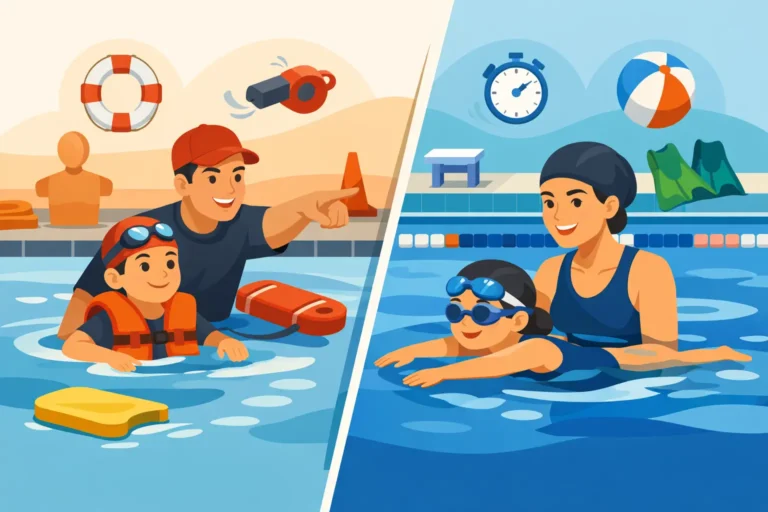
For parents and adult learners, the better choice usually comes down to learning style, urgency, and goals. Some swimmers improve fastest with one coach focused entirely on them. Others benefit from the routine, pacing, and shared motivation of a structured class. Both formats can be highly effective when the teaching is organized and the progression is clear.
What private swim coaching vs group classes really changes
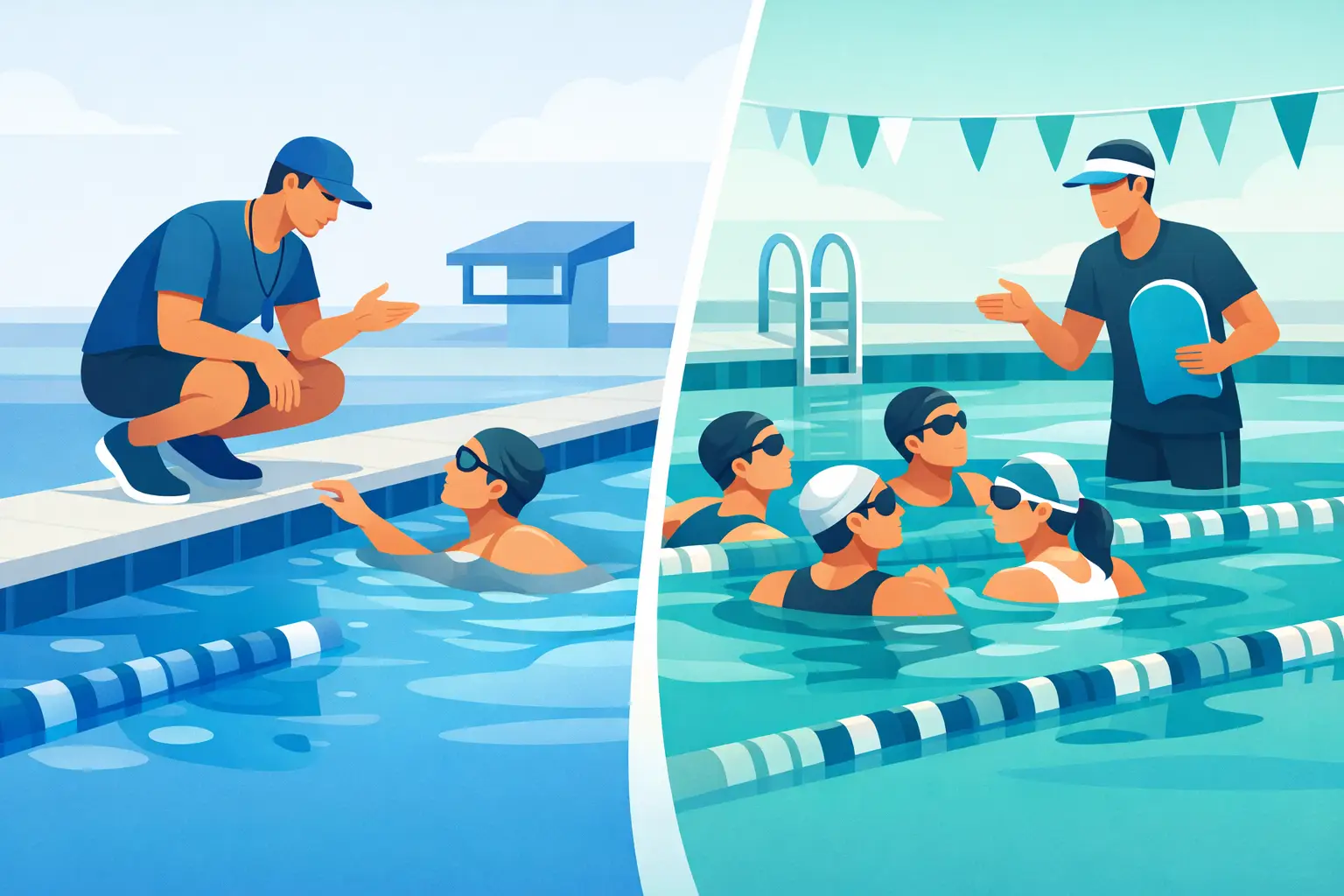
The biggest difference is attention. In private coaching, every correction, drill, and repetition is built around one swimmer. If a child struggles with blowing bubbles, back floating, or recovering from fear after a bad experience, the coach can slow the lesson down and work on that exact barrier without holding up others.
In group classes, instruction is shared across several swimmers at a similar level. That setup works well when students are ready to follow a class structure, watch demonstrations, and learn through repetition with peers. It also creates a more standardized pathway, which many families prefer when they want regular weekly practice and visible stage-by-stage improvement.
Neither format is automatically better. The stronger question is this: what does the swimmer need right now to become safer and more capable in the water?
When private swim coaching is the better fit
Private lessons are often the fastest route for swimmers who need targeted support. This includes young children who are not yet comfortable separating from a parent, adults with water fear, beginners who have missed key fundamentals, and students preparing for a practical test on a tight timeline.
A one-to-one setting allows the coach to adjust everything in real time. The pace can be slowed for nervous swimmers or intensified for those working on stroke efficiency, endurance, or certification readiness. That flexibility matters because swimming is technical. If body position, breathing, kicking, or timing is off, repeated mistakes can become habits. Private coaching helps correct errors early before they settle in.
This format is also valuable for swimmers with very specific goals. A child may need extra support for SwimSafer stage requirements. An adult may want focused work on freestyle breathing. A learner aiming for lifesaving progression may need more disciplined technical feedback. In these situations, individualized coaching usually leads to faster measurable gains.
The trade-off is cost. Private lessons carry a higher fee because the coach’s time is dedicated to one person. For some families, that investment makes sense when the need is urgent or the swimmer has not responded well in a group setting. For others, it may be more practical as a short-term boost before moving into a group class.
Where group classes have a real advantage
Group lessons are often the most efficient long-term option for swimmers who are ready to learn in a shared environment. Children especially can respond well to the rhythm of a weekly class. Seeing peers attempt the same skills can reduce anxiety, improve focus, and build healthy motivation.
There is also value in learning to function within a lesson structure. Students practice listening, taking turns, following instructions, and repeating skills under consistent coaching. These habits support progression, especially for school-age swimmers moving through formal stages.
For many families, group classes provide the right balance of affordability and continuity. A well-run program still offers structured teaching, clear benchmarks, and safety-focused progression. It may not deliver the same level of individualized correction as private coaching, but it gives swimmers regular water time and an environment that supports steady development.
Group classes can also be better for children who enjoy social learning. Some students are more willing to try a new skill after watching another swimmer do it first. That shared dynamic can be helpful when building confidence in submersion, floating, kicking, and independent movement.
For beginners, fear matters more than format
A common mistake is choosing based only on age. Not every child beginner is suited to a group class, and not every adult beginner needs private coaching. Fear level, attention span, and confidence are usually more important.
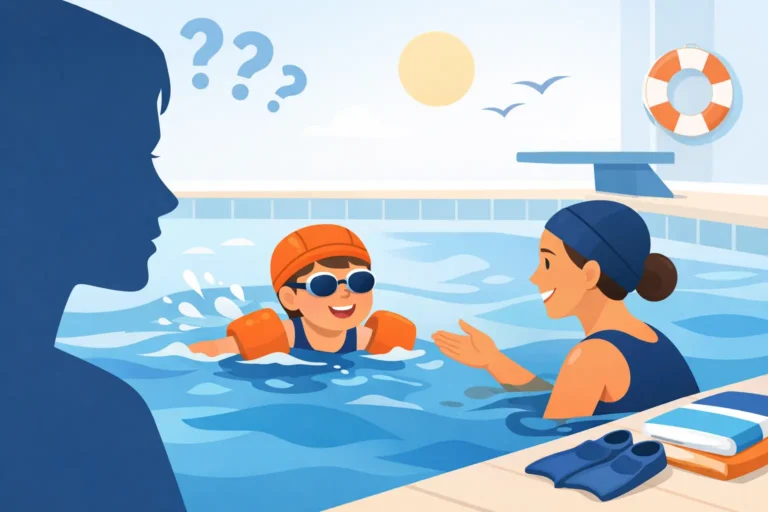
If a swimmer is highly anxious, private coaching often gives the safest starting point. The coach can establish trust, reduce overload, and build comfort step by step. Forcing that swimmer into a group too early may slow progress, even if the class itself is well designed.
But if the swimmer is calm, follows instructions, and enjoys learning with others, a group class may be completely appropriate from the start. In fact, some beginners gain confidence faster when the environment feels normal and shared rather than highly focused on their hesitation.
The best decision is based on response, not assumption. A capable coach should be able to identify whether a swimmer needs more individual support or is ready to progress with peers.
Private swim coaching vs group classes for SwimSafer goals
For swimmers in Singapore, progression is often tied to SwimSafer stages, practical test performance, and water safety outcomes. That makes lesson format especially important.
Group classes are a strong fit for swimmers moving through a structured program over time. They support consistent attendance, regular skills practice, and familiarity with staged expectations. When the class is organized by ability level, students can build the core competencies needed for advancement.
Private coaching becomes more useful when there are gaps. A swimmer may be close to assessment standard but weak in one required skill. Another may need concentrated work before a mock test or holiday intensive. In these cases, private lessons can accelerate readiness by focusing only on the areas that affect performance.
Many families do best with a blended approach. Weekly group lessons provide continuity, while occasional private sessions help fix technical issues or prepare for an upcoming benchmark. That combination can be especially effective for swimmers who are progressing well overall but need extra support at key stages.
Adults often choose based on efficiency
Adult learners usually ask a more direct question: which option gets results faster? If the goal is overcoming fear, learning basic survival skills, correcting inefficient stroke mechanics, or preparing for a defined event, private coaching is often the more efficient choice.
Adults tend to be more self-aware and more self-conscious. Many prefer the privacy and direct feedback of a one-to-one lesson, particularly if they are complete beginners. Private instruction also avoids the frustration of spending time on class content that may not match their exact level.
Still, group classes can work very well for adults who enjoy routine and are comfortable learning alongside others. They offer accountability, scheduled practice, and a more budget-friendly path to improvement. The key is proper level placement. An adult in the wrong group often feels either overwhelmed or underchallenged.
Cost matters, but value matters more
It is reasonable to compare lesson fees. But the cheaper option is not always the better value if progress stalls. A swimmer who needs six months in the wrong format may cost more in time and frustration than a shorter period of focused coaching.
At the same time, the most expensive option is not automatically necessary. If a swimmer is thriving in a structured class, following instructions well, and progressing steadily, private lessons may offer only a small extra benefit.
The smarter comparison is cost against outcome. Are lessons building water confidence? Is safety improving? Are skills becoming consistent enough for independent swimming, stage progression, or test readiness? Those are the measures that matter.
How to choose with confidence
Start with the swimmer’s current barriers. If fear, inconsistent basics, special learning needs, or urgent test preparation are involved, private coaching is often the more effective starting point. If the swimmer is comfortable, coachable, and ready for steady progression, a group class may be the right foundation.
It also helps to think in phases rather than permanent categories. A nervous beginner may start privately, then join a group once confidence improves. A child in regular classes may add short-term one-to-one support before an assessment. AQZOG often sees the strongest outcomes when lesson format matches the swimmer’s stage of development instead of following a one-size-fits-all decision.
Swimming is a life skill, and the teaching format should support that responsibility. Choose the setting that gives the swimmer the best chance to become safe, confident, and technically sound – then reassess as they grow.