A Parent’s Guide to Toddler Swim Milestones
The first time your toddler clings to your shoulder at the pool, then lets go long enough to splash, kick, and smile, you see how swimming progress really works. A good guide to toddler swim milestones should help you spot that progress clearly – not by chasing advanced skills too early, but by understanding what safe, structured development looks like.
For parents, that matters because toddler swimming is not about collecting tricks. It is about building water confidence, listening skills, body control, and early safety habits in the right order. Some toddlers move quickly. Others need more repetition. Both can be progressing well.
What toddler swim milestones really measure
Toddler swim milestones are best understood as signs of readiness, not deadlines. At this age, children develop unevenly. A toddler may be comfortable getting their face wet but still resist floating on their back. Another may kick strongly yet struggle to separate from a parent or coach.
That is normal. In structured swim instruction, milestones help coaches and parents answer a simple question: is the child becoming safer, calmer, and more capable in the water over time?
The strongest early milestones usually fall into four areas: emotional comfort, response to instruction, movement in the water, and basic safety behavior. When these areas improve together, the child is building a useful foundation for later swimming skills.
A realistic guide to toddler swim milestones by stage
Stage 1: Water acceptance and emotional comfort
This is the first major stage, and it is often underestimated. Before a toddler can learn meaningful swim skills, they need to feel secure in the pool environment. That includes entering the water without distress, tolerating splashing, and accepting support from an instructor or parent.
At this stage, good signs include relaxed body language, willingness to play in shallow water, and brief comfort with water on the face. Some toddlers also begin to hold the pool edge or move toward toys and familiar cues.
If your child cries at every lesson, refuses contact with the water, or becomes more fearful over several weeks, that does not mean swimming is not for them. It usually means the pace, teaching style, or setting needs adjustment. Early progress is not always linear.
Stage 2: Listening and simple response skills
Once a toddler is more settled, the next milestone is not a stroke. It is cooperation. Can they respond to short instructions such as sit, hold, kick, turn, or reach? Can they wait briefly, move with guidance, and repeat simple actions?
This stage matters because safety in the water depends on responsive behavior. A toddler who can follow one-step directions is easier to guide through safe entries, assisted floating, and movement back to the wall.
Parents sometimes focus only on physical ability, but in practice, attention and instruction-following are just as important. A child who kicks well but does not stop when told is not as water-ready as they may appear.
Stage 3: Breath control and face submersion
Breath control is a key milestone in any guide to toddler swim milestones because it supports nearly everything that follows. This starts very simply – blowing bubbles, closing the mouth before water contact, and becoming comfortable with brief face wetting or short submersion.
Not every toddler accepts this quickly. Some dislike water near the nose or eyes for months before suddenly becoming comfortable. Progress here should be patient and measured. Forcing submersion usually creates setbacks.
A strong early indicator is when a toddler anticipates water contact and reacts calmly. That shows they are not just tolerating the activity. They are beginning to understand it.
Stage 4: Assisted floating and body position
Floating is one of the most valuable early skills, but it often takes time. Toddlers tend to resist back floating because it feels unfamiliar and reduces their sense of control. Front floating may be easier at first, especially with support.
The milestone is not perfect independence. It is learning to relax enough for the body to stay aligned with assistance. A child who stiffens, curls up, or panics may simply need more repetition and trust-building.
This is where experienced instruction makes a difference. Good teaching builds floating through gradual support, consistent cues, and predictable routines. When toddlers understand what is coming next, their body tension often decreases.
Stage 5: Kicking, paddling, and short guided movement
Once comfort and body position improve, toddlers can begin moving through the water in short, supported distances. This may look like kicking while holding the wall, reaching for the instructor, or using coordinated arm and leg actions with assistance.
Parents sometimes ask whether this means their toddler is swimming. Usually, not yet in the independent sense. But it is a meaningful milestone because it shows propulsion, orientation, and confidence.
At this stage, the quality of movement matters less than the child’s ability to repeat it calmly. A short, controlled movement toward the wall is more useful than a frantic burst that ends in fear.
Stage 6: Safety habits and return-to-wall skills
This is one of the most practical toddler milestones and one of the most important. Can the child hold the wall? Can they turn back toward a safe point after entering the water? Can they wait at the edge instead of jumping in unexpectedly?
These skills are early water survival behaviors. They do not replace supervision, but they are essential in structured progression. In many cases, they matter more than whether a toddler can perform a recognizable stroke.
For families who view swimming as a life skill, this is where lessons begin to show real value. Safety responses taught young can become habits later.
What affects the pace of toddler swim progress
Age is only one factor. Temperament often matters more. A bold toddler may try everything but lack control. A cautious toddler may learn more slowly at first, then become very consistent once trust is built.
Lesson frequency also affects progress. Weekly lessons can work well, but toddlers usually need regular exposure and repetition. Long gaps often mean spending the next session rebuilding confidence.
The teaching environment matters too. Warm, structured, predictable lessons usually produce better outcomes than high-pressure sessions focused on performance. Parents should expect progression, but not on a rigid timeline.
When parents should be encouraged – and when to ask questions
You should feel encouraged if your toddler is gradually becoming calmer, more cooperative, and more willing in the water, even if the visible skills still look basic. That is real progress.
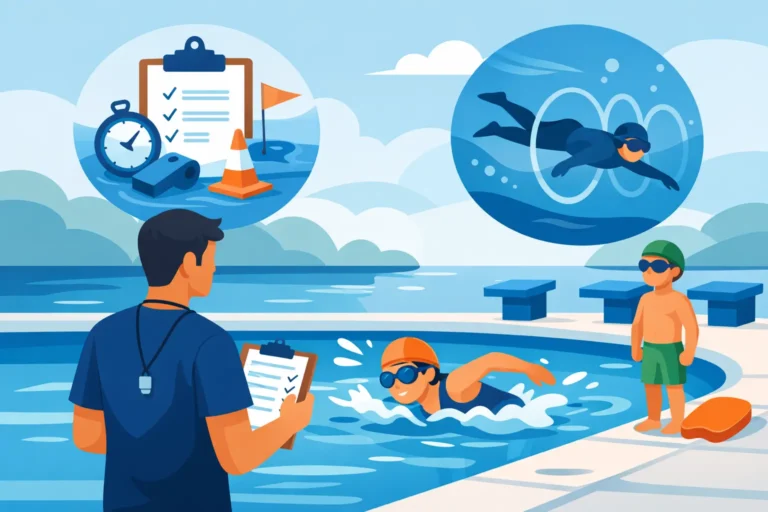
You should ask questions if lessons feel random, if your child is repeatedly pushed into activities that create distress, or if there is no clear explanation of what the current goal is. Toddler swimming works best when progression is structured and each stage prepares for the next one.
A strong program explains why a child is practicing a skill, what milestone it supports, and what readiness signs come next. That kind of structure builds trust for both parents and children.
How parents can support swim milestones outside class
You do not need to coach your toddler at home, and most parents should not try to replicate formal lessons on their own. What helps more is reinforcing comfort and consistency. Talk positively about the pool. Keep pre-class routines calm. Avoid showing anxiety, because toddlers read that quickly.
During family swim time, focus on familiarity rather than performance. Let your child splash, hold the wall, practice safe entry with support, and enjoy short, positive experiences. A toddler who associates water with security and routine is easier to teach.
It also helps to judge progress over months, not single sessions. Some lessons will look excellent. Others will feel like a step backward. That is common in early childhood learning.
Choosing the right instruction for toddler swim milestones
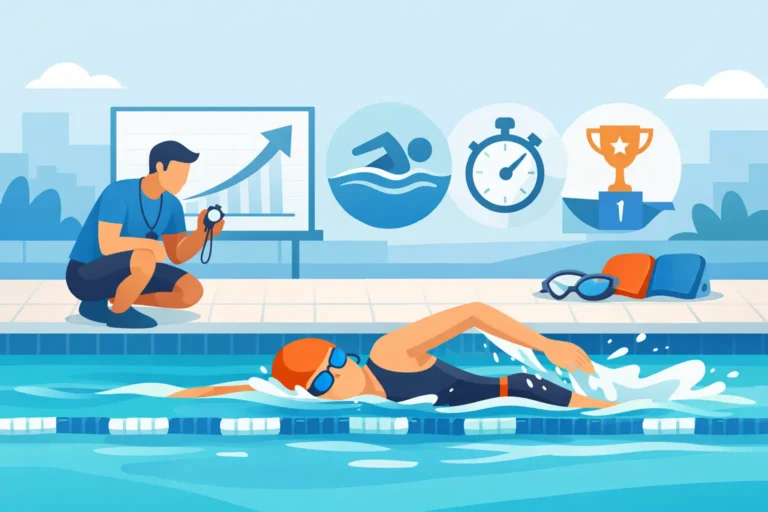
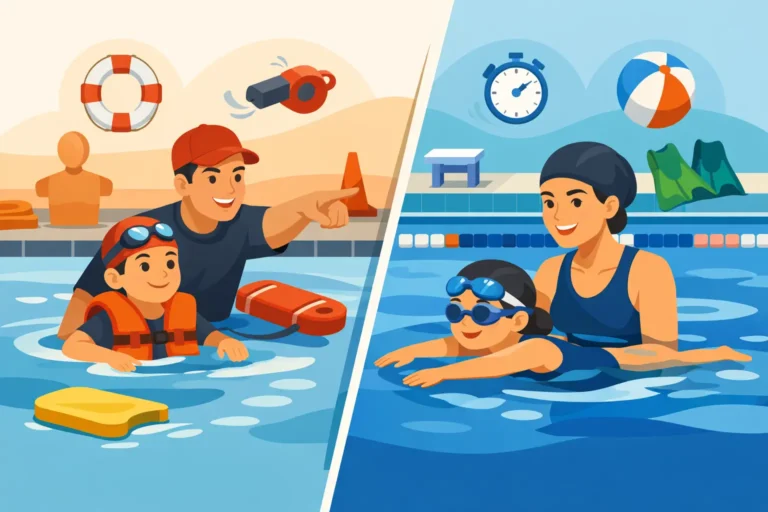
The best lessons for toddlers are structured, safety-led, and realistic about development. Parents should look for instructors who understand early childhood behavior, use clear progression, and prioritize water safety before advanced technique.
For many families, that means choosing a program with measurable stages rather than a casual play session alone. Play has value, but on its own it does not always build the behaviors needed for safe water progression. A structured program, such as those delivered by experienced schools like AQZOG, gives toddlers repeated exposure to the right skills in the right order.
That order matters. Water confidence without boundaries can become overconfidence. Technique without comfort tends to collapse under stress. The goal is a child who is not just active in water, but increasingly safe, responsive, and capable.
A helpful way to view toddler swimming is this: the early milestones are not small because they look simple. They are foundational because they shape everything that comes next. When your toddler learns to trust the water, respond to cues, control their breathing, and move toward safety, you are not just seeing a lesson go well. You are seeing the start of a life skill being built properly.