Why Survival Skills Are Important to Anyone
A child slips at the pool edge. An adult misjudges the depth while on vacation. A strong swimmer becomes tired farther from the shore than expected. These situations are different, but the first requirement is the same: stay calm, make safe decisions, and know what to do next. Survival skills are important to anyone because emergencies do not wait for age, fitness level, or swimming experience.
For families, survival readiness is not about creating fear around water. It is about giving children and adults the practical ability to respond with control. Swimming is one of the most valuable places to build that ability because it combines physical skill, awareness, confidence, and clear decision-making.
Survival Skills Are Important to Anyone Around Water
Water is part of everyday life for many families. It is found at public pools, school activities, hotels, beaches, water parks, and friends’ homes. Even people who do not consider themselves swimmers may face water-related situations at some point.
That is why water survival should not be treated as an optional extra after a person learns a few strokes. A child may be able to kick across a shallow pool but still panic when they cannot touch the bottom. An adult may know how to float but lack the stamina or judgment to return safely to the wall. True readiness is built through structured progression, not assumptions.
The goal is not to turn every learner into a competitive swimmer or a lifesaver overnight. The goal is to develop reliable responses: entering safely, surfacing calmly, floating, breathing, changing direction, moving toward safety, and asking for help when needed. Each skill supports the next.
Swimming Builds a Practical Survival Foundation
Swimming lessons offer more than exercise and stroke technique. They give learners repeated, supervised practice in an environment where mistakes can be corrected before they become dangerous habits. This is particularly important for children, who may overestimate their ability after one confident experience in the water.
A strong survival foundation usually begins with comfort and orientation. Learners need to understand how water feels on the face, how to control breathing, and how to regain balance after losing footing. For a nervous beginner, this may mean starting with simple supported floats and gentle submersion. For a more confident child, it may mean learning to roll from a front float to a back float without assistance.
These early skills are not small achievements. They teach the body and mind that water can be managed with calm actions. When panic is reduced, better choices become possible.
Floating Is More Than a Beginner Exercise
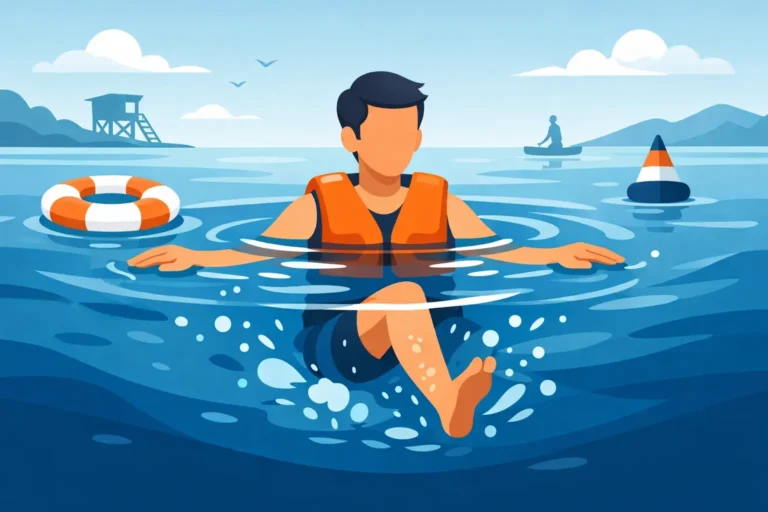
Floating is often taught early because it is one of the most useful survival skills. A person who can float on their back can rest, breathe, observe their surroundings, and regain control before attempting to move.
For children, a stable back float can be a critical step between unexpected entry and reaching safety. For adults, it can conserve energy in deeper water. Floating does not replace supervised swimming or proper safety equipment, but it provides valuable time when a swimmer is tired or disoriented.
Treading Water Develops Endurance and Control
Treading water helps a learner maintain an upright position without holding the wall or touching the bottom. It requires coordinated movement, body awareness, and controlled breathing. These are practical skills for waiting for assistance, signaling to others, or preparing to move toward a safe exit.
The amount of time a person should tread depends on their age, strength, and learning stage. A young child should not be expected to perform like a trained adult. Progression matters. Good instruction builds duration gradually while protecting technique and confidence.
Safe Movement Matters More Than Speed
In an emergency, fast swimming is not always the answer. A tired swimmer who rushes may exhaust themselves quickly. A safer approach may involve floating, using an efficient stroke, moving along the pool edge, or returning to the nearest exit.
This is why structured swimming programs teach more than one way to move through the water. Learners should become familiar with front and back movement, changing direction, and choosing the most efficient response for the situation. Technique creates options, and options create safer decisions.
Children Need Skills They Can Use Under Pressure
Parents often ask when a child is ready to be considered water-safe. The honest answer is that no child is ever fully water-safe without active adult supervision. Even capable swimmers can become distracted, tired, cold, or overconfident.
However, children can develop meaningful survival ability. A well-designed progression teaches them to enter and exit safely, recover from an unexpected fall, float independently, travel a practical distance, and recognize when to seek help. It also teaches listening skills: waiting for permission, following pool rules, and staying within assigned areas.
Formal progression programs, such as SwimSafer-based training, can be valuable because they provide measurable milestones rather than vague promises. Parents can see what their child has practiced, where confidence is growing, and which skills need further reinforcement. Test readiness should never replace real competence, but assessments can help confirm that a learner is developing the expected skills at each stage.
At AQZOG, structured instruction emphasizes water confidence alongside survival awareness, so learners work toward clear outcomes rather than simply spending time in the pool.
Adults Benefit From Survival Training Too
Many adults avoid lessons because they feel embarrassed about being beginners. Others assume that casual pool experience is enough. Neither concern should prevent someone from learning practical water skills.
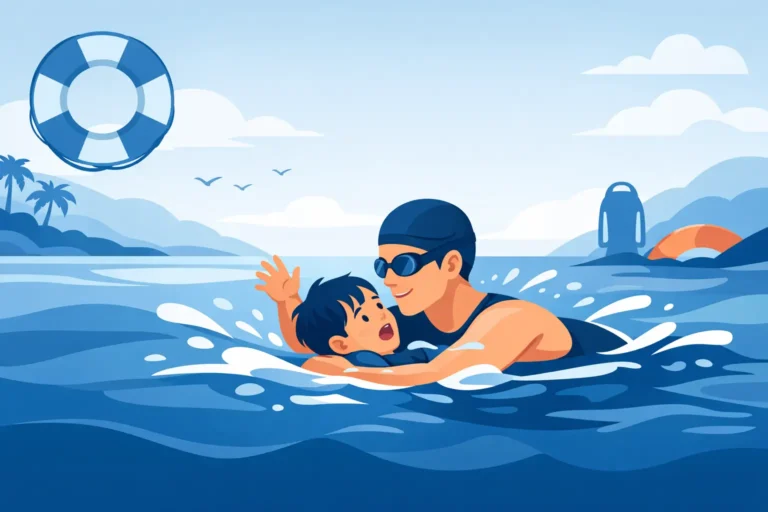
Adult survival training can be especially meaningful for parents, caregivers, travelers, and people who enjoy boating, snorkeling, or open-water activities. A parent who understands safe rescue principles is better prepared to respond without becoming a second victim. An adult who can float and swim efficiently is more likely to stay composed if they unexpectedly enter deep water.
The right starting point depends on the learner. Someone with a strong fear of water may need patient confidence-building before working on distance. A recreational swimmer may need better breathing, treading, and endurance. A triathlon trainee may benefit from open-water awareness and pacing. There is no single pathway, but every pathway should include practical survival capability.
Water Safety Is Also About Judgment
Physical skills matter, but survival is not only physical. Good judgment prevents many incidents before they begin.
Learners should understand why running on wet surfaces is dangerous, why diving into unknown water can cause serious injury, and why rough play can quickly overwhelm a weaker swimmer. They should know that inflatable toys are not safety devices and that swimming ability can change when water is cold, crowded, or moving.
Children also need language for speaking up. They should feel comfortable saying they are tired, asking for a break, or telling an adult when a friend is struggling. These habits can be practiced during lessons and reinforced during family swim time.
For adults, judgment includes recognizing personal limits. Alcohol, fatigue, illness, weather conditions, and unfamiliar locations all affect water safety. Being a confident swimmer does not remove risk. It should encourage more responsible decisions.
How Families Can Reinforce Survival Skills
Weekly lessons create the foundation, but families can reinforce learning through simple, consistent habits. Before each swim, review the pool rules and identify where the exits, lifeguards, and shallow areas are located. During supervised practice, encourage children to demonstrate skills they have learned, such as floating, rolling over, or reaching the wall safely.
Avoid pressuring a child to perform beyond their current stage. Confidence grows when challenges are realistic and repeated successfully. If a learner is fearful, celebrate small progress. If a learner is advanced, keep safety conversations active so confidence does not become carelessness.
It also helps to choose lessons with clear progression. Ask what survival skills are included, how instructors assess readiness, and how the program prepares learners for deeper water. A structured plan gives families a better picture of progress than occasional, unplanned pool visits.
The Skill That Supports Every Other Skill
Survival skills create a different kind of confidence. It is not the confidence of believing nothing can go wrong. It is the confidence of knowing how to respond when conditions change.
For a toddler, that may begin with comfort and supported floating. For a school-age child, it may mean recovering after a simulated fall and moving to safety. For an adult, it may mean finally learning to breathe, float, and swim without fear. Each achievement makes water more accessible, but it also makes the person better prepared to respect it.
The next time your family heads to the pool, look beyond whether everyone can swim a lap. Ask whether each person knows how to pause, float, breathe, choose a safe direction, and get help. Those are the skills that turn time in the water into lasting confidence.