What Is SwimSafer Stage One for Young Swimmers?
A child who can splash confidently is not necessarily ready to be safe in the water. The key difference is whether they can respond calmly, follow safety rules, float with control, and get themselves to a safe exit. That is the purpose behind the question many parents ask: what is SwimSafer stage one?
SwimSafer Stage 1 is the starting point of Singapore’s national swimming and water-safety progression. It is designed to give beginner swimmers a secure foundation before they move on to longer swims, deeper water skills, and more demanding survival sequences. For young children, it is where comfort in the pool begins to become real water confidence.
What Is SwimSafer Stage One?
SwimSafer Stage 1 introduces children to essential water-entry, floating, movement, exit, and safety-awareness skills. It is not about racing across the pool or achieving a perfect freestyle stroke. The focus is on helping a child become comfortable and controlled in a supervised aquatic environment.
At this stage, swimmers learn that water can be enjoyable, but it must also be treated with respect. They practice listening to instructions, recognizing safe behavior around the pool, and completing simple tasks without panic. These habits matter because a child’s ability to remain calm often determines how well they can use the skills they have learned.
Stage 1 is generally suitable for beginners and young learners who are ready to participate in a structured class. The right age can vary. Some children are ready to learn independently at an earlier age, while others need more time in toddler water-introduction lessons before moving into a formal certification pathway.
The Skills Children Build in SwimSafer Stage 1
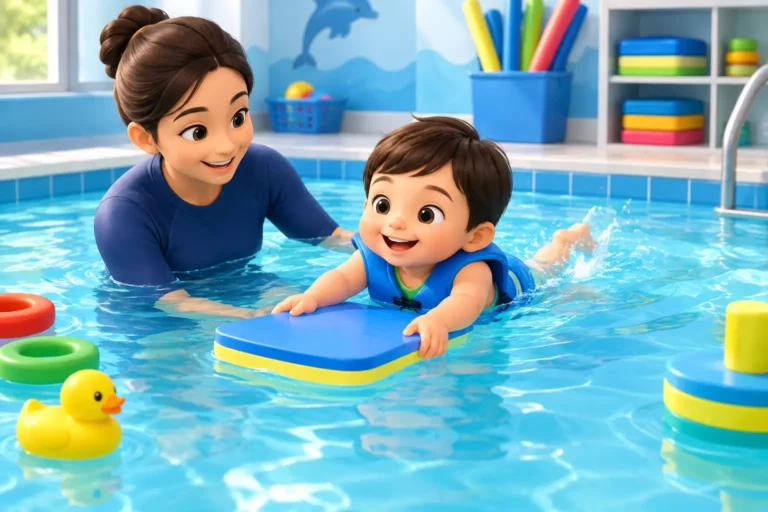
A good Stage 1 program develops several skills together rather than treating swimming as one isolated movement. Children typically work on safe pool entry and exit, getting their face wet, submerging with increasing confidence, floating on the front and back, gliding, and moving through the water over short distances.
These tasks may look simple from the pool deck, but each one serves a safety purpose. Entering the water safely teaches awareness of depth and surroundings. Exiting independently develops self-reliance. Submerging helps reduce fear if a child accidentally goes underwater. Floating gives a child a way to pause, breathe, and regain control instead of struggling.
Instructors also introduce basic water-safety knowledge. Children learn to wait for permission before entering, avoid pushing or rough play, recognize pool rules, and understand why adult supervision matters. These are not side lessons. Water safety knowledge is part of the progression because safe decision-making should develop alongside physical ability.
Confidence Is a Measurable Outcome
Parents often describe their goal as wanting their child to be “water confident.” In a structured program, confidence is visible through behavior. A confident Stage 1 swimmer is more willing to put their face in the water, attempt a back float, follow a sequence of instructions, and recover after a small mistake.
That does not mean every child will look fearless. Some children need several lessons before they relax enough to float without gripping an instructor or pool wall. Others are physically capable but become anxious during formal assessment conditions. Patient repetition and clear coaching usually make the difference.
Confidence should never be forced. Pushing a fearful child into deep water or demanding a skill before they understand it can slow progress. Effective instruction uses gradual exposure, close supervision, and achievable milestones so the child experiences success at each step.
Why Stage 1 Matters Before Formal Swimming Strokes
Many parents understandably want to see their child learn freestyle quickly. Freestyle is useful, but speed should not come before body control and water survival awareness. A swimmer who can kick fast but cannot float calmly or exit safely has gaps in their foundation.
SwimSafer Stage 1 helps close those gaps early. It teaches children how their body behaves in water and gives them practical responses they can use if they lose balance, inhale water, or become unsure of what to do next. This is especially relevant in Singapore, where children may encounter pools during family outings, school activities, vacations, or holiday programs.
The stage also prepares children for more advanced learning. Once a swimmer can submerge, float, glide, and move independently with control, coaching can become more technical. They can learn coordinated breathing, streamline position, kicking efficiency, and stroke patterns without being held back by fear of putting their face in the water.
What Happens During a Stage 1 Assessment?
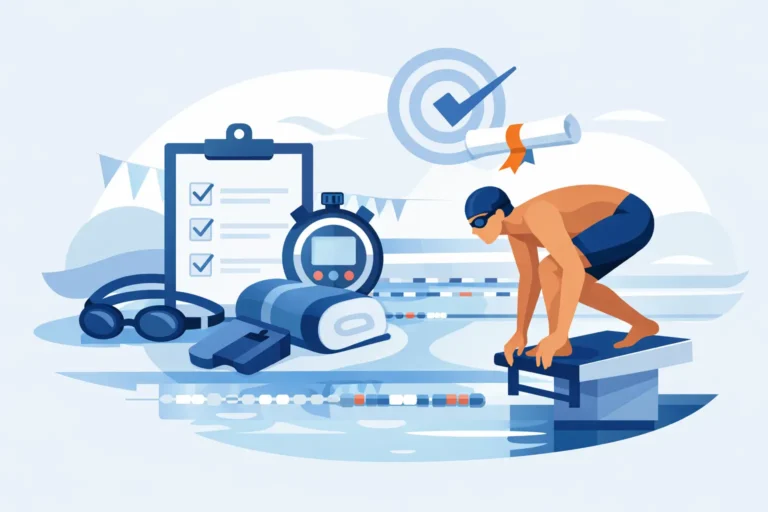
A SwimSafer Stage 1 assessment checks whether a child can demonstrate the required skills and safety knowledge with sufficient control. The exact assessment format and criteria should always be confirmed with the approved program provider, as requirements and administration may be updated over time.
For children, the assessment can feel different from a normal lesson. They may be asked to complete familiar skills in a clear sequence, with less prompting than usual. This is why assessment readiness should be built gradually, not rushed during the final few classes.
A prepared child understands the instructor’s commands, can perform skills consistently, and knows what to do if they need a moment to reset. Mock practical assessments can be especially helpful for children who become nervous when observed. They turn the unknown into a familiar routine and show the coach exactly which areas need more practice.
Passing matters, but the certificate should reflect genuine skill. If a child needs more time to develop a stable float or independent movement, extra practice is a positive investment in safety. A fast pass without reliable ability does not serve the child well in the next stage.
How Parents Can Support Progress Outside Class
Parents do not need to become swimming instructors to help their child succeed. The most useful support is consistent, calm encouragement. Ask your child what skill they practiced, praise effort rather than only results, and avoid comparing them with siblings or classmates.
If you visit a pool outside lessons, follow the coach’s guidance and keep practice simple. Allow your child to repeat familiar activities in shallow water under direct adult supervision, such as blowing bubbles, putting their face in, or practicing a supported float. Do not introduce unsupervised challenges or ask them to attempt skills beyond their current level.
Regular attendance makes a significant difference at Stage 1. Beginners need repetition to build muscle memory and trust in the water. Long gaps between lessons can cause a child to lose confidence, particularly if they are still overcoming fear of submersion or floating.
Equipment can help, but it should be used carefully. Goggles may make face-in-water practice more comfortable, while flotation aids can support early learning. However, children should not become dependent on aids that create a false sense of security. Under qualified coaching, support is reduced progressively as the swimmer gains control.
Choosing the Right Stage 1 Class
The right class balances safety, progression, and individual attention. Look for instructors who can explain the purpose behind each activity, not simply direct children through drills. Beginners need coaches who recognize when a child needs encouragement, a clearer demonstration, or a more gradual approach.
Class size also affects learning. Group lessons give children valuable experience following instructions and learning alongside peers, but a child who is highly anxious, has missed foundational skills, or needs rapid test preparation may benefit from private or semi-private coaching. There is no single best format for every learner.
For families seeking a structured pathway, AQZOG provides SwimSafer-focused coaching that builds water confidence first, then develops the consistency needed for certification readiness. The goal is not to push children through stages prematurely. It is to help them progress with skills they can demonstrate reliably.
After Stage 1: What Comes Next?
Stage 1 is the beginning of a longer safety journey, not a finish line. As children progress, they are expected to develop stronger swimming ability, better endurance, deeper-water confidence, and increasingly practical survival skills. Each stage adds responsibility as well as physical competence.
A child who has completed Stage 1 successfully is ready to keep building. They have learned that water requires calm thinking, controlled movement, and respect for safety rules. Those lessons remain valuable whether their next goal is a SwimSafer certificate, a school requirement, competitive swimming, or simply feeling safe during family pool time.
The best next step is consistent practice with an instructor who knows your child’s current ability. When a young swimmer feels secure enough to try, repeat, and improve, progress tends to follow naturally.