Holiday Swimming Program Guide for Fast Progress
School breaks can be the moment a hesitant child finally puts their face in the water, learns to float independently, or completes the skills holding back their SwimSafer progress. A well-planned holiday swimming program guide helps families use that short window purposefully – not simply fill a few mornings at the pool.
Holiday intensives are different from regular weekly lessons. With more frequent practice, swimmers can retain coaching points, correct technique sooner, and build confidence through repetition. The right program still needs more than extra pool time. It must have a clear starting point, safe group placement, qualified coaching, and outcomes that match each learner’s ability.
Why Holiday Intensives Can Produce Faster Results
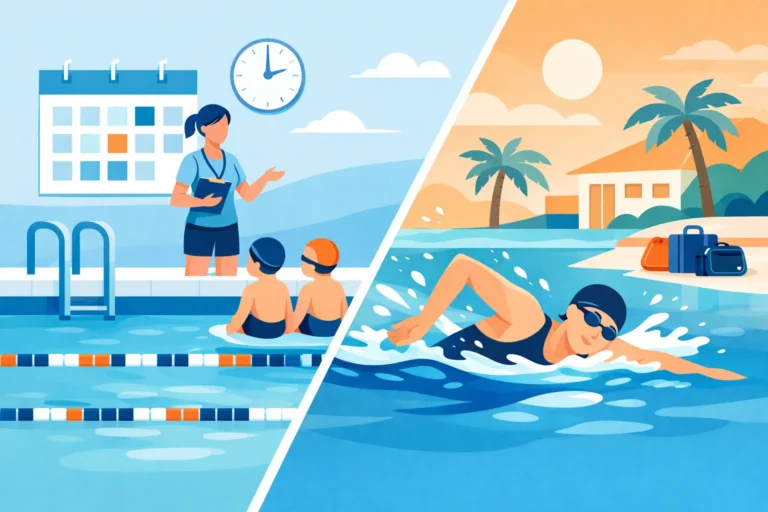
Swimming is a physical skill. A child may understand what a coach means by “kick from the hip” or “look down,” but the movement becomes reliable only after repeated practice. Weekly classes give learners time to absorb each lesson, while holiday programs compress that practice into consecutive days.
This continuity is especially valuable for beginners. They can revisit water entry, submersion, floating, kicking, and basic movement before anxiety or uncertainty returns. For swimmers with some experience, concentrated coaching can improve breathing control, streamline position, stroke coordination, and stamina.
Fast progress does not mean rushing children into skills they are not ready to perform. Safe progression remains the priority. A confident swimmer is not just one who can cross the pool. They can respond calmly, float or tread water when needed, understand safe behavior around water, and execute skills with control.
For families in Singapore, a holiday program can also provide focused support toward SwimSafer stages, practical assessment preparation, or a specific weak area identified during regular lessons. The best fit depends on the learner’s starting point and goal.
Holiday Swimming Program Guide: Choose the Right Pathway
Before enrolling, identify what success should look like by the end of the program. “Improve swimming” is a useful starting intention, but a clear goal helps the coach place the swimmer correctly and helps parents assess meaningful progress.
For toddlers and first-time swimmers
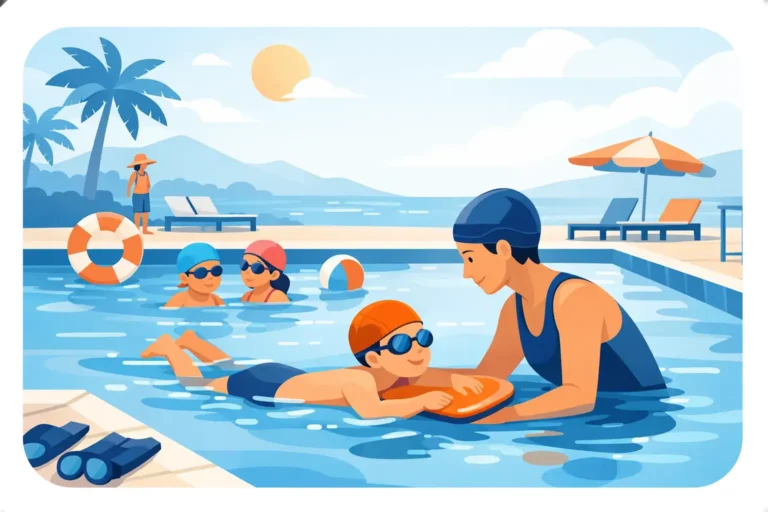
A toddler or complete beginner needs water familiarity before formal stroke development. Look for a program that introduces pool routines gradually: entering and exiting safely, splashing, blowing bubbles, putting the face in water, floating with support, and moving short distances.
The purpose is not to force independence on a deadline. It is to establish trust, comfort, and safe responses in the water. Some children are ready to progress quickly after a few sessions. Others need more time with the same foundational skills. Both are normal, and careful coaching should adapt without compromising safety.
For young children, shorter, positive sessions often work better than long technical drills. Parents should expect the coach to build confidence through structured activities, clear boundaries, and consistent routines.
For school-age beginners
School-age beginners can often move through foundational skills more quickly because they can follow instructions and understand body position. A suitable intensive should develop independent floating, gliding, kicking, breathing, and basic stroke actions while reinforcing water safety.
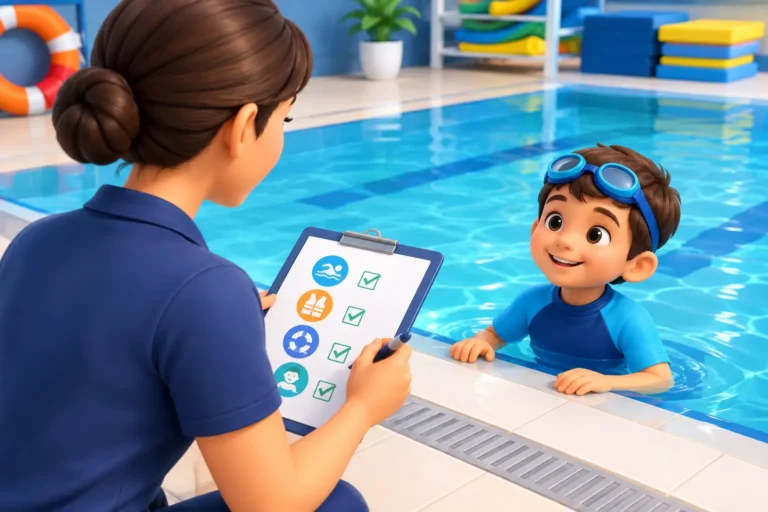
This is also the stage where class grouping matters. A child who is placed with swimmers far ahead may become discouraged. A child placed in a group that is too easy may spend valuable holiday time repeating skills they have already achieved. Ask whether the school assesses ability before placement and whether coaches can adjust the training focus when a swimmer progresses.
For SwimSafer learners and test candidates
A holiday intensive can be an effective option for swimmers working toward a SwimSafer stage, particularly when they need additional practice before a practical assessment. However, families should avoid choosing a program based solely on the promise of a certificate.
Certification should reflect demonstrated competence, not attendance. Learners need to perform the required skills reliably, safely, and with appropriate confidence. A strong preparation program reviews individual skills, identifies gaps, conducts realistic practice, and explains what is expected during assessment conditions.
Mock practical tests can be useful for learners who know the skills but become nervous when being observed. They help children understand instructions, manage waiting time, and practice performing without repeated prompting. Theory preparation is equally valuable where it applies, because water safety knowledge is part of becoming a capable swimmer.
For adults returning to the water
Holiday programs are not only for children. Adults who have delayed lessons because of work may use a break to begin properly. For a water-fear learner, the first objective may be comfort, breathing, floating, and controlled recovery in shallow water. For an experienced adult, it may be improving freestyle efficiency, endurance, or technique for fitness and triathlon training.
Adults often make fast technical gains in an intensive format, but fear and ingrained habits may require patience. Private or semi-private coaching can be the better choice when a learner needs individual pacing, targeted feedback, or a more private setting. Group programs can be motivating and cost-effective when participants share a similar level and goal.
What a Safe, Structured Program Should Include
The quality of a holiday program is visible in its planning. Coaches should know what each session is designed to achieve, how skills connect from one day to the next, and when a swimmer needs consolidation rather than a new challenge.
A strong program begins with ability-based grouping or an initial assessment. It uses clear progressions rather than random games or laps, even when lessons are made enjoyable for young children. It should also include active supervision, appropriate coach-to-swimmer ratios, safe pool entry and exit procedures, and coaching that encourages learners without pressuring them beyond their readiness.
Parents should look for measurable outcomes. These may include independent back floating, controlled breathing, a more efficient front crawl, improved distance, water-survival skills, or readiness for the next SwimSafer requirement. The exact outcome will vary, but it should be specific enough to discuss with the coach.
Experienced instructors also recognize that one intensive cannot replace long-term learning in every case. A holiday program may create a major breakthrough, but advanced stroke technique, endurance, and lifesaving competence need ongoing practice. The best next step may be a weekly group class, additional private lessons, or a later assessment-preparation session.
Questions to Ask Before You Enroll
A short conversation before registration can prevent a poor fit. Ask how swimmers are assessed and grouped, what skills the program targets, how many sessions are included, and whether the schedule builds progressively from day to day. For test-focused learners, ask whether the training covers the specific SwimSafer requirements and whether mock assessments are available.
It is also sensible to ask what happens if a child is anxious, misses a session, or advances more quickly than expected. Programs vary. Some offer fixed group schedules, while others have more flexibility or recommend private coaching for individual needs.
Location matters as well. A convenient public pool reduces travel stress and makes it easier for children to arrive rested and ready to learn. Yet convenience should not be the only factor. A nearby program with unclear levels or limited safety structure may not deliver the progress your family expects.
Help Your Child Get More From Each Lesson
Progress begins before the first lesson. Explain the plan positively, arrive early enough to settle in, and make sure your child has comfortable swimwear, goggles that fit, a towel, and water for hydration. Avoid framing lessons as a test they must pass. Instead, emphasize that each session is a chance to practice a new skill safely.
After class, ask simple questions: What felt easier today? What did the coach ask you to practice? What would you like to try again tomorrow? This keeps attention on learning rather than comparing with other swimmers.
Parents should also resist giving competing technical instructions from the pool deck. If a coach is teaching a new breathing pattern or body position, consistency helps. Share concerns with the instructor after class so the next session can address them constructively.
Turning Holiday Progress Into Lasting Water Confidence
The final day of a holiday course should not be treated as the finish line. Children retain more when they return to the water regularly and continue practicing at an appropriate level. A learner who has gained independence may be ready for the next structured group. A child preparing for SwimSafer may need continued refinement before assessment. An adult who has overcome initial fear may benefit from a steady routine that turns confidence into capability.
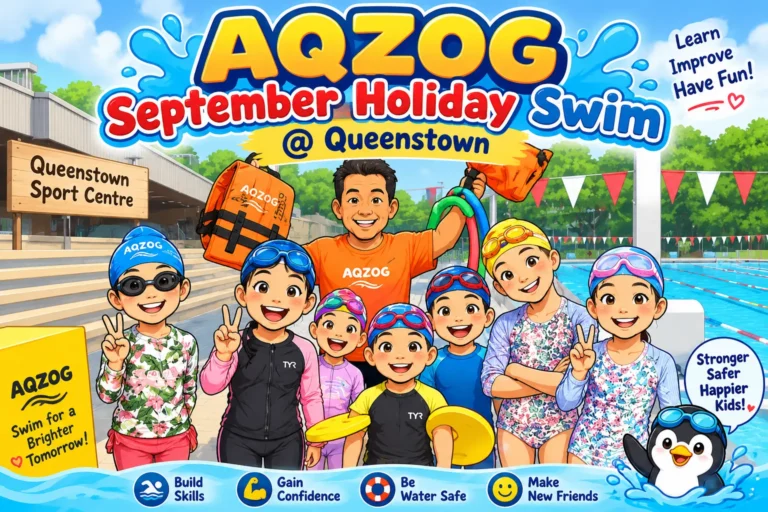
AQZOG approaches holiday intensives as focused stages within a wider swimming journey: safety first, clear skill development next, and measurable progression over time. Whether the goal is a first independent float, stronger freestyle, or test readiness, the most valuable result is a swimmer who leaves the pool more capable, more confident, and better prepared to stay safe in and around water.