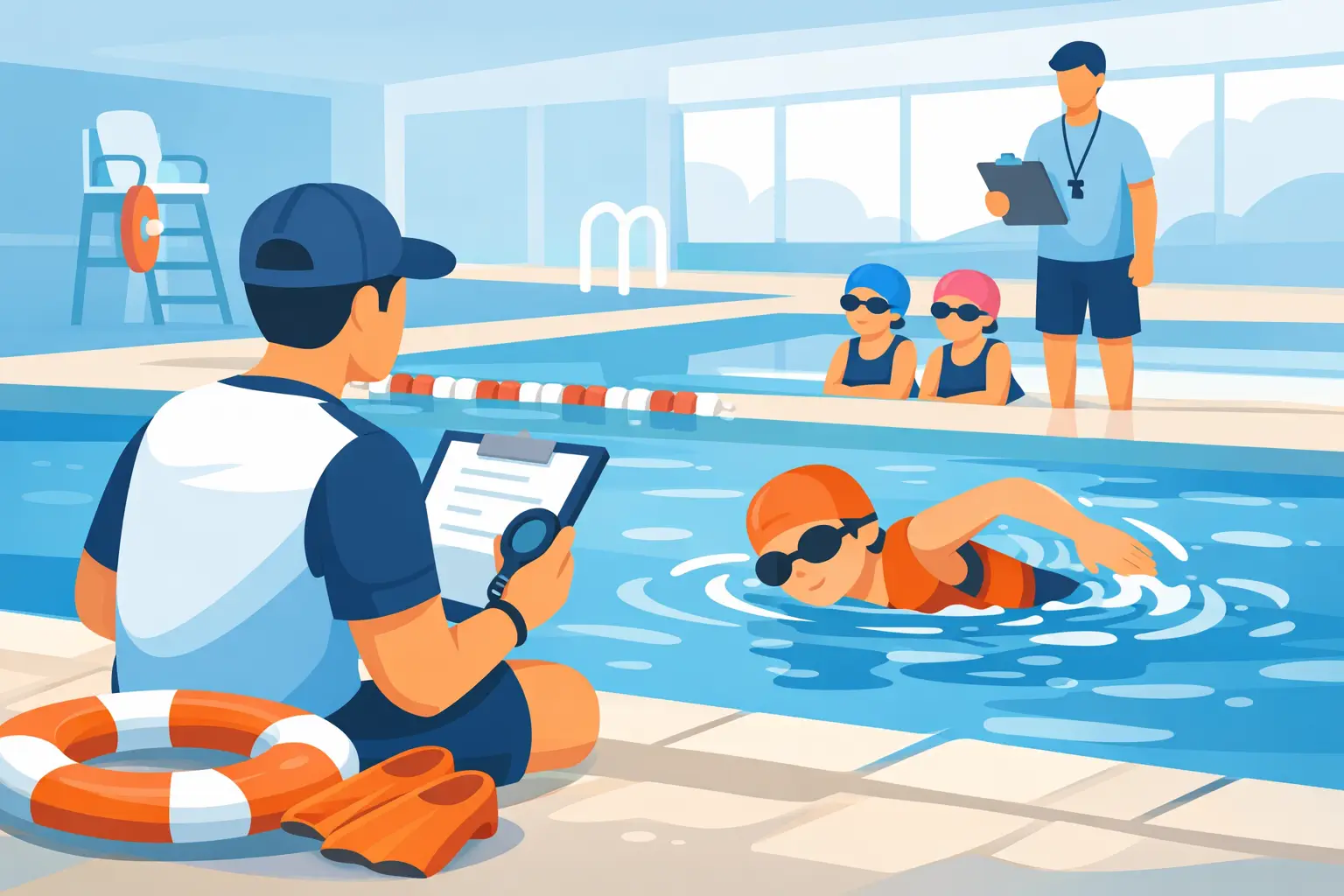
SwimSafer Mock Practical Test: What to Expect
A child can swim well during class and still freeze when an assessment starts. That is exactly why a SwimSafer mock practical test matters. It gives swimmers a chance to experience test conditions before the actual assessment, so skills are not only learned but performed calmly, correctly, and safely when it counts.
For many parents, the biggest concern is not whether their child has attended enough lessons. It is whether the child can demonstrate the required skills on command, in sequence, and under observation. Adult learners often face the same issue. They may be capable in training but become tense during evaluation. A mock practical test helps close that gap between practice and performance.
What a SwimSafer mock practical test is really for
A mock test is not just a practice run. It is a structured checkpoint designed to measure readiness against SwimSafer standards. Instead of a regular lesson flow, the swimmer is asked to complete skills in a more formal way, often with less prompting and fewer repeats. That change matters.
In normal lessons, a coach may correct body position immediately, give extra attempts, or break a skill into smaller parts. During an assessment, the swimmer must show control, confidence, and understanding with much less support. The mock test reveals whether the swimmer can do that consistently.
This is also where hidden weaknesses show up. A swimmer may manage front glide well in isolation but lose composure when it follows another task. A child may remember technique but forget verbal instructions. An adult may have the endurance to finish the swim but rush breathing and lose form. These are the details that affect results.
What happens during a SwimSafer mock practical test
The exact content depends on the swimmer’s current stage, but the structure is usually straightforward. The coach reviews the required practical items, observes each skill under test-like conditions, and records where the swimmer meets standard, falls short, or needs more consistency.
Unlike a regular lesson, the pace is more deliberate. There is less coaching during the attempt because the purpose is to see what the swimmer can already execute independently. That can feel stricter, especially for younger children, but it creates a realistic picture of readiness.
Most mock tests focus on several areas at once. These often include stroke technique, breathing control, movement through the water, floating, water confidence, and safety-based tasks. At higher stages, stamina, coordination, and rescue awareness become more significant. A swimmer who is strong in one area but weak in another may still need more preparation before the actual test.
Skills are assessed as a full performance, not isolated effort
One of the biggest surprises for families is that passing standard is not always about doing a skill once. It is about showing the skill with enough control and reliability to meet the expected benchmark. That is why mock testing is useful. It checks whether the swimmer can reproduce the skill properly, not just occasionally.
For example, a swimmer may complete a distance but with poor streamlining, irregular breathing, or visible panic near the end. Technically, they moved through the water, but not at the level expected for certification. A mock test helps identify that difference early.
Why swimmers fail even when they seem “almost ready”
The phrase “almost ready” is where many failed assessments begin. In SwimSafer progression, close is not the same as test-ready. A swimmer needs enough consistency that performance holds up even with nerves, distractions, or a different pool environment.
Children often struggle with listening and sequence. They know the skills but mix up instructions or start before they are fully prepared. Some rush because they want to finish quickly. Others hesitate because they fear getting it wrong. Both reactions affect performance.
Adults usually face a different challenge. Their issue is less about understanding and more about tension. They overthink timing, hold their breath too long, or become self-conscious during observation. In both cases, the mock practical test turns vague concerns into specific training targets.
Common weak points coaches look for
Body position is one of the most common issues. If the hips sink or the head lifts too much, efficiency drops and confidence often drops with it. Breathing rhythm is another problem area, especially when swimmers can perform a stroke but cannot maintain relaxed breathing over distance.
Transitions also matter more than many people expect. Moving from one task to the next without losing focus is part of test readiness. A child who can float but cannot settle quickly after a swim effort may not be fully prepared. A swimmer who understands rescue concepts but hesitates during demonstration may need more practice under pressure.
How a mock test improves actual test performance
The first benefit is clarity. Parents no longer have to guess whether their child is ready. Adult learners do not have to rely on feeling alone. A mock test shows what is already secure and what still needs work.
The second benefit is emotional preparation. Test nerves are real, especially for younger swimmers. When the swimmer has already experienced a structured assessment once, the real test feels less unfamiliar. That usually leads to better focus, calmer breathing, and more reliable execution.
The third benefit is efficient training. Instead of repeating general lessons and hoping for improvement, the coach can target exact gaps. If the swimmer needs stronger kicking endurance, cleaner stroke timing, or more confident water entry, the next training block becomes more purposeful.
How parents can use mock test feedback wisely
Parents naturally want a clear answer: pass or not yet. But the most useful mock test feedback goes beyond that. It explains why the swimmer is not yet ready, or why they are close but still need consistency.
This matters because rushing into an official assessment too early can dent confidence. A failed test does not just mean another attempt later. For some children, it creates anxiety around future assessments. It is often better to build stronger readiness first and enter the real test with momentum.
At the same time, waiting too long is not always ideal either. If a swimmer is already meeting standard comfortably, excessive delay can lead to boredom or loss of sharpness. Good coaching finds the balance between readiness and timing.
What useful feedback should include
Strong mock test feedback should be specific. “Needs more practice” is too broad to help. Better feedback identifies exact areas such as breathing control during freestyle, confidence in deep water, distance management, or response to verbal instruction.
It should also distinguish between technical problems and confidence problems. A swimmer with sound technique but low confidence may progress quickly with more test simulation. A swimmer with confidence but weak fundamentals usually needs more technical correction before assessment.
Who benefits most from a SwimSafer mock practical test
This type of preparation is especially valuable for swimmers approaching certification stages, children who are capable in class but inconsistent in assessment settings, and adults returning to swimming after a long break. It is also useful for learners on a tighter timeline, such as those preparing during school holidays or trying to move through a stage efficiently.
Private and small-group learners often benefit even more because coaches can observe detailed habits that may be missed in a general class environment. For test-focused preparation, that level of attention can make a clear difference.
At AQZOG, structured mock test preparation fits naturally into a progression-based teaching approach because the goal is not just pool familiarity. The goal is measurable skill development, water safety competence, and certification readiness built on solid fundamentals.
How to know when to schedule one
A mock test works best when the swimmer has already learned the required stage skills and needs confirmation of readiness. If the swimmer is still being introduced to major components, it is probably too early. In that case, lesson time is better spent building skills first.
A good time to schedule a mock assessment is when performance looks mostly consistent in training but there are still questions about stamina, independence, or confidence. That is where the test provides the most value. It gives a realistic benchmark without the pressure of an official outcome.
For parents, the key sign is this: if your child can perform the skills during class but you are unsure whether they can do them correctly on demand, a mock practical test is likely the right next step. For adults, the same applies when technique is in place but assessment confidence still feels shaky.
A SwimSafer mock practical test is not about adding pressure. It is about removing uncertainty. When swimmers understand the standard, experience the format, and train based on clear feedback, they step into the actual assessment with much better control. That kind of preparation does more than improve pass rates. It builds safer, more confident swimmers for the long term.