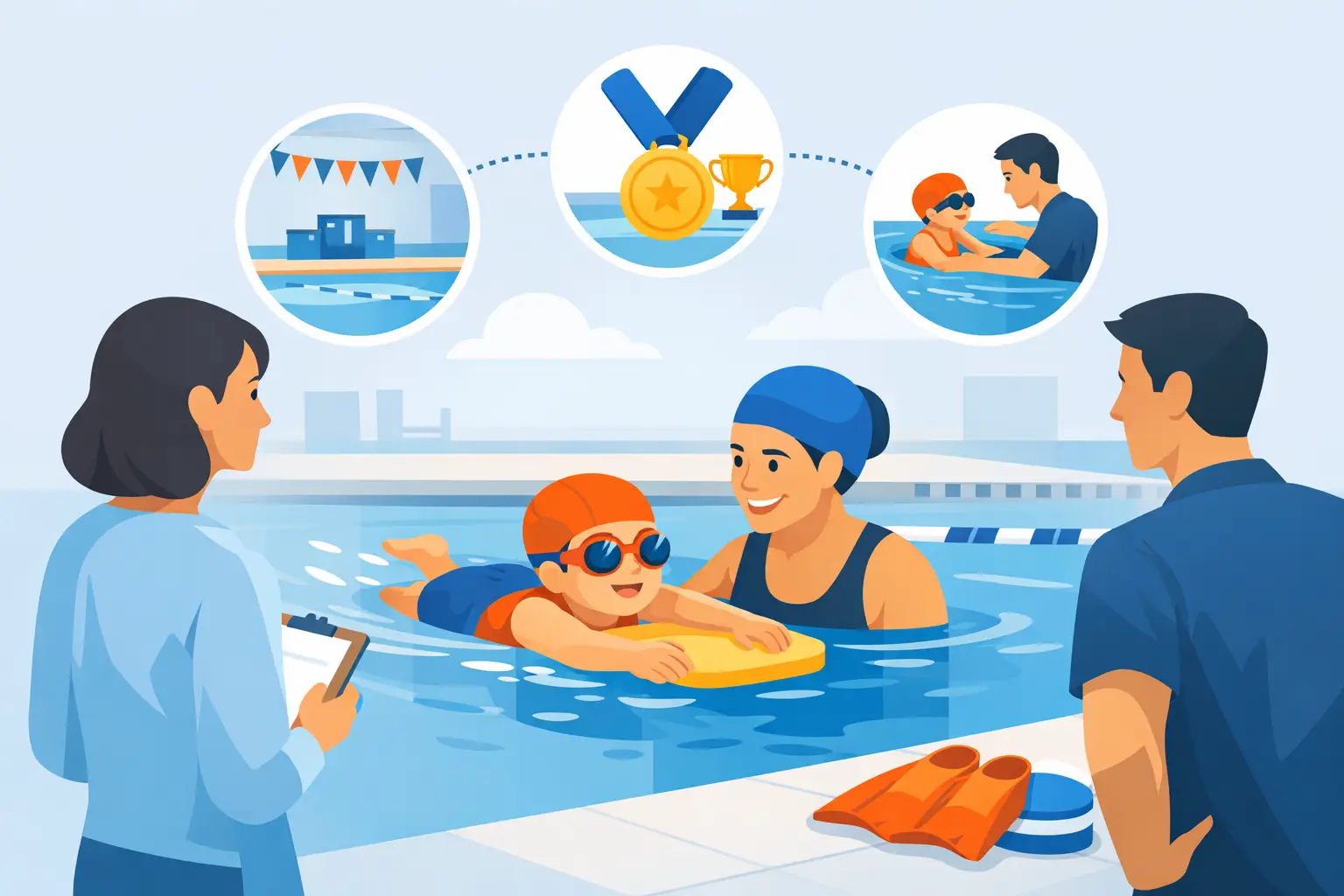
How to Choose Swim School for Real Progress
A swim class can look great for the first ten minutes. The pool is busy, the kids are smiling, and the coach is energetic. But if you are trying to figure out how to choose swim school, the real question is simpler: will this program build safe, measurable swimming ability over time?
That matters even more for young children, nervous beginners, and anyone working toward formal assessments. A good swim school does more than keep lessons moving. It teaches water safety, builds confidence in the right order, and gives swimmers a clear path from beginner skills to stronger technique and test readiness.
How to choose swim school without guessing
Start by looking past marketing phrases. Many schools promise fun, confidence, and improvement. Those things matter, but they are not enough on their own. You need to know how the school teaches, how it measures progress, and whether its coaching system suits the swimmer in your family.
For parents, that often means checking whether the program is age-appropriate, safety-focused, and structured around actual skill development rather than casual pool time. For adults, it means finding a school that can match your starting point, whether you are overcoming fear of water, learning basic strokes, or training for performance.
The best choice is rarely the cheapest or the nearest by default. Convenience matters because attendance drives progress, but poor structure can waste months. On the other hand, a well-run program at a nearby public pool can be a strong fit if the teaching standards are consistent and the progression is clear.
Safety should come before style
A polished website and friendly coach are positive signs, but safety standards should carry more weight. Ask what beginners learn first. If the answer focuses only on floating and kicking, that is incomplete. Early instruction should include safe water entry, breath control, body position, movement to safety, and confidence in submersion at an appropriate pace.
For children, especially toddlers and early learners, safety is not a side topic. It should be built into every stage of instruction. A school with a strong safety culture teaches survival habits alongside stroke development. That includes listening skills, pool awareness, and the ability to recover calmly in the water.
This is also where class supervision matters. A large group is not automatically a bad class, but the coach must be able to see, correct, and support each swimmer. If one instructor is managing too many mixed-ability students at once, progress slows and safety can become reactive instead of proactive.
Look for structured progression, not random lessons
One of the clearest signs of quality is whether the school has a defined progression system. Swimmers should not simply repeat similar activities each week without a clear goal. Every stage should build on the previous one, with visible milestones and age-appropriate expectations.
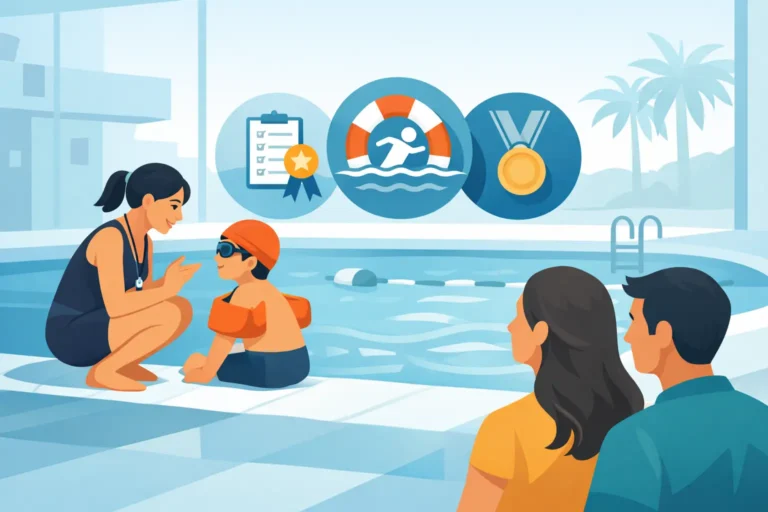
For school-age children in Singapore, this often includes alignment with recognized progression frameworks such as SwimSafer. That matters because it gives families a clearer benchmark for skill development, water survival knowledge, and assessment readiness. A school that understands certification pathways can prepare swimmers more systematically than one that teaches isolated skills without a larger plan.
Adults need structure too. A beginner adult class should not feel like a child program adapted on the spot. The pacing, explanations, and confidence-building methods should reflect adult learning needs. If the school offers private or semi-private options, that can be especially helpful for adults who want faster correction, privacy, or a more targeted progression path.
Coaching quality matters more than poolside energy
A lively coach can make lessons enjoyable, but enjoyment alone does not create competent swimmers. Good coaches know how to break skills into teachable steps, spot technical errors early, and adjust their approach for different learners.
When you assess a swim school, ask about coaching experience, teaching background, and familiarity with beginner instruction as well as advancement pathways. A coach who is excellent with competitive swimmers may not be the right fit for a fearful six-year-old. Likewise, a coach who keeps toddlers engaged may not be the best person for an adult working on endurance and stroke efficiency.
Consistency matters too. If classes are constantly rotated among different instructors without continuity, swimmers may receive mixed cues and uneven correction. A strong school usually has a coaching system, not just individual coaches doing their own thing.
Class format affects results
There is no single best lesson format for everyone. Group classes can work very well when the levels are matched, the structure is strong, and the swimmer benefits from routine and peer learning. They are often a practical choice for families seeking weekly progression at a manageable cost.
Private lessons can accelerate results when a swimmer needs focused attention. This is often useful for water-fear learners, students preparing for practical tests, or children who need more direct correction before they are ready for a group setting. Semi-private lessons sit somewhere in the middle and can work well for siblings or friends of similar ability.
Holiday intensives are another option, but they are most effective when they build on a structured curriculum rather than compress random practice into a few days. Intensive programs can produce faster progress, but only if the swimmer has a clear target and enough lesson frequency to reinforce learning.
Progress tracking should be visible
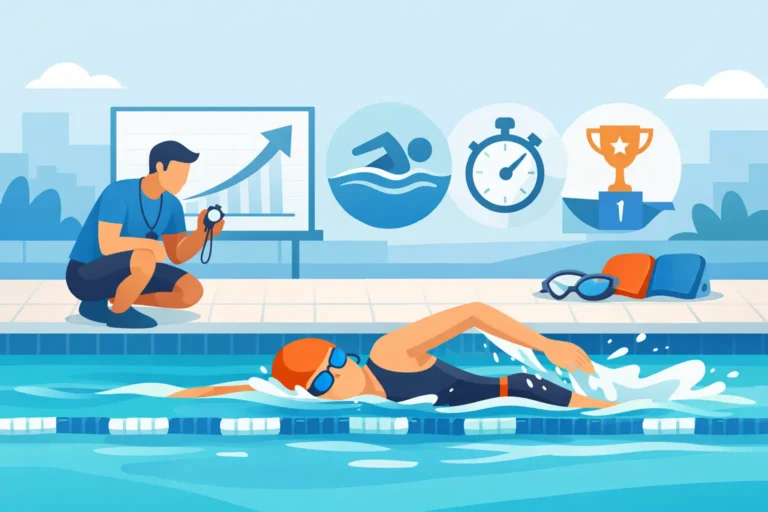
If you ask how your child is doing, the answer should be more specific than “getting better.” A reliable swim school should be able to explain what skills have been achieved, what still needs work, and what the next stage looks like.
That does not mean every lesson needs a formal report card. It does mean there should be a clear teaching sequence and regular feedback. Families should know whether the swimmer is working on water confidence, stroke coordination, breathing, stamina, or assessment criteria. Adults should receive the same clarity, especially if they are training toward a fitness goal or certification milestone.
Visible progress builds trust. It also helps prevent a common problem in swim education: students staying in the same level too long because nobody has defined what readiness actually looks like.
Convenience matters, but only after quality
Most families need lessons that fit school schedules, work commitments, and travel time. That is realistic. If the pool is too far away, attendance becomes inconsistent, and even a strong program loses effectiveness.
Still, convenience should be filtered through quality. A nearby school with weak structure is not better than a slightly less convenient option with stronger coaching and a clearer progression system. The ideal setup is a school that combines both: accessible locations and reliable teaching standards across venues.
This is one reason public pool programs can be a strong choice if they are well managed. They offer practical access for many neighborhoods, and when the school maintains consistent curriculum standards, families do not have to trade convenience for quality.
Ask the right questions before enrolling
Parents and adult learners do not need to interrogate a school, but a few direct questions reveal a lot. Ask how beginners are assessed, how levels are grouped, how progression is tracked, and what happens if a swimmer is not ready to move on. If certification is important, ask how the program prepares students for theory, practical standards, and mock assessments.
You should also ask how the school handles nervous learners. Confidence building is not just about being kind. It is about having a method. The right school introduces challenge progressively, without rushing a swimmer or allowing avoidance to become a long-term habit.
If possible, observe a class. Watch whether swimmers spend most of the lesson actively learning or simply waiting for turns. Notice whether corrections are specific. A good lesson often looks calm, organized, and purposeful, even when young children are involved.
How to choose swim school for your child or yourself
The best school is the one that matches the swimmer’s age, goals, learning pace, and safety needs while offering a real progression pathway. For a toddler, that may mean water introduction with strong parent communication and careful confidence building. For a primary-school child, it may mean a structured route toward SwimSafer stages and stronger survival skills. For an adult, it may mean patient instruction, technical correction, and scheduling that supports regular attendance.
Schools such as AQZOG have built their reputation around this kind of structured progression, especially for families who want safety, certification readiness, and dependable coaching standards rather than casual exposure alone. That distinction matters because swimming is not just an activity to sample. It is a life skill that should be taught with purpose.
A good swim school leaves you with more than a booked class slot. It gives you confidence that each lesson is moving somewhere important, one skill at a time.