How to Pass SwimSafer Stage 1 in Singapore
Many children are comfortable in the pool but still struggle on assessment day because they do not know exactly what the examiner is looking for. If you are wondering how to pass SwimSafer Stage 1 in Singapore, the answer is not just “swim more.” It is about learning the correct Stage 1 skills, practicing them in the right order, and building enough confidence to perform them calmly during the test.
SwimSafer Stage 1 is designed to check whether a swimmer has basic water confidence, simple movement skills, and early water safety awareness. This is the foundation stage, so examiners are not expecting polished competitive strokes. They want to see control, safe behavior in the water, and the ability to follow instructions.
What SwimSafer Stage 1 tests
At this level, swimmers are usually assessed on basic entries and exits, breath control, floating, kicking, short-distance movement, and simple water survival understanding. The exact test items may vary slightly by assessor or program setup, but the overall standard stays the same. A child must show that they are safe, responsive, and able to move independently for short distances.
This matters for parents because many children fail not from lack of potential, but from one weak area such as panic during floating, poor breath control, or forgetting instructions. Stage 1 is a progression test, so every basic skill counts.
How to pass SwimSafer Stage 1 in Singapore with the right preparation
The best preparation starts with understanding that confidence and technique develop together. A child who is tense will often lift the head too high, sink the legs, or stop kicking halfway. A child who has repeated the same skill many times in a structured lesson is far more likely to stay relaxed and complete the task correctly.
Focus first on water comfort. Swimmers should be able to put their face in the water, blow bubbles, and recover without fear. If a child still hesitates to submerge the face, that should be practiced before worrying about distance or speed.
Next, work on floating. Front float and back float are common sticking points because they require trust in the water. The body must stay long, the breathing must stay calm, and the swimmer must avoid curling up. Parents often try to help too much here, but over-support can slow progress. The swimmer needs to feel what balance in the water is like.
Kicking is another key area. For Stage 1, assessors usually want to see consistent flutter kicks rather than large bicycle-like movements. Small, steady kicks with straight but relaxed legs are more effective. If the swimmer stops to look around or bends the knees too much, progress in the water becomes difficult.
Common reasons children do not pass
One common issue is rushing into the test before the swimmer is truly ready. Passing a lesson is not the same as passing an assessment. In class, children may perform well with familiar coaches, but during a formal test they need to respond independently.
Another issue is inconsistent attendance. Swimming is a skill built through repetition. Missing too many lessons often leads to uneven progress, especially in breath control and floating.
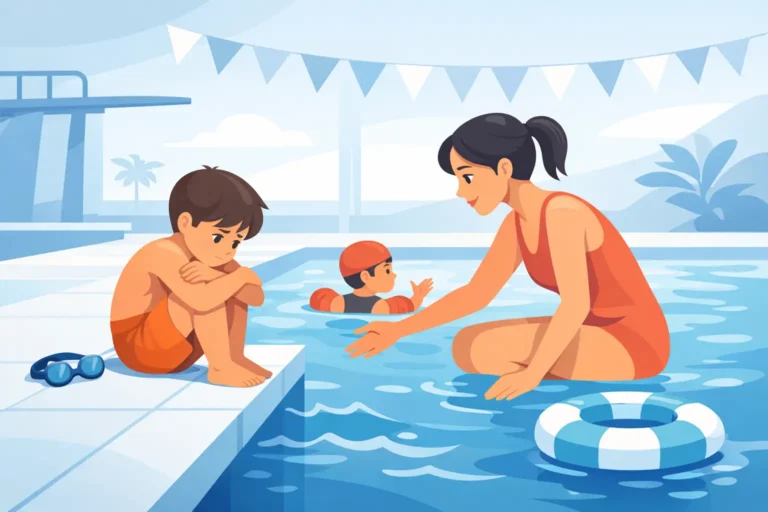
Some swimmers also know the skill but lose confidence when asked to do it alone. This is why mock assessments are useful. They reduce surprises and help the swimmer get used to listening, waiting, and performing when called.
Skills to practice before the assessment
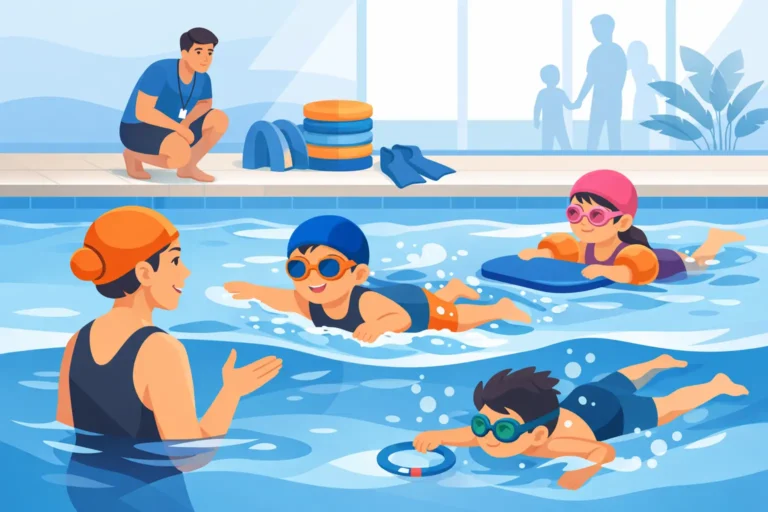
A swimmer preparing for Stage 1 should be comfortable with a few core actions. These include safe pool entry and exit, bubble blowing, front and back floating, short kicking movement, and basic arm action or paddling movement depending on the training format. They should also understand simple safety rules such as listening to the instructor, moving only when told, and staying calm in the water.
Practice should be short and focused. Ten minutes of quality repetition is often better than a long session where the child becomes tired or frustrated. For younger swimmers, praise and routine make a big difference. When they know what comes next, they usually perform with more confidence.
What parents can do to help
The most helpful thing a parent can do is support consistency without creating pressure. Avoid telling a child that they “must pass” or comparing them with siblings or classmates. That usually increases anxiety and makes performance worse.
Instead, talk about the test as a chance to show what they have learned. Reinforce that Stage 1 is about safety and confidence, not perfection. If your child is weak in one area, ask the coach directly what needs improvement and focus practice there.
A structured SwimSafer training program can also make the process faster and clearer. Schools such as AQZOG typically prepare swimmers with skill progression, test-focused drills, and coaching that matches Singapore’s SwimSafer requirements. That kind of targeted practice helps swimmers understand not just what to do, but how to do it correctly under assessment conditions.
Final test-day advice
Before the assessment, make sure the swimmer is rested, has eaten lightly, and arrives early enough to settle down. Rushing to the pool often leads to a nervous start. Encourage your child to listen carefully, breathe normally, and do one skill at a time.
If they do not pass on the first attempt, that does not mean they are not capable. It usually means one or two foundation skills need more work. With proper coaching, regular practice, and calm preparation, SwimSafer Stage 1 is a realistic and achievable first milestone for both children and beginner learners in Singapore.