How Often Should Children Attend Swim Lessons?
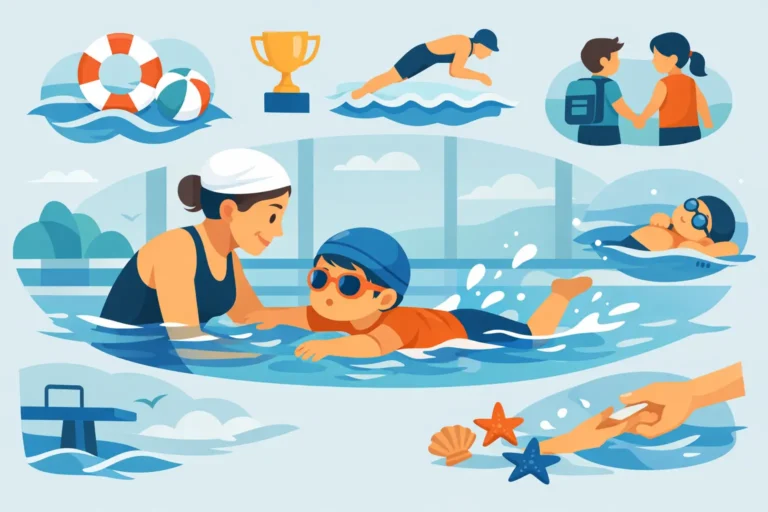
A child who swims once, then disappears from the pool for three weeks, is not really building a skill. They are starting over again and again. That is why parents so often ask how often should children attend swim lessons if they want real progress, stronger water safety, and steady confidence in the pool.
The short answer is this: for most children, once a week is the minimum for consistent learning, while twice a week often leads to faster and more noticeable improvement. The best schedule depends on age, water confidence, learning goals, and whether the child is training for general safety, stroke development, or a structured program such as SwimSafer.
How often should children attend swim lessons for steady progress?
For most beginners and developing swimmers, one lesson per week provides enough repetition to maintain familiarity and build skills over time. This is the most common schedule because it is manageable for families and gives children a regular routine without becoming overwhelming.
That said, once a week is usually a steady pace, not a fast one. Children who attend only weekly lessons may need more time to gain confidence, refine technique, and remember corrections from one class to the next. If the goal is simple water comfort and gradual improvement, that pace is often suitable. If the goal is faster progression, weekly lessons may feel slow.
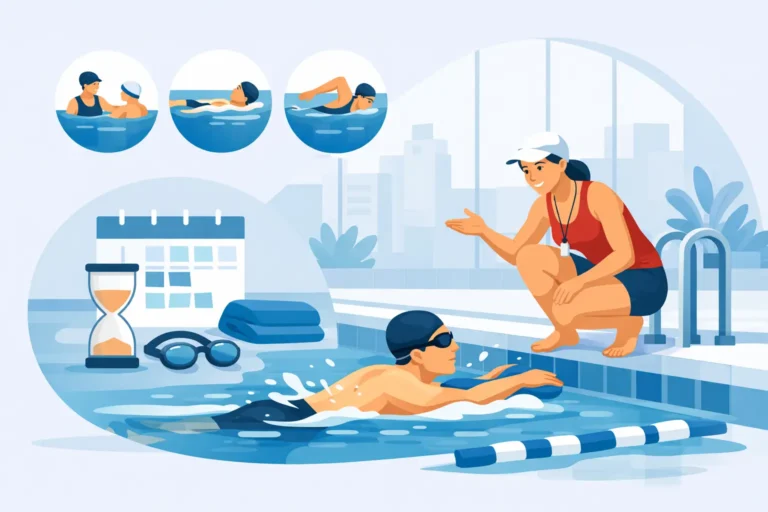
Twice a week is often the most effective balance for children who need stronger momentum. Skills are revisited before they fade, fear is reduced through more frequent exposure, and coaches have more opportunities to correct body position, breathing, kicking, and coordination. For children preparing for assessments or working through a fear of water, this added consistency can make a significant difference.
Three or more sessions a week can work well in short bursts, especially during school breaks or holiday intensive programs. This approach is useful when a child needs concentrated practice, but it should still be age-appropriate. Very frequent lessons can produce fast results, yet they only help if the child remains physically comfortable and mentally engaged.
Age matters more than many parents expect
A toddler, a six-year-old beginner, and a ten-year-old working toward certification do not need the same lesson schedule. Their attention span, physical coordination, and emotional readiness are different.
For toddlers and preschoolers, shorter and consistent exposure matters more than volume. One lesson a week can work well if the child is happy in the water and parents support that learning with calm, positive water experiences. If the child is especially hesitant or slow to warm up, two short sessions a week may help normalize the environment and reduce resistance.
For children in the early learning years, typically around ages five to eight, once or twice a week is usually ideal. This is often the stage where they begin developing independent movement, listening skills, and the ability to follow structured instruction. At this age, repetition creates familiarity, and familiarity supports confidence.
For older children who already have basic water confidence, scheduling becomes more goal-based. A child who simply needs maintenance may do well with weekly classes. A child working toward stroke efficiency, endurance, or SwimSafer stage completion may benefit more from twice-weekly lessons or a temporary intensive schedule.
Skill level changes the answer
When parents ask how often should children attend swim lessons, the most accurate answer is not based on age alone. It also depends on what the child can already do.
A complete beginner usually needs frequent reinforcement. Floating, submersion, safe entry and exit, breath control, and basic propulsion are not minor skills. They are foundational safety skills. When there are long gaps between lessons, beginners often lose confidence and require extra time each session just to settle back in.
An intermediate swimmer may need less hand-holding but more technical correction. This is where once-a-week lessons can maintain progress, but twice-a-week lessons can sharpen it. Stroke timing, breathing rhythm, streamline position, and endurance all improve faster when coached more consistently.
An advanced child may not require multiple formal lessons every week forever, but that does not mean instruction stops being useful. At higher levels, coaching helps prevent poor habits from becoming fixed. It also supports test readiness, efficiency, and stronger water survival ability, which should remain central goals in any serious swim program.
Weekly lessons vs. intensive lessons
There is no single best model for every family. Weekly classes and intensive programs both have value, but they serve different purposes.
Weekly lessons are best for long-term skill building. They create routine, reduce scheduling pressure, and support gradual development. This format is especially effective when parents want their child to progress step by step in a structured program.
Intensive lessons, often taken during school holidays, are useful when a child needs a concentrated boost. Because the child returns to the water repeatedly within a short period, coaches can build on yesterday’s lesson instead of reteaching last week’s. This often leads to visible gains in confidence and technical control.
The trade-off is that intensive programs require physical stamina and mental readiness. Some children thrive with daily practice. Others become tired, distracted, or resistant. A good schedule is not just the one that looks efficient on paper. It is the one your child can handle consistently and positively.
Signs your child may need more frequent swim lessons
Sometimes the current schedule is simply not enough. If your child seems stuck, frequency may be part of the problem.
A child may benefit from more lessons if they remain anxious every class, forget key skills from week to week, struggle to progress through basic milestones, or need an upcoming assessment or certification. In many cases, the issue is not lack of ability. It is lack of consistent reinforcement.
Parents also notice this when a child performs well during class but cannot repeat the skill the following week. That pattern usually suggests the learning has not settled yet. More frequent practice can help turn coached actions into reliable habits.
Signs your child may need less pressure, not more
More is not always better. If a child is exhausted, frustrated, or starting to resist lessons strongly, increasing frequency may backfire.
Children learn best when they feel safe, focused, and successful often enough to stay motivated. If lessons are packed too tightly, especially for younger swimmers, they may stop enjoying the process. Progress can slow when the child is mentally overloaded.
This is why structured instruction matters. A qualified coach will not only teach the next skill. They will gauge whether the child is ready for more volume or whether the better choice is to protect confidence and keep the experience positive.
What schedule works best for SwimSafer and measurable progression?
For families in Singapore, many children are not just learning to swim casually. They are moving through a structured pathway with clear benchmarks in water safety, survival skills, stroke development, and test readiness. In that context, frequency matters even more.
A once-a-week class is often enough to support long-term progression through SwimSafer stages, especially when attendance is regular and the child is attentive. But children who need to prepare for assessments within a shorter timeline usually benefit from twice-weekly sessions or supplementary practice during holiday periods.
This is one reason established swim schools like AQZOG place strong emphasis on structured progression rather than random pool exposure. Regular lessons with a clear skills roadmap allow children to build one competency on top of another, instead of practicing disconnected activities that do not translate into measurable improvement.
So, how often should children attend swim lessons?
If your child is a beginner, start with at least once a week and consider twice a week if confidence is low or progress needs to be faster. If your child is building toward stronger technique, safety benchmarks, or formal assessments, twice a week is often the more effective schedule. If your child already swims competently, weekly lessons may be enough to maintain progress, with additional sessions added when goals become more demanding.
The most important point is consistency. A moderate schedule followed regularly is far more effective than an ambitious plan that keeps getting canceled. Children learn swimming through repetition, trust in the coach, and enough exposure for skills to become automatic.
If you are deciding on the right frequency, do not ask only what fits the calendar. Ask what will help your child stay safe, keep improving, and grow confident in the water over time. That is the schedule worth committing to.